
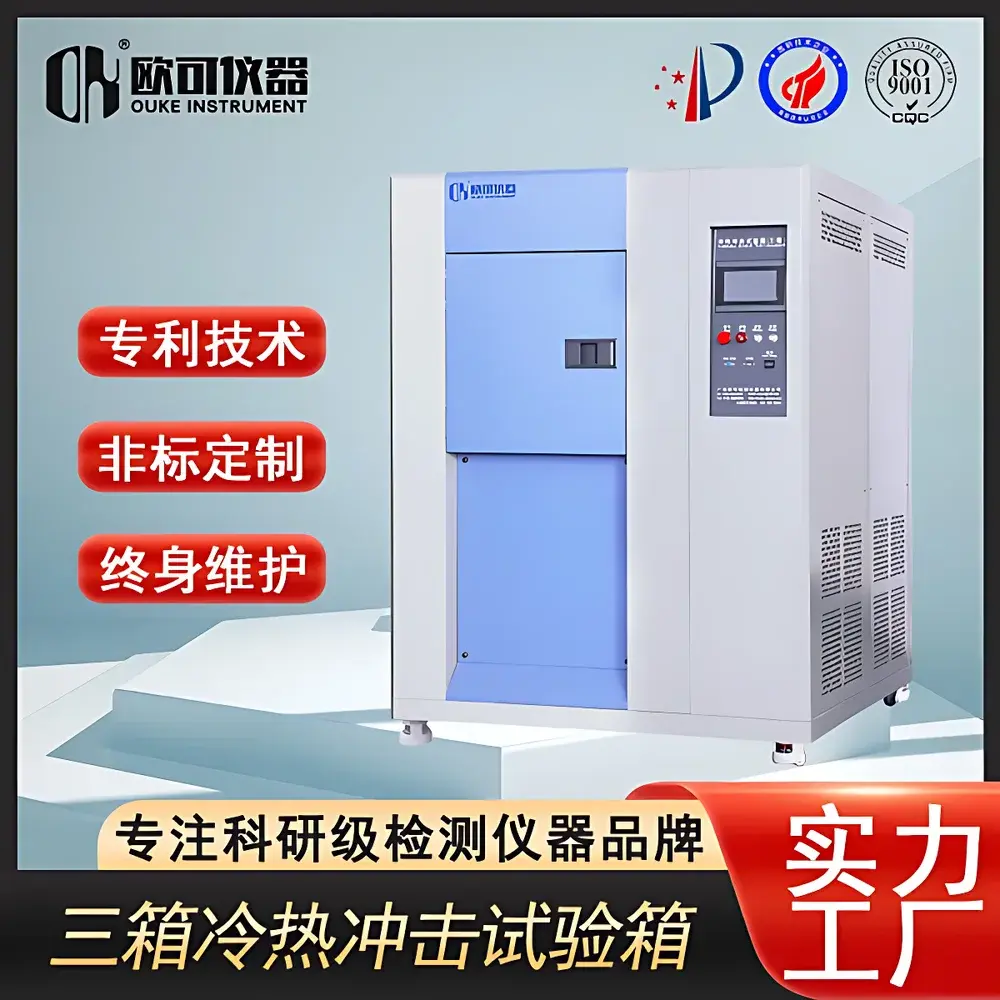
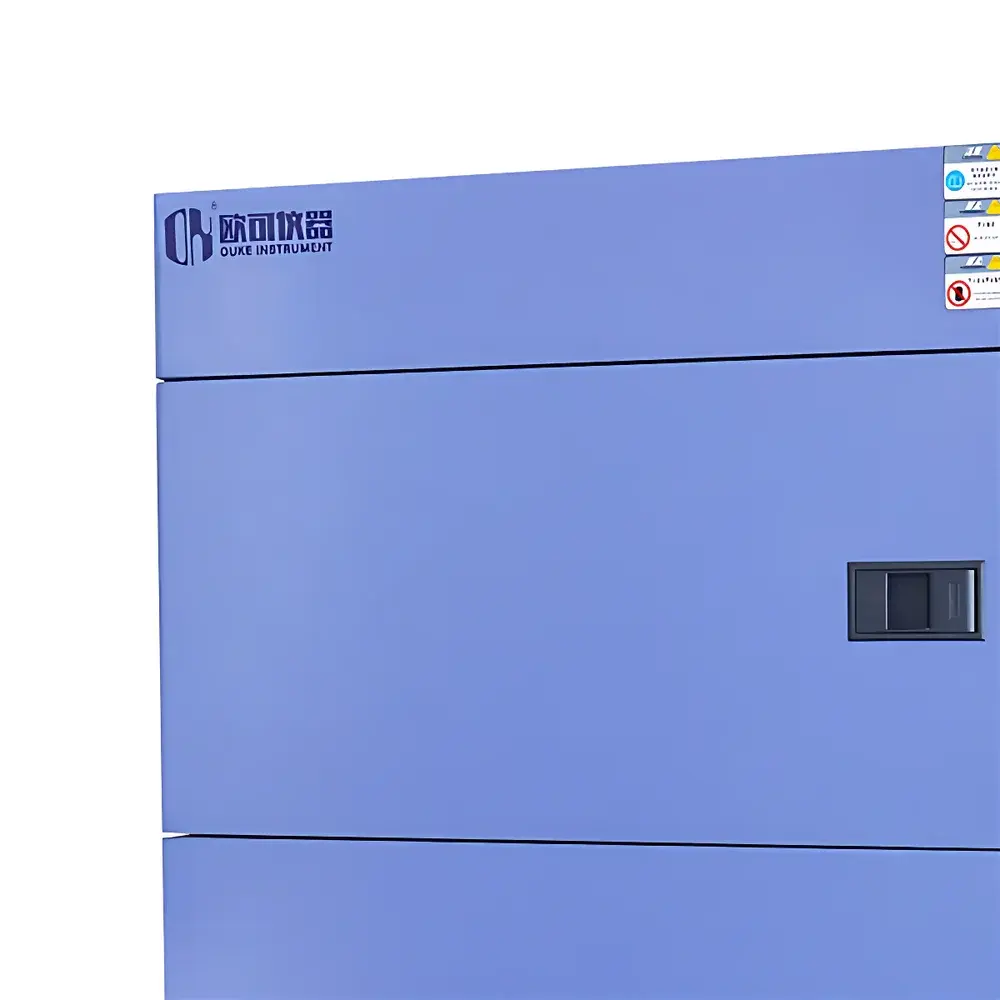
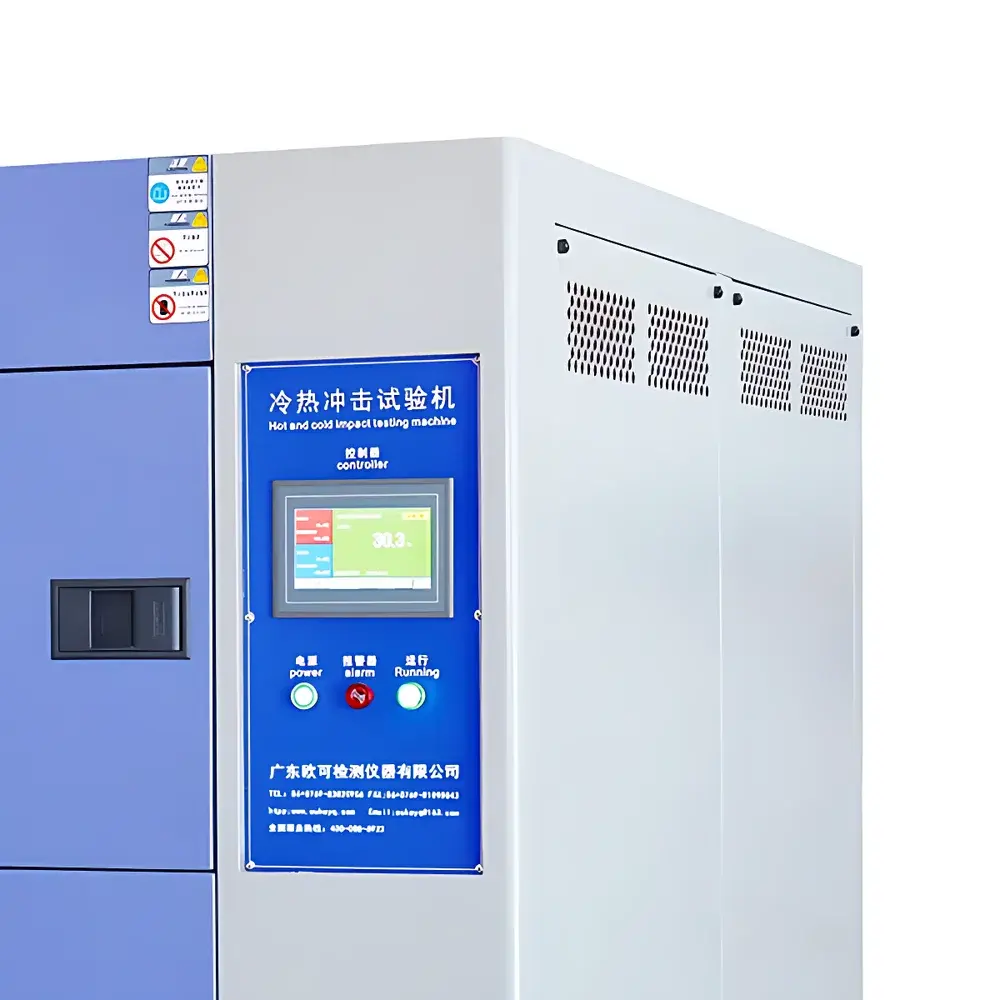
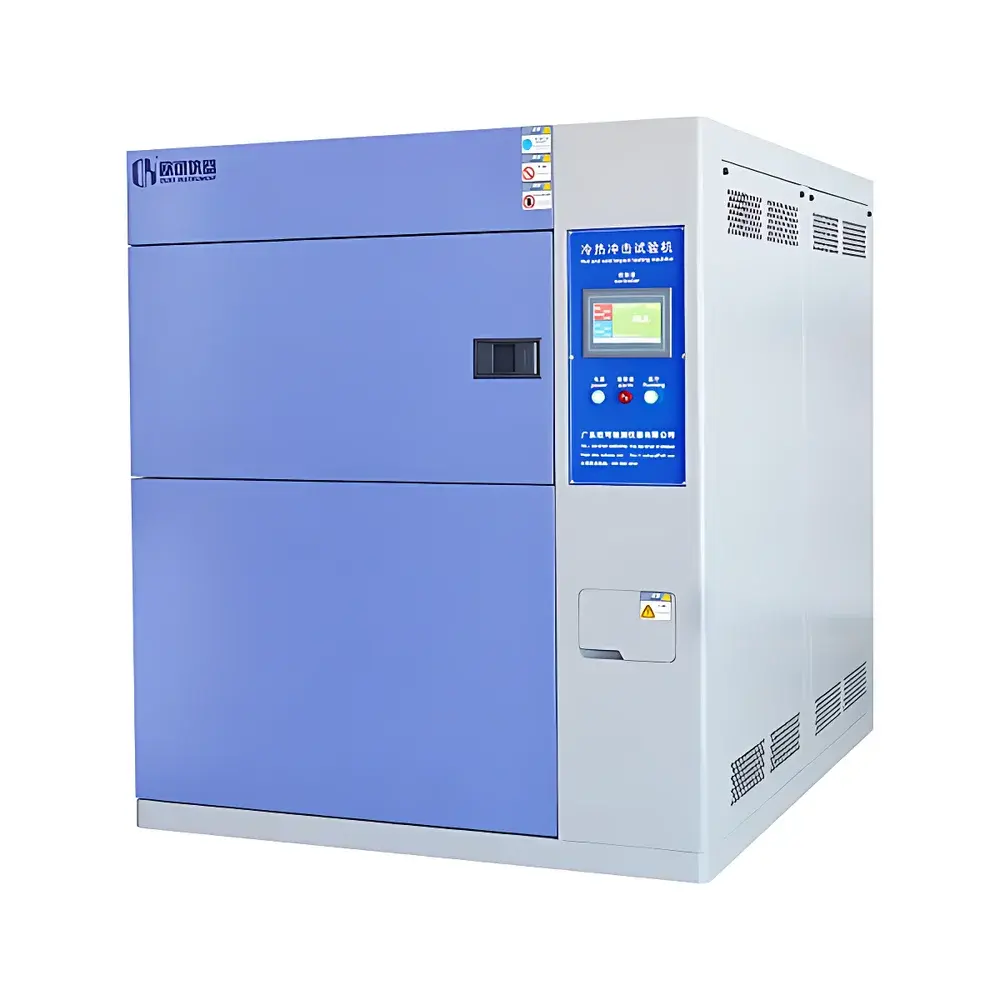
OK Instruments OK-TS-80.66666 Thermal Shock Test Chamber
| Brand | OK Instruments |
|---|---|
| Origin | Guangdong, China |
| Manufacturer Type | Direct Manufacturer |
| Model | OK-TS-80.66666 |
| High Temperature Range | +150 °C |
| Low Temperature Range | −40 °C |
| Thermal Shock Range | −40 °C to +150 °C |
| Temperature Stability | ±2 °C |
| Temperature Transition Time | ≤10 s (hot-to-cold / cold-to-hot) |
Overview
The OK Instruments OK-TS-80.66666 Thermal Shock Test Chamber is an engineered environmental test system designed to subject electronic components, automotive modules, aerospace assemblies, and packaging materials to rapid, repetitive thermal transitions between extreme high- and low-temperature environments. Unlike temperature cycling or rapid thermal ramping chambers—which apply controlled linear temperature gradients—this chamber implements true thermal shock per internationally recognized stress protocols. Its operational principle relies on either dual-chamber basket transfer (two-zone configuration) or triple-chamber air-switching (three-zone configuration), enabling specimen exposure to step-change thermal conditions with transition times ≤10 seconds. This replicates real-world failure mechanisms driven by differential thermal expansion, interfacial delamination, solder joint fracture, and hermetic seal breach. The chamber complies with the fundamental timing and exposure requirements of MIL-STD-883 Method 1010.8, IEC 60068-2-14 (equivalent to GB/T 2423.22), and JEDEC JESD22-A104, where the defining metric is not rate-of-change (°C/min), but rather the elapsed time between stable thermal states at the specimen surface.
Key Features
- Dual- or triple-zone architecture configurable per application requirements: two-zone (basket-transfer) for high-fidelity mechanical shock correlation; three-zone (air-valve switching) for vibration-sensitive, powered-in-situ, or large-format DUTs.
- Guaranteed thermal transition time ≤10 seconds from one stabilized temperature zone to the other, verified per IEC 60068-2-14 Annex A.
- Stable operating ranges: −40 °C to +150 °C, with chamber temperature uniformity maintained within ±2 °C across the working volume during dwell phases.
- Robust stainless-steel construction with insulated double-wall panels and high-efficiency refrigeration/hot-gas bypass systems for repeatable thermal response.
- Programmable controller with Ethernet interface supporting up to 999 cycles, multi-segment profiles, and user-defined dwell durations at hot/cold extremes.
- Integrated safety interlocks including over-temperature cutoff, refrigerant pressure monitoring, and door position verification to ensure operator and equipment protection.
Sample Compatibility & Compliance
The OK-TS-80.66666 accommodates specimens up to standard mid-size industrial dimensions (custom configurations available upon request). Two-zone operation supports dynamic loading up to 20 kg on the transfer basket; three-zone operation eliminates mechanical displacement, enabling testing of stationary, electrically active, or optically aligned units. All test sequences adhere to the procedural rigor required for qualification under MIL-STD-883H, IEC 60068-2-14 Ed. 4.0, and JESD22-A104D. Data logging meets GLP/GMP traceability standards with timestamped temperature records, cycle counters, and alarm event histories. Optional 21 CFR Part 11-compliant software packages provide audit trails, electronic signatures, and role-based access control for regulated environments.
Software & Data Management
The embedded controller features a 7-inch color touchscreen HMI with intuitive navigation, real-time temperature plotting, and on-device data export via USB. Optional PC-based software (OK-TestSuite v3.x) enables remote monitoring, automated report generation (PDF/CSV), statistical process analysis (SPC), and integration with LIMS or MES platforms. All logged parameters—including chamber setpoints, actual sensor readings, transition timestamps, and fault codes—are stored with millisecond resolution. Calibration history and maintenance logs are retained internally and exportable for internal audits or third-party certification reviews.
Applications
- Qualification of PCBAs, IC packages (QFN, BGA, CSP), and MEMS sensors per JEDEC reliability standards.
- Validation of automotive ECUs, battery management systems (BMS), and ADAS components under thermal shock per ISO 16750-4 and AEC-Q200.
- Assessment of aerospace avionics enclosures, optical housings, and composite structural joints exposed to stratospheric-to-ground thermal transients.
- Failure analysis root-cause studies targeting intermetallic growth, die attach voiding, and underfill cracking in accelerated life testing.
- Material compatibility screening for conformal coatings, potting compounds, and adhesive bonds used in harsh-environment electronics.
FAQ
What distinguishes thermal shock testing from temperature cycling or rapid thermal profiling?
Thermal shock applies instantaneous, discontinuous temperature transitions (step changes) between two stable extremes, primarily inducing mechanical stress due to CTE mismatch. Temperature cycling uses continuous, linear ramps to simulate cumulative thermal fatigue—measured in °C/min—not transition time.
Is this chamber suitable for powered-in-situ testing?
Yes—when configured in three-zone mode, the test specimen remains stationary in the central chamber while conditioned air is directed via fast-acting pneumatic dampers, enabling live electrical or optical performance monitoring during transitions.
Does the system support liquid nitrogen (LN2) assist for extended low-temperature capability?
The base model operates with mechanical refrigeration only. LN2 augmentation is available as a factory-installed option for applications requiring sub-−40 °C cold zones or faster recovery times.
How is temperature uniformity validated across the working volume?
Uniformity is certified per IEC 60068-3-5 using nine calibrated PT100 sensors placed in a 3×3 grid pattern during SAT (System Accuracy Test), with results documented in the出厂 calibration certificate.
Can test data be exported for regulatory submission (e.g., FDA, ISO 9001)?
Yes—raw data files include ISO 8601 timestamps, sensor IDs, and metadata compliant with ALCOA+ principles. Optional 21 CFR Part 11 software adds electronic signature, audit trail, and data integrity controls required for regulated industries.



