
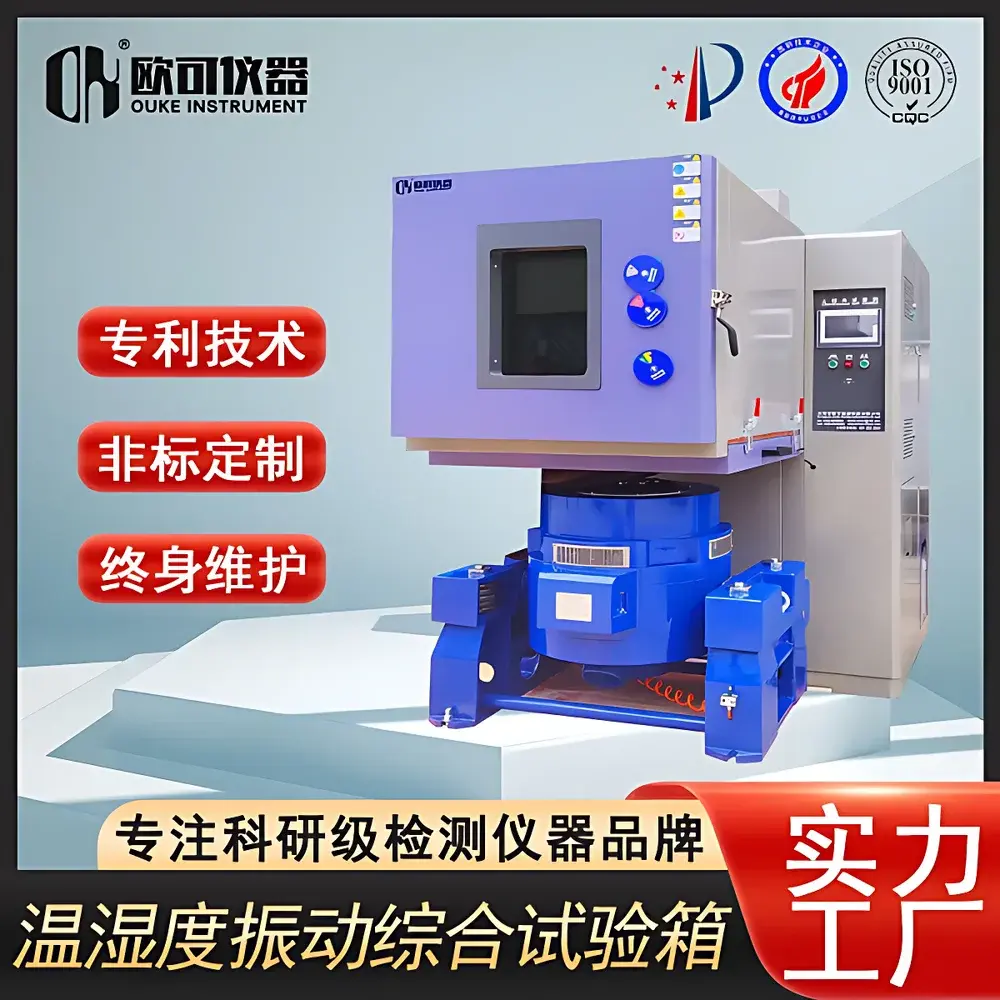
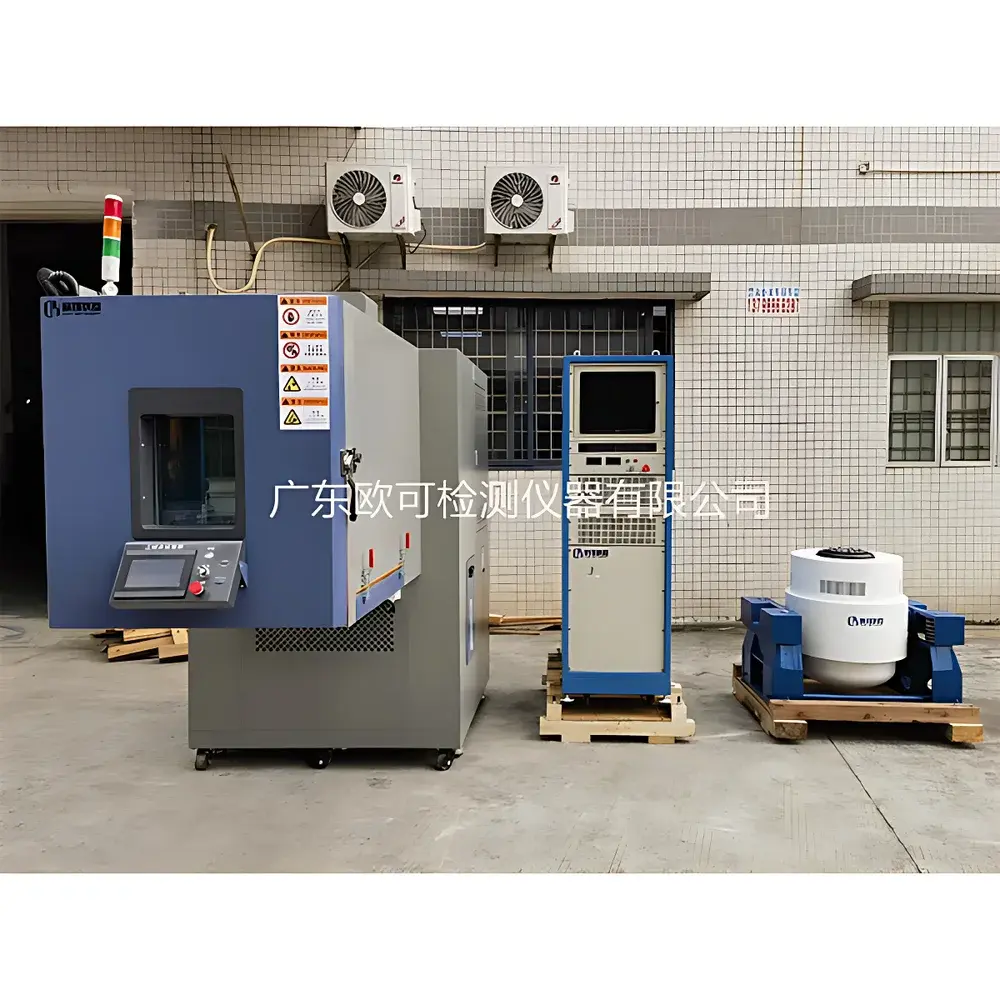
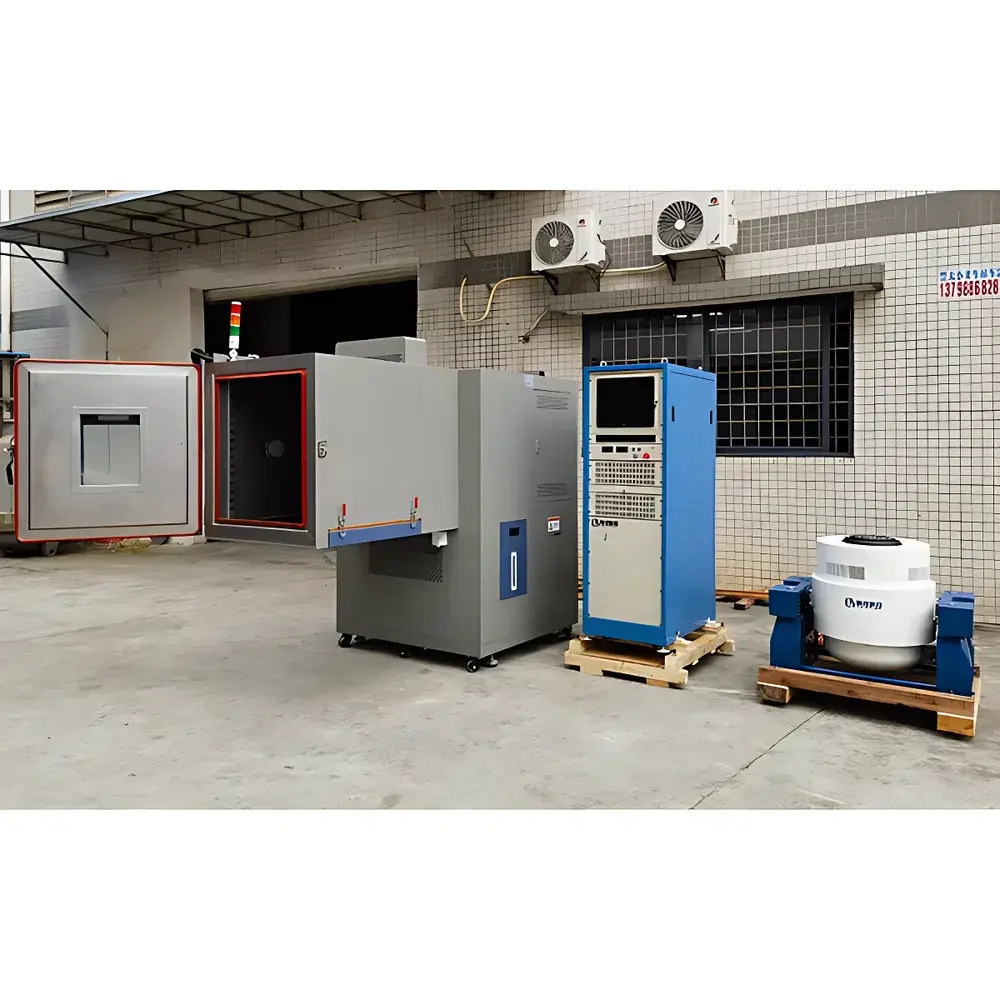
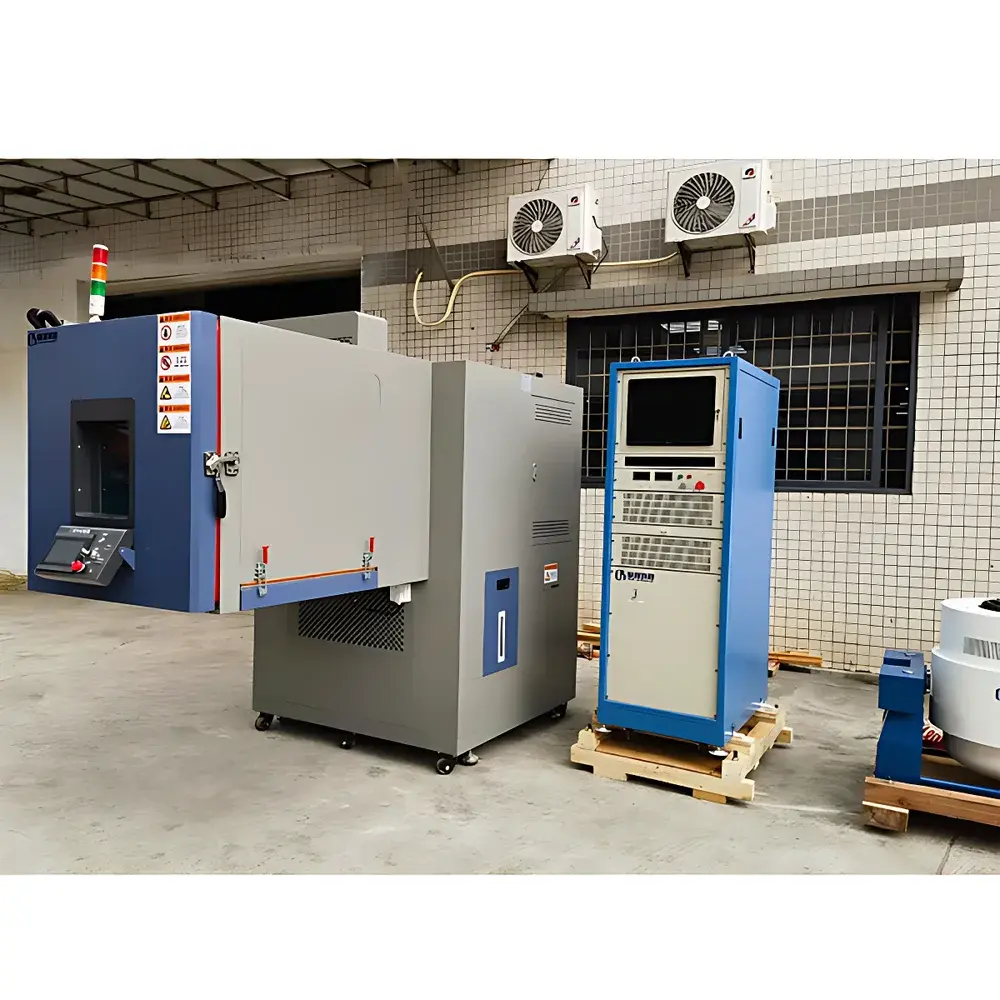
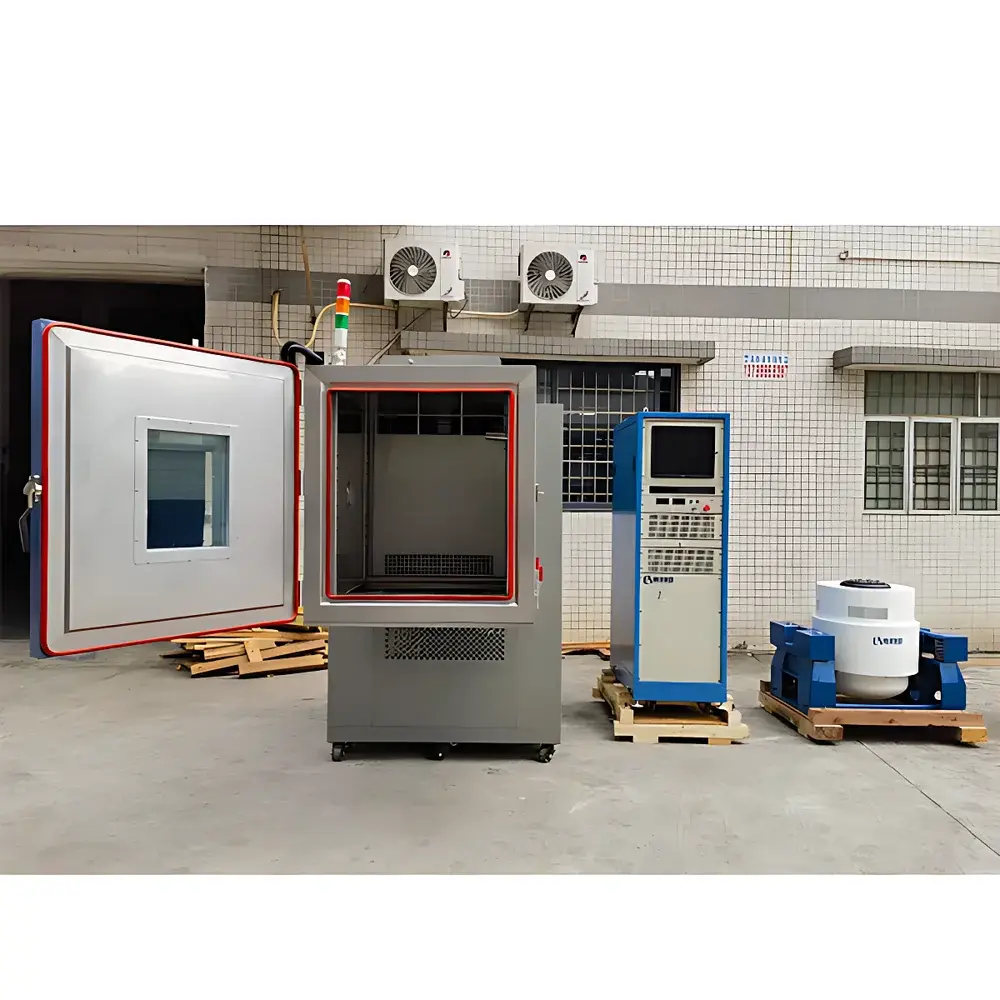
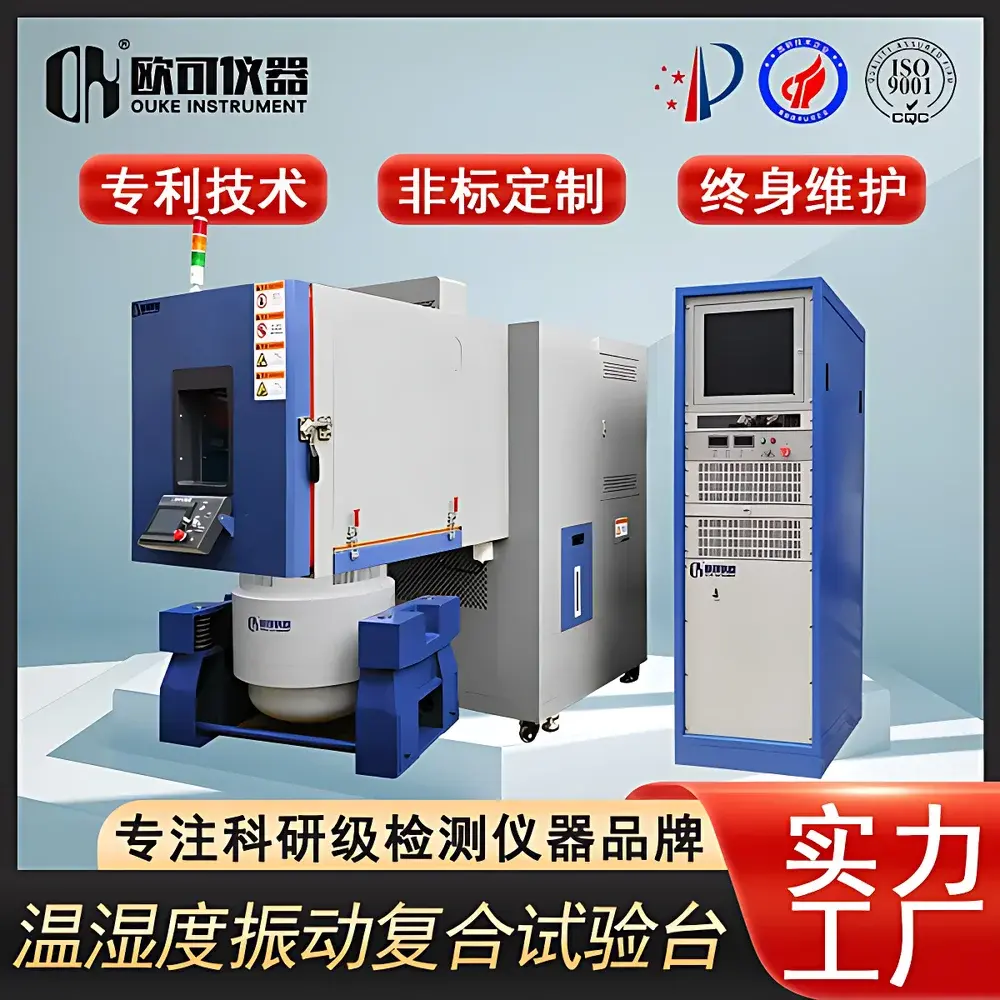
OK Instruments OK-ZTH-1000.145 Combined Temperature-Humidity-Vibration Test System
| Brand | OK Instruments |
|---|---|
| Origin | Guangdong, China |
| Manufacturer Type | Direct Manufacturer |
| Product Origin | Domestic (China) |
| Model | OK-ZTH-1000.145 |
| Temperature Range | −70 °C to +150 °C |
| Humidity Range | 20–98 %RH at 20–85 °C |
| Temperature Ramp Rate | 5 / 10 / 15 °C/min |
| Temperature Uniformity | ≤ ±0.5 °C |
| Standard Load Capacity | 15 kg aluminum mass, 350 W internal heat dissipation |
Overview
The OK Instruments OK-ZTH-1000.145 Combined Temperature-Humidity-Vibration Test System is an integrated environmental stress screening platform engineered for simultaneous or sequential application of thermal, hygric, and mechanical (vibrational) stresses. It operates on the principle of multi-stress synergism—where coupled environmental loads accelerate failure mechanisms that remain latent under single-stress testing. The system integrates a high-fidelity climatic chamber with a high-performance electrodynamic shaker, all governed by a unified real-time control architecture. This architecture enables precise synchronization of temperature ramping, humidity cycling, and vibration profiles—including sine, random, shock, and mixed-mode excitations—within a single test sequence. Designed for engineering validation and qualification testing, the OK-ZTH-1000.145 supports deterministic stress exposure in accordance with established physics-of-failure models, facilitating early detection of solder joint fatigue, connector loosening, material delamination, and condensation-induced corrosion.
Key Features
- Triple-stress integration: Independent yet synchronized control of temperature (−70 °C to +150 °C), relative humidity (20–98 %RH, conditioned within 20–85 °C operating envelope), and triaxial vibration (vertical + horizontal, up to 1000 N force capacity, configurable frequency range 5–2000 Hz)
- Programmable thermal ramp rates of 5, 10, or 15 °C/min—achievable across full temperature span without compromising humidity stability or vibration fidelity
- Thermal uniformity ≤ ±0.5 °C and humidity accuracy ±2 %RH (calibrated per ISO 17025-accredited methodology) over working volume
- Dual-stage refrigeration system with cascade compressors and optimized heat exchanger design for rapid cooldown and stable low-temperature hold performance
- Integrated safety architecture including compressor high-pressure cut-off, over-temperature interlock, phase-loss protection, ground-fault circuit interruption, and emergency stop with hardware-latched logic
- Modular shaker mounting configuration—bottom-mounted or internal suspension—enabling minimal dynamic coupling between vibration actuator and chamber structure
Sample Compatibility & Compliance
The OK-ZTH-1000.145 accommodates DUTs up to 15 kg mass with internal power dissipation up to 350 W, supporting standard test fixtures and custom load frames compliant with ASTM E1822 and IEC 60068-2-64. Chamber interior dimensions (W × H × D) support typical aerospace avionics enclosures, automotive ECUs, and industrial PCB assemblies. The system conforms to functional requirements specified in MIL-STD-810H Method 520.5 (Combined Environments), IEC 60068-2-60 (Vibration + Humidity), RTCA DO-160G Section 25 (Environmental Conditions and Test Procedures for Airborne Equipment), and GB/T 2423.35–2019 (Test Z/AFc: Combined Temperature/Humidity/Vibration Tests). All control firmware and data logging modules are designed to support audit-ready operation under GLP and GMP frameworks, with optional 21 CFR Part 11-compliant electronic signature and audit trail functionality.
Software & Data Management
Control and monitoring are executed via OK-TestSuite™ v4.2—a Windows-based, deterministic real-time platform with deterministic loop timing (<1 ms jitter). The software supports hierarchical test sequencing, event-triggered profile switching (e.g., initiate random vibration upon reaching −40 °C), and dual-channel analog input for external sensor feedback (e.g., DUT surface thermocouple or strain gauge). All test data—including chamber setpoints, actual sensor readings, shaker drive signals, and fault logs—are timestamped with microsecond resolution and stored in IEEE-compliant HDF5 format. Export options include CSV, MATLAB .mat, and XML for traceable post-processing. Calibration records, user access logs, and version-controlled test methods are managed through role-based permissions aligned with ISO/IEC 17025 Clause 7.7.
Applications
This system serves as a core tool in reliability engineering workflows across sectors where mission-critical performance under compound environmental exposure is mandated. In aerospace, it validates flight-critical electronics against thermal shock combined with broadband vibration during ascent/descent cycles. Automotive Tier-1 suppliers use it for EMC-sensitive ADAS modules subjected to humidity soak followed by resonant-frequency sweep testing. Electronics manufacturers deploy it for accelerated life testing of 5G base station RF front-ends, where condensation-induced impedance drift must be correlated with mechanical resonance shifts. Additional applications include qualification of battery management systems under thermal cycling + sinusoidal vibration, and validation of medical imaging subsystems per IEC 60601-1-11 environmental clauses.
FAQ
What standards does the OK-ZTH-1000.145 support for combined environment testing?
It natively supports test method execution per MIL-STD-810H Method 520.5, IEC 60068-2-60, RTCA DO-160G Section 25, and GB/T 2423.35–2019.
Can vibration profiles be triggered conditionally based on chamber temperature or humidity?
Yes—OK-TestSuite™ supports event-driven sequencing, allowing vibration activation, amplitude modulation, or profile switching upon reaching user-defined thermal/hygrometric thresholds.
Is the system suitable for long-duration HALT or HASS protocols?
While not a dedicated HALT chamber, its thermal ramp rate, vibration fidelity, and control stability make it appropriate for structured step-stress profiling when configured with appropriate DUT monitoring interfaces.
How is calibration traceability maintained across temperature, humidity, and vibration channels?
Each sensor channel is calibrated annually using NIST-traceable references; certificates include uncertainty budgets per ISO/IEC 17025 and are archived within the system’s electronic quality record module.
Does the system provide hardware-level safety interlocks between climate and vibration subsystems?
Yes—mechanical and electrical interlocks prevent vibration initiation during door-open states or if chamber temperature exceeds safe operational limits for shaker components.



