
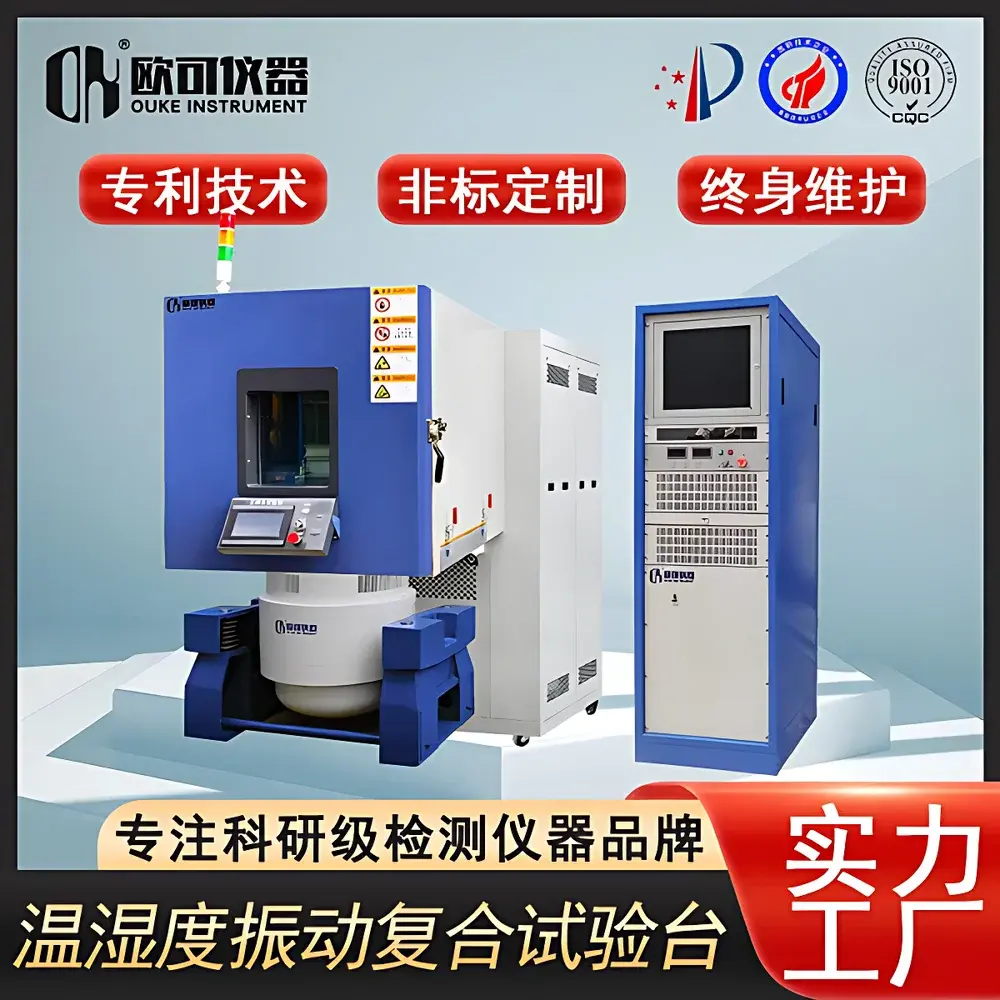
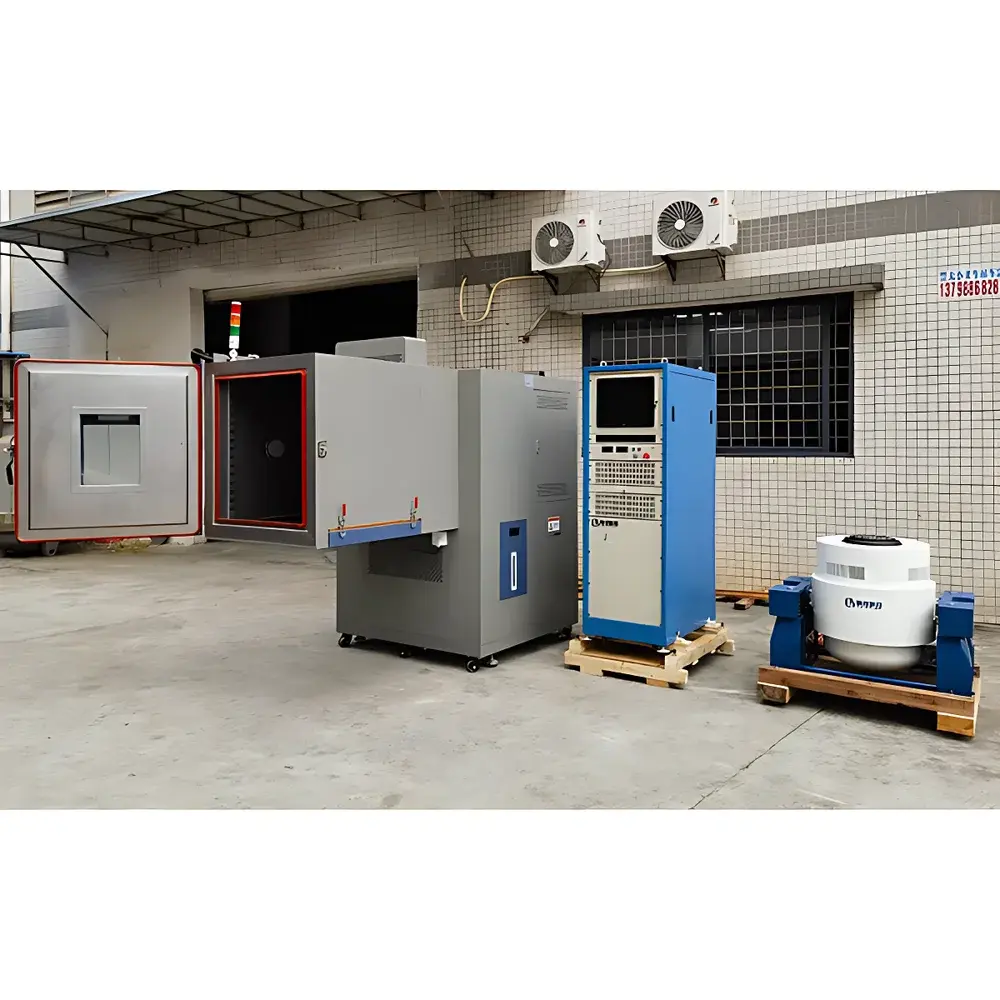
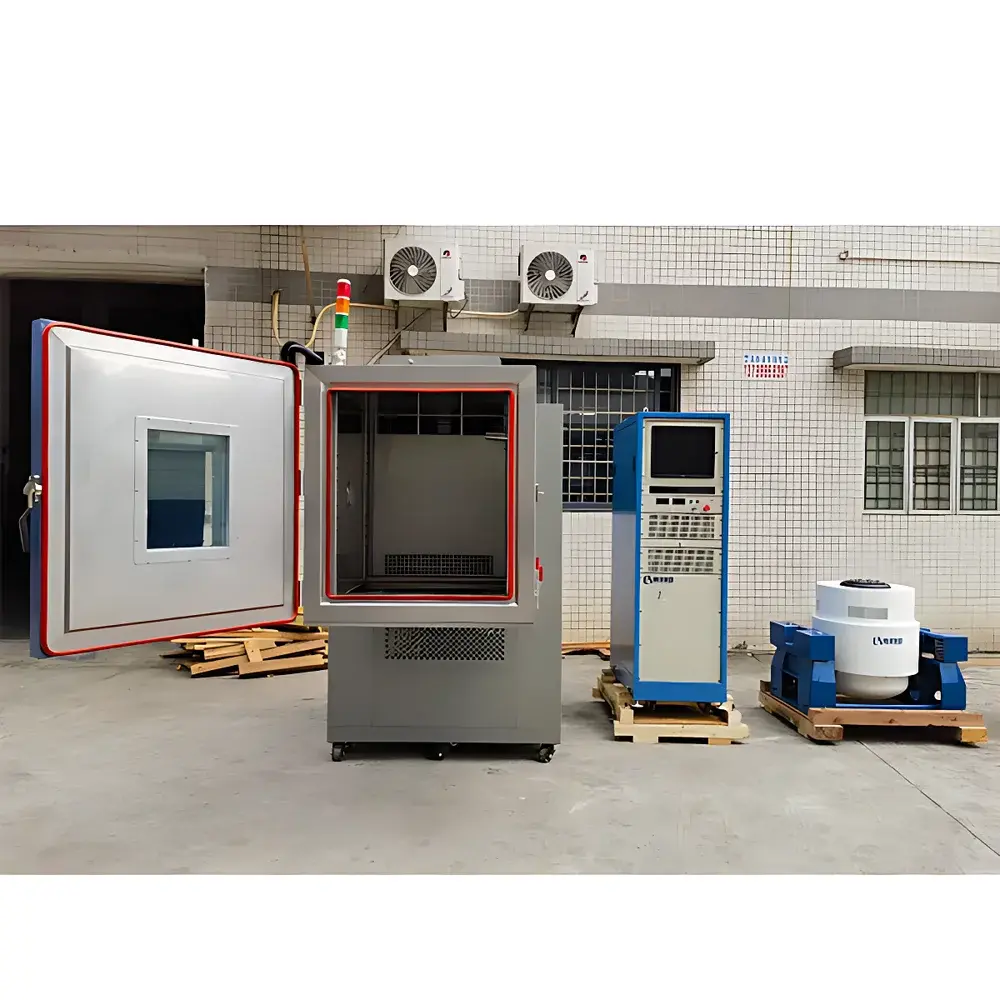
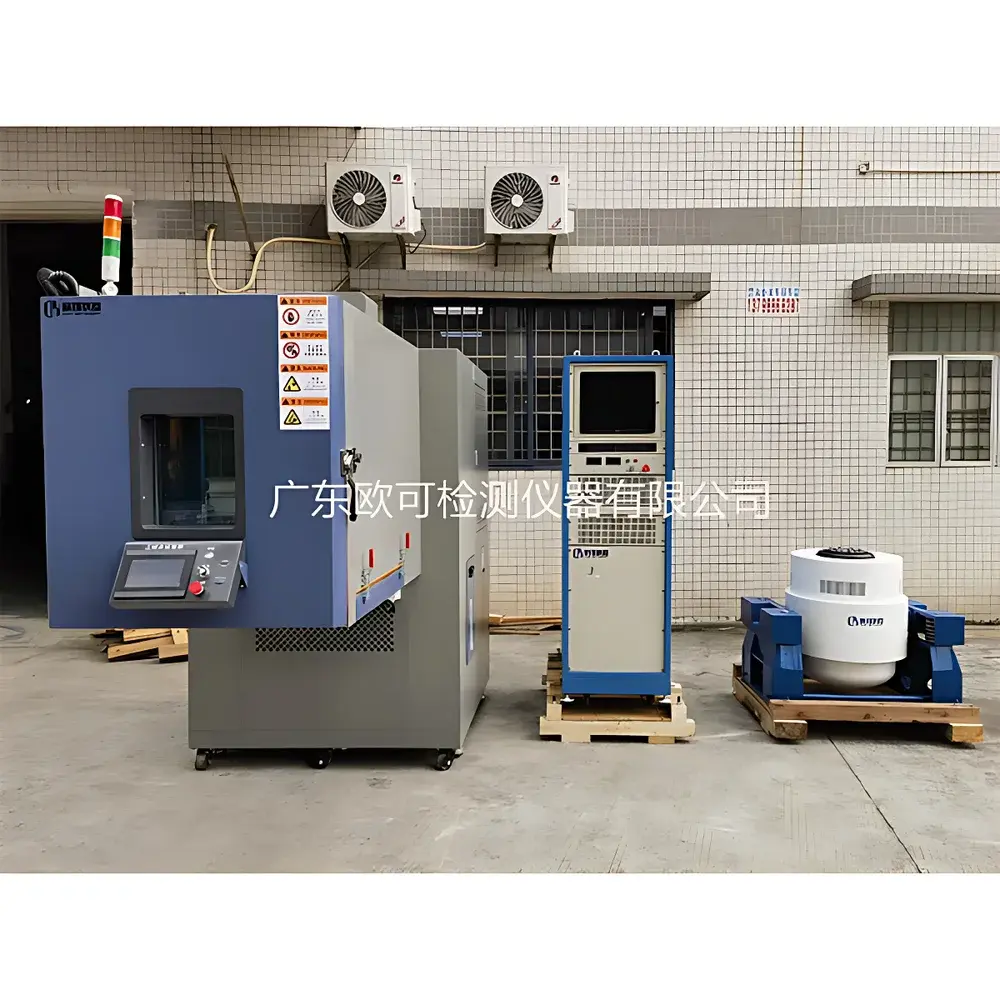
OK Instruments OK-ZTH-1000.162 Combined Temperature-Humidity-Vibration Environmental Test Chamber
| Brand | OK Instruments |
|---|---|
| Origin | Guangdong, China |
| Manufacturer Type | Direct Manufacturer |
| Product Origin | Domestic (China) |
| Model | OK-ZTH-1000.162 |
| Temperature Range | −70 °C to +150 °C |
| Humidity Range | 20–98 %RH at 20–85 °C |
| Temperature Ramp Rate | 5 / 10 / 15 °C/min |
| Temperature Uniformity | ≤ ±0.5 °C |
| Standard Load Capacity | 15 kg aluminum mass, 350 W internal heat dissipation |
Overview
The OK Instruments OK-ZTH-1000.162 Combined Temperature-Humidity-Vibration Environmental Test Chamber is an integrated reliability validation platform engineered for simultaneous multi-stress environmental simulation. It operates on the principle of coupled physical stress application—precisely coordinating thermal cycling, humidity conditioning, and controlled mechanical vibration within a single, sealed test volume. This architecture enables accelerated life testing (ALT), highly accelerated life testing (HALT), and highly accelerated stress screening (HASS) in accordance with industry-standard reliability engineering methodologies. Unlike sequential or single-stress chambers, the OK-ZTH-1000.162 replicates real-world operational complexity where thermal expansion/contraction, moisture-induced swelling or corrosion, and dynamic mechanical loading interact synergistically—exposing latent defects such as solder joint fatigue, connector fretting, delamination in composite assemblies, and microcrack propagation that remain undetected under isolated stress conditions.
Key Features
- Triple-axis integrated control architecture supporting concurrent programming of temperature, relative humidity, and vibration profiles via synchronized real-time controllers.
- Hermetically sealed climate chamber with vacuum-insulated double-wall construction, stainless steel interior, and high-efficiency steam-based humidification system (boiler-type) paired with refrigerative dehumidification.
- Electrodynamic shaker system with broadband frequency response (5 Hz – 2000 Hz), integrated through a low-conductivity, high-rigidity extension shaft penetrating the chamber base—designed to minimize thermal leakage while preserving vibration fidelity (transmissibility >92% at 1 kHz).
- Thermally decoupled test table mounted on active isolation mounts, enabling effective vibration transmission while limiting conductive heat transfer from the shaker to the chamber environment.
- High-precision PID-based climate control with ≤ ±0.5 °C temperature uniformity across the working volume and humidity control accuracy of ±2 %RH within the 20–98 %RH range.
- Configurable ramp rates (5 / 10 / 15 °C/min) supported by dual-stage refrigeration (cascade compressor system) and rapid-response resistive heating elements.
- Comprehensive safety subsystem including over-temperature/over-humidity cutoffs, shaker over-acceleration protection, emergency stop interlocks, ground-fault circuit interruption (GFCI), and redundant sensor monitoring (Pt100 RTDs, capacitive RH sensors, IEPE accelerometers).
Sample Compatibility & Compliance
The OK-ZTH-1000.162 accommodates standard test specimens up to 15 kg mass and 350 W internal power dissipation—suitable for automotive ECUs, avionics line-replaceable units (LRUs), PCB assemblies, battery modules, and embedded sensor systems. Its physical and control architecture complies with critical international test standards, including IEC 60068-2-1 (cold), IEC 60068-2-2 (dry heat), IEC 60068-2-30 (damp heat cyclic), ISO 16750-4 (road vehicles—environmental conditions), MIL-STD-810H Method 514.8 (vibration), and MIL-STD-810H Method 502.7 (temperature). The system supports full audit trail logging required under GLP and GMP frameworks, with optional FDA 21 CFR Part 11-compliant software configuration available upon request.
Software & Data Management
Control and data acquisition are managed via OK Instruments’ proprietary ETS-Link™ software suite, running on a dedicated industrial PC with deterministic real-time OS. The interface supports graphical profile editing (time-based, event-triggered, and conditional logic), live multi-parameter visualization (temperature, RH, acceleration PSD, displacement), and synchronized high-speed data streaming at up to 50 kHz per channel. All test logs—including setpoints, actual values, alarm events, and controller status—are timestamped, digitally signed, and exportable in CSV, MATLAB (.mat), and ASAM MDF 4.1 formats. Built-in data integrity features include cyclic redundancy checks (CRC), automatic backup to network-attached storage (NAS), and configurable user access levels (operator, engineer, administrator) with password-protected parameter modification rights.
Applications
- Automotive Electronics: Validation of ADAS sensors, infotainment head units, and battery management systems under combined thermal shock, humidity ingress, and road-simulated random vibration.
- Aerospace & Defense: Qualification of flight-critical components per RTCA DO-160 Section 21 (vibration) and Section 16 (temperature/humidity), including airborne communication transceivers and inertial measurement units (IMUs).
- Consumer Electronics: HALT of smartphones, wearables, and IoT gateways to identify design margin limits and early-life failure modes.
- Energy Systems: Reliability assessment of photovoltaic inverters, EV charging modules, and smart grid controllers subjected to desert-to-coastal environmental transitions with mechanical agitation.
- Railway Signaling: Compliance testing per EN 50125-3 and EN 50155 for onboard control electronics exposed to wide ambient swings and track-induced harmonic vibration.
FAQ
What is the maximum allowable specimen size for the OK-ZTH-1000.162?
The internal chamber dimensions support test specimens up to 1000 mm (W) × 1000 mm (D) × 1000 mm (H); however, usable space is reduced by thermal guard bands and vibration coupling constraints—recommended maximum footprint is 800 mm × 800 mm on the test table.
Can the system perform independent humidity-only or vibration-only tests?
Yes. The control architecture allows standalone operation of any single stress domain (temperature, humidity, or vibration) or any two-domain combination (e.g., temp-humidity without vibration), fully programmable via the ETS-Link™ interface.
Is third-party calibration certification included with delivery?
A NIST-traceable factory calibration report covering temperature, humidity, and accelerometer sensitivity is provided. Optional UKAS or DAkkS-accredited on-site calibration can be arranged prior to commissioning.
How is vibration energy transmitted through the chamber floor without compromising thermal integrity?
The extension shaft employs a multi-layer thermal break design using low-conductivity ceramic composites and vacuum-gap insulation, achieving 2.5×10⁶ N·m/rad.
Does the system support remote monitoring and alarm notification?
Yes. Ethernet-based SNMP and Modbus TCP interfaces enable integration into facility SCADA systems; email/SMS alerts for critical alarms (e.g., chamber door open, coolant loss, shaker fault) are configurable via SMTP server settings.



