
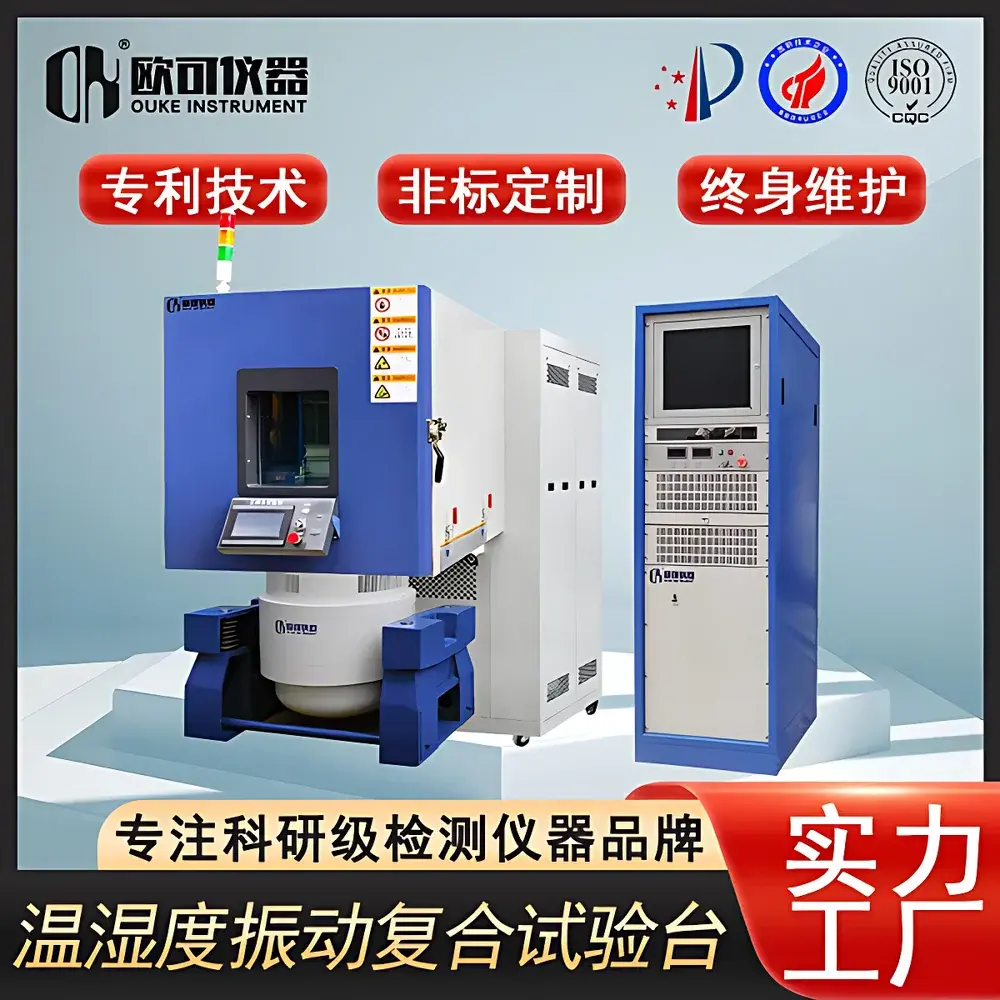
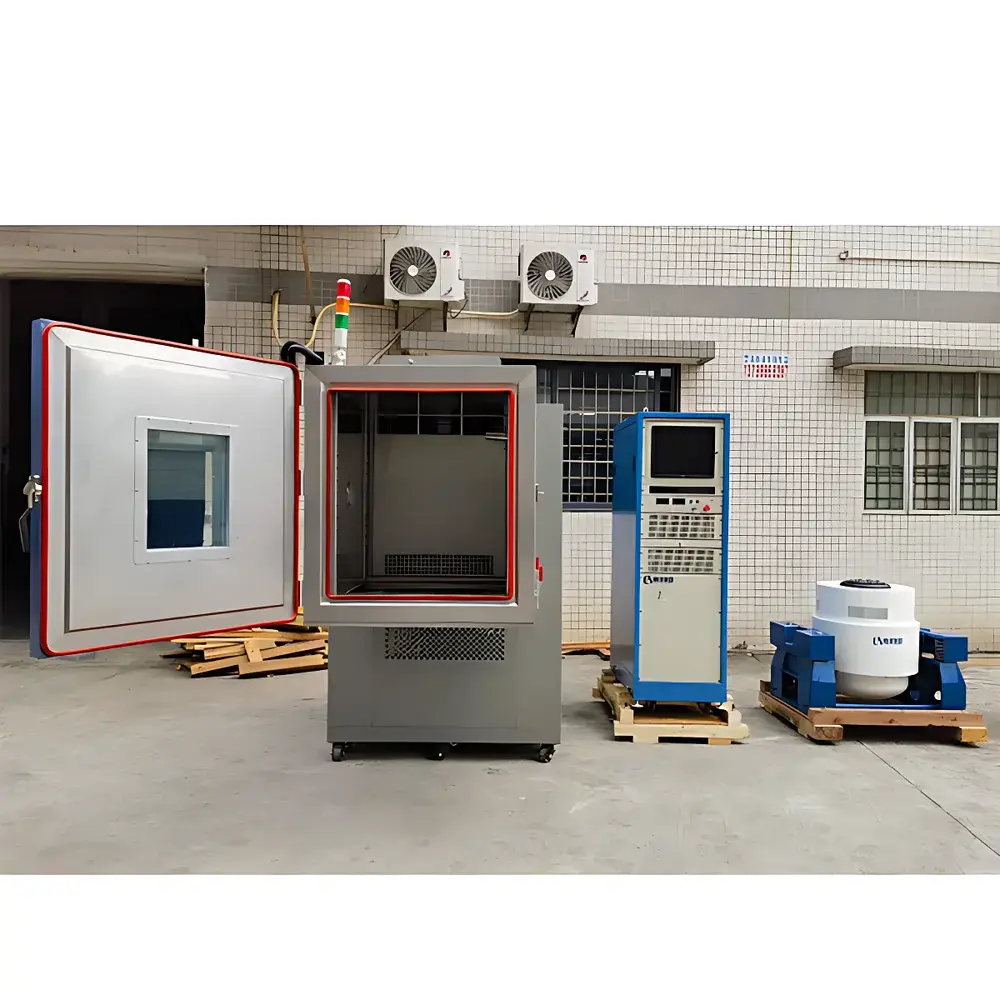
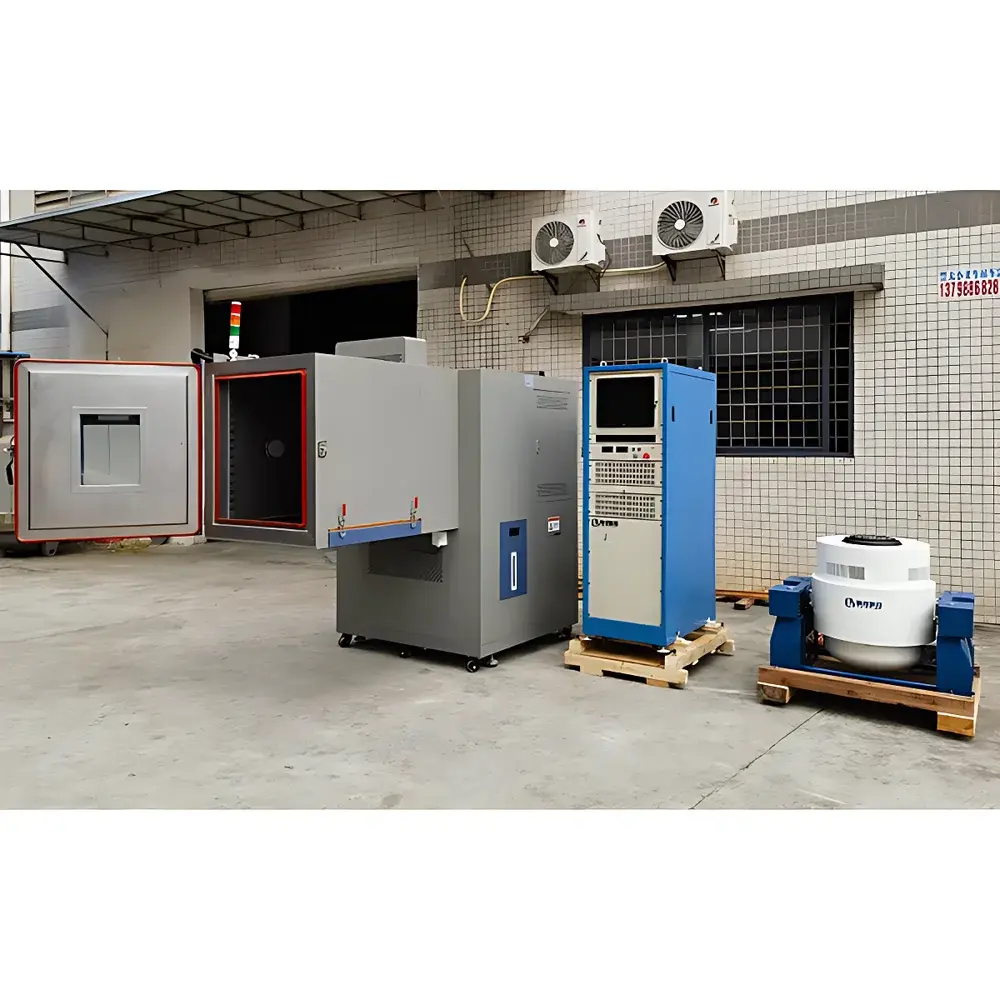
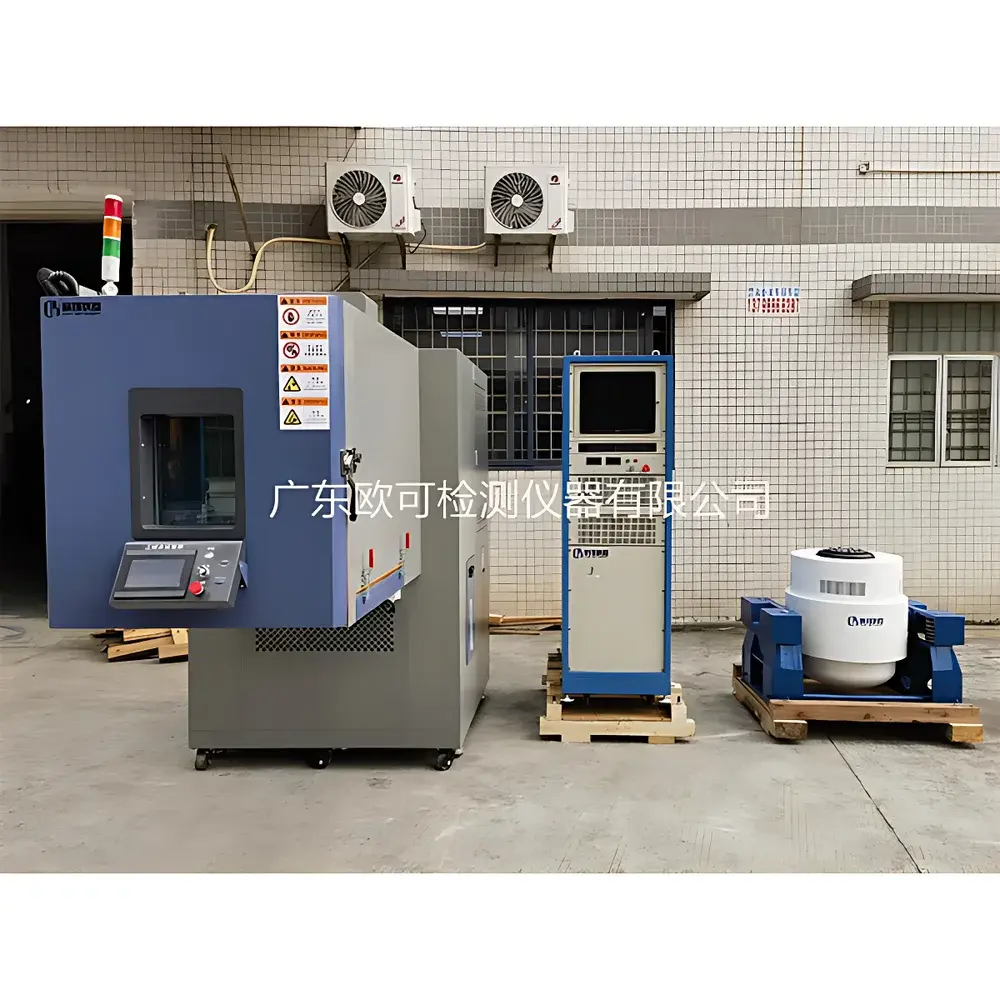
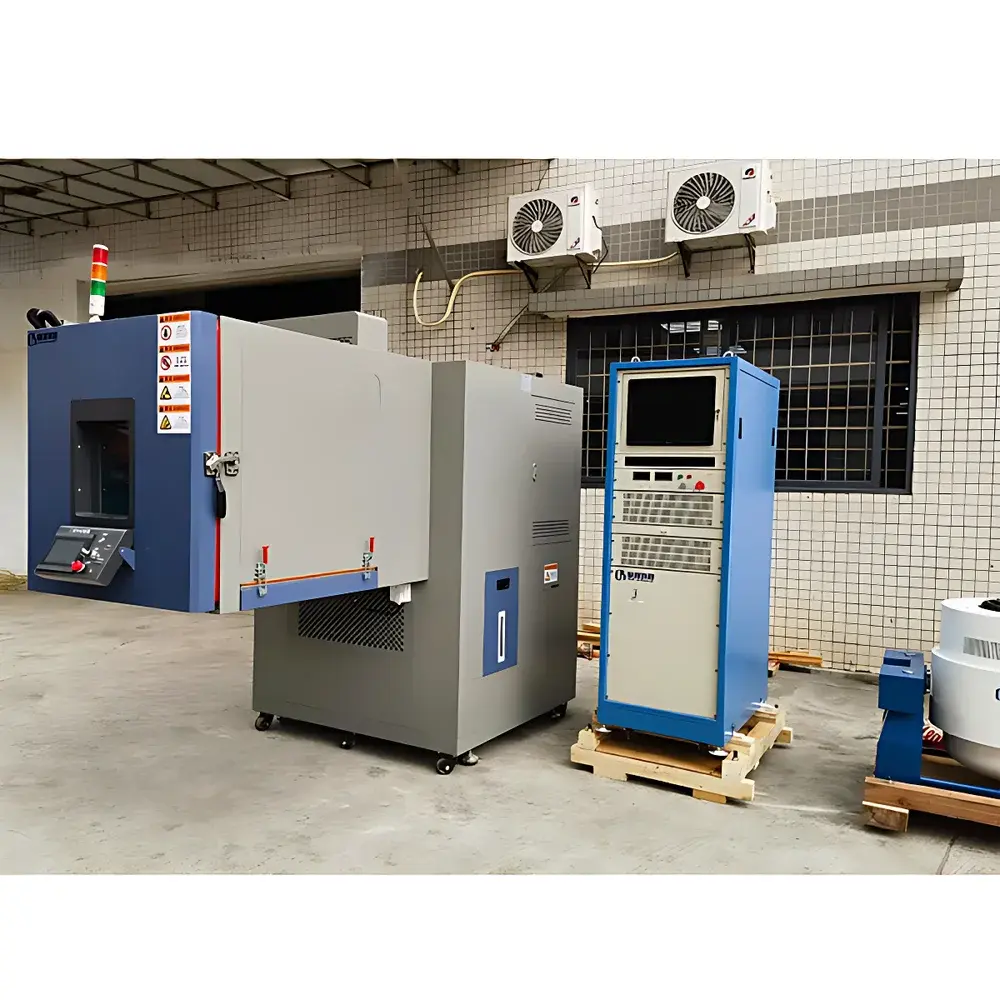
OK Instruments OK-ZTH-1000.28 Combined Temperature, Humidity and Vibration Environmental Test Chamber
| Brand | OK Instruments |
|---|---|
| Origin | Guangdong, China |
| Manufacturer Type | Direct Manufacturer |
| Product Origin | Domestic (China) |
| Model | OK-ZTH-1000.28 |
| Temperature Range | −70 °C to +150 °C |
| Humidity Range | 20–98 %RH at 20–85 °C |
| Temperature Ramp Rate | 5 / 10 / 15 °C/min |
| Temperature Uniformity | ≤ ±0.5 °C |
| Standard Load Capacity | 15 kg aluminum mass block |
Overview
The OK Instruments OK-ZTH-1000.28 Combined Temperature, Humidity and Vibration Environmental Test Chamber is an integrated reliability testing system engineered for simultaneous application of thermal, hygric, and mechanical stress stimuli. It operates on the principle of multi-stress acceleration—leveraging synergistic interactions between temperature cycling, controlled relative humidity, and programmable electrodynamic vibration—to replicate real-world operational, transportation, and storage environments. Unlike sequential or single-stress test methods, this triaxial environmental chamber enables concurrent exposure, facilitating detection of latent failure mechanisms such as thermally induced microcrack propagation under vibrational fatigue, moisture-assisted interfacial delamination in PCB assemblies, or condensation-driven corrosion exacerbated by resonant structural oscillation. Designed for compliance with international environmental simulation standards—including ISO 16750-4 (road vehicles), IEC 60068-2 (environmental testing), and MIL-STD-810H Method 520.5 (combined environments)—the system serves as a foundational tool in accelerated life testing (ALT), HALT/HASS protocols, and qualification validation for high-integrity systems.
Key Features
- Triple-stress integration architecture: Fully synchronized control of temperature, humidity, and vibration within a single test volume—no external coupling interfaces required.
- High-fidelity thermal subsystem: Dual-stage cascade refrigeration system achieving −70 °C minimum operating temperature; PID-controlled resistive heating enabling precise ramp rates up to 15 °C/min with ≤ ±0.5 °C chamber uniformity (measured per IEC 60068-3-5).
- Humidity control via steam injection and refrigerative dehumidification: Maintains stable 20–98 %RH across 20–85 °C operating range, with humidity stability ≤ ±2 %RH (1σ, steady-state).
- Integrated electrodynamic shaker: Mounted beneath the test chamber floor with rigid kinematic coupling; supports programmable sine, random, shock, and transient vibration profiles (5–2000 Hz bandwidth; 100 g peak acceleration capability).
- Real-time synchronization engine: Enables phase-aligned stress sequencing—e.g., superimposing a 20 g random vibration spectrum during −40 °C soak, followed by linear ramp to +85 °C while maintaining 85 %RH.
- Robust safety architecture: Hardware-level interlocks prevent vibration activation outside defined thermal/humidity windows; overtemperature, overhumidity, and shaker fault monitoring trigger immediate shutdown and event logging.
Sample Compatibility & Compliance
The OK-ZTH-1000.28 accommodates test specimens up to 15 kg mass with thermal dissipation ≤350 W, supported by standardized aluminum load blocks for thermal mass calibration. Internal chamber dimensions (W × D × H) are optimized for automotive ECUs, aerospace avionics modules, battery management systems (BMS), and industrial power converters. The system meets essential requirements for GLP-compliant test execution: audit-trail-enabled operation logs, user-access-controlled parameter locking, and timestamped calibration records traceable to NIST-traceable references. It supports full traceability per ISO/IEC 17025:2017 and aligns with FDA 21 CFR Part 11 data integrity principles when operated with optional electronic signature modules. Compliance documentation includes test reports conforming to IEC 60068-2-1 (cold), -2 (dry heat), -30 (damp heat cyclic), and -64 (combined temperature/humidity/vibration).
Software & Data Management
Equipped with OK-TestSuite™ v4.2 control software, the system provides intuitive graphical programming of complex multi-axis test profiles using drag-and-drop sequence editors and spectral definition wizards. All test parameters—including chamber setpoints, vibration PSDs, and time-history waveforms—are stored in encrypted SQLite databases with SHA-256 hashing for tamper evidence. Raw sensor data (chamber air temperature, chamber wall temperature, humidity sensor output, accelerometer voltage, shaker armature position) is sampled at ≥1 kHz and archived in HDF5 format for post-test analysis in MATLAB, Python (SciPy), or commercial CAE tools. Optional API integration enables direct linkage to PLM platforms (e.g., Siemens Teamcenter) and MES systems for automated test initiation and result ingestion. Calibration certificates and maintenance logs are embedded in the software’s asset management module, supporting ISO 9001:2015 clause 7.1.5 traceability requirements.
Applications
- Automotive electronics: Validation of ADAS sensors, infotainment head units, and 48V DC-DC converters under combined thermal shock and road-spectrum vibration per ISO 16750-4 Annex D.
- Aerospace components: Testing of flight-critical actuators and satellite payload electronics under rapid thermal transients (−55 °C ↔ +125 °C in <10 min) coupled with broadband random vibration (0.04 g²/Hz, 20–2000 Hz).
- Energy infrastructure: Qualification of photovoltaic inverters and wind turbine pitch controllers exposed to coastal humidity (95 %RH) and low-frequency tower sway (1–5 Hz, ±5 mm displacement).
- Railway signaling systems: Endurance evaluation of trackside ERTMS units subjected to diurnal temperature cycles (−25 °C ↔ +70 °C) and rail-induced harmonic vibration (12.5 Hz, 3 g RMS).
- Medical device packaging: Accelerated aging of sterile barrier systems under 60 °C/95 %RH with 50 Hz sinusoidal vibration to assess seal integrity degradation.
FAQ
What standards does the OK-ZTH-1000.28 support out-of-the-box?
The system includes preloaded test templates for IEC 60068-2-1, -2, -30, -64; ISO 16750-4; and MIL-STD-810H Methods 502.6, 507.6, and 520.5.
Can the vibration table operate independently of the environmental chamber?
Yes—the shaker subsystem can be decoupled and used as a standalone electrodynamic vibration test system with full waveform generation and closed-loop control capabilities.
Is remote monitoring and control available?
Standard Ethernet (TCP/IP) and optional 4G/LTE connectivity enable secure web-based supervision, alarm notification via SMTP/SMS, and real-time dashboard visualization through OK-CloudLink™ portal.
What maintenance intervals are recommended for long-term reliability?
Compressor oil and refrigerant checks every 12 months; shaker armature coil impedance verification every 6 months; humidity sensor recalibration annually—full preventive maintenance schedule provided in the OEM service manual.
Does the system support third-party data acquisition hardware?
Yes—via IEEE 1588 PTP time synchronization and analog/digital I/O expansion ports compliant with NI PXI and Beckhoff EtherCAT ecosystems.



