
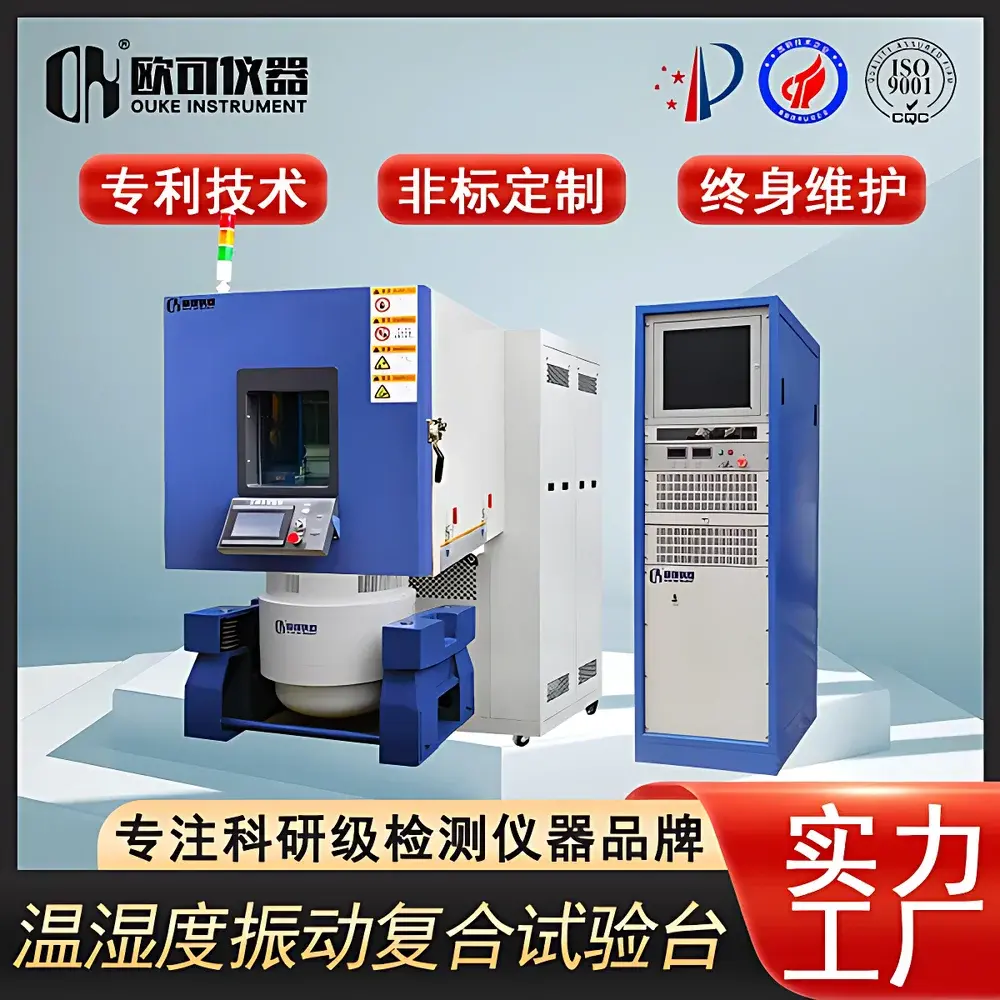
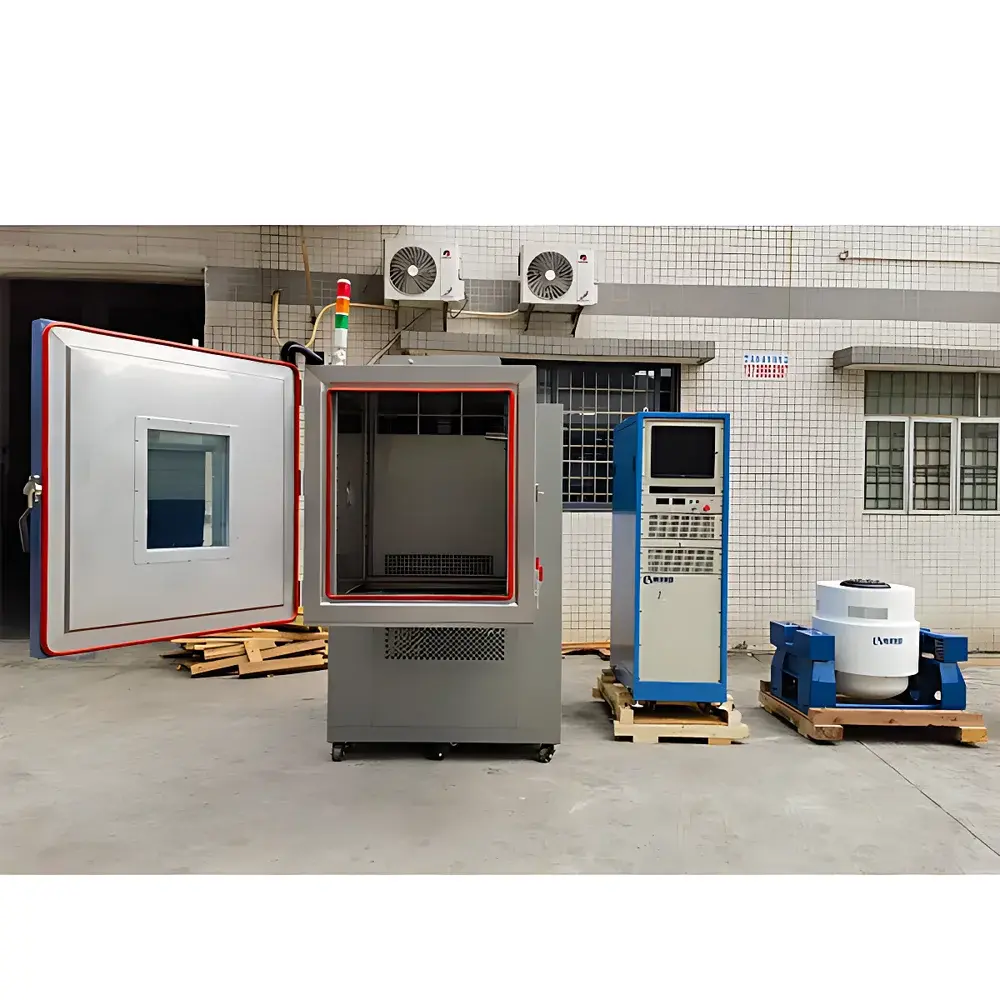
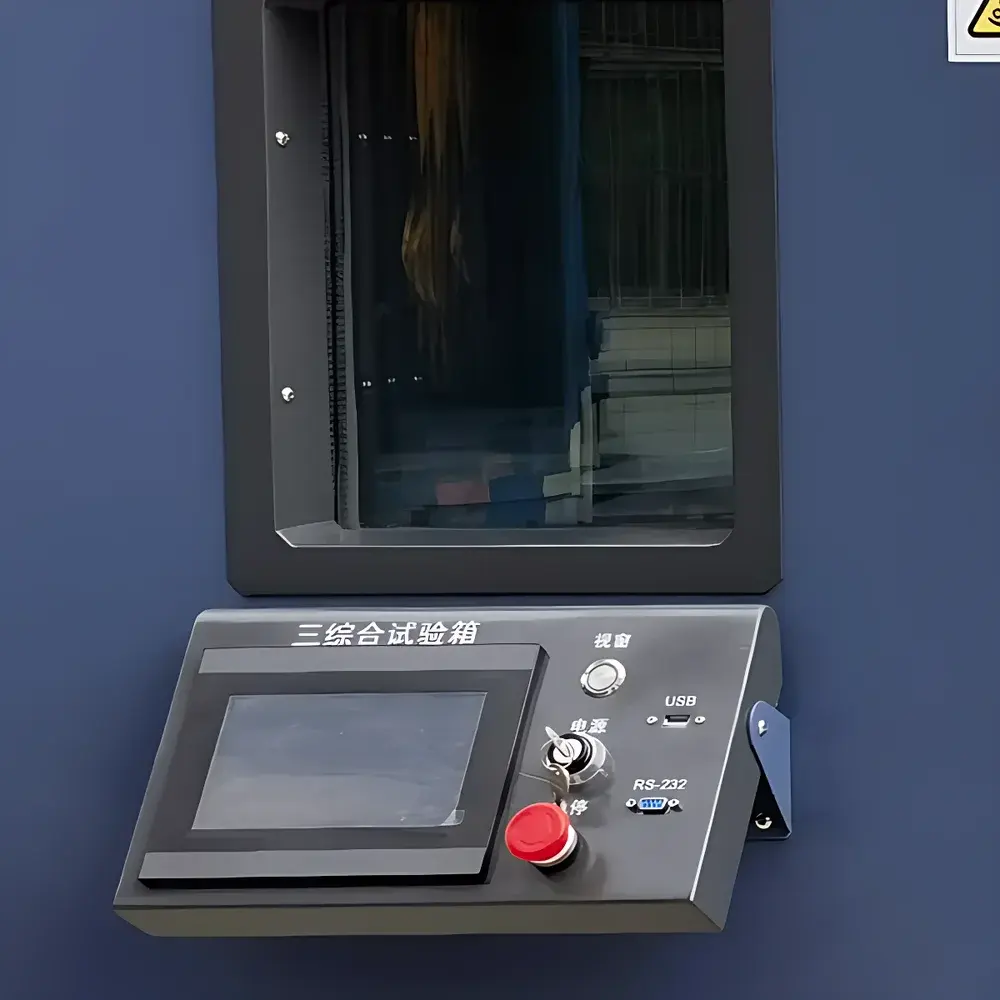
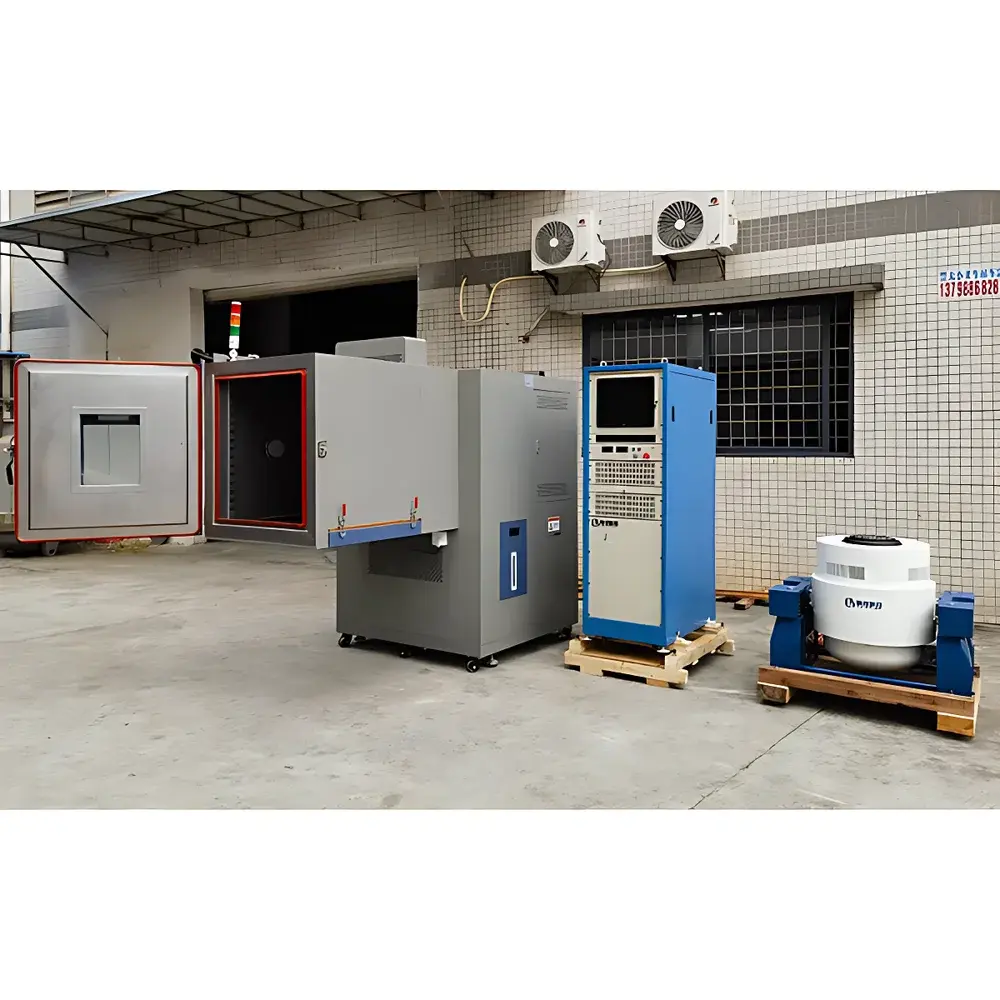
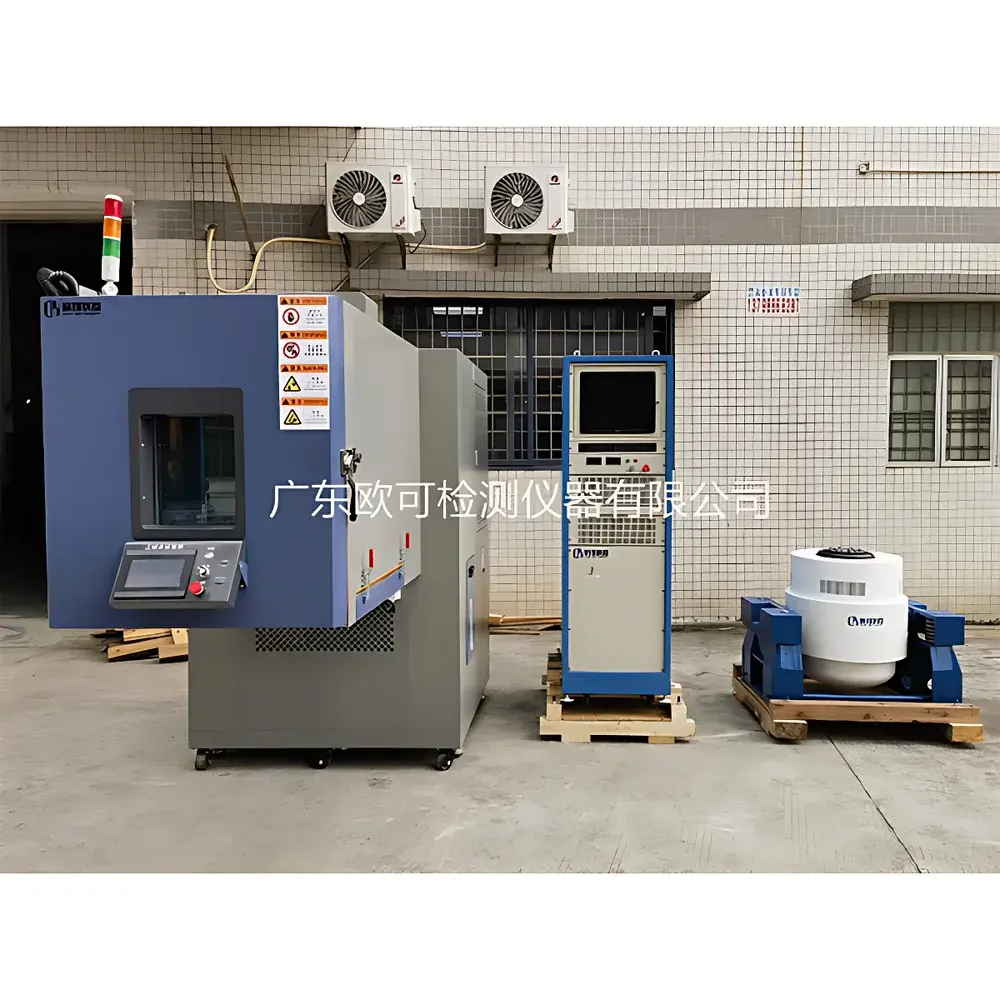
OK Instruments OK-ZTH-1445 Combined Temperature-Humidity-Vibration Test System
| Brand | OK Instruments |
|---|---|
| Origin | Guangdong, China |
| Manufacturer Type | Direct Manufacturer |
| Product Origin | Domestic (China) |
| Model | OK-ZTH-1445 |
| Price | USD 21,000 (FOB Guangdong) |
| Temperature Range | −70 °C to +150 °C |
| Humidity Range | 20–98 %RH at 20–85 °C |
| Temperature Ramp Rate | 5 / 10 / 15 °C/min (selectable) |
| Temperature Uniformity | ≤ ±0.5 °C |
| Standard Load Capacity | 15 kg aluminum mass block |
Overview
The OK Instruments OK-ZTH-1445 Combined Temperature-Humidity-Vibration Test System is an integrated environmental reliability test platform engineered for simultaneous application of thermal, hygric, and mechanical stress stimuli. It operates on the principle of multi-stress coupling—precisely synchronizing programmable temperature/humidity profiles with electrodynamic vibration excitation (typically via a vertically mounted shaker beneath the climatic chamber). This architecture enables true concurrent stress application, distinguishing it from sequential or single-factor testing systems. As a core instrument in environmental engineering and reliability physics, the OK-ZTH-1445 supports accelerated life testing, failure mode identification, and design validation under conditions that replicate real-world operational environments—including ground transport, aerospace mission cycles, and consumer usage scenarios. Its design adheres to foundational principles outlined in IEC 60068-2, MIL-STD-810H, and ISO 16750-4, ensuring traceable, repeatable, and auditable test execution.
Key Features
- Triple-Stress Synchronization Engine: Proprietary control architecture enables real-time coordination of temperature ramping, humidity modulation, and vibration profile execution—including random, sine, shock, and swept-sine waveforms—with sub-second timing resolution.
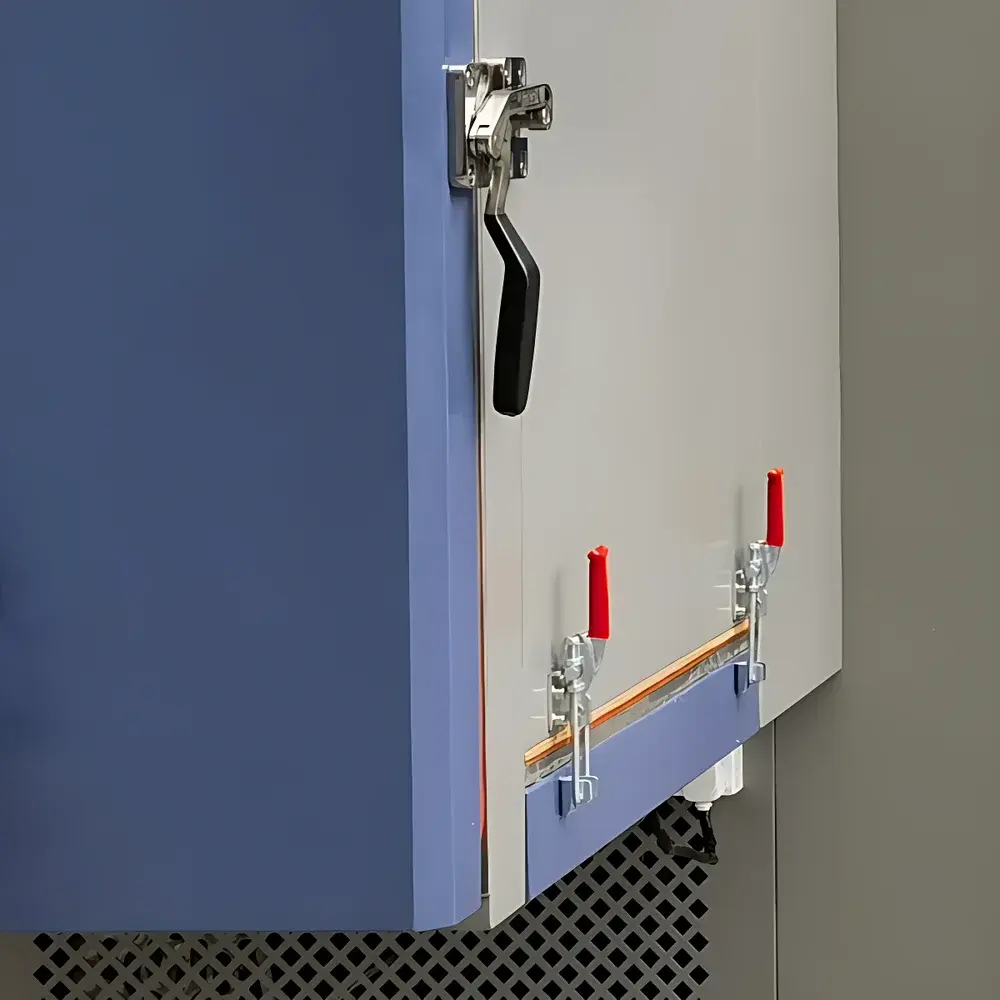
- Vibration-Optimized Chamber Construction: Reinforced stainless-steel inner chamber with fatigue-resistant structural bracing; dynamic sealing system at door interface and cable feedthroughs maintains integrity under continuous 5–2000 Hz vibration exposure.
- Thermally Decoupled Shaker Integration: Bottom-mounted electrodynamic shaker with thermally insulated mounting interface prevents heat transfer and mechanical feedback into the climatic control loop, preserving temperature stability (≤ ±0.5 °C) during vibration.
- Wide-Range Environmental Capability: Achieves −70 °C to +150 °C temperature span with selectable ramp rates (5/10/15 °C/min); delivers 20–98 %RH across 20–85 °C ambient range—validated per IEC 60068-3-5.
- Load-Adapted Thermal Management: Supports up to 15 kg aluminum test mass with 350 W internal power dissipation, featuring active condensate management and high-efficiency refrigerant recovery to sustain stable humidity setpoints during dynamic thermal transitions.
Sample Compatibility & Compliance
The OK-ZTH-1445 accommodates standard test specimens up to 600 × 600 × 600 mm (W × D × H), with optional extended platforms for larger assemblies. It supports instrumentation-ready configurations—including embedded thermocouples, strain gauges, and signal monitoring ports—enabling in situ performance assessment during test execution. The system complies with essential regulatory frameworks for environmental testing: IEC 60068-2-1 (cold), IEC 60068-2-2 (dry heat), IEC 60068-2-30 (damp heat cyclic), and ISO 16750-4 (road vehicle environmental conditions). All control firmware and data logging modules are designed to support GLP/GMP audit trails and meet FDA 21 CFR Part 11 requirements for electronic records and signatures when configured with optional validation packages.
Software & Data Management
Control and analysis are managed through OK-TestSuite v4.2—a Windows-based, multi-user software platform supporting hierarchical user access levels, test script versioning, and automated report generation (PDF/CSV/XLSX). The system records synchronized time-series data from up to 16 analog/digital channels—including chamber temperature/humidity, shaker acceleration (m/s²), displacement (mm), and user-defined external sensor inputs—at configurable sampling intervals down to 10 ms. All raw data files include embedded metadata (test ID, operator, calibration status, environmental setpoints), enabling full traceability. Optional add-ons include remote monitoring via secure HTTPS API, integration with enterprise LIMS/MES platforms via OPC UA, and automated compliance checking against predefined pass/fail thresholds aligned with ASTM D4332 or IPC-9701 standards.
Applications
- Automotive Electronics: Validation of ADAS ECUs under combined desert heat (+85 °C, 85 %RH) and road-induced broadband vibration (0.04 g²/Hz, 10–2000 Hz).
- Aerospace Avionics: Simulation of ascent/descent thermal transients (−55 °C → +70 °C in 10 min) overlaid with turbulence-spectrum random vibration per DO-160 Section 8.
- Consumer Device Reliability: Accelerated wear-in testing of smartphones subjected to body-heat-equivalent temperature (37 °C), perspiration-level humidity (70 %RH), and walking-induced sinusoidal vibration (1.5 Hz, ±0.5 g).
- Packaging Integrity Assessment: Evaluation of cold-chain logistics packaging under −25 °C storage, maritime humidity (95 %RH), and simulated truck-bed vibration (random, 0.02 g²/Hz, 5–500 Hz).
- Industrial Sensor Durability: Long-duration cycling (1000+ hr) of pressure transducers exposed to thermal cycling (−40 °C ↔ +125 °C) and resonant-frequency vibration to assess solder joint fatigue.
FAQ
What distinguishes “concurrent” from “sequential” multi-stress testing?
Concurrent operation means temperature, humidity, and vibration are applied simultaneously within a single test chamber—enabling physical coupling effects such as moisture-assisted crack propagation under thermal strain and vibrational loading. Sequential tests apply stresses one at a time, missing synergistic degradation mechanisms.
Can the OK-ZTH-1445 be validated for ISO/IEC 17025 accreditation?
Yes—when equipped with NIST-traceable calibration certificates for temperature, humidity, and acceleration sensors, and operated with documented SOPs, the system meets technical requirements for accredited laboratory use per ISO/IEC 17025:2017 Clause 6.4.
Is low-pressure (altitude) capability available as an upgrade?
The OK-ZTH-1445 is not designed for vacuum or low-pressure operation. For four-stress (temperature/humidity/vibration/pressure) simulation, OK Instruments offers the OK-ZTHP series, compliant with MIL-STD-810H Method 500.7.
How is electrical safety maintained when vibration occurs inside a humid environment?
All internal cabling uses IP67-rated connectors and silicone-insulated conductors rated for −70 °C to +150 °C; shaker coil windings employ Class H insulation and hermetically sealed driver electronics meeting IEC 60529 and UL 61010-1.
Does the system support HALT/HASS test profiles?
While optimized for environmental simulation, the OK-ZTH-1445 can execute high-acceleration random vibration and rapid thermal transitions. However, dedicated HALT systems (e.g., OK-HALT-5000) provide higher g-levels, multi-axis excitation, and proprietary defect detection algorithms not included in this model.
Related Products



