
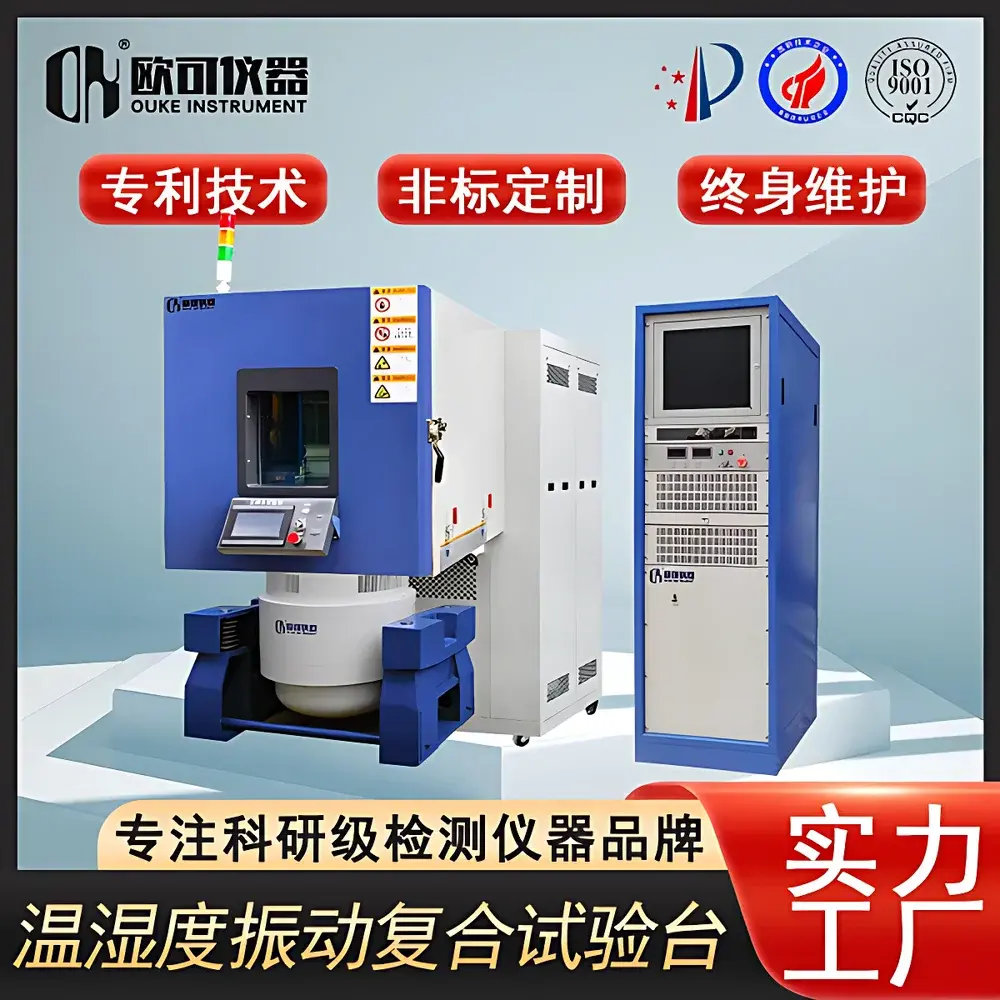
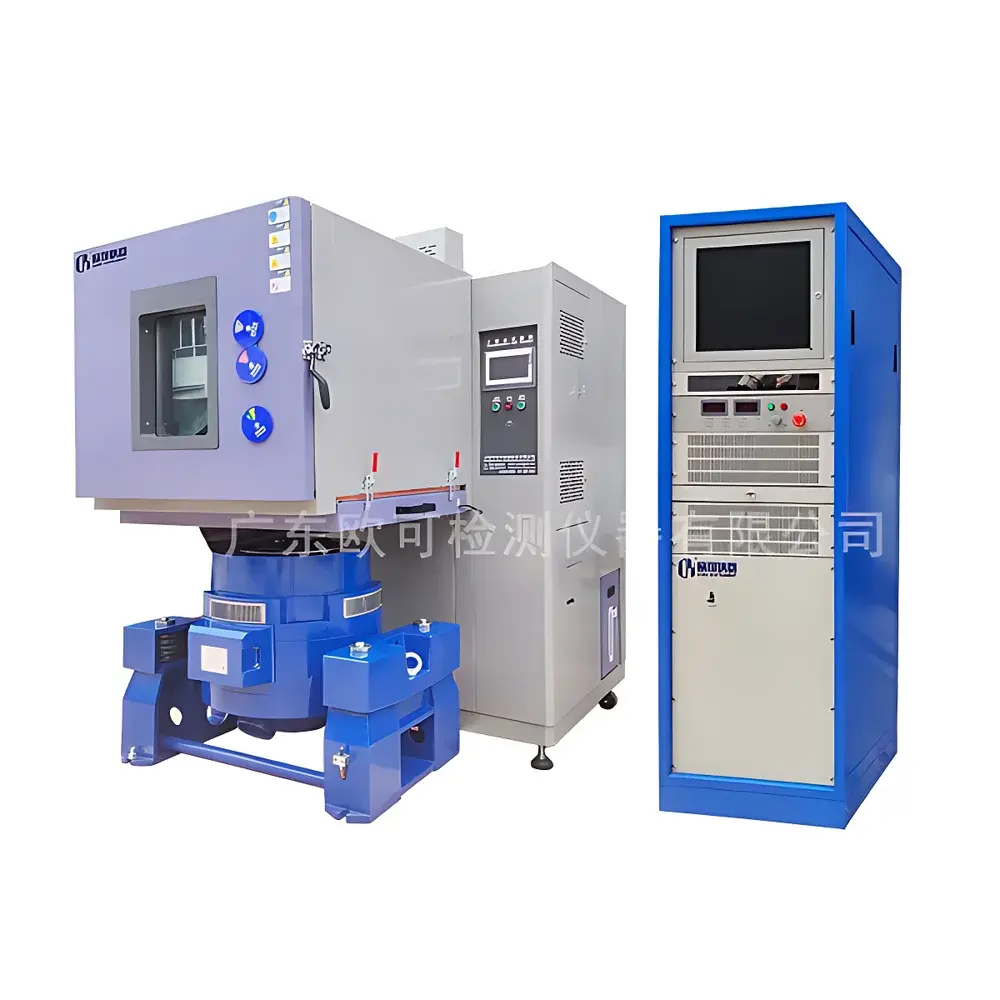
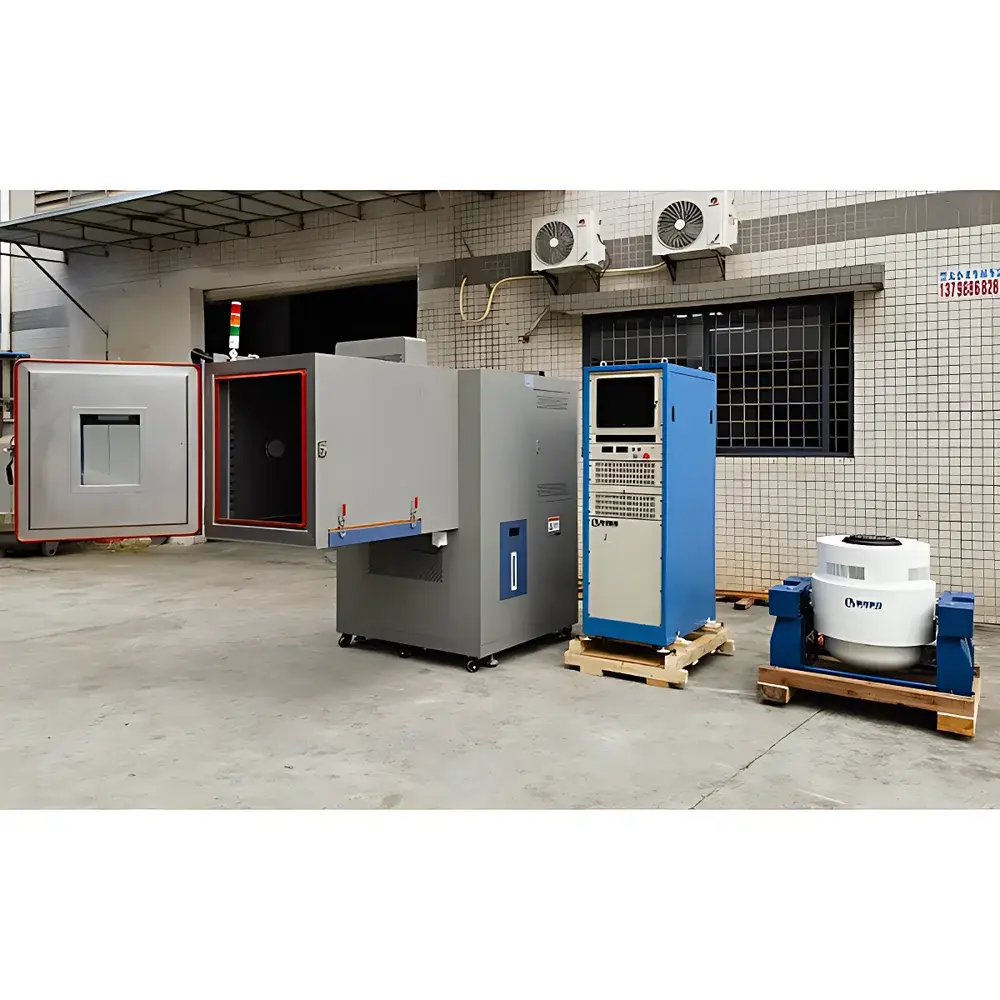
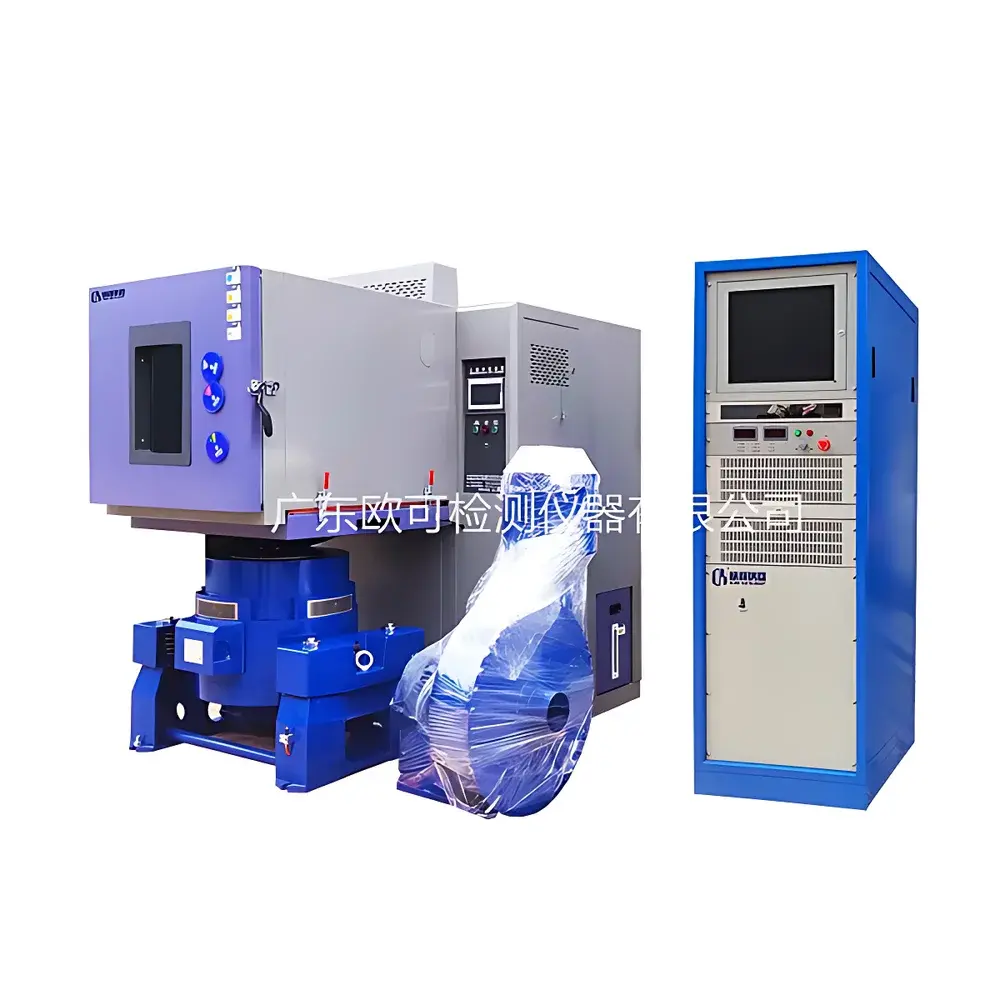
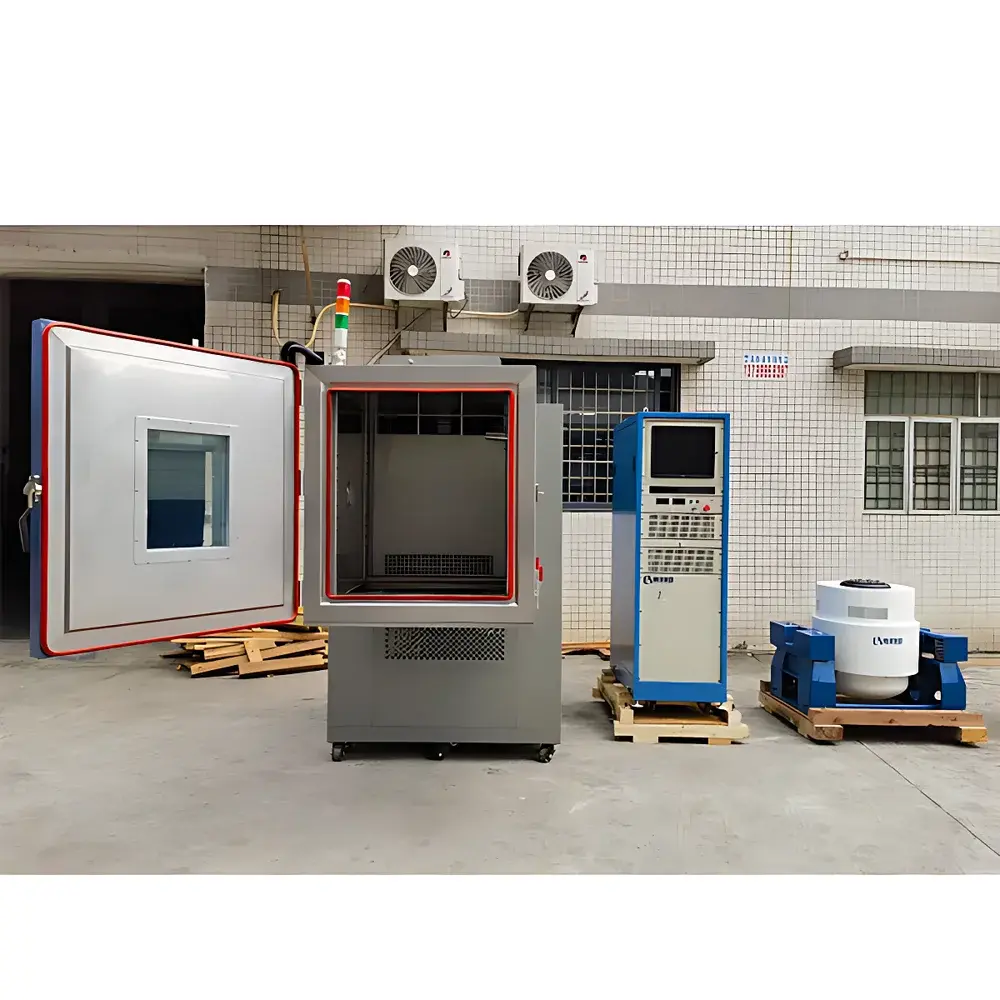
OK Instruments OK-ZTH-390.163 Combined Temperature-Humidity-Vibration Test Chamber
| Brand | OK Instruments |
|---|---|
| Origin | Guangdong, China |
| Manufacturer Type | Direct Manufacturer |
| Product Origin | Domestic (China) |
| Model | OK-ZTH-390.163 |
| Temperature Range | −70 °C to +150 °C |
| Humidity Range | 20–98 %RH at 20–85 °C |
| Temperature Ramp Rate | 5 / 10 / 15 °C/min |
| Temperature Uniformity | ≤ ±0.5 °C |
| Standard Load Capacity | 15 kg aluminum mass with 350 W internal heat dissipation |
Overview
The OK Instruments OK-ZTH-390.163 Combined Temperature-Humidity-Vibration Test Chamber is an integrated environmental simulation system engineered for high-fidelity replication of real-world multi-stress conditions encountered during product operation, transportation, and storage. Unlike sequential or single-stress testing, this chamber applies thermal, hygric, and mechanical (vibrational) stresses simultaneously—enabling detection of synergistic failure mechanisms that remain latent under isolated stress exposure. Its operational principle is grounded in accelerated reliability physics: concurrent stress application induces coupled degradation pathways—including thermomechanical fatigue, moisture-assisted interfacial delamination, vibration-induced solder joint fracture, and humidity-driven corrosion at microelectronic interfaces. Designed to meet the functional and structural integrity demands of mission-critical systems, the chamber supports test profiles compliant with MIL-STD-810 Method 527 (Multi-Excitation Vibration), IEC 60068-2-64 (Random Vibration), IEC 60068-2-30 (Damp Heat Cycling), and RTCA DO-160 Section 16 (Combined Environmental Conditions). It serves as a core platform for HALT (Highly Accelerated Life Testing), HASS (Highly Accelerated Stress Screening), and comprehensive environmental qualification per ISO/IEC 17025-accredited laboratories.
Key Features
- Simultaneous triple-stress application: precision-synchronized control of temperature (−70 °C to +150 °C), relative humidity (20–98 %RH within 20–85 °C), and electrodynamic vibration (sine, random, shock, and mixed-mode profiles)
- Structurally reinforced climatic chamber mounted directly on a high-force electrodynamic shaker—engineered with dynamic isolation mounts, vibration-damped refrigerant lines, and reinforced thermal insulation to maintain integrity under 10 gRMS acceleration
- Active thermal management architecture featuring dual-stage cascade refrigeration, PID-controlled resistive heating, and steam-based humidification with condensate recovery
- Integrated controller with deterministic real-time OS capable of executing multi-segment test profiles with sub-second synchronization between climate setpoints and vibration spectra
- Dynamic sealing system: magnetic door gasket with adaptive compression, feedthroughs rated for 10⁶ cycles under simultaneous thermal cycling and 20 Hz vibration, and hermetic cable management for signal/power continuity
- Compliance-ready data logging with audit trail, electronic signatures, and configurable reporting aligned with FDA 21 CFR Part 11 and GLP/GMP traceability requirements
Sample Compatibility & Compliance
The chamber accommodates test specimens up to 15 kg mass with internal heat dissipation up to 350 W—validated using standardized aluminum reference loads. Internal dimensions support typical automotive ECUs, EV battery modules (up to 300 mm × 200 mm × 150 mm), avionics LRUs, and PCB assemblies with edge-mounted connectors. All subsystems conform to IEC 61000-6-2 (immunity) and IEC 61000-6-4 (emission) standards. Mechanical integration follows ISO 10816-1 (vibration severity assessment) and ASTM E1496 (environmental test chamber performance verification). Calibration procedures are traceable to NIM (National Institute of Metrology, China) and support third-party validation per ISO/IEC 17025.
Software & Data Management
The proprietary OK-EnviroControl Suite provides a deterministic, Windows-based interface for profile authoring, real-time monitoring, and post-test analysis. Users define hierarchical test sequences—including ramp-hold-soak cycles, vibration spectrum overlays, and humidity dwell transitions—with programmable trigger logic (e.g., initiate random vibration upon reaching target temperature stability). Raw sensor data (acceleration, Pt100 temperature, capacitive RH) is sampled at 10 kHz and stored in HDF5 format with embedded metadata (timestamp, operator ID, calibration status). The system supports automated report generation in PDF/XLSX formats, including statistical summaries (min/max/mean/stdev), pass/fail flagging against user-defined limits, and deviation alerts. Audit logs record all parameter changes, user logins, and system events with SHA-256 hashing for integrity verification—fully compliant with FDA 21 CFR Part 11 Subpart B requirements for electronic records and signatures.
Applications
- Automotive: Validation of ADAS sensors, powertrain ECUs, battery thermal management systems, and lighting modules under combined road vibration, under-hood thermal transients, and coastal humidity exposure
- Aerospace & Defense: Qualification of flight-critical avionics, satellite payload electronics, and missile guidance units per RTCA DO-160 and MIL-STD-810G/H
- Electronics Manufacturing: Reliability screening of high-density PCBAs, stacked-die packages, and flexible printed circuits subjected to thermo-mechanical strain and moisture ingress
- Renewable Energy: Durability assessment of solar inverter enclosures, wind turbine pitch controllers, and grid-scale energy storage systems operating across wide ambient ranges
- Rail Transportation: Certification of onboard signaling equipment, traction converters, and passenger information systems per EN 50125-3 and UIC 550 standards
FAQ
What distinguishes combined testing from sequential environmental testing?
Combined testing applies temperature, humidity, and vibration concurrently—revealing interaction-driven failure modes (e.g., thermal expansion mismatch amplifying vibration-induced microcrack propagation) that sequential tests inherently miss.
Can the chamber perform vibration-only tests without climate control?
Yes—the vibration subsystem operates independently with full spectral control, enabling standalone sine sweep, random PSD, or transient shock testing while maintaining ambient chamber conditions.
How is temperature uniformity maintained during active vibration?
A combination of optimized air circulation design, low-inertia heater placement, and real-time spatial compensation algorithms ensures ≤ ±0.5 °C uniformity across the test volume—even at maximum vibration amplitude.
Is remote monitoring and control supported?
The system includes OPC UA server functionality for secure integration into enterprise MES/QMS platforms and supports TLS-encrypted web-based supervision via standard browsers.
What maintenance intervals are recommended for long-term reliability?
Preventive maintenance is scheduled every 1,000 operational hours or annually—covering refrigerant pressure verification, shaker armature centering, humidity sensor recalibration, and safety interlock validation per manufacturer’s technical bulletin TB-ZTH-2023-01.



