
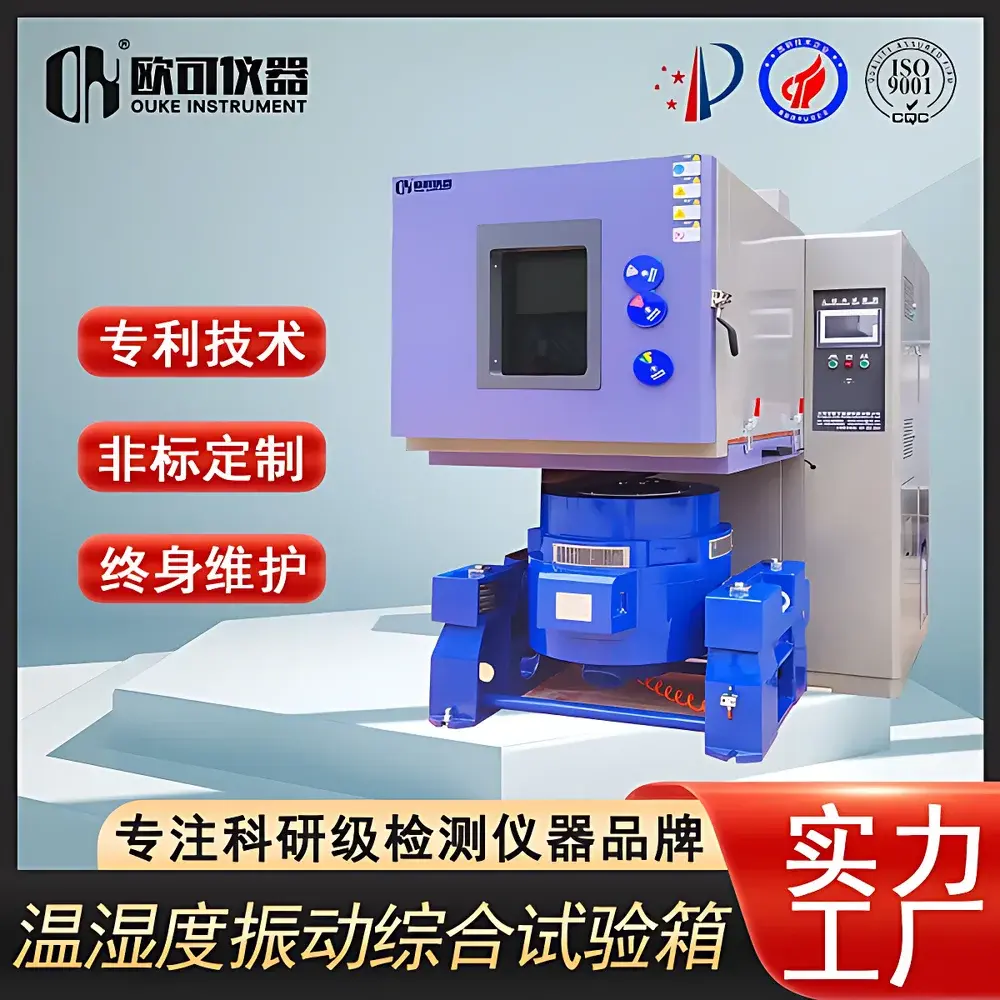
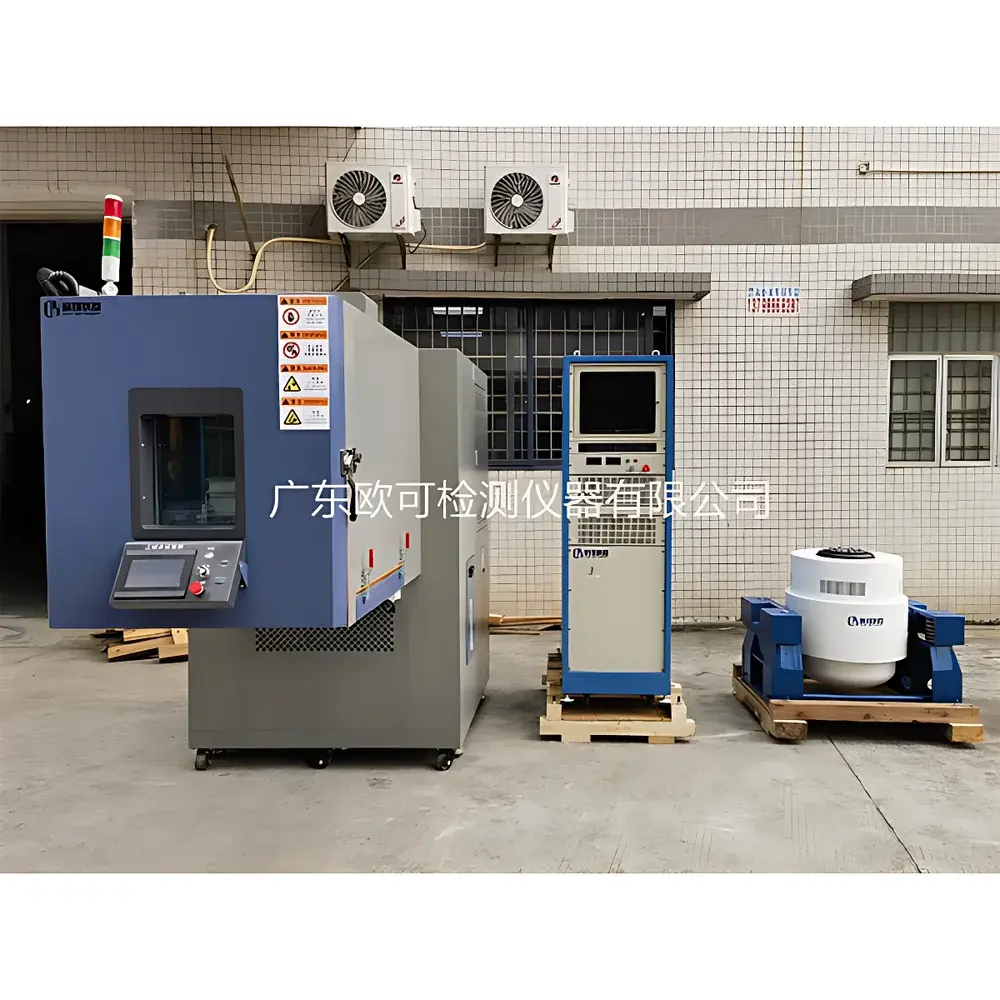
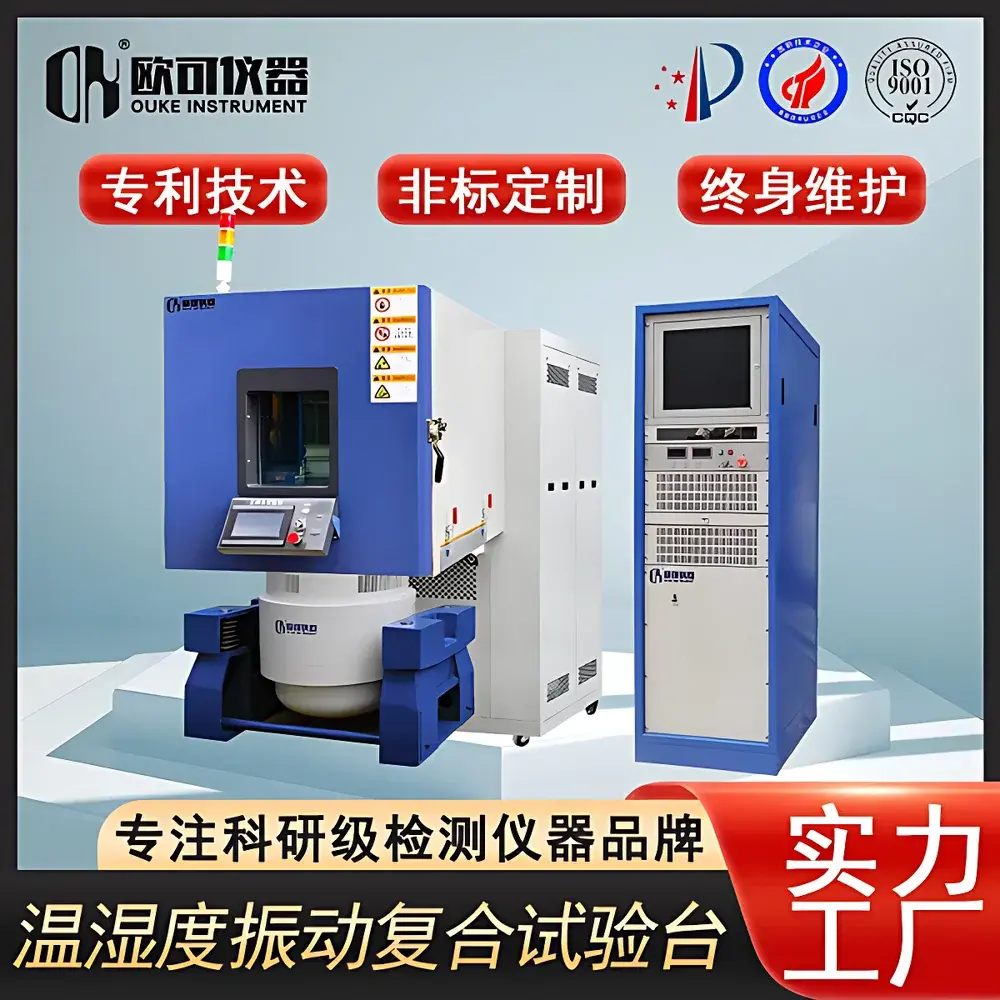
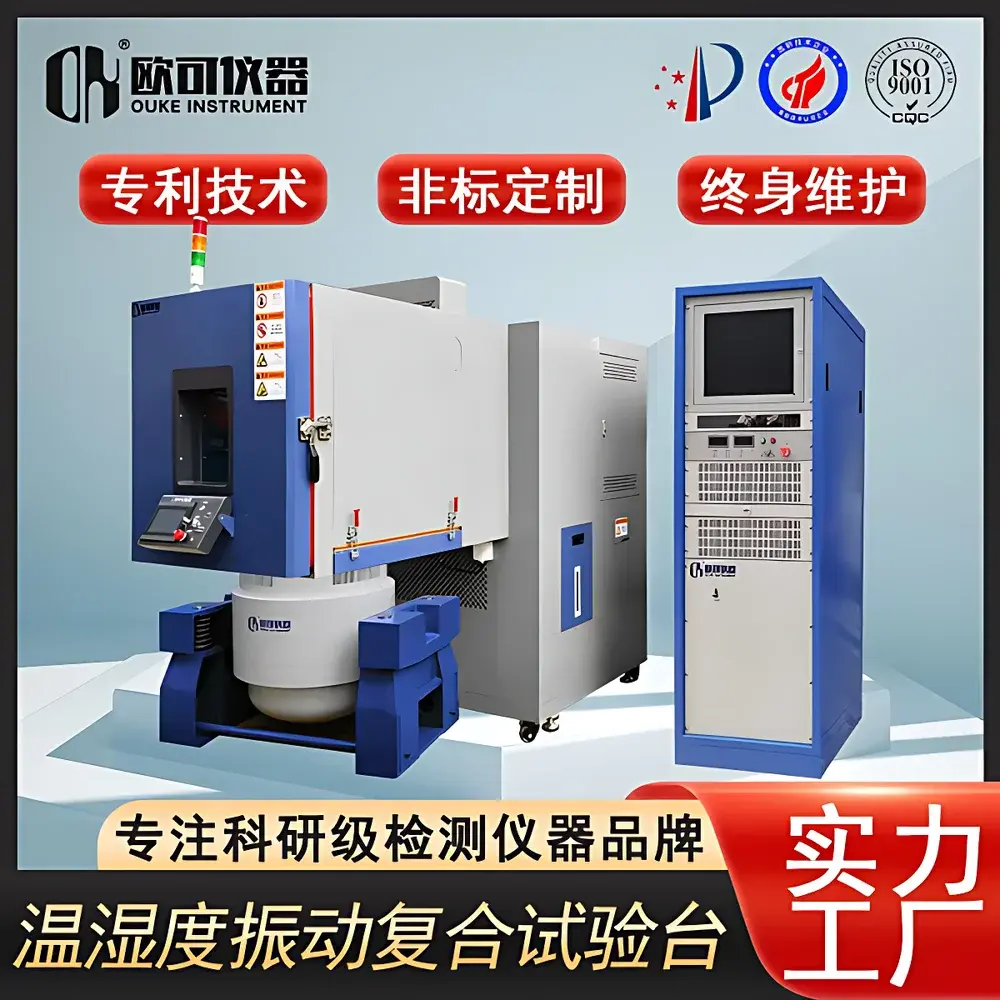
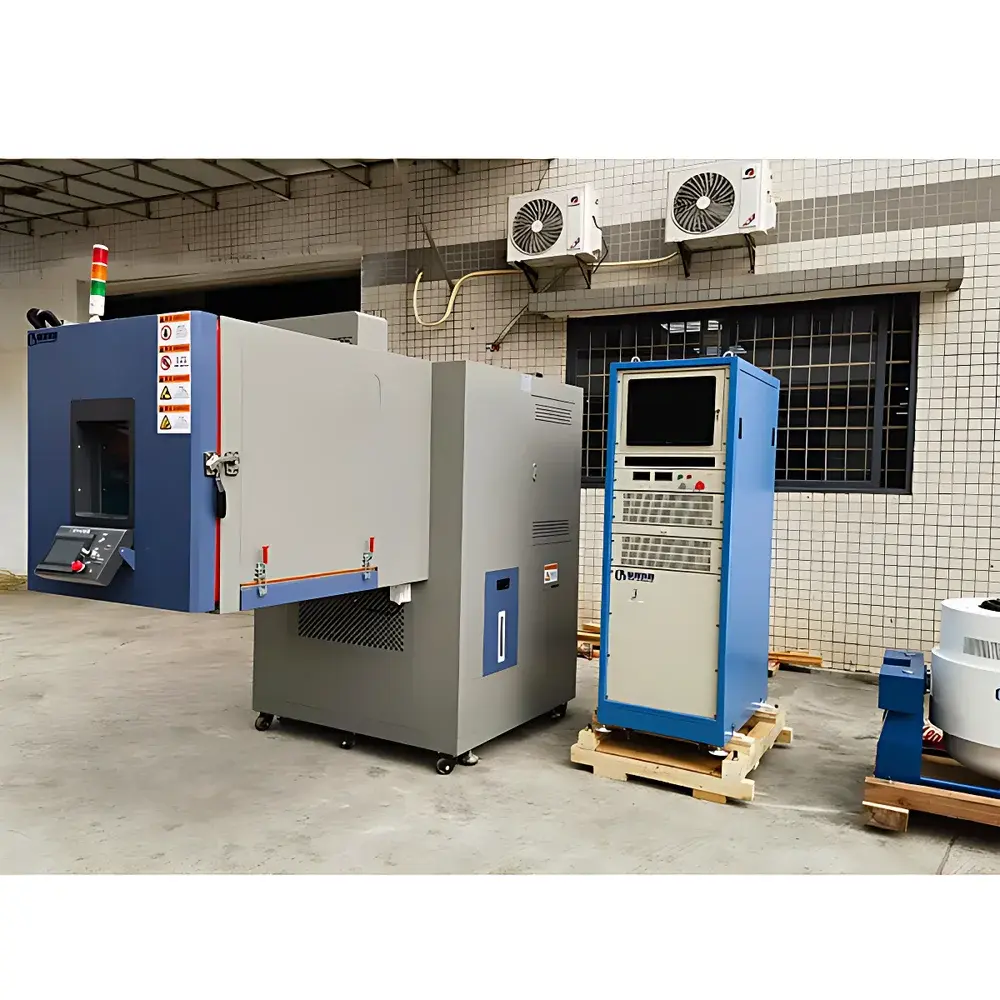
OK Instruments OK-ZTH-512.165 Combined Temperature-Humidity-Vibration Test System
| Brand | OK Instruments |
|---|---|
| Origin | Guangdong, China |
| Manufacturer Type | Direct Manufacturer |
| Product Origin | Domestic (China) |
| Model | OK-ZTH-512.165 |
| Temperature Range | −70 °C to +150 °C |
| Humidity Range | 20–98 %RH at 20–85 °C |
| Temperature Ramp Rate | 5 / 10 / 15 °C/min |
| Temperature Uniformity & Stability | ≤ ±0.5 °C |
| Standard Load Capacity | 15 kg aluminum mass block with 350 W internal heat dissipation |
Overview
The OK Instruments OK-ZTH-512.165 Combined Temperature-Humidity-Vibration Test System is an integrated environmental reliability test platform engineered for simultaneous or sequential application of thermal, hygric, and mechanical stress stimuli. It implements a true tri-stress coupling architecture—combining a precision-controlled climatic chamber with a high-fidelity electrodynamic vibration shaker and a synchronized multi-parameter control system. This configuration enables rigorous simulation of real-world operational environments where temperature cycling, moisture exposure, and dynamic mechanical loading co-occur—such as under-hood automotive electronics, avionics in flight envelopes, or outdoor telecom infrastructure subjected to diurnal thermal swings and wind-induced structural excitation. The system operates on the fundamental principle of accelerated stress testing: by elevating stress intensity and interaction fidelity beyond nominal service conditions, it induces latent failure mechanisms—including interfacial delamination, solder joint fatigue, connector fretting corrosion, and condensation-driven leakage currents—that remain undetected in single-stress qualification protocols.
Key Features
- Triple-stress integration: Independent yet coordinated control of temperature (−70 °C to +150 °C), relative humidity (20–98 %RH within 20–85 °C operating band), and vertical-axis vibration (configurable for sine, random, or shock profiles).
- High-rate thermal conditioning: Programmable ramp rates of 5, 10, or 15 °C/min—enabling rapid thermal transient testing aligned with HALT (Highly Accelerated Life Testing) methodology per ASTM E2774 and IEC 60068-2-66.
- Stable climatic performance: Temperature fluctuation ≤ ±0.5 °C; humidity uniformity maintained across working volume via optimized air circulation, stainless-steel interior, and dual-mode humidification/dehumidification (steam injection + refrigerant-based condensation).
- Structurally isolated vibration subsystem: Electrodynamic shaker mounted beneath the chamber baseplate with rigid through-floor motion transmission; integrated inertial mass compensation ensures minimal cross-coupling between thermal chamber dynamics and vibration input fidelity.
- Robust mechanical design: 304 stainless-steel inner chamber; high-density polyurethane insulation; reinforced observation window with anti-fog heating; multiple cable/port interfaces (IP65-rated feedthroughs) for external sensor connectivity.
- Comprehensive safety architecture: Redundant over-temperature, over-humidity, and over-acceleration cut-offs; door interlock; emergency stop circuitry compliant with ISO 13850; real-time fault logging with timestamped event history.
Sample Compatibility & Compliance
The OK-ZTH-512.165 accommodates DUTs up to 15 kg mounted on standard aluminum test fixtures, supporting typical PCB assemblies, ECUs, battery modules, and compact electronic enclosures. Its chamber dimensions (W×H×D: 800×800×800 mm) allow for representative packaging configurations without compromising airflow or vibration transmissibility. The system meets foundational requirements for environmental test compliance frameworks including MIL-STD-810H Method 520.5 (Combined Stress), RTCA DO-160G Section 25 (Environmental Conditions and Test Procedures for Airborne Equipment), and IEC 60068-2 series standards for combined temperature/humidity/vibration testing. While not pre-certified to GLP or FDA 21 CFR Part 11 out-of-the-box, its data acquisition architecture supports audit-ready traceability when configured with optional calibrated sensors and time-stamped digital log export (CSV/JSON), facilitating internal validation per ISO/IEC 17025 quality management systems.
Software & Data Management
The system is controlled via OK-TestSuite™ v4.2—a Windows-based deterministic real-time control environment with deterministic loop timing (<10 ms jitter). Users define multi-segment test profiles specifying time-synchronized trajectories for temperature setpoint, RH setpoint, and vibration spectral density (PSD) or acceleration amplitude. The software provides live overlay plots of chamber conditions vs. DUT sensor inputs (e.g., thermocouples, accelerometers, functional I/O monitors), with configurable alarm thresholds and automatic pause-on-failure logic. All raw data—including controller setpoints, chamber feedback, vibration drive signals, and external analog/digital channel inputs—are logged at user-selectable intervals (10 Hz default) into encrypted binary archives. Export options include IEEE-compliant .tdms format for MATLAB/Simulink analysis and CSV for statistical process control (SPC) integration. Optional firmware upgrade enables secure remote access, role-based user permissions, and electronic signature support for regulated environments.
Applications
- Automotive Electronics: Validation of ADAS sensors, powertrain control units, and EV battery management systems under combined thermal shock, humidity soak, and road-spectrum vibration.
- Aerospace & Defense: Screening of flight-critical avionics for latent solder joint fractures induced by thermal-mechanical cycling during ascent/descent phases.
- Consumer Electronics: Reliability assessment of ruggedized smartphones, drones, and wearable devices exposed to desert heat, tropical humidity, and handling-induced impact.
- Telecom Infrastructure: Endurance testing of 5G small-cell radios and fiber-optic line cards deployed in uncontrolled outdoor cabinets.
- Medical Devices: Verification of implantable or portable diagnostic equipment per IEC 60601-1 Clause 11 (environmental testing) under combined stress conditions.
FAQ
What is the maximum allowable DUT power dissipation inside the chamber?
The system is rated for 350 W of continuous internal heat load from the DUT while maintaining specified temperature and humidity stability—verified using a 15 kg aluminum thermal mass as reference load.
Can the vibration axis be extended to multi-degree-of-freedom (MDOF)?
The standard configuration supports vertical (Z-axis) excitation only. Optional MDOF shaker tables (X/Y/Z + pitch/yaw/roll) are available as factory-installed upgrades, subject to chamber structural reinforcement and increased footprint requirements.
Is third-party calibration documentation provided with shipment?
Yes—each unit ships with NIST-traceable calibration certificates for temperature, humidity, and vibration sensors, valid for 12 months from date of manufacture.
How is condensation managed during rapid cooldown with high humidity?
The system employs active dew-point control via coordinated refrigeration staging and dehumidifier activation, minimizing surface condensation on DUTs and chamber walls during transition phases.
Does the controller support custom script-based test sequencing?
Yes—the OK-TestSuite™ platform includes embedded Python scripting capability (via PyWin32 API), enabling users to implement conditional branching, adaptive profile modification, and automated pass/fail decision logic based on real-time sensor fusion.



