
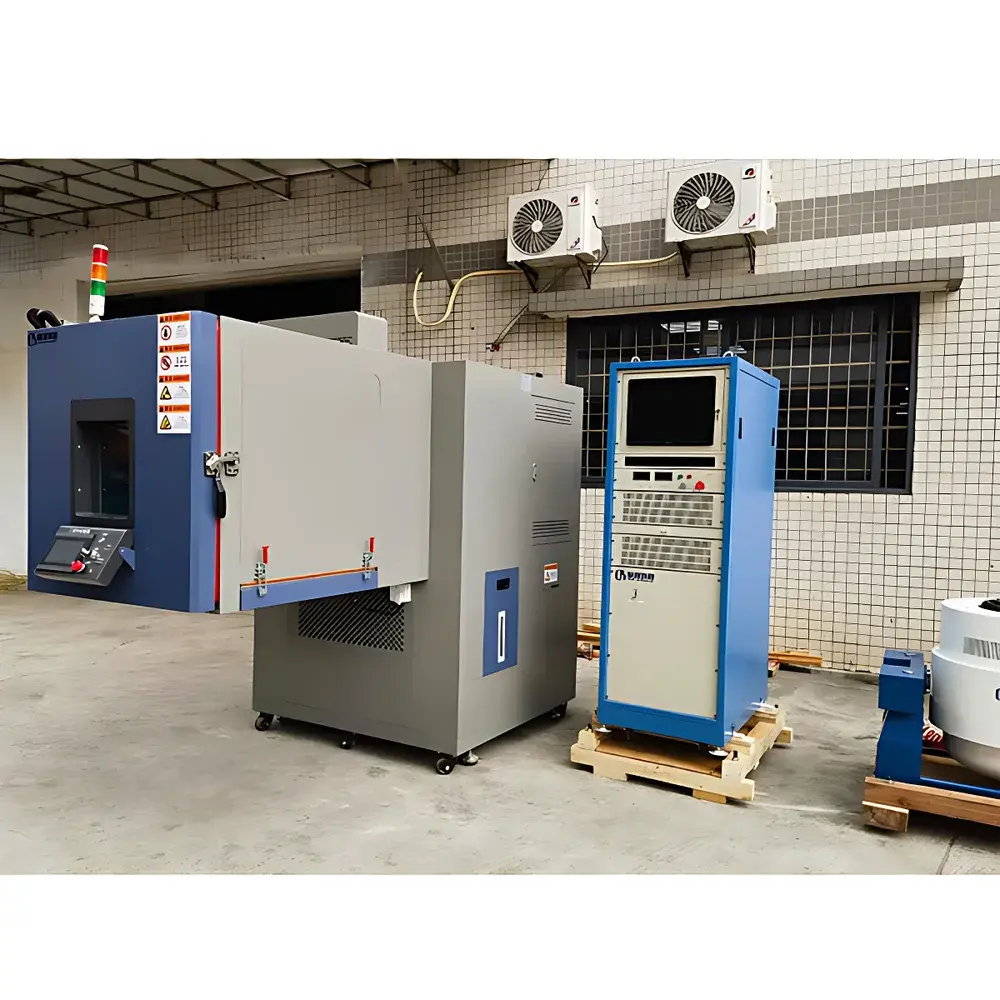
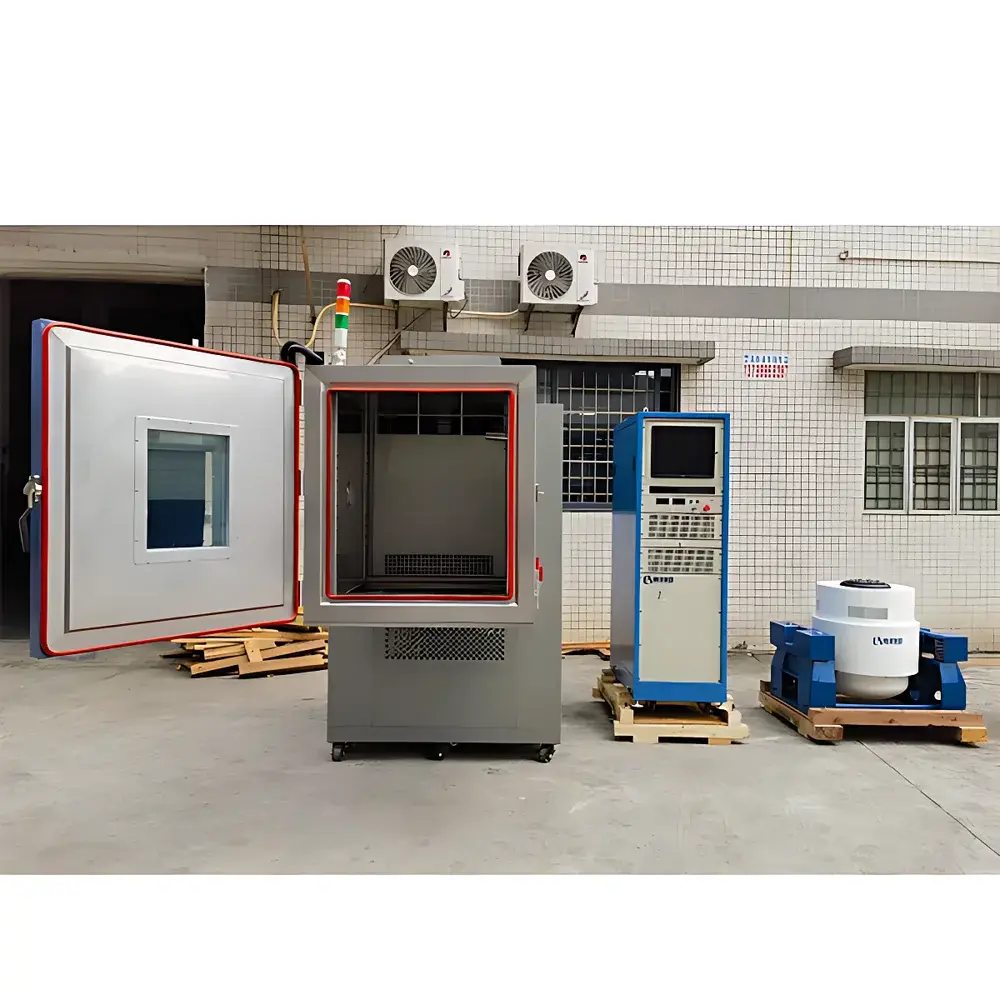
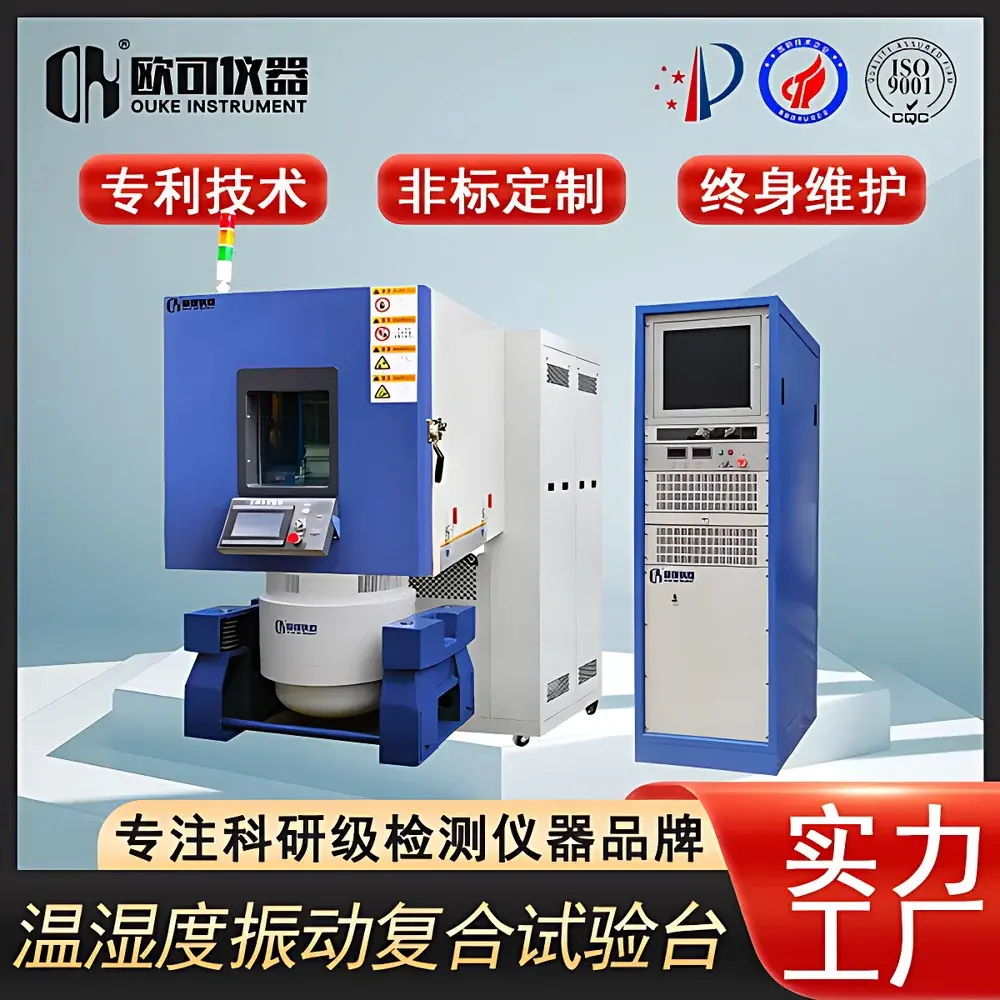
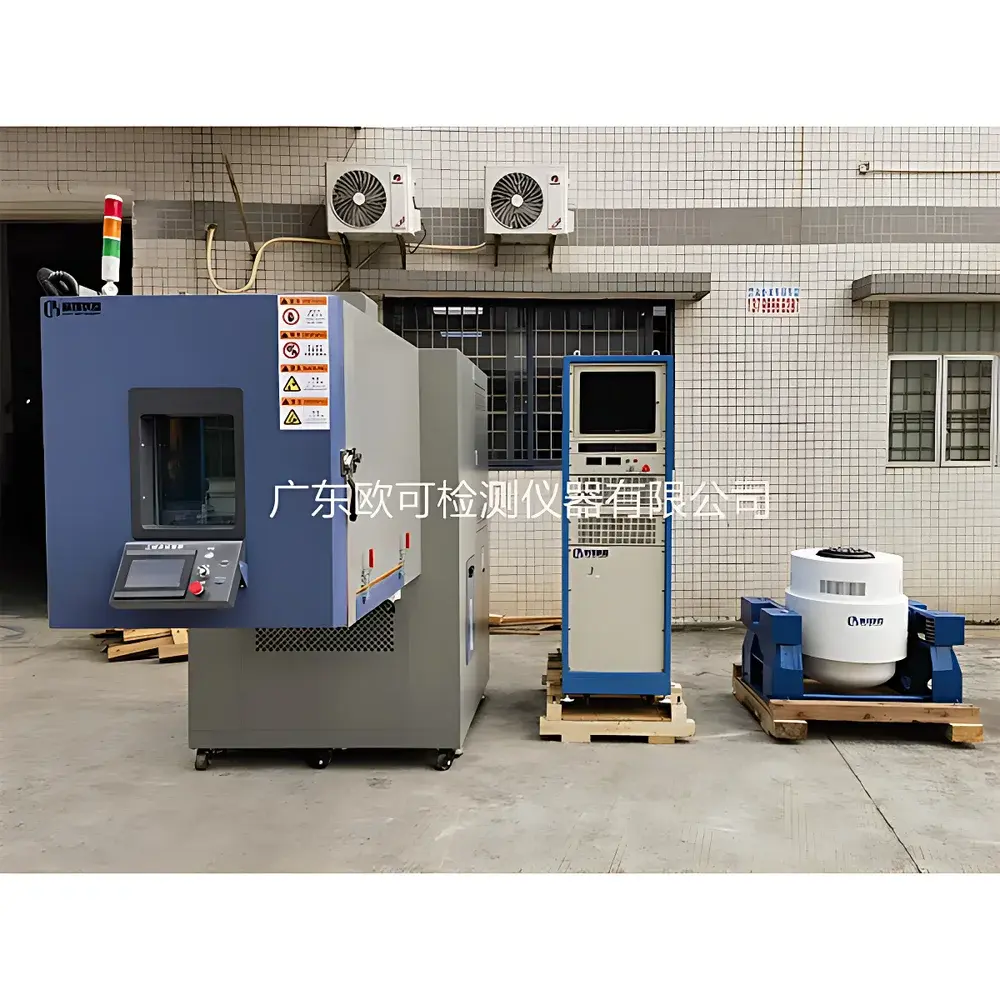
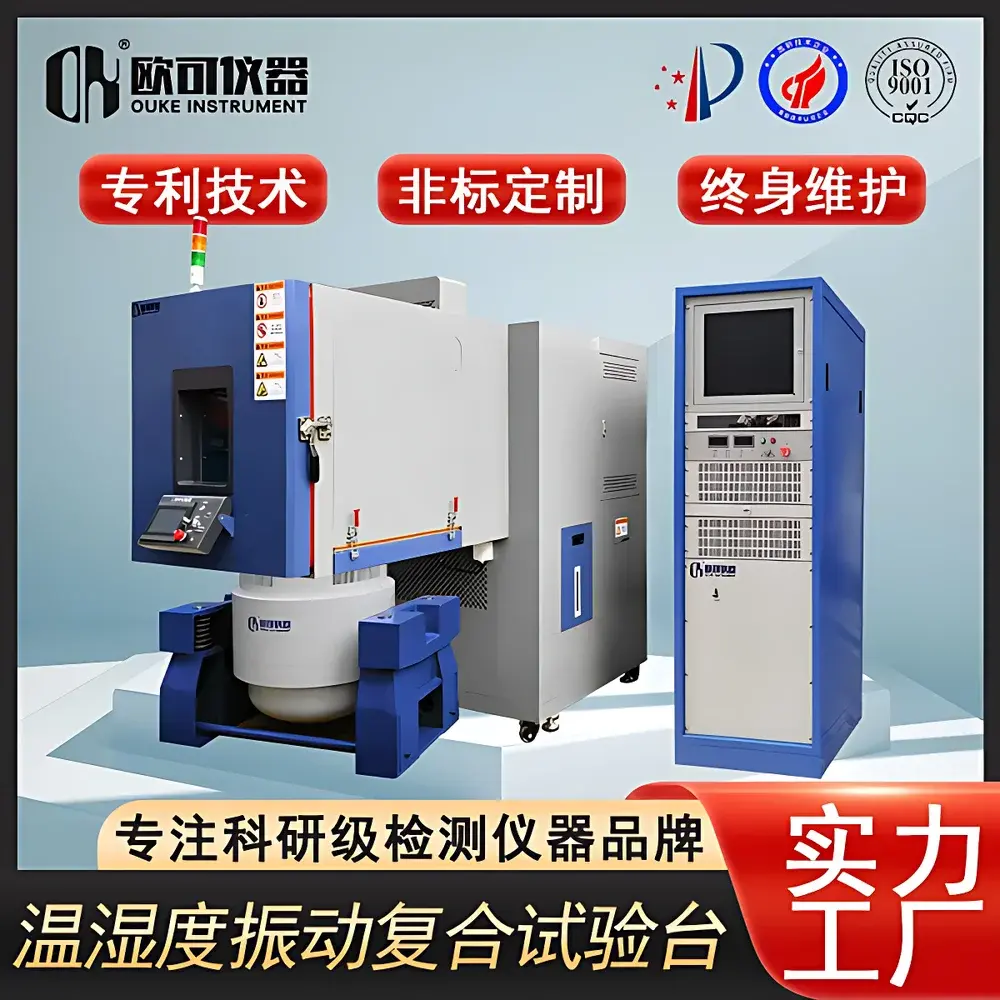
OK Instruments OK-ZTH-512.23 Combined Temperature-Humidity-Vibration Environmental Test Chamber
| Brand | OK Instruments |
|---|---|
| Origin | Guangdong, China |
| Manufacturer Type | Direct Manufacturer |
| Country of Origin | China |
| Model | OK-ZTH-512.23 |
| Temperature Range | −70 °C to +150 °C |
| Humidity Range | 20–98 %RH (at 20–85 °C) |
| Temperature Ramp Rate | 5 / 10 / 15 °C/min |
| Temperature Uniformity | ≤ ±0.5 °C |
| Standard Load Capacity | 15 kg aluminum mass block, 350 W internal heat dissipation |
Overview
The OK Instruments OK-ZTH-512.23 Combined Temperature-Humidity-Vibration Environmental Test Chamber is an integrated reliability validation platform engineered for simultaneous or sequenced application of thermal, hygric, and mechanical stress stimuli. Unlike stacked single-stress systems, this chamber employs a unified control architecture that enables true spatiotemporal coupling of environmental profiles—precisely synchronizing temperature transitions, humidity modulation, and vibration excitation across defined test segments. Its operational principle rests on closed-loop coordination between a high-efficiency refrigeration subsystem (dual-stage cascade compression), a steam-based humidification system with condensate recovery, and a servo-controlled electromagnetic shaker mounted via rigid kinematic interface through the chamber baseplate. This architecture supports realistic simulation of field-relevant stress combinations encountered during logistics (e.g., rail/air transport under diurnal climate shifts), storage (e.g., tropical warehouse conditions with floor-borne vibration), and operational deployment (e.g., automotive ECUs subjected to engine-induced vibration amid rapid ambient thermal transients).
Key Features
- Triple-stress integration: Simultaneous control of temperature (−70 °C to +150 °C), relative humidity (20–98 %RH within 20–85 °C operating envelope), and vibration (Z-axis vertical excitation standard; optional triaxial X/Y/Z configuration available upon specification)
- Precision thermal management: Dual-stage cascade refrigeration system with low-GWP refrigerants, enabling stable deep-cold operation down to −70 °C and programmable ramp rates of 5, 10, or 15 °C/min
- High-fidelity humidity control: Steam generator with PID-regulated boiler output and chilled-mirror dew point monitoring, delivering ≤ ±2 %RH accuracy across the full range
- Vibration subsystem: Electromagnetic shaker with rated force ≥ 10 kN (typical), frequency range 5–2000 Hz, displacement limit ±25 mm peak-to-peak, acceleration capacity up to 100 gpk
- Structural integrity: Stainless steel inner chamber (AISI 304), high-density polyurethane insulated panels (≥150 mm thickness), reinforced load-bearing base frame rated for 15 kg static payload and dynamic inertial loads
- Comprehensive safety architecture: Redundant overtemperature cutoffs (mechanical and electronic), vibration amplitude limiter, refrigerant high/low pressure interlocks, ground fault circuit interrupter (GFCI), and seismic-grade isolation mounts
Sample Compatibility & Compliance
The OK-ZTH-512.23 accommodates test specimens up to 512 L internal volume (W×D×H: 800 × 800 × 800 mm), with standardized 60 mm-diameter feedthrough ports for power, signal, and thermocouple routing. Its design conforms to core requirements of MIL-STD-810H Method 520.5 (Combined Environments), IEC 60068-2-68 (Combined Temperature/Humidity/Vibration), ISO 16750-4 (Road Vehicles – Environmental Conditions), and GB/T 2423.35–2019 (Electrotechnical Products – Combined Temperature and Vibration Tests). All control algorithms implement real-time data logging with timestamped metadata per IEC 61508 SIL2-aligned architecture, supporting traceability for GLP/GMP-regulated validation protocols. Optional audit trail modules comply with FDA 21 CFR Part 11 requirements for electronic records and signatures.
Software & Data Management
Control and monitoring are executed via OK-TestSuite™ v4.2—a Windows-based deterministic real-time operating system (RTOS) platform featuring dual-redundant Ethernet interfaces and hardware-synchronized sampling at 10 kHz for vibration channels and 1 Hz for environmental parameters. The software supports hierarchical test profile definition: users define master sequences containing nested subroutines for thermal soak, humidity dwell, and vibration sweeps—with cross-parameter triggering (e.g., initiate 20 grms random vibration only when chamber reaches −40 °C ± 0.3 °C). All raw data streams (temperature, RH, accelerometer voltage, shaker current) are stored in IEEE-compliant .tdms format with embedded calibration certificates. Export options include CSV, MATLAB .mat, and PDF-certified reports compliant with ISO/IEC 17025 documentation standards.
Applications
- Automotive electronics: Validation of ADAS sensors, battery management systems (BMS), and infotainment modules against ISO 16750-4 thermal-vibration stress profiles
- Aerospace avionics: DO-160G Section 25 (Combined Temperature/Vibration) testing of flight-critical actuators and navigation units
- Defense systems: MIL-STD-810H Method 520.5 qualification of ruggedized communications gear for desert/maritime deployment
- Energy storage: Accelerated life testing of EV traction battery packs under coupled thermal cycling and road-spectrum vibration
- Medical devices: IEC 60601-1-11 environmental robustness verification for portable diagnostic equipment deployed in field hospitals
FAQ
What is the maximum specimen weight supported during active vibration?
Standard configuration supports 15 kg static mass with 350 W internal heating; dynamic load capacity depends on frequency and acceleration—consult shaker force curves in the technical annex.
Can the chamber operate in humidity-only mode without temperature extremes?
Yes. Humidity control is fully decoupled and functional across 20–85 °C ambient, enabling isothermal damp-heat or dry-heat testing per IEC 60068-2-30.
Is third-party calibration certification included with delivery?
Factory calibration per ISO/IEC 17025 is provided; NIST-traceable certificates for temperature, humidity, and vibration transducers are available as optional add-ons.
What electrical infrastructure is required for installation?
Three-phase 380 VAC ±10 %, 50/60 Hz, minimum 63 A dedicated circuit; water-cooled variants require deionized cooling water at 15–25 °C inlet temperature and ≥3 bar supply pressure.
How is vibration isolation achieved to prevent structural transmission?
The unit integrates passive pneumatic isolators (natural frequency < 2.5 Hz) and active feedback dampers tuned to suppress resonant energy transfer below 10 Hz, meeting ISO 20486-1 building vibration criteria.



