
OK Instruments OK-ZTH-512 Combined Temperature-Humidity-Vibration Test System
| Brand | OK Instruments |
|---|---|
| Origin | Guangdong, China |
| Manufacturer Type | Direct Manufacturer |
| Product Origin | Domestic (China) |
| Model | OK-ZTH-512 |
| Temperature Range | −70 °C to +150 °C |
| Humidity Range | 20–98 %RH at 20–85 °C |
| Temperature Ramp Rate | 5 / 10 / 15 °C/min |
| Temperature Uniformity | ≤ ±0.5 °C |
| Standard Load Capacity | 15 kg aluminum mass, 350 W thermal dissipation |
Overview
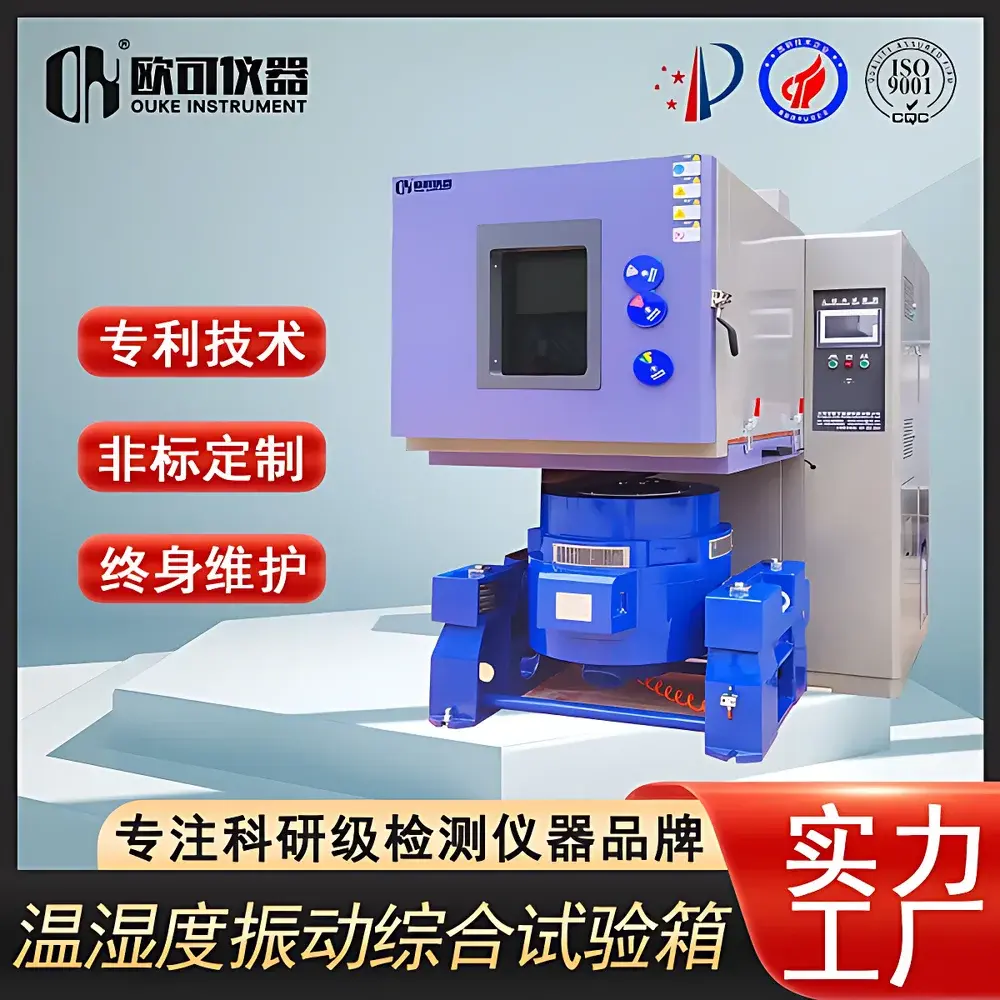
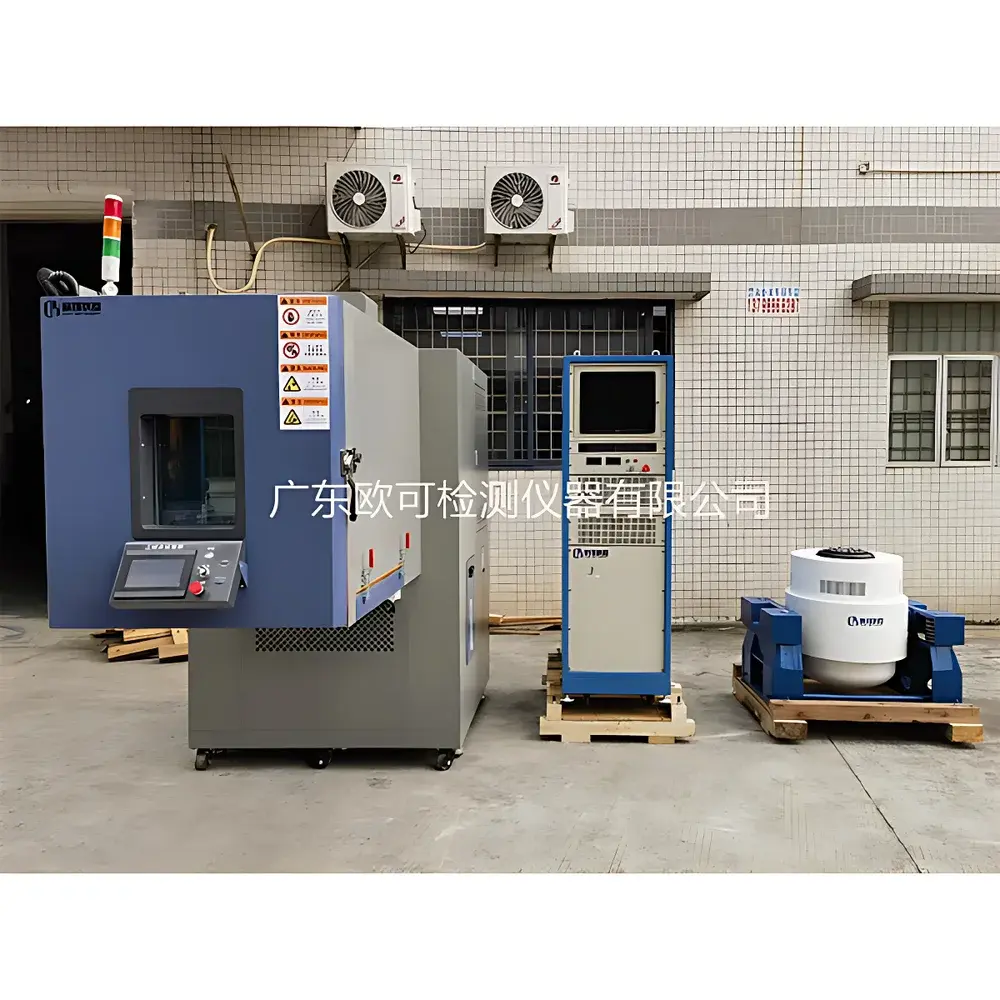
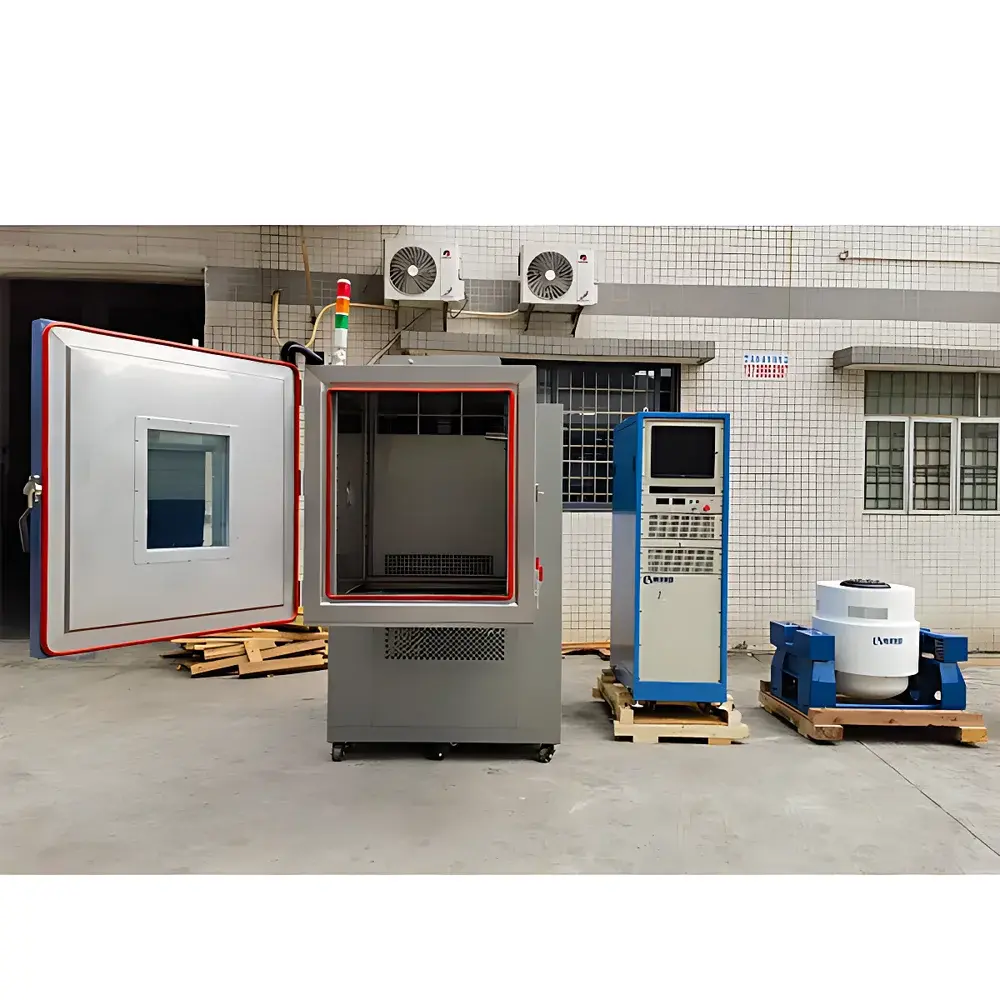
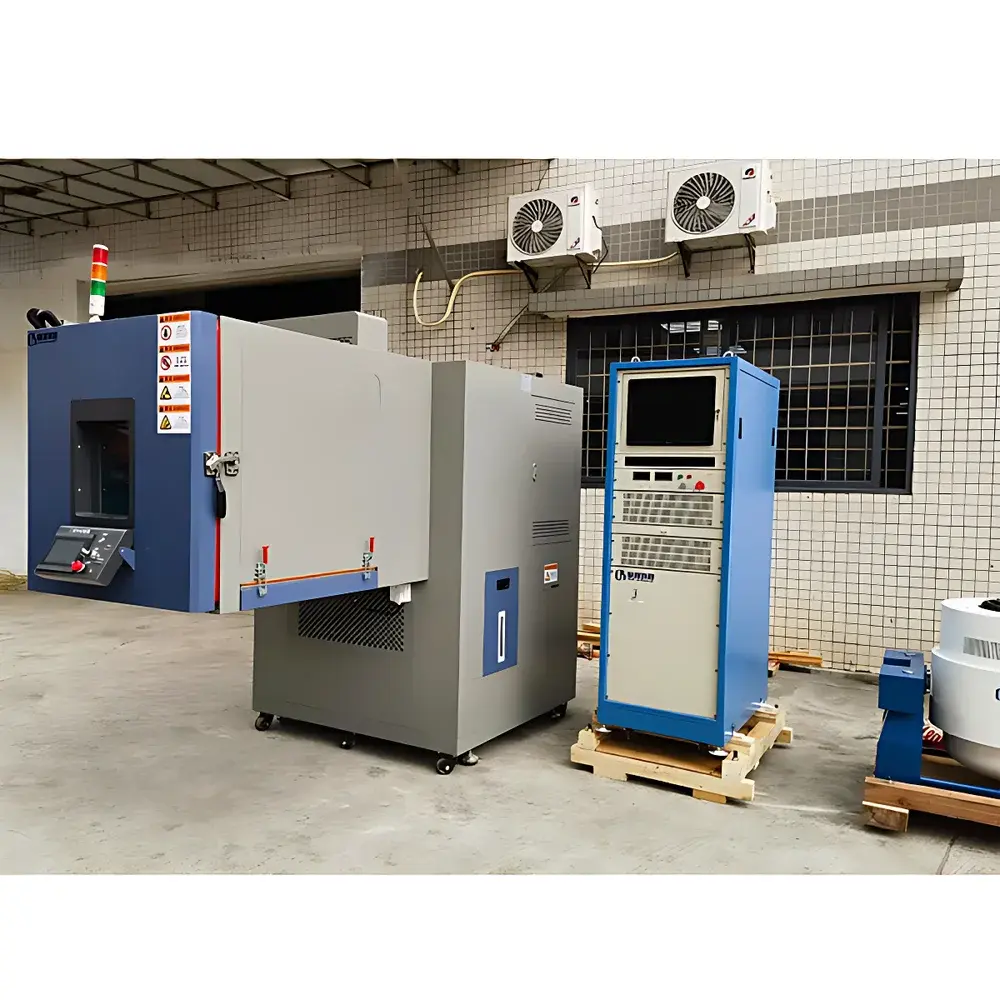
The OK Instruments OK-ZTH-512 Combined Temperature-Humidity-Vibration Test System is an engineered platform for accelerated reliability validation under multi-stress environmental conditions. It integrates three independent yet synchronized physical stress domains—controlled thermal cycling, regulated humidity exposure, and mechanically induced vibration—within a single test envelope. The system operates on the principle of synergistic stress coupling: unlike sequential or single-stress testing, it applies temperature, humidity, and mechanical excitation concurrently, replicating real-world operational profiles where environmental and dynamic loads co-occur—such as airborne electronics subjected to aerodynamic heating, cabin pressure changes, and broadband structural vibration during flight; or automotive ECUs enduring engine bay thermal transients, condensation cycles, and road-induced random vibration. Its architecture conforms to fundamental requirements for combined environmental simulation defined in MIL-STD-810H Method 520.4 (Vibration and Temperature), RTCA DO-160G Section 20 (Vibration), and ISO 16750-4 (Road vehicles — Environmental conditions and testing for electrical and electronic equipment — Part 4: Climatic loads). The chamber employs a dual-refrigeration cascade system based on the reversed Carnot cycle, with PID-controlled electric heating and steam-based humidification, while vibration is delivered via either electromagnetic or electro-hydraulic shakers—selected per application-specific frequency range, displacement, and payload requirements.
Key Features
- Triple-domain synchronization: Independent real-time control of temperature (−70 °C to +150 °C), relative humidity (20–98 %RH within 20–85 °C), and mechanical vibration (sinusoidal sweep, random, shock, or transient profiles) with microsecond-level time alignment.
- High-fidelity thermal performance: Achieves ramp rates of up to 15 °C/min across full temperature range, with chamber uniformity maintained at ≤ ±0.5 °C under static and dynamic load conditions—including active vibration.
- Modular vibration subsystem: Supports interchangeable electromagnetic shakers (for high-frequency, high-acceleration testing up to 2 kHz and 100 g peak) or hydraulic shakers (for low-frequency, high-displacement applications up to 100 mm peak-to-peak and 50 kN force).
- Robust chamber integrity: Stainless steel inner chamber with insulated double-wall construction, anti-condensation heating on viewing windows and sensor ports, and reinforced feedthroughs for instrumentation cables and vibration actuator interfaces.
- Integrated safety architecture: Dual-redundant over-temperature, over-humidity, and over-acceleration limit monitoring; automatic emergency shutdown with hardware interlocks; real-time fault logging compliant with IEC 61508 SIL2 principles.
Sample Compatibility & Compliance
The OK-ZTH-512 accommodates test specimens up to 15 kg mounted on standardized aluminum mass plates, supporting thermal dissipation up to 350 W without compromising chamber stability. It meets essential national and military standards including GB/T 10586–2018 (Environmental test chambers — General specifications), GB/T 10592–2008 (Specification for temperature and humidity test chambers), GB/T 2423.1–2022 (Cold test), GB/T 2423.2–2022 (Dry heat test), GB/T 2423.10–2019 (Vibration test), and GJB 150.3A–2009 (Low-pressure/temperature/humidity/vibration combined test). While not certified to IEC 60068-2 series by default, its control algorithms and sensor traceability support validation against IEC 60068-2-1, -2, -14, -30, and -64 when configured with NIST-traceable calibration records. All firmware and controller logs retain audit trails required for GLP-compliant test reporting.
Software & Data Management
The system runs on OK-TestSuite™ v4.2—a deterministic real-time control platform built on Linux RT kernel. Users define multi-segment test profiles using drag-and-drop graphical editors, specifying time-dependent setpoints for temperature, humidity, and vibration spectra (PSD, SRS, or time-history). All analog and digital channels—including thermocouples (Type K/T), capacitive RH sensors, accelerometers (IEPE), and displacement transducers—are sampled synchronously at ≥10 kHz with hardware timestamping. Raw data is stored in HDF5 format with embedded metadata (test ID, operator, calibration status, environmental context), enabling direct import into MATLAB, Python (via h5py), or commercial CAE tools. Export options include CSV, PDF reports with pass/fail annotations, and XML-based test definitions compatible with enterprise PLM systems (e.g., Siemens Teamcenter, PTC Windchill).
Applications
- Aerospace: Qualification of avionics enclosures, inertial measurement units (IMUs), and satellite power converters under simultaneous thermal cycling, altitude-simulated low pressure (when integrated with optional vacuum module), and broadband vibration representative of launch vehicle spectral loading.
- Automotive: Durability assessment of ADAS domain controllers, battery management systems (BMS), and radar modules under combined under-hood thermal soak, humidity ingress, and road-spectrum vibration per ISO 16750-4 and LV 124.
- Defense Electronics: Life-cycle screening of tactical radios, EO/IR systems, and guided munition fuzes exposed to desert diurnal cycles, maritime salt fog (with optional corrosion module), and transport vibration per MIL-STD-810H Method 514.7.
- Consumer Electronics: Accelerated stress testing of wearable devices, UAV flight controllers, and AR/VR headsets subjected to global climatic zones (e.g., Singapore humidity + Tokyo winter cold + urban transit vibration).
FAQ
What vibration standards does the OK-ZTH-512 support out-of-the-box?
It includes preloaded test templates aligned with MIL-STD-810H Method 514.7 (vibration), ISO 16750-3 (road vehicle vibration), and RTCA DO-160G Section 20 (airborne equipment). Custom PSD profiles can be imported via IEEE 1156-compliant ASCII format.
Can the system operate continuously at −70 °C while vibrating at 50 g RMS?
Yes—thermal and mechanical subsystems are independently cooled and isolated. Chamber stability is verified under sustained −70 °C operation with 50 g RMS random vibration applied to a 10 kg aluminum load, per internal OK-QA-027 validation protocol.
Is remote monitoring and control supported?
Yes—via secure HTTPS web interface (TLS 1.2+) and OPC UA server (compliant with IEC 62541), enabling integration with factory SCADA or cloud-based test fleet management platforms.
Does the system comply with FDA 21 CFR Part 11 for electronic records?
The OK-TestSuite™ software supports Part 11 compliance when deployed with external identity provider (LDAP/Active Directory), electronic signatures, and audit trail archiving—configured per customer’s SOP and validated during IQ/OQ.
What maintenance intervals are recommended for long-term reliability?
Compressor oil and refrigerant analysis every 12 months; shaker armature alignment and suspension inspection every 2,000 operating hours; humidity sensor recalibration every 6 months or after 500 test cycles—documented in OK-MAN-REV3 maintenance manual.



