
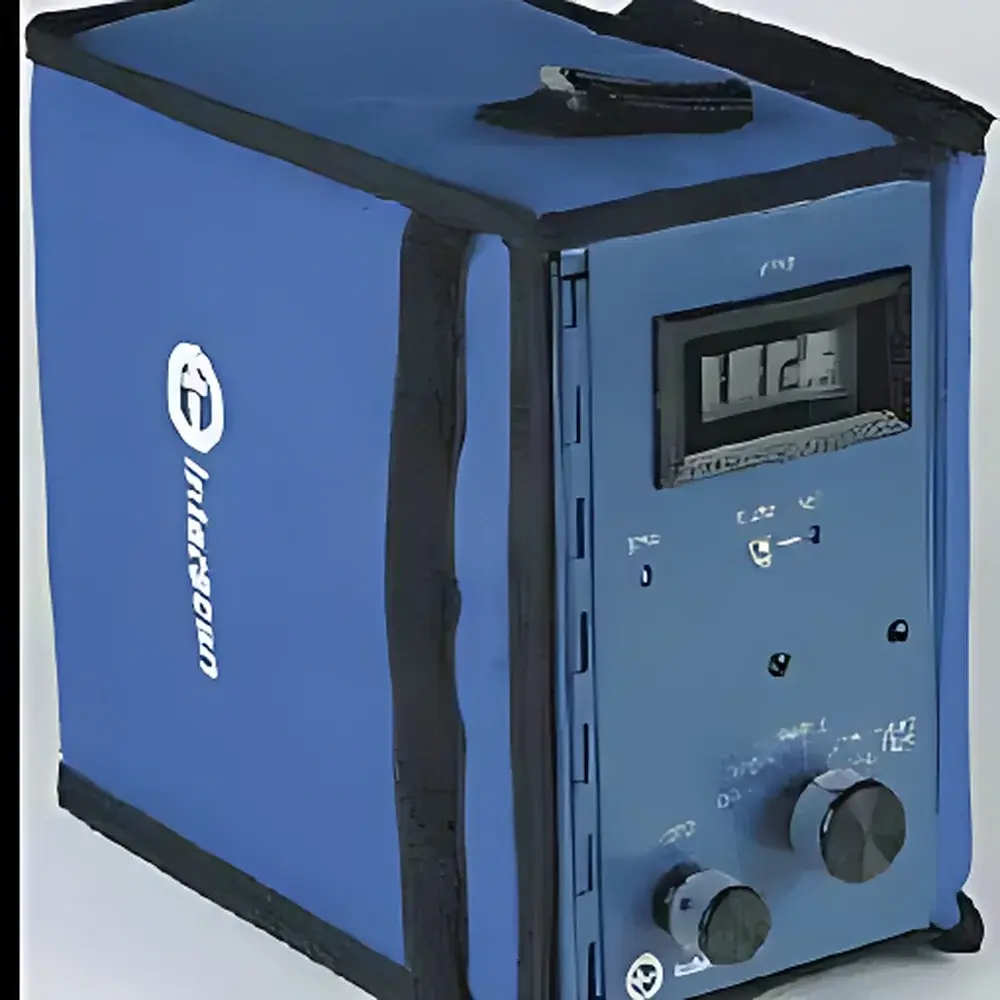
Interscan 4160-2 Digital Formaldehyde Analyzer
| Origin | USA |
|---|---|
| Manufacturer Type | Authorized Distributor |
| Origin Category | Imported |
| Model | 4160-2 |
| Price | USD 3,650 (FOB) |
| Principle | Electrochemical Sensor |
| Measurement Range | 0–19.99 ppm |
| Extended Low-Range Mode | 0–500 ppb |
| Resolution | 0.01 ppm |
| Accuracy | ±2% Rd ±0.01 ppm |
| Flow Rate | 1.0 L/min |
| Dimensions | 178 × 102 × 225 mm |
| Weight | 2.0 kg |
| Power | Rechargeable Li-ion battery with real-time voltage monitoring |
| Certification | China NIM Type Approval (Certificate No. 2021F012), Evaluated by Chinese Center for Disease Control and Prevention – Institute of Environmental Health and Related Product Safety |
Overview
The Interscan 4160-2 Digital Formaldehyde Analyzer is a portable, pump-assisted electrochemical gas detection instrument engineered for quantitative measurement of formaldehyde (HCHO) in ambient air, indoor environments, occupational settings, and laboratory-grade validation studies. Unlike passive diffusion-based sensors, the 4160-2 employs a precision-matched, temperature-compensated electrochemical cell that operates on amperometric transduction—generating a current proportional to HCHO concentration in parts per million (ppm) or parts per billion (ppb). Its dual-range capability (0–19.99 ppm standard; 0–500 ppb high-sensitivity mode) enables trace-level detection required for compliance with WHO indoor air guidelines (0.08 ppm/30-min average) and ISO 16000-23 (formaldehyde in building materials testing). The instrument’s robust architecture integrates a calibrated micro-diaphragm sampling pump, real-time flow monitoring, and embedded environmental compensation algorithms for humidity (10–95% RH non-condensing) and temperature (0–40 °C), ensuring metrological stability across variable field conditions.
Key Features
- Patented electrochemical sensor with proprietary catalyst formulation, delivering long-term baseline stability and minimal cross-sensitivity to CO, NO₂, SO₂, and VOCs
- True digital readout with auto-ranging LCD display—no analog scaling or manual zero adjustment required
- Integrated sampling pump operating at precisely controlled 1.0 L/min flow rate, certified per ISO 13137 for consistent volumetric sampling
- Zero consumables design: no filters, scrubbers, or replaceable membranes—reducing total cost of ownership and operational downtime
- Rechargeable lithium-ion battery with integrated voltage monitoring circuitry; supports ≥8 hours continuous operation and displays remaining capacity as percentage
- NIM-certified type approval (China National Institute of Metrology) and third-party validation by the Chinese CDC Institute of Environmental Health, confirming performance against GB/T 18204.2–2014 and ISO 16017-1
- IP54-rated enclosure for dust and splash resistance during field deployment
Sample Compatibility & Compliance
The 4160-2 is validated for direct analysis of formaldehyde in undiluted ambient air, HVAC duct streams, chamber emission tests (e.g., ASTM D6007, ISO 12460-3), and residential/commercial indoor air quality (IAQ) surveys. It complies with international regulatory frameworks including OSHA PEL (0.75 ppm TWA), ACGIH TLV (0.3 ppm STEL), and EU Directive 2019/1836 Annex I (formaldehyde classification as carcinogen Cat. 1B). Data integrity meets GLP and GMP-aligned documentation requirements: all measurements are timestamped, stored internally with firmware-enforced audit trail, and exportable via USB-C in CSV format. While not FDA 21 CFR Part 11–certified out-of-box, the device supports ALCOA+ principles when paired with validated laboratory data management systems.
Software & Data Management
The analyzer includes embedded firmware v3.2 with onboard memory for up to 10,000 timestamped readings (date, time, concentration, temperature, relative humidity, battery status). Data export is accomplished via USB-C interface using Interscan’s free PC software (FormaLog v2.1), which provides batch calibration verification reports, drift trend analysis, and customizable report generation compliant with ISO/IEC 17025 clause 7.7. Software supports automated pass/fail flagging against user-defined action limits (e.g., 0.05 ppm for sensitive occupancy), and generates PDF summaries with embedded instrument ID, operator ID, and calibration certificate linkage. Firmware updates are delivered via signed binary packages to ensure cryptographic integrity.
Applications
- Indoor Air Quality (IAQ) assessment in schools, hospitals, and office buildings per ASHRAE Standard 62.1 and EN 13779
- Post-construction indoor air testing following LEED IEQ Credit 3.2 and WELL Building Standard W02
- Emission testing of composite wood products, adhesives, and insulation materials per EPA Method TO-11A and ISO 12460-3
- Occupational hygiene monitoring in furniture manufacturing, textile dyeing, and resin production facilities
- Research applications in environmental toxicology and exposure science requiring sub-ppb resolution under controlled chamber conditions
- Verification of air purification system efficacy (e.g., photocatalytic oxidation, activated carbon filtration)
FAQ
What calibration standards are supported?
The 4160-2 is factory-calibrated using NIST-traceable formaldehyde gas standard (±1.5% uncertainty) and supports user-initiated span calibration with certified 1.0 ppm HCHO permeation tube or dynamic dilution system.
Is the sensor replaceable in the field?
Yes—the electrochemical cell is a user-serviceable module with pre-aligned gasket and connector; replacement requires no recalibration if performed within 30 days of original calibration date.
Does the instrument meet ISO 17025 traceability requirements?
Each unit ships with a calibration certificate bearing NIM-accredited reference standard traceability, full uncertainty budget, and technician signature; certificate validity is 12 months from issuance.
Can it be used in high-humidity environments such as bathrooms or greenhouses?
Yes—built-in humidity compensation (10–95% RH) and condensation-resistant inlet filter enable reliable operation without signal suppression or sensor poisoning.
How is data integrity ensured during power loss?
All measurements are written to non-volatile flash memory immediately upon acquisition; no data is held solely in RAM, eliminating risk of loss during unexpected shutdown.







