
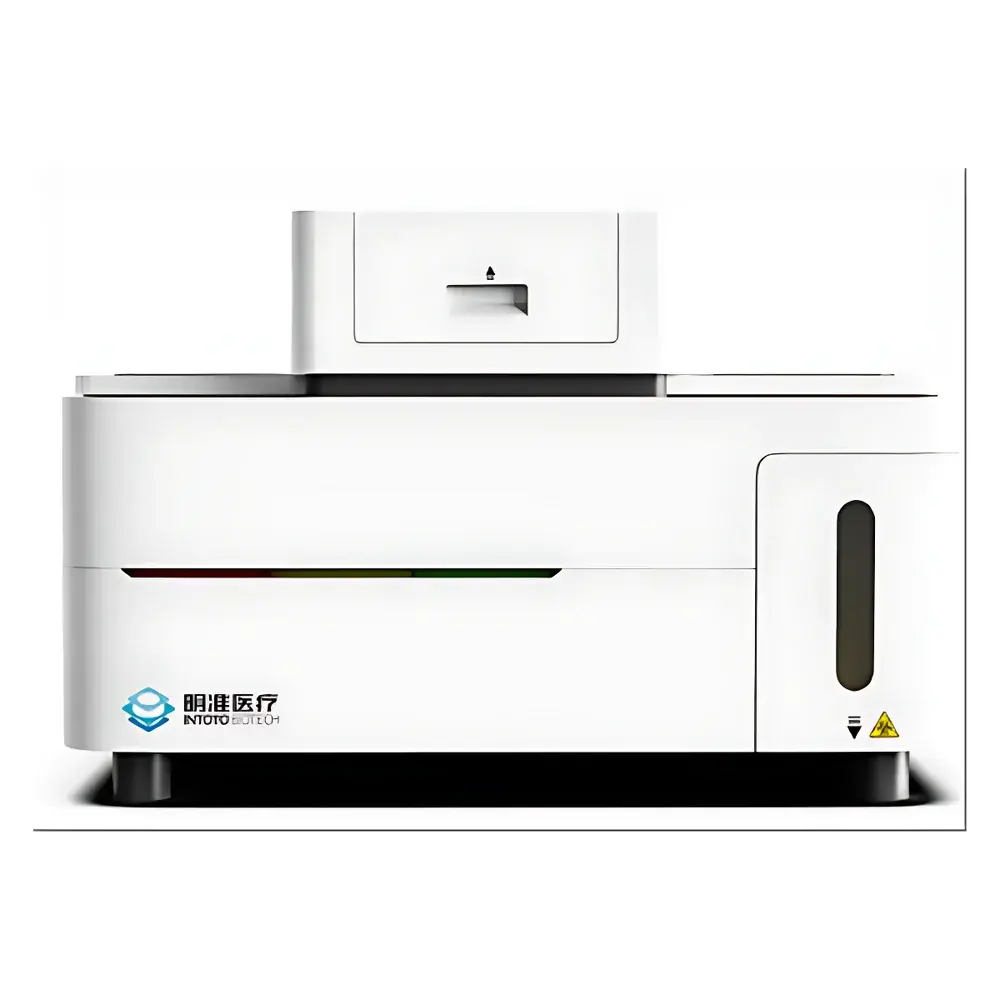
INTOTOBIOTECH Pano One Light Sheet Microscope System
| Brand | INTOTOBIOTECH |
|---|---|
| Origin | China |
| Manufacturer Type | Authorized Distributor |
| Model | Pano One |
| Pricing | Upon Request |
Overview
The INTOTOBIOTECH Pano One Light Sheet Microscope System is a fully domesticated, high-performance light sheet fluorescence microscope engineered for isotropic-resolution 3D imaging of large biological specimens—from single cells to intact mouse brains. It operates on the principle of orthogonal illumination and detection: a thin, quasi-diffraction-limited light sheet illuminates only the focal plane of the detection objective, minimizing out-of-focus excitation and phototoxicity. Unlike conventional Gaussian or Bessel light sheet systems, the Pano One employs axially tunable illumination with synchronized rolling-shutter acquisition—enabling dynamic adjustment of the light sheet waist position in concert with camera exposure timing. This architecture achieves sub-micron axial resolution (≤0.7 µm) across millimeter- to centimeter-scale samples without computational deconvolution, representing the highest reported axial resolution among diffraction-limited light sheet platforms to date.
Key Features
- Axial Scanning with Rolling-Shutter Synchronization: Real-time coordination between light sheet focus translation and scientific CMOS camera shutter timing eliminates axial blurring from off-plane excitation, enabling high-fidelity volumetric reconstruction at speeds suitable for hours-long live imaging.
- Inverted Open-Top Architecture: Facilitates flexible sample mounting—including agarose-embedded embryos, cleared tissues in custom chambers, and freely suspended organoids—without mechanical constraints imposed by upright or closed-chamber designs.
- Full Refractive Index Matching System (RI = 1.33–1.58): Integrated motorized immersion matching optics automatically compensate for RI mismatches across diverse tissue-clearing protocols (e.g., CLARITY, iDISCO, CUBIC, SHIELD), preserving wavefront fidelity and minimizing spherical aberration in thick specimens.
- Isotropic Spatial Resolution: Delivers uniform <0.7 µm lateral and axial resolution across the entire imaging volume—critical for quantitative morphometry, neuronal tracing, and spatial transcriptomics registration.
- Multi-Scale Imaging Capability: Supports seamless transitions from subcellular detail (e.g., synaptic puncta) to whole-organ architecture (e.g., murine brain, zebrafish larva, Arabidopsis root) using interchangeable objectives and scalable illumination optics.
Sample Compatibility & Compliance
The Pano One accommodates a broad spectrum of specimen types and preparation methods, including live embryos (zebrafish, Drosophila, mouse), fixed and chemically cleared tissues (murine cortex, spinal cord, tumor xenografts), plant organs, and hydrogel-embedded organoids. Its open-top design supports long-term perfusion and environmental control (temperature, CO₂, humidity) for extended live imaging sessions. The system complies with ISO 10993-5 biocompatibility standards for optical components in contact with biological media and adheres to IEC 61000-6-3 electromagnetic compatibility requirements. All software modules support audit trails and electronic signatures per FDA 21 CFR Part 11 for GLP/GMP-aligned workflows.
Software & Data Management
Control and analysis are managed through the proprietary PanoStudio suite—a modular, Python-based platform supporting real-time acquisition, multi-view fusion, and AI-assisted segmentation. Built-in GPU-accelerated deconvolution (Wiener filter), rigid/non-rigid registration, and intensity normalization ensure reproducible quantification across multi-session experiments. Raw data are stored in standardized OME-TIFF format with embedded metadata (acquisition parameters, RI settings, laser power, objective ID). Integration with common bioimaging ecosystems—including Napari, QuPath, and SpaceM—is supported via documented APIs and export plugins. Data provenance, versioned processing pipelines, and user-access logs meet FAIR (Findable, Accessible, Interoperable, Reusable) principles.
Applications
- Whole-brain mapping of neural circuits in cleared mouse models with single-cell resolution
- Longitudinal developmental imaging of embryogenesis under physiological conditions
- Spatially resolved transcriptomics alignment—providing anatomical context for scRNA-seq and spatial proteomics datasets
- Quantitative analysis of tumor microenvironment heterogeneity across multiple length scales
- 3D phenotyping of plant vasculature and root architecture under stress conditions
- In situ validation of CRISPR editing outcomes in intact organoids
FAQ
What is the maximum specimen size supported by the Pano One?
The system accommodates samples up to 15 mm in diameter and 25 mm in height using standard open-top chambers; custom chamber solutions extend compatibility to 30 mm × 30 mm × 30 mm volumes.
Does the Pano One support multi-color imaging with spectral unmixing?
Yes—it integrates up to four independently tunable solid-state lasers (405/488/561/640 nm) and a high-quantum-efficiency sCMOS camera with optional spectral filter wheels or prism-based line-scanning detectors for linear unmixing.
Can the refractive index matching be adjusted during acquisition?
Yes—motorized immersion optics enable real-time RI adaptation across Z-stacks, allowing optimal correction for depth-dependent RI gradients in heterogeneous tissues.
Is the system compatible with third-party clearing protocols?
It has been validated with over 12 major tissue-clearing methods, including organic-solvent-based (uDISCO), aqueous (CUBIC, FRUIT), and hydrogel-embedding (CLARITY, SHIELD) approaches.
What level of technical support and training is provided?
INTOTOBIOTECH offers on-site installation, operator certification, application-specific protocol development, and annual preventive maintenance—backed by a global network of certified field service engineers and remote diagnostics capability.





