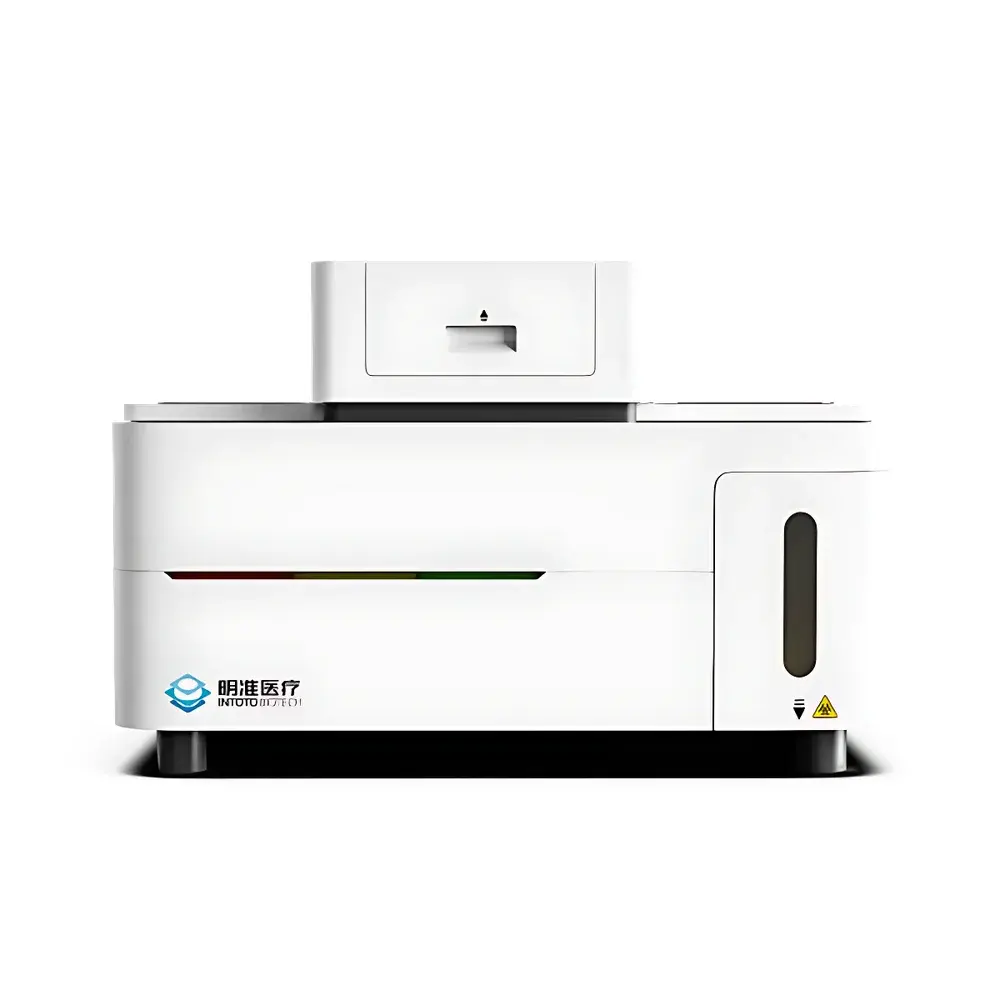
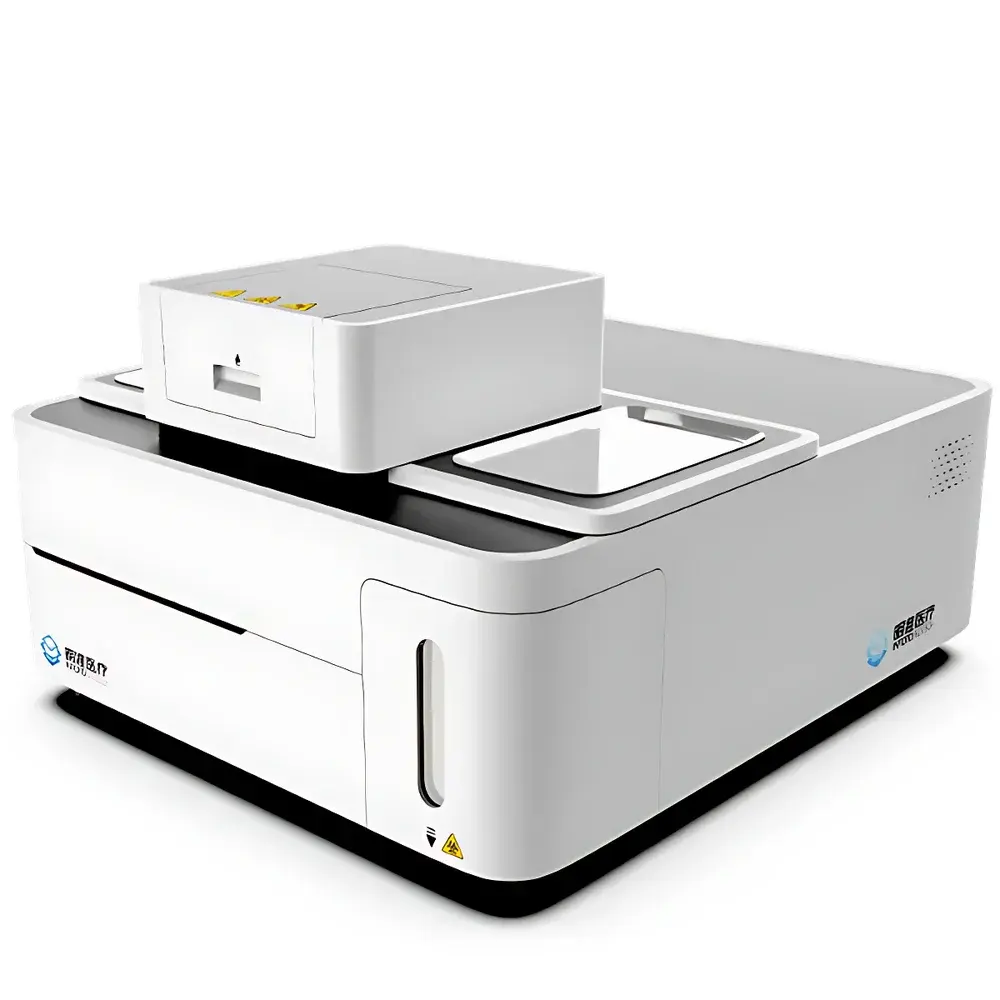
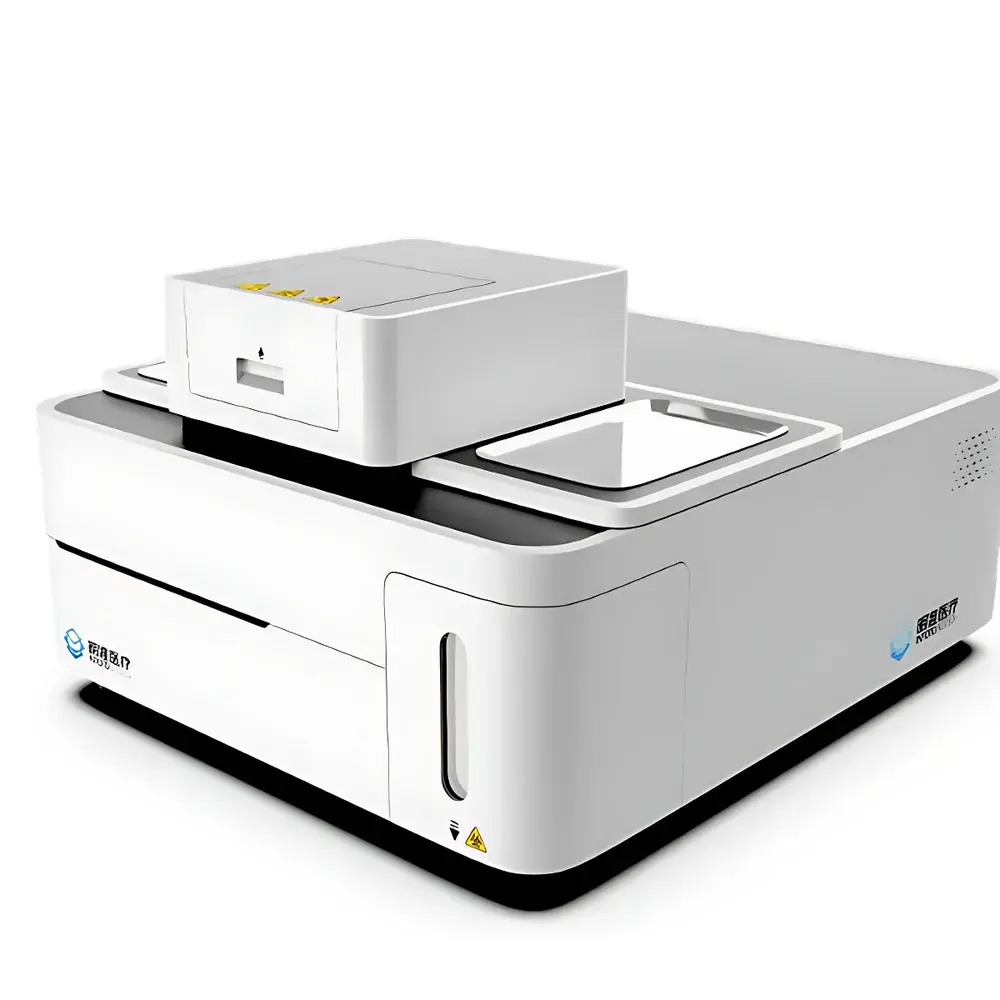
INTOTOBIOTECH Patho One Light Sheet Microscopy System for 3D Label-Free Tissue Pathology Imaging
| Brand | INTOTOBIOTECH |
|---|---|
| Origin | Guangdong, China |
| Manufacturer Type | Original Equipment Manufacturer (OEM) |
| Region of Manufacture | Domestic (China) |
| Model | Patho One |
| Pricing | Upon Request |
Overview
The INTOTOBIOTECH Patho One is a purpose-built light sheet fluorescence microscopy (LSFM) platform engineered for volumetric, non-destructive, and label-compatible 3D histopathological imaging of intact tissue specimens. Unlike conventional microtome-based sectioning workflows—where physical slicing introduces sampling bias, structural distortion, and irreversible loss of spatial context—the Patho One leverages orthogonal illumination geometry to optically section thick biological tissues with high axial resolution while minimizing phototoxicity and photobleaching. Its core architecture integrates a tunable dual-side illumination module, high-numerical-aperture detection optics, and precision motorized sample positioning, enabling rapid acquisition of gigapixel-scale 3D image stacks from centimeter-scale human biopsy or resection specimens after optical clearing. The system is designed for translational pathology labs seeking quantitative spatial phenotyping without compromising specimen integrity—supporting longitudinal analysis, multi-omics correlation, and archival preservation of clinically annotated biospecimens.
Key Features
- Non-invasive 3D imaging of whole-mount tissues up to 10 mm in thickness post-clearing, preserving native tissue architecture and intercellular relationships
- Proprietary reversible, non-toxic optical clearing protocol compatible with endogenous fluorescence and standard immunolabeling workflows (e.g., anti-CD3, anti-Ki67, DAPI)
- Dual-axis light sheet illumination with real-time beam shaping to suppress scattering artifacts and ensure uniform excitation across heterogeneous tissue volumes
- Motorized XYZ stage with sub-micron repeatability and thermal drift compensation for long-duration acquisitions (>24 h)
- Integrated hardware synchronization between laser pulsing, camera exposure, and stage motion to eliminate motion blur and registration errors
- Modular design supporting optional expansion with spectral unmixing filters, multi-channel LED excitation, or adaptive optics modules
Sample Compatibility & Compliance
The Patho One accommodates formalin-fixed paraffin-embedded (FFPE) tissue blocks following deparaffinization and rehydration, as well as fresh-frozen and cryopreserved specimens. It is validated for use with human surgical specimens—including breast, prostate, lung, and colorectal tissues—and murine xenograft models. All optical clearing reagents comply with ISO 10993-5 (cytotoxicity) and OECD 437 (ocular irritation) standards. The instrument’s firmware and data handling pipeline adhere to ALCOA+ principles (Attributable, Legible, Contemporaneous, Original, Accurate, Complete, Consistent, Enduring, Available), supporting audit readiness for GLP-compliant preclinical studies and clinical trial ancillary analyses. While not FDA-cleared as an IVD device, the system meets essential requirements of IEC 61000-6-3 (EMC emissions) and IEC 60601-1 (general safety for medical electrical equipment).
Software & Data Management
Acquisition and reconstruction are managed via PathoStudio v2.4—a cross-platform application built on Qt and Python-based scientific computing libraries (NumPy, SciPy, ITK). The software provides real-time preview, adaptive z-step optimization, and GPU-accelerated deconvolution using Richardson-Lucy algorithms. Raw data is stored in OME-TIFF format with embedded metadata compliant with the Open Microscopy Environment (OME) schema. Quantitative analysis modules include 3D nuclear segmentation (based on U-Net architecture trained on >50,000 manually annotated nuclei), spatial point pattern analysis (Ripley’s K-function), and co-expression heatmaps generated from multi-target fluorescence channels. Audit trails, user access logs, and electronic signatures are implemented in accordance with FDA 21 CFR Part 11 requirements for regulated environments.
Applications
- Whole-organoid and tumor spheroid phenotyping with single-cell resolution in 3D culture models
- Spatial mapping of immune cell infiltration gradients in tumor microenvironments (TME), including tertiary lymphoid structure (TLS) quantification
- Multimodal correlation of morphometric features (e.g., glandular architecture distortion, nuclear pleomorphism) with transcriptomic or proteomic readouts
- Longitudinal monitoring of treatment response in patient-derived xenografts (PDX) without serial sacrifice
- Development of AI training datasets for digital pathology algorithms requiring ground-truth 3D spatial labels
- Validation of biomarker expression heterogeneity across anatomical compartments (e.g., invasive front vs. tumor core)
FAQ
Does the Patho One require tissue sectioning prior to imaging?
No. The system images intact, optically cleared tissues without physical sectioning—preserving volumetric continuity and eliminating slice-to-slice alignment artifacts.
Can it be integrated into existing digital pathology workflows?
Yes. OME-TIFF outputs are natively supported by QuPath, HALO, and Visiopharm platforms; metadata fields map to DICOM-SR extensions for PACS integration.
What is the maximum recommended tissue thickness for optimal signal-to-noise ratio?
For human FFPE tissues cleared with INTOTO’s proprietary ClearPath reagent, the practical limit is 8–10 mm at 2 µm isotropic voxel resolution; thinner samples (<4 mm) enable subcellular detail down to 0.3 µm lateral resolution.
Is the optical clearing process compatible with downstream molecular assays?
Yes. The reversible clearing chemistry allows post-imaging recovery of nucleic acids and proteins suitable for RNA-seq, WES, or multiplexed IHC validation.
Does the system support live-tissue imaging?
Not intended for intravital imaging; the Patho One is optimized for fixed, cleared specimens. Live-sample compatibility requires additional environmental control modules (not included in base configuration).