
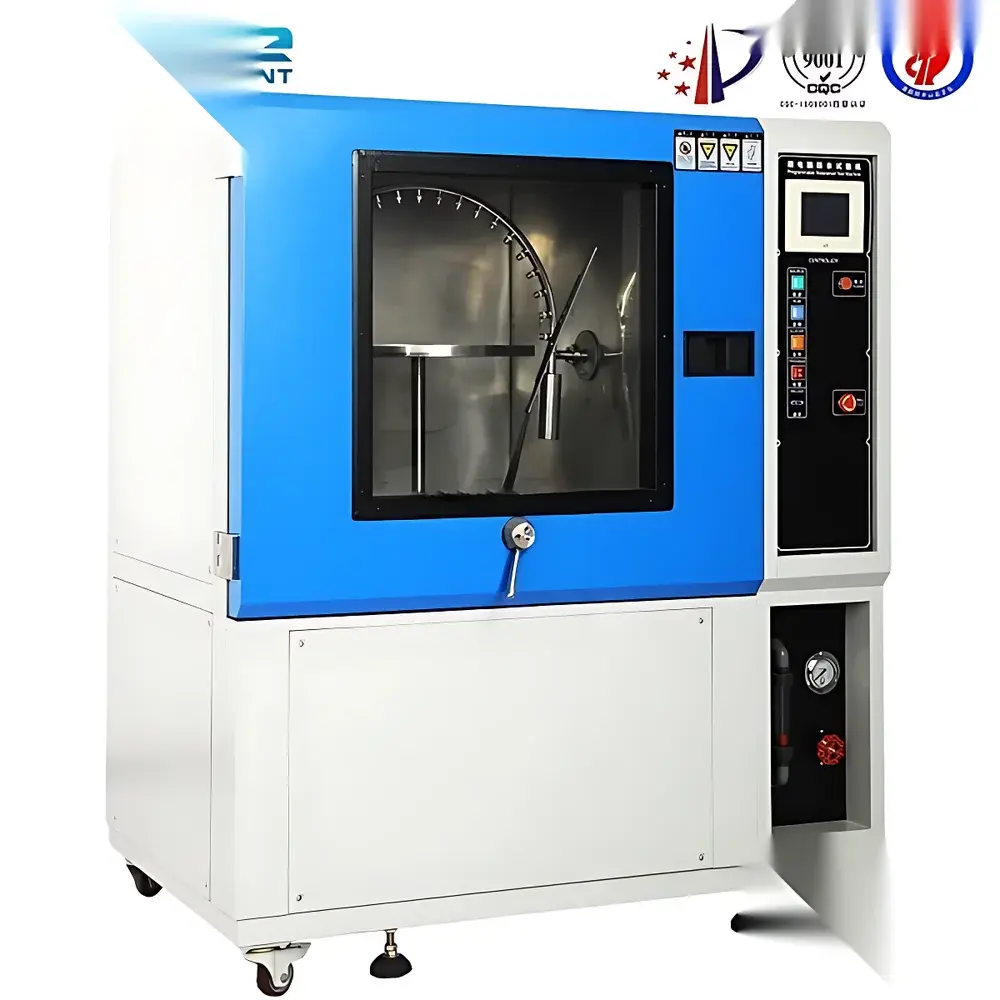
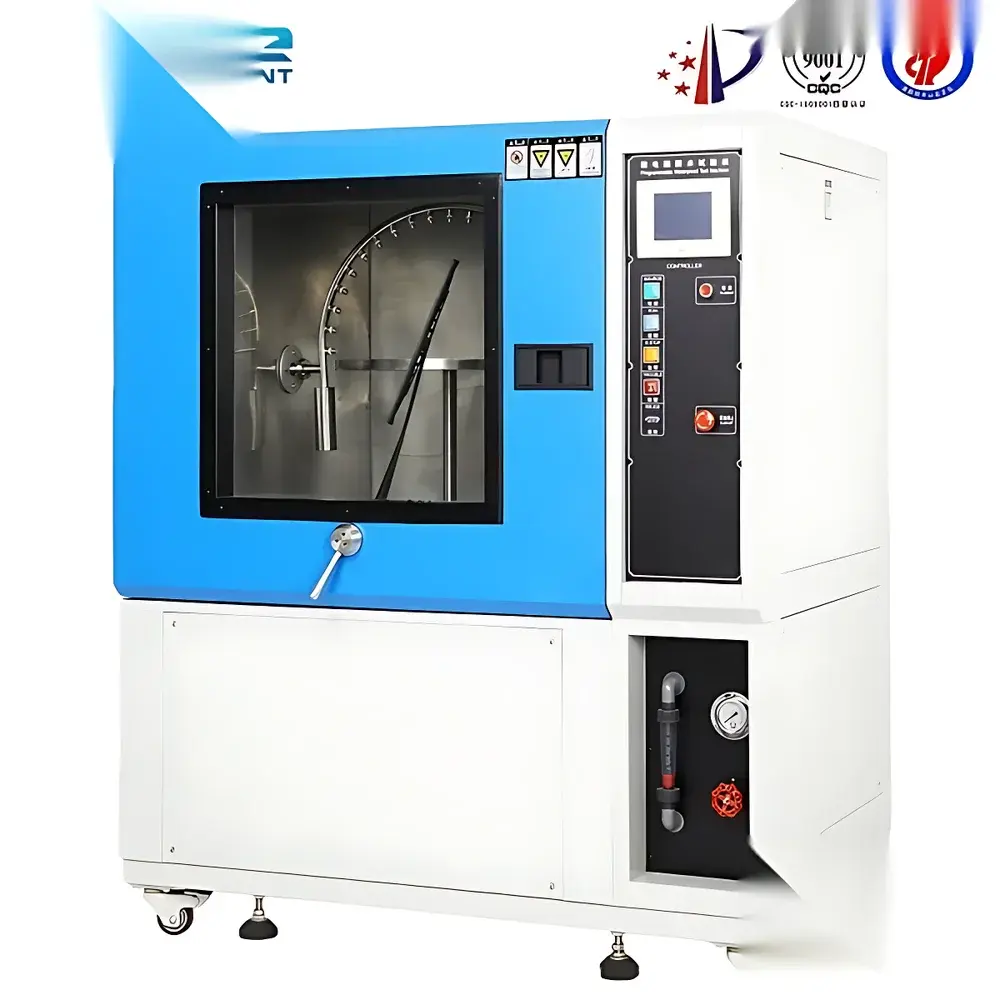
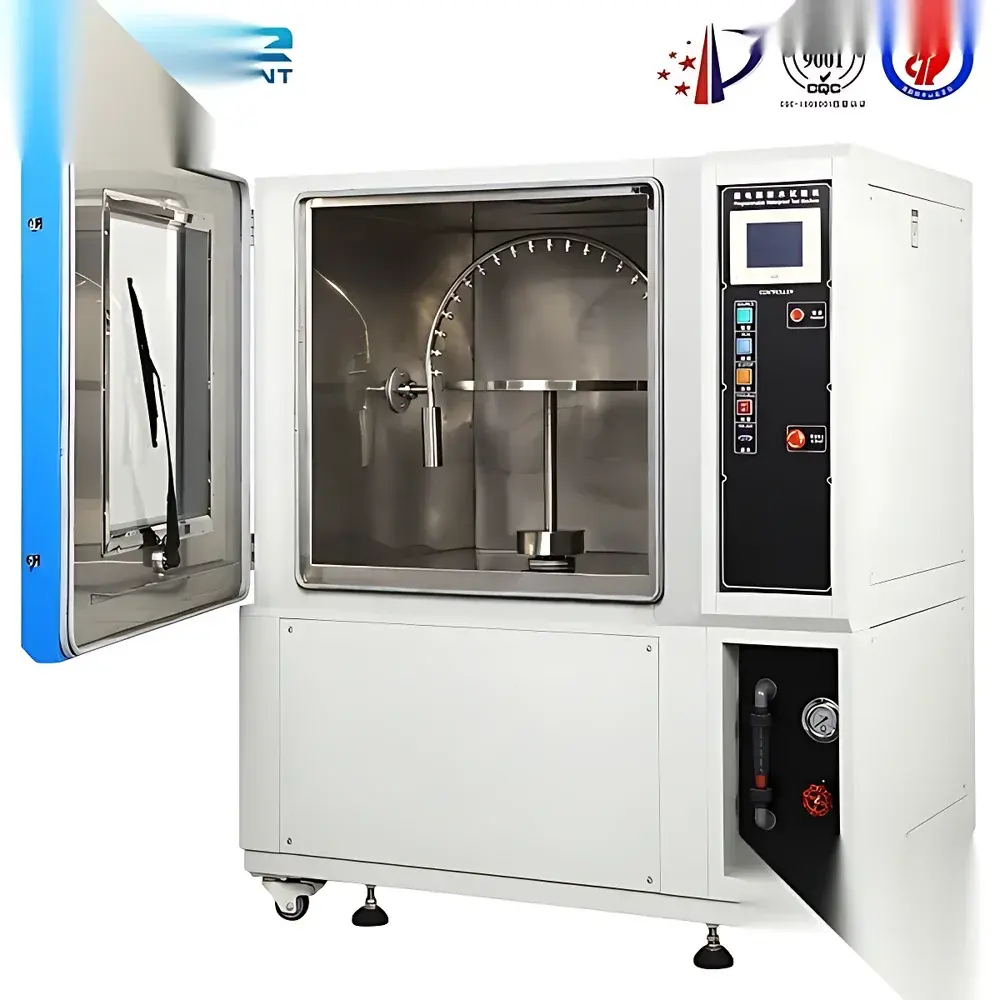
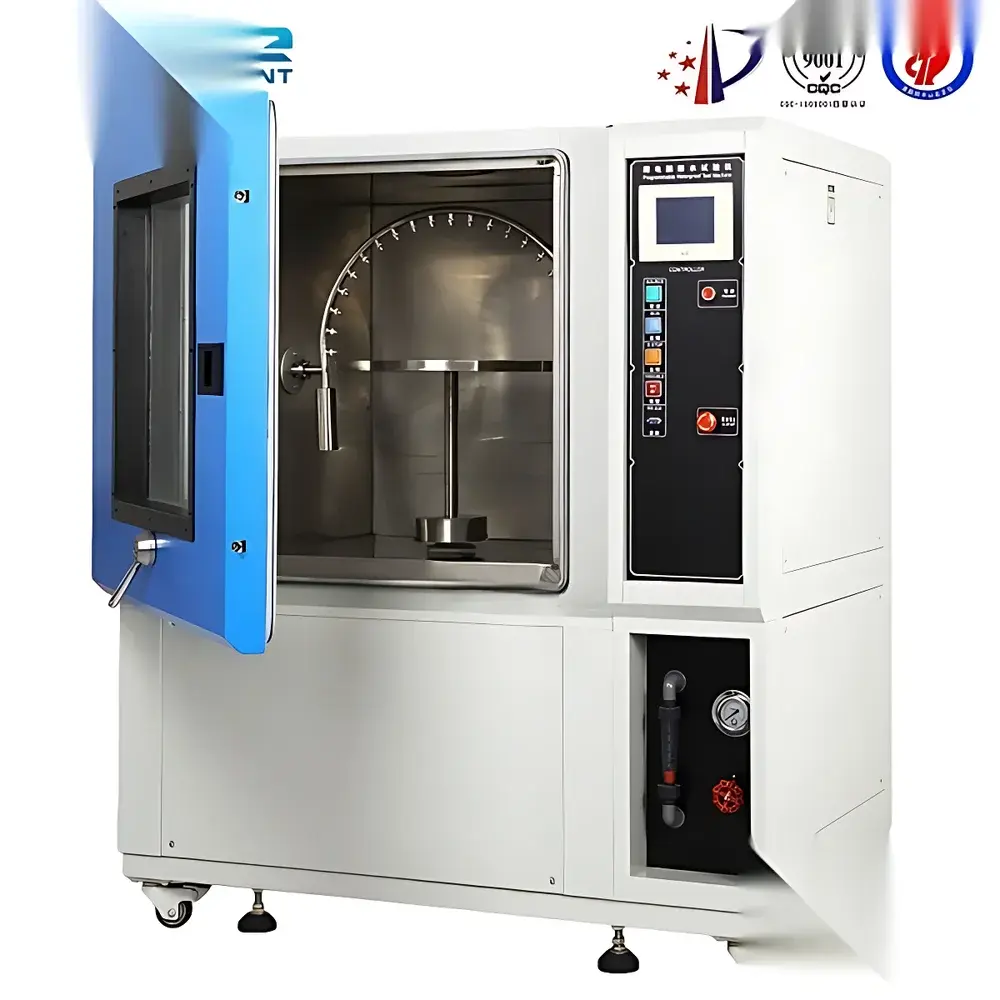
IPX5/IPX6 Rain Test Chamber
No specifications available.
Overview
The IPX5/IPX6 Rain Test Chamber is an engineered environmental simulation system designed to evaluate the ingress protection (IP) rating of electrical and electronic enclosures against water projected by nozzles—specifically conforming to IEC 60529, ISO 20653, and SAE J575 test requirements for IPX5 (water jets) and IPX6 (powerful water jets). This chamber replicates realistic exposure conditions encountered during transportation, outdoor operation, or vehicle-mounted deployment—including directional water impact at defined flow rates, pressures, and incidence angles. Unlike general-purpose humidity or temperature chambers, this system integrates precision-controlled oscillating spray arms, calibrated nozzles, and programmable rotation stages to deliver repeatable, standards-compliant water ingress validation. It is widely deployed in automotive lighting validation labs, industrial electronics QC departments, and R&D facilities supporting UL/CSA-certified product development.
Key Features
- Precision oscillating spray arm driven by stepper motor: enables accurate angular positioning (±0.5° repeatability) and adjustable oscillation frequency (0.5–12 cycles/min), ensuring consistent nozzle trajectory per IEC 60529 Clause 14.2.3.
- Stainless-steel (SUS304) inner chamber construction with seamless welding: resists corrosion from prolonged water exposure and facilitates cleaning and long-term calibration stability.
- Double-layer thermal insulation: rigid polyurethane foam (≥30 mm thickness) combined with glass fiber backing minimizes external heat transfer and reduces ambient energy load during extended test cycles.
- Corrosion-resistant rotating turntable: PVC-hardboard platform (3 mm thickness) mounted on sealed stainless-steel bearings; supports loads up to 50 kg with ±0.1° rotational accuracy.
- Full-material compatibility with water contact zones: all wetted components—including nozzles, manifolds, piping, and drip trays—are fabricated from AISI 304 stainless steel or electrolytic copper to prevent galvanic corrosion and particulate shedding.
- Dual control architecture: optional entry-level programmable logic controller (PLC) with digital timer interface, or factory-integrated full-color 7-inch capacitive touchscreen HMI with embedded test sequence library, real-time pressure/flow monitoring, and event logging.
- Post-test air purge function: automatically activates compressed-air nozzles (0.4–0.6 MPa) to remove residual droplets from test specimens and internal surfaces, reducing drying time and mitigating secondary condensation effects.
- Structural outer enclosure: CNC-formed A3 carbon steel (1.2 mm gauge) with electrostatic powder coating (RAL 7035 texture finish) ensures mechanical rigidity, electromagnetic shielding integrity, and laboratory-grade aesthetic consistency.
Sample Compatibility & Compliance
The chamber accommodates test specimens up to Ø800 mm × H1000 mm (custom dimensions available upon request), including headlamps, tail lamps, sensor housings, junction boxes, and portable consumer electronics. All operational parameters—including water flow rate (12.5 L/min ±5% for IPX5; 100 L/min ±5% for IPX6), nozzle orifice diameter (6.3 mm for IPX5; 12.5 mm for IPX6), and spray distance (3 m ±0.1 m)—are traceable to NIST-calibrated flow meters and pressure transducers. The system supports full documentation packages compliant with ISO/IEC 17025 accreditation requirements, including calibration certificates, uncertainty budgets, and as-found/as-left verification reports. It is routinely validated for use in GLP-regulated environments and aligns with FDA 21 CFR Part 11 data integrity expectations when paired with audit-trail-enabled software options.
Software & Data Management
The proprietary touch-HMI firmware includes configurable test profiles (e.g., “IPX5_Standard”, “IPX6_Automotive_Lamp”), real-time display of water pressure (0–1.0 MPa), flow rate (L/min), oscillation angle (±60°), and elapsed test duration. All operational events—including start/stop commands, parameter changes, alarm triggers (e.g., low-pressure fault, overtemperature), and manual overrides—are timestamped and stored locally with 32 GB onboard memory (retention ≥12 months). Optional Ethernet/Wi-Fi connectivity enables secure remote monitoring via HTTPS-based web interface and integration into enterprise LIMS or MES platforms using Modbus TCP or OPC UA protocols. Raw log files export in CSV format with ISO 8601 timestamps and are compatible with statistical process control (SPC) tools such as Minitab or JMP.
Applications
- Validation of automotive exterior lighting systems per ECE R112, FMVSS 108, and GB 4785 compliance protocols.
- Verification of IP ratings for industrial IoT sensors deployed in outdoor substations or rail infrastructure.
- Pre-certification testing for UL 50E, UL 1598, and IEC 60598-1 enclosure evaluations.
- Reliability screening of consumer electronics (e.g., smart home controllers, outdoor security cameras) prior to accelerated life testing.
- Material compatibility assessment of gasket compounds, conformal coatings, and potting resins under cyclic hydraulic stress.
- Supporting Design Failure Mode and Effects Analysis (DFMEA) by correlating water ingress pathways with enclosure geometry and sealing interface tolerances.
FAQ
What standards does this chamber fully support?
IEC 60529 (IPX5 and IPX6), ISO 20653 (IPX5K/IPX6K), SAE J575, and GB/T 4208—verified via third-party witnessed performance qualification (PQ) reports.
Can the turntable speed be synchronized with spray arm oscillation?
Yes—advanced sequencing mode allows coordinated phase alignment between rotation (0.1–5 rpm) and oscillation (0.5–12 cpm) to simulate dynamic vehicle motion during rain exposure.
Is calibration certification included with delivery?
Each unit ships with a factory-issued calibration certificate covering water flow, pressure, angular position, and temperature sensors, traceable to national metrology institutes.
What maintenance intervals are recommended?
Nozzle inspection every 200 operating hours; filter replacement every 500 hours; full system verification annually or after 2,000 test cycles—per ISO/IEC 17025 preventive maintenance guidelines.
Does the system meet electromagnetic compatibility (EMC) requirements for lab integration?
Yes—complies with EN 61326-1 (industrial environment) and EN 55011 Class B radiated/conducted emissions limits, with CE marking and RoHS 2.0 declaration provided.



