
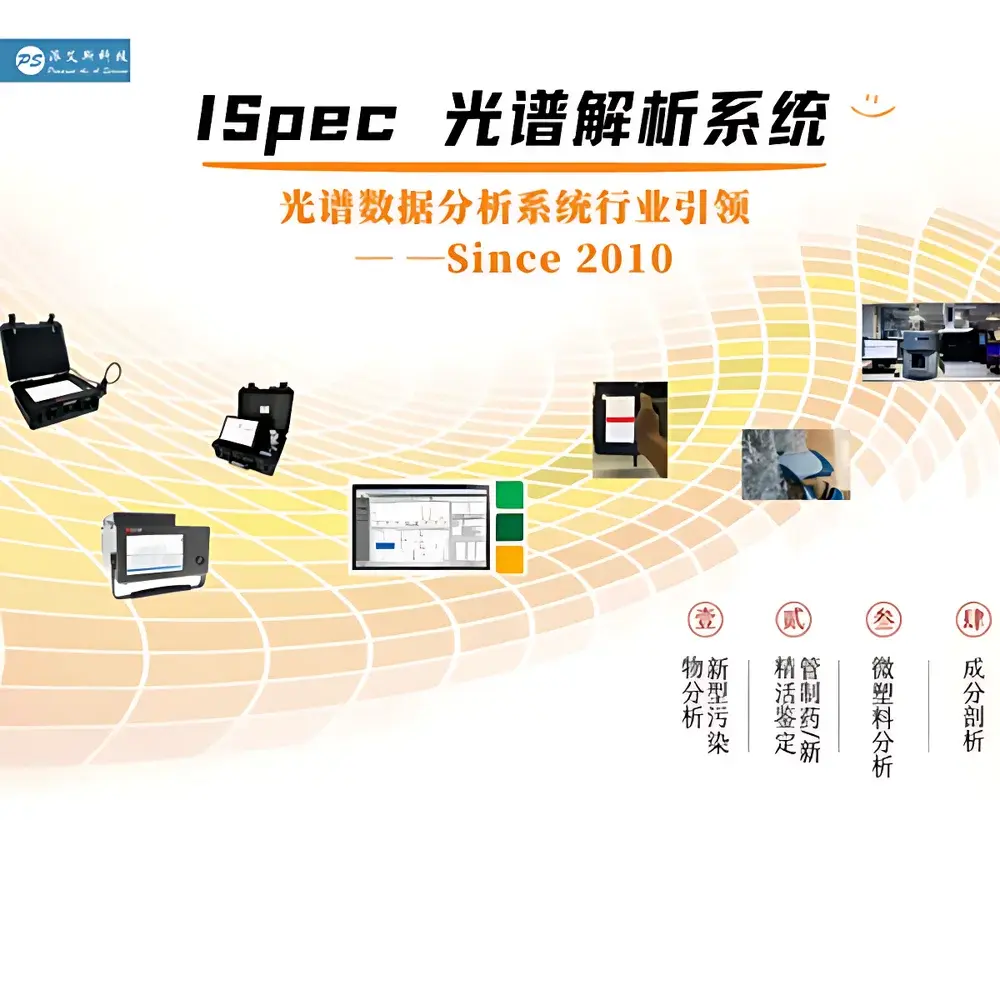
ISPEC KnowItAll Spectral Analysis System
| Brand | ISPEC |
|---|---|
| Origin | Beijing, China |
| Manufacturer Type | Manufacturer |
| Regional Classification | Domestic |
| Model | Analytical System |
| Quotation | Upon Request |
| Instrument Category | Spectral Software & Database Suite |
| Instrument Type | Laboratory-Based |
| Wavenumber Range | 4000–400 cm⁻¹ |
| Resolution | 1 cm⁻¹ |
Overview
The ISPEC KnowItAll Spectral Analysis System is a comprehensive, laboratory-grade spectral informatics platform engineered for rigorous chemical identification, structural elucidation, and regulatory-compliant data interpretation. Unlike standalone instrument control software, this system operates as a unified post-acquisition analytical environment—integrating spectral processing, multi-technique database searching, chemometric analysis, and auditable reporting into a single architecture. It leverages fundamental spectroscopic principles—including vibrational mode assignment in infrared (IR) and Raman spectroscopy, mass-to-charge correlation in mass spectrometry (MS), chemical shift prediction in nuclear magnetic resonance (NMR), and electronic transition modeling in UV-Vis—to deliver traceable, reproducible compound characterization. Designed explicitly for QC/QA laboratories, forensic chemistry units, environmental monitoring agencies, and pharmaceutical R&D facilities, the system supports full lifecycle management of spectral data from raw acquisition to final report generation under GLP/GMP-aligned workflows.
Key Features
- Multi-technique spectral analysis engine supporting IR, Raman, FT-NIR, NMR, MS, and UV-Vis data formats from over 30 leading instrument vendors
- Integrated spectral processing toolkit (ProcessIt™): baseline correction, atmospheric compensation, vector normalization, derivative smoothing, and spectral subtraction with metadata retention
- Intelligent identification workflow (ID Expert™): simultaneous single- and multi-component search across reference libraries using peak matching, functional group inference, and similarity scoring algorithms
- Advanced mixture deconvolution (MineIt™ & SearchIt™): enables spectral unmixing, co-elution resolution, and cross-technique correlation (e.g., IR + MS alignment for unknown verification)
- Patented NMR prediction module (PredictIt™ NMR): database-driven ¹H and ¹³C chemical shift estimation based on molecular topology and substituent effects
- FDA 21 CFR Part 11–compliant audit trail, electronic signature support, and role-based access control for regulated environments
- ChemWindow® 2D structure drawing with stereochemistry-aware rendering and IUPAC name generation
Sample Compatibility & Compliance
The system accepts spectra from solid, liquid, and gaseous samples analyzed via transmission, ATR, diffuse reflectance, or gas-phase IR cells—provided the source instrument outputs standard file formats (JCAMP-DX, ANDI/NetCDF, mzML, NMR-Data, or vendor-native binaries). Its spectral libraries comply with ISO 17025 requirements for reference material traceability and are curated against NIST SRMs, USP Reference Standards, and EPA Method 8270/8330 spectral benchmarks. The ISPEC-customized database includes analyte sets aligned with Chinese national standards (e.g., GB/T 39198-2020 for microplastics, GB 31658 for veterinary drug residues, and Ministry of Public Security bulletins on controlled substances), while the Sadtler IR Library meets ASTM E1421 and ISO 18967 specifications for spectral authenticity and inter-laboratory reproducibility.
Software & Data Management
KnowItAll Analytical Edition provides a centralized spectral data repository with version-controlled library management, customizable metadata tagging (CAS#, SMILES, batch ID, analyst, instrument serial number), and automated backup to network-attached storage or cloud archives (AWS S3, Azure Blob). All analytical actions—including peak picking, library search parameters, and report exports—are logged with timestamp, user ID, and hash-verified integrity checks. The system supports direct integration with LIMS platforms via RESTful API and exports PDF/A-1b compliant reports containing embedded spectra, annotated structures, confidence metrics, and spectral overlays—all traceable to original acquisition files. Database updates are delivered quarterly via encrypted package delivery with SHA-256 checksum validation.
Applications
- Regulatory compliance testing: Identification of banned substances in food, cosmetics, and environmental matrices per EU REACH, US FDA, and China NMPA guidelines
- Pharmaceutical quality control: Raw material identity verification, excipient compatibility screening, and polymorph differentiation using IR/NIR fingerprinting
- Forensic toxicology: Rapid classification of novel psychoactive substances (NPS), synthetic cannabinoids, fentanyl analogues, and designer stimulants
- Environmental forensics: Detection and quantification of endocrine disruptors, antibiotics, and microplastic polymer types in wastewater and soil extracts
- Polymer science: Additive identification, degradation product profiling, and copolymer composition analysis via FTIR spectral deconvolution
- Academic research: Teaching spectral interpretation workflows, building custom teaching libraries, and publishing reproducible spectral datasets with DOI assignment
FAQ
Does the system support real-time instrument control?
No. This is a post-acquisition analysis platform only; it does not interface with spectrometer hardware for data acquisition.
Can I import proprietary spectral data from non-standard instruments?
Yes—custom format parsers can be developed upon request, subject to file structure documentation and validation testing.
Is the Sadtler IR Library included by default?
Yes, the full Sadtler IR Collection (2.2+ million spectra) is licensed and bundled with all Analytical Edition deployments.
How frequently are spectral databases updated?
Major quarterly updates include new reference spectra, corrected assignments, and regulatory-mandated additions; minor patches address nomenclature and metadata consistency.
Does the software meet GLP audit requirements?
Yes—full electronic record integrity, audit trail export, and 21 CFR Part 11 compliance features are enabled and validated out-of-the-box.
Related Products




