
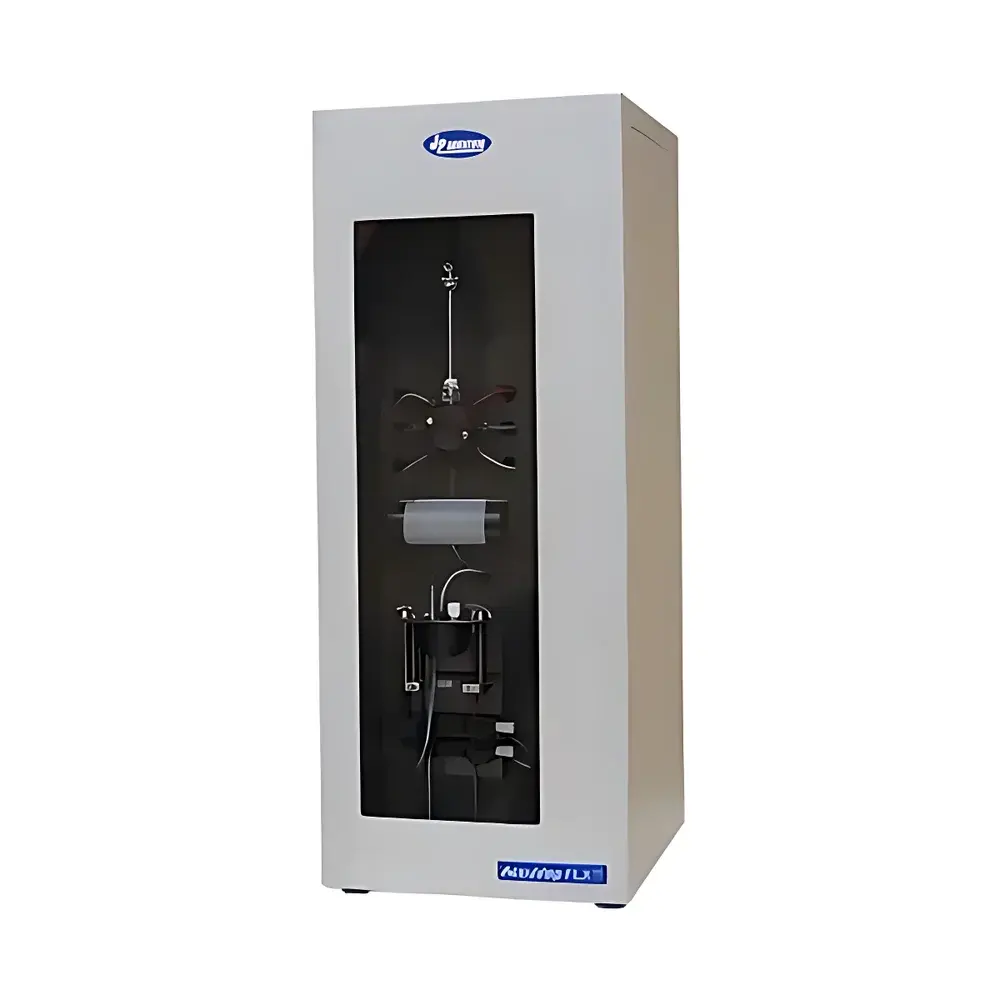
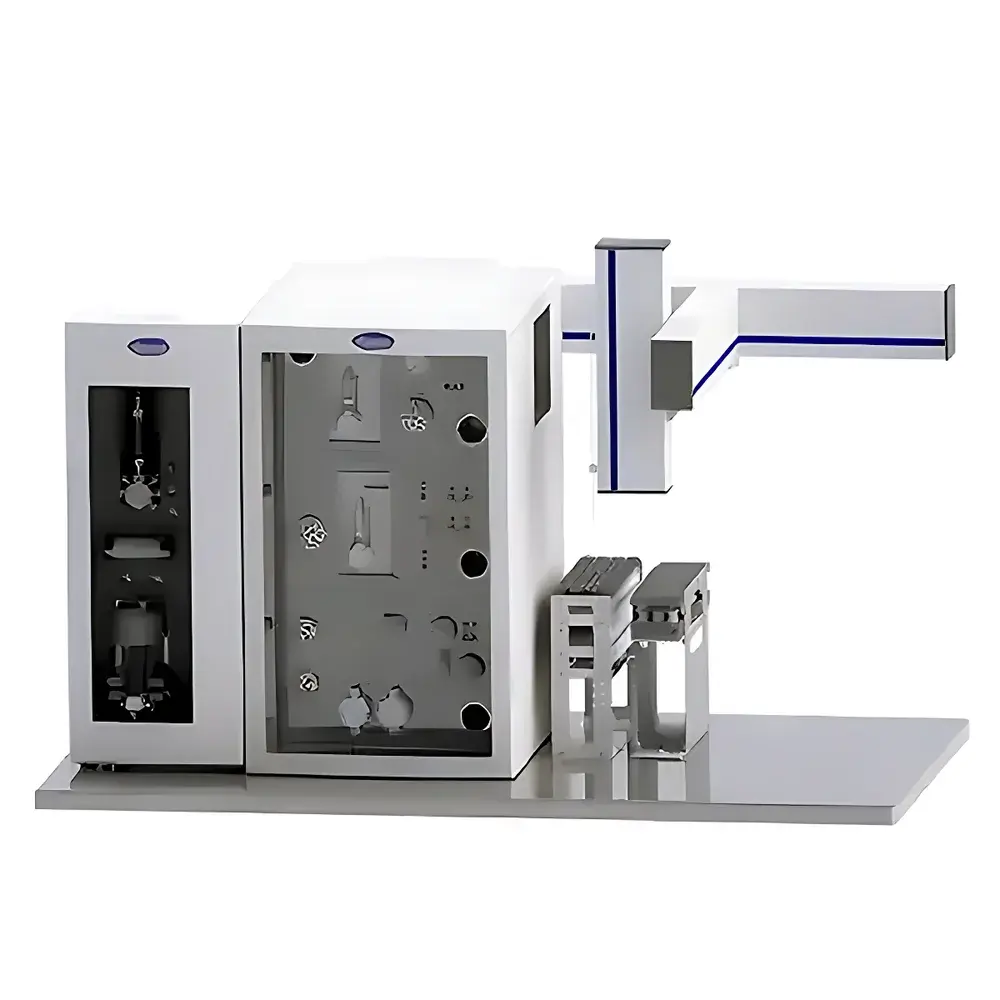
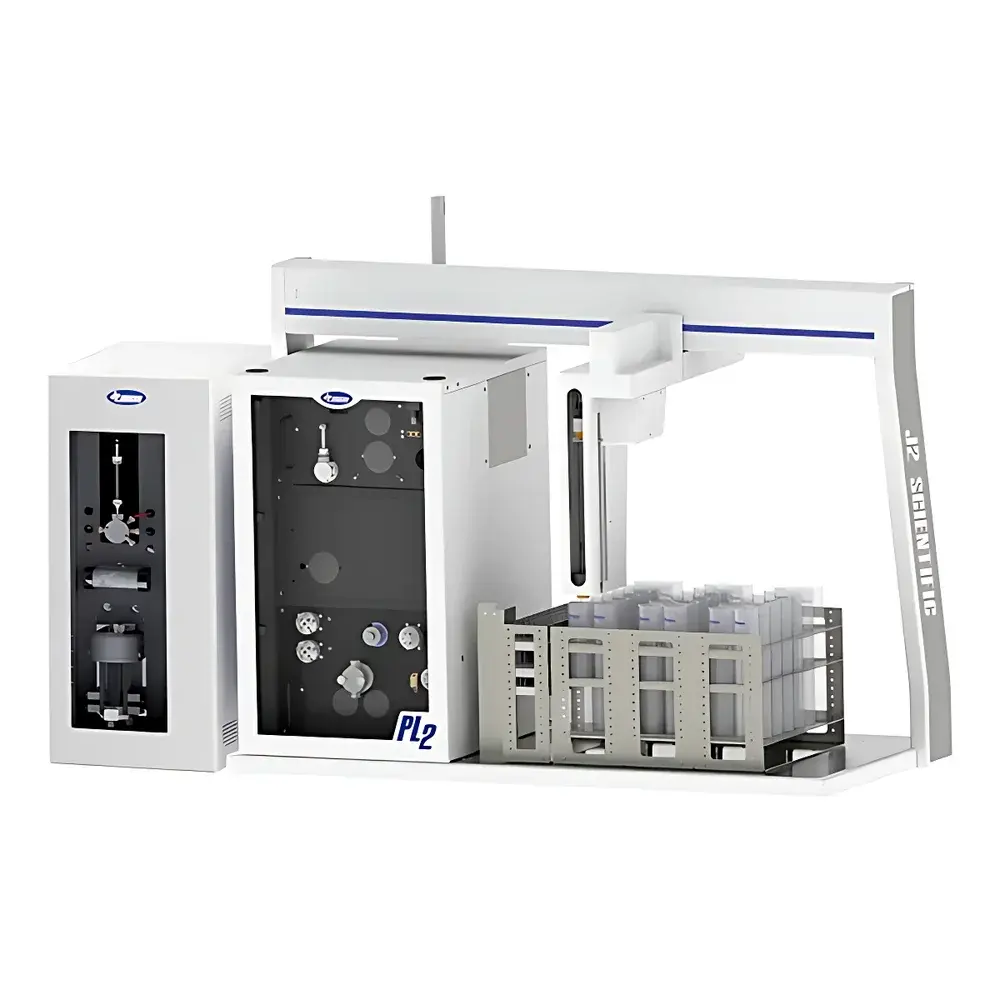
J2 Scientific Preplinc2 AccuVap Automated Sample Concentration System
| Brand | J2 Scientific |
|---|---|
| Origin | USA |
| Model | Preplinc2 AccuVap |
| Heating Temperature Range | Ambient to 100 °C (±0.1 °C) |
| Vacuum Range | 100–760 Torr |
| Endpoint Volume Selection | 1–5 mL or dry-down mode |
| Liquid-Level Detection | RF-combined optical sensing with temperature compensation |
| Injection Pump | 5 mL zero-dead-volume syringe pump (precision <0.1% typ., repeatability <0.01% typ.) |
| Solvent Compatibility | Up to 3 solvents, programmable in-line solvent exchange |
| Final Volume Accuracy | ±0.02 mL |
| Sample Throughput | Fully automated batch processing of multiple samples (10 mL–1 L per run) |
| Cleaning Modes | Heated solvent rinse, nitrogen purge, steam-assisted thermal cleaning, tool-free cup disassembly |
Overview
The J2 Scientific Preplinc2 AccuVap is an automated, high-precision sample concentration system engineered for quantitative recovery and reproducible endpoint control in analytical laboratories. It employs a dual-mode evaporation strategy—combining vacuum-assisted solvent removal with independent three-zone electric heating—to maintain dynamic thermal equilibrium during concentration. Unlike conventional rotary evaporators or nitrogen blow-down systems, the AccuVap integrates real-time liquid-level monitoring via RF-combined optical sensing, eliminating optical interference from colored or turbid matrices. This technology, augmented by redundant temperature feedback, enables precise endpoint determination without reliance on fixed time or pressure thresholds. The system operates under ambient pressure and temperature-controlled conditions, minimizing thermal degradation of thermolabile analytes while supporting full-dry or volumetric endpoints (1–5 mL). Its architecture supports seamless integration into regulated workflows requiring auditability, traceability, and compliance with GLP/GMP principles.
Key Features
- Real-time, adaptive process control: Vacuum and heating profiles adjust automatically as liquid volume changes within the concentrator chamber, maintaining consistent evaporation kinetics across variable sample loads.
- Zero-dead-volume 5 mL syringe pump: Delivers sub-microliter accuracy for reconstitution and solvent exchange; certified precision <0.1% (typ.) and repeatability <0.01% (typ.).
- Triple-cleaning protocol: Programmable heated solvent wash, steam-assisted thermal sanitization, and nitrogen purging ensure cross-contamination risk is reduced to <0.001% carryover between runs.
- Tool-free concentrator cup design: Enables rapid disassembly and manual cleaning without calibration loss—critical for high-sensitivity residue analysis (e.g., pesticide screening per EPA Method 1694).
- In-line solvent exchange capability: Switches between up to three solvents mid-run—enabling transitions from hexane to ethyl acetate or methanol without manual intervention.
- Hermetic sample transfer path: All post-concentration transfers occur under sealed conditions, preventing volatile loss, atmospheric contamination, and operator exposure to organic vapors.
Sample Compatibility & Compliance
The Preplinc2 AccuVap accommodates sample volumes ranging from 10 mL to >1 L, making it suitable for environmental extracts (e.g., soil/sediment leachates), food homogenates, pharmaceutical stability batches, and clinical biofluids. Its PTFE-lined fluidic pathways resist corrosion from aggressive solvents including chlorinated hydrocarbons, acetonitrile, and concentrated acids. The system meets mechanical safety requirements per UL 61010-1 and electromagnetic compatibility standards IEC 61326-1. Software logs all critical parameters—including temperature setpoints, vacuum profiles, pump actuations, and cleaning cycles—with timestamped, user-identifiable entries. Audit trails comply with FDA 21 CFR Part 11 when deployed with validated electronic signatures and role-based access controls.
Software & Data Management
The graphical user interface (GUI) supports method development, storage, and version-controlled recall of concentration protocols. Each method stores not only endpoint criteria but also solvent transition points, heating ramp rates, and cleaning sequence parameters. All operational data—including sensor outputs, pump dispense volumes, and vacuum transducer readings—are exported in CSV or XML format for LIMS integration. Optional software modules provide IQ/OQ documentation templates aligned with ASTM D7218 (for environmental labs) and USP <1058> (analytical instrument qualification). Raw data files are cryptographically hashed to ensure integrity during archival.
Applications
- Environmental analysis: Quantitative concentration of EPA SW-846 Methods 3540C (Soxhlet), 3550C (Ultrasonic), and 3630C (GPC) eluates prior to GC-MS/MS or LC-MS/MS analysis.
- Food safety testing: Recovery of multi-residue pesticide extracts from QuEChERS supernatants with minimal matrix co-concentration.
- Pharmaceutical impurity profiling: Controlled solvent exchange from dichloromethane to acetonitrile prior to HPLC injection, preserving labile degradants.
- Clinical toxicology: Parallel concentration of 96-well plate plasma extracts under nitrogen-blanketed conditions to prevent oxidation of catecholamines.
- Regulatory submissions: Generation of auditable concentration records required for OECD GLP studies (e.g., 417, 425) and ISO/IEC 17025-accredited testing.
FAQ
How does the RF-combined optical sensor improve endpoint accuracy compared to standard photodiodes?
It mitigates false triggering caused by sample coloration or suspended particulates by measuring both optical transmission and dielectric response—cross-validated against inline temperature—ensuring robust detection across diverse matrices.
Can the system be validated for use in a 21 CFR Part 11 environment?
Yes—when configured with optional audit-trail logging, electronic signature enforcement, and secure user authentication, the AccuVap satisfies predicate rule requirements for electronic records and signatures.
What maintenance intervals are recommended for long-term precision?
The zero-dead-volume pump requires recalibration every 6 months; PTFE seals should be inspected quarterly; and the RF-optical sensor window must be cleaned after each solvent-exchange sequence using IPA and lint-free wipes.
Is integration with J2 Scientific’s GPC or SPE platforms hardware- or software-dependent?
Both: A dedicated RS-485 interface enables hardware-level handshake for synchronized sample handoff, while shared method libraries and unified log export formats ensure software interoperability across the purification workflow.
Does the system support unattended overnight operation?
Yes—equipped with automatic fault detection, emergency vacuum release, and thermal cutoff at 105 °C, it is certified for continuous 24/7 operation in Class 10,000 cleanroom environments.



