
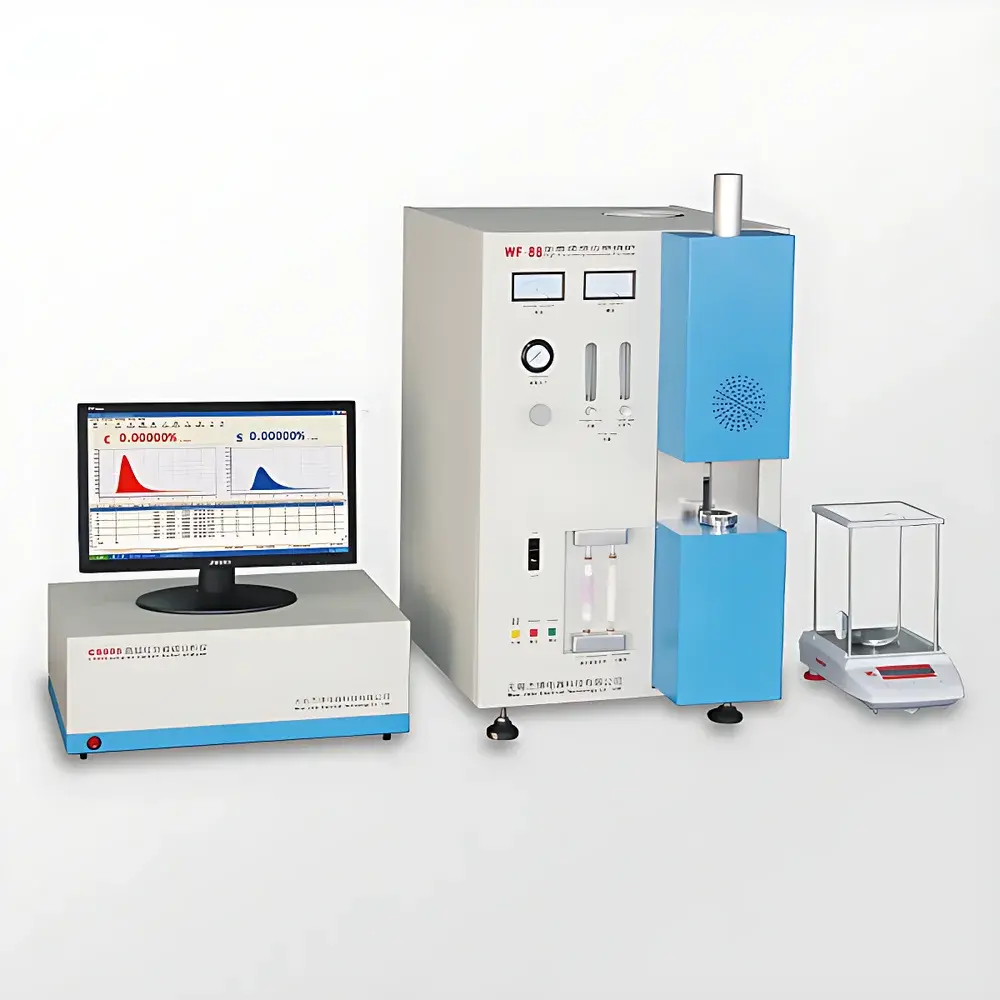
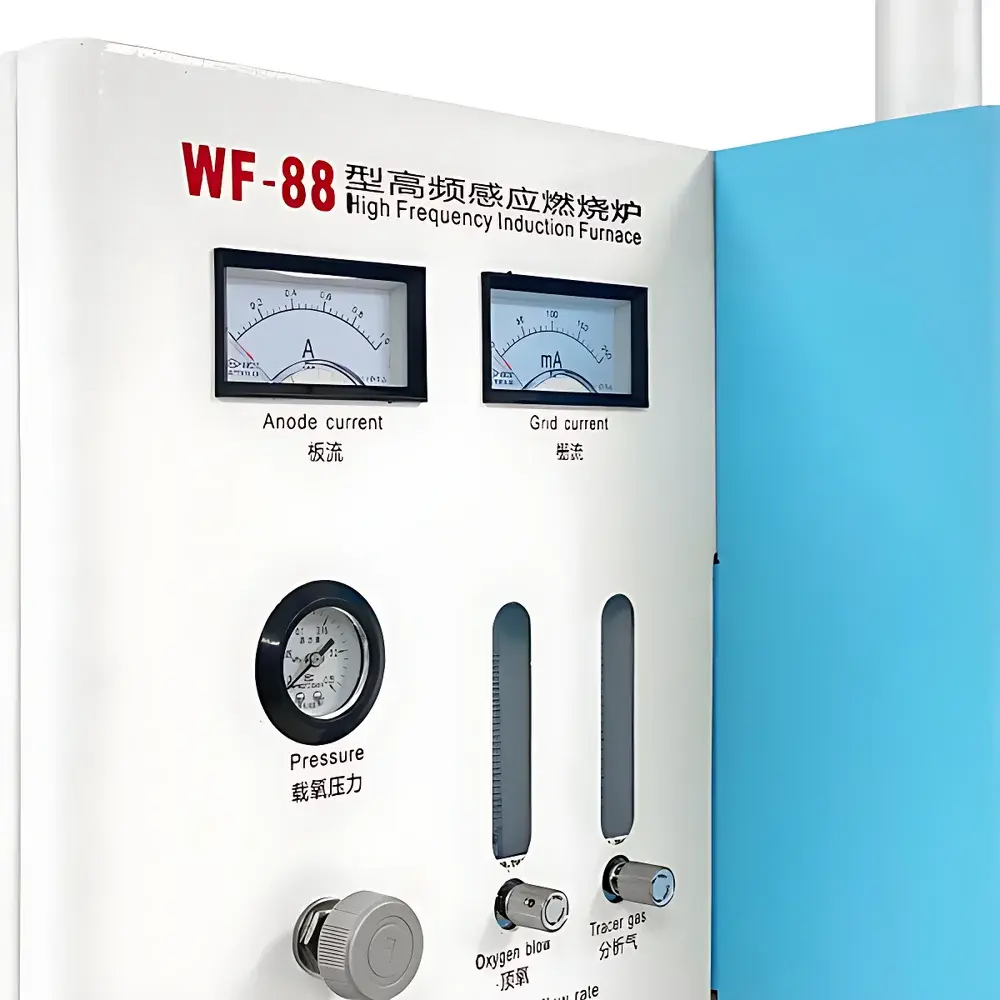
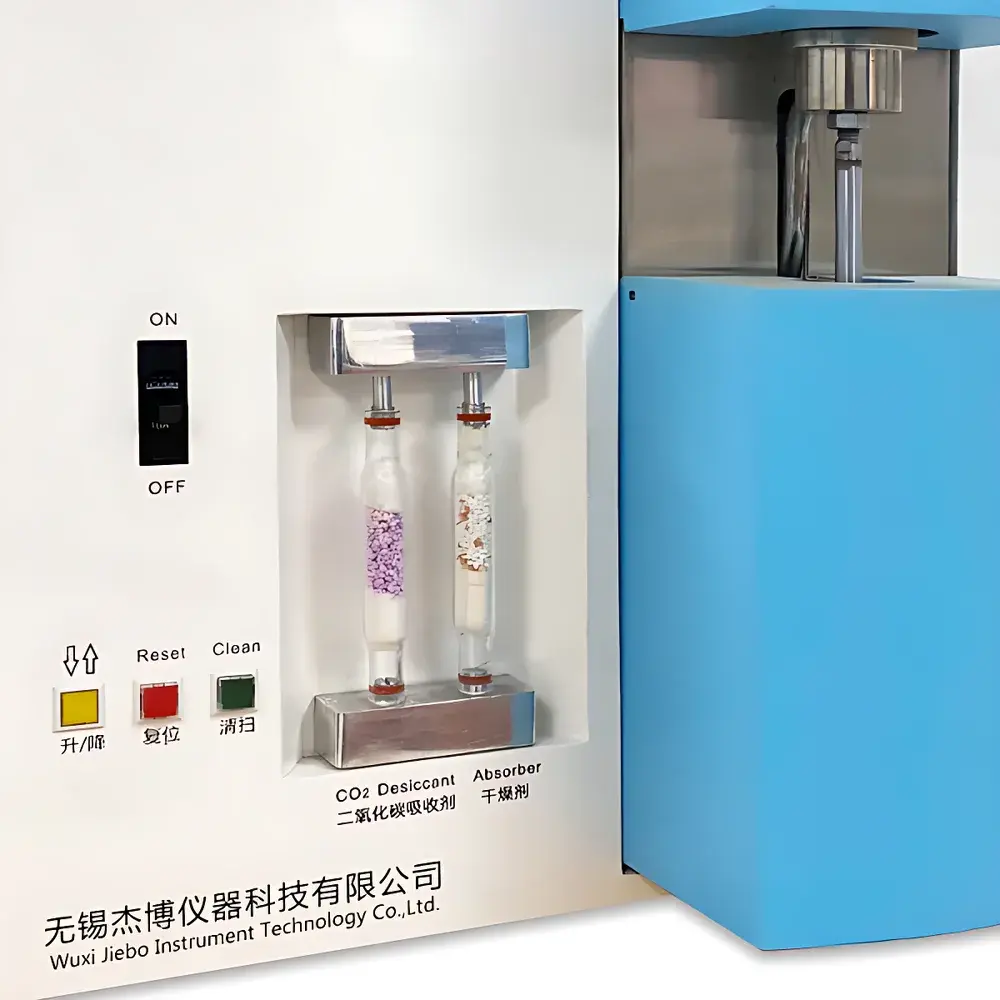
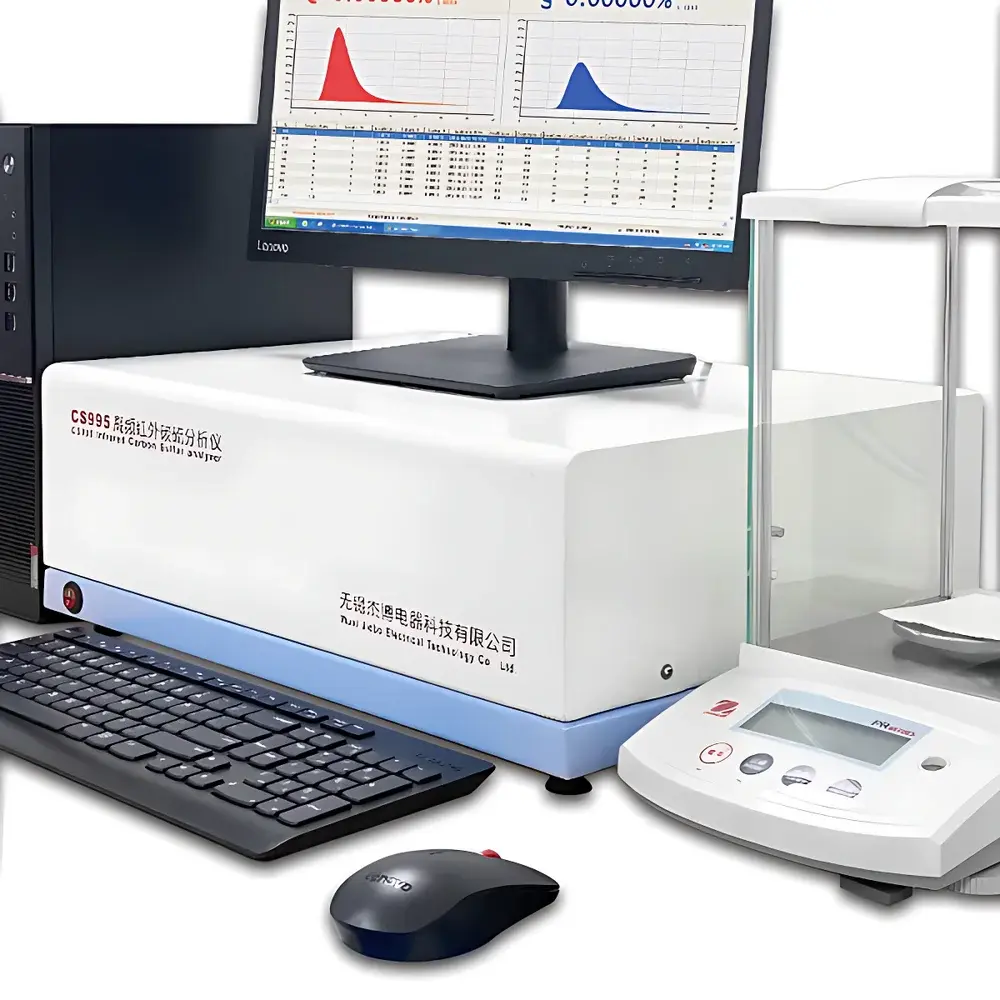
JB CS995 Advanced Digital Carbon-Sulfur Analyzer
| Brand | JB |
|---|---|
| Origin | Jiangsu, China |
| Manufacturer Type | Authorized Distributor |
| Product Origin | Domestic (China) |
| Model | CS995 Advanced Digital Carbon-Sulfur Analyzer |
| Price | USD 16,800 (FOB Jiangsu) |
| Measurement Principle | Infrared Absorption Spectroscopy |
| Heating System | High-Frequency Induction Furnace (2.5 kW, 20 MHz) |
| Measurement Range | C: 0.0001–6.0000 wt% |
| S | 0.0001–0.5000 wt% |
| Sensitivity | 0.01 ppm (C and S) |
| Precision | ±1 ppm (RSD ≤ 0.5% at mid-range concentration) |
| Analysis Time | ≤35 seconds per sample (including combustion, gas purification, and IR detection) |
Overview
The JB CS995 Advanced Digital Carbon-Sulfur Analyzer is a high-performance, dual-channel infrared absorption spectrometer engineered for rapid, accurate, and trace-level quantification of total carbon (C) and total sulfur (S) in solid inorganic materials. It operates on the fundamental principle of non-dispersive infrared (NDIR) spectroscopy: following complete combustion in a high-frequency induction furnace under controlled oxygen flow, the evolved CO₂ and SO₂ gases are swept through dedicated optical cells where their characteristic absorption bands at 4.26 µm (CO₂) and 7.35 µm (SO₂) are measured photometrically. The instrument’s dual-detector architecture enables simultaneous, independent quantification of both elements with minimal cross-interference, delivering high reproducibility across diverse matrix types — from low-alloy steels to refractory ceramics and geological samples.
Key Features
- High-frequency induction furnace (2.5 kW, 20 MHz) with graphite crucible and ceramic liner, ensuring uniform, ash-free combustion up to 1700 °C and consistent thermal stability across >10,000 analyses.
- Dual NDIR detectors with temperature-stabilized optical path and auto-zero reference channel, minimizing drift and enabling long-term calibration stability (calibration validity ≥ 8 hours under routine operation).
- Digital signal processing unit with 24-bit ADC resolution and real-time baseline correction, supporting detection limits down to 0.01 ppm for both C and S in solid samples.
- Integrated gas purification train comprising copper oxide catalyst, magnesium perchlorate desiccant, and alkali-asbestos trap to remove halogens, NOₓ, H₂O, and residual CO — critical for compliance with ASTM E1019 and ISO 15350 requirements.
- Touchscreen HMI with embedded ARM Cortex-A9 controller, supporting multi-language UI (English, German, Japanese), method recall, and audit-ready operation logs.
- Modular design compliant with IEC 61000-6-3 (EMC) and IEC 61010-1 (safety), with optional RS-232, USB host/device, and Ethernet interfaces for LIMS integration.
Sample Compatibility & Compliance
The CS995 is validated for use with pressed pellets, drill chips, and milled powders weighing 0.2–1.0 g. It meets analytical requirements for routine QC/QA in metallurgical laboratories handling ferrous and non-ferrous alloys (e.g., ASTM A751, ISO 4941), mineral concentrates (ASTM D3176), coal and coke (ASTM D3176, ISO 1171), and refractory raw materials (ISO 21068-2). All measurement protocols align with GLP documentation standards; data integrity is ensured via electronic signatures, time-stamped audit trails, and user-access level controls — fully compatible with FDA 21 CFR Part 11 when deployed with validated software configuration.
Software & Data Management
The JB Analytical Suite v3.2 provides comprehensive instrument control, calibration management (single-point and multi-point), and statistical reporting (mean, SD, RSD, % recovery, control charts). Raw spectral data, combustion profiles, and calibration curves are stored in vendor-neutral .CSV and .XML formats. Software supports automated report generation per ISO/IEC 17025 templates and includes built-in uncertainty estimation per GUM (JCGM 100:2008). Data export functions comply with laboratory informatics workflows, including direct upload to enterprise LIMS via HL7 or ASTM E1384-compliant interfaces.
Applications
- Quality control of carbon equivalency (CE) and sulfur embrittlement risk in carbon, alloy, and stainless steels.
- Grade verification of aluminum, copper, titanium, and nickel-based alloys per AMS, EN, and GB/T specifications.
- Geochemical assay of iron ore, bauxite, limestone, and phosphate rock for process optimization and smelter feed control.
- Compliance testing of coal and coke for sulfur content in accordance with environmental regulations (e.g., EPA Method 30B, ISO 334).
- Research-grade analysis of synthetic refractories, silicon carbide composites, and graphite electrodes where stoichiometric C/S ratios impact thermal stability.
FAQ
What sample preparation is required prior to analysis?
Samples must be homogenized to ≤100 µm particle size, dried at 105 °C for 2 h, and weighed precisely using a Class I analytical balance (0.01 mg readability). Metallic samples may require surface cleaning to remove oxides or lubricants.
Is the CS995 compliant with ISO/IEC 17025 accreditation requirements?
Yes — when operated with documented SOPs, calibrated reference materials (CRM), and validated software configuration, the CS995 satisfies Clause 7.7 (Measurement Traceability) and Clause 7.8 (Reporting Results) of ISO/IEC 17025:2017.
Can the instrument analyze sulfur in sulfide-rich ores without interference from SO₃ or sulfate species?
Yes — the high-temperature combustion (≥1500 °C) and catalytic oxidation stage ensure quantitative conversion of all sulfur-bearing compounds (sulfides, sulfates, elemental S) to SO₂, as verified per ISO 15350 Annex B.
What maintenance intervals are recommended for optimal performance?
Daily: Desiccant replacement and dust filter inspection. Weekly: Furnace liner cleaning and optical window wipe with spectroscopic-grade methanol. Quarterly: Detector gain calibration and gas line leak check per manufacturer’s PM checklist.
Does the system support remote diagnostics or firmware updates?
Yes — via secure HTTPS-enabled web interface (port 443); firmware updates are digitally signed and require administrator authentication. Remote support sessions are encrypted using TLS 1.2 and log all access events.




