
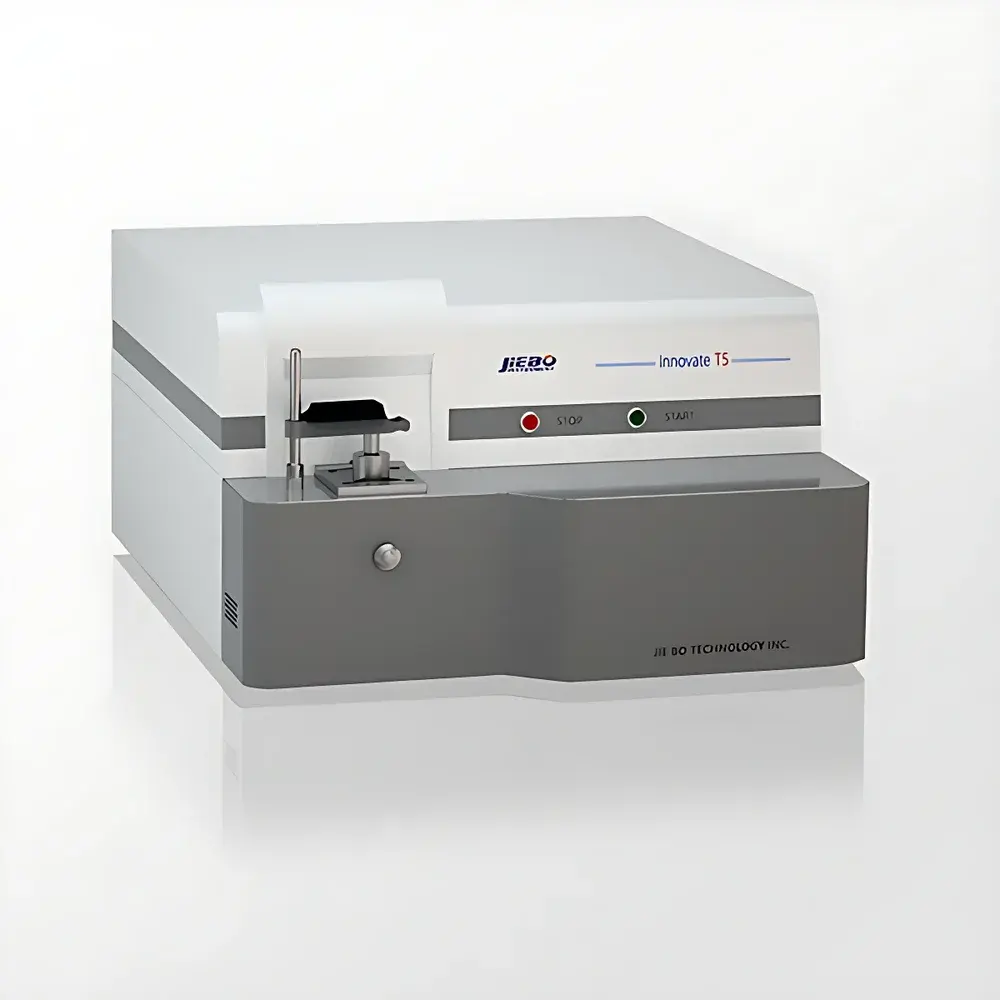
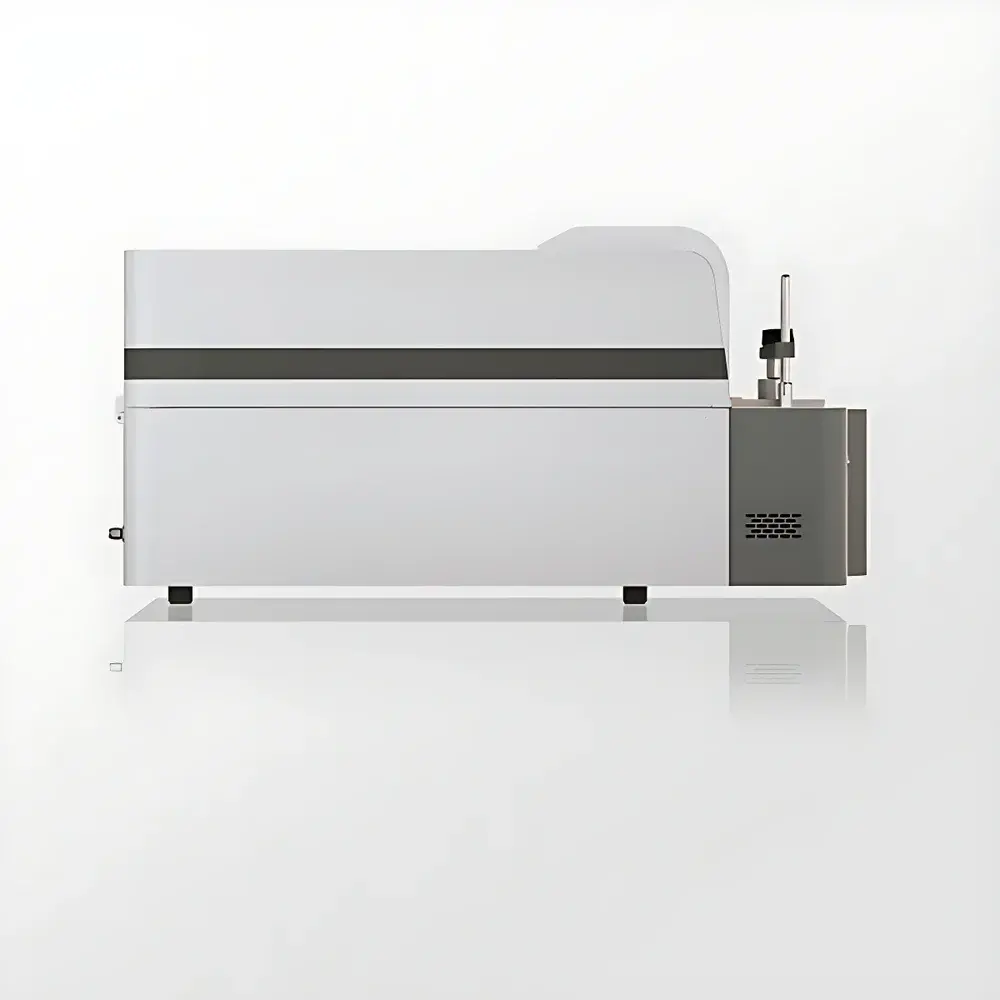
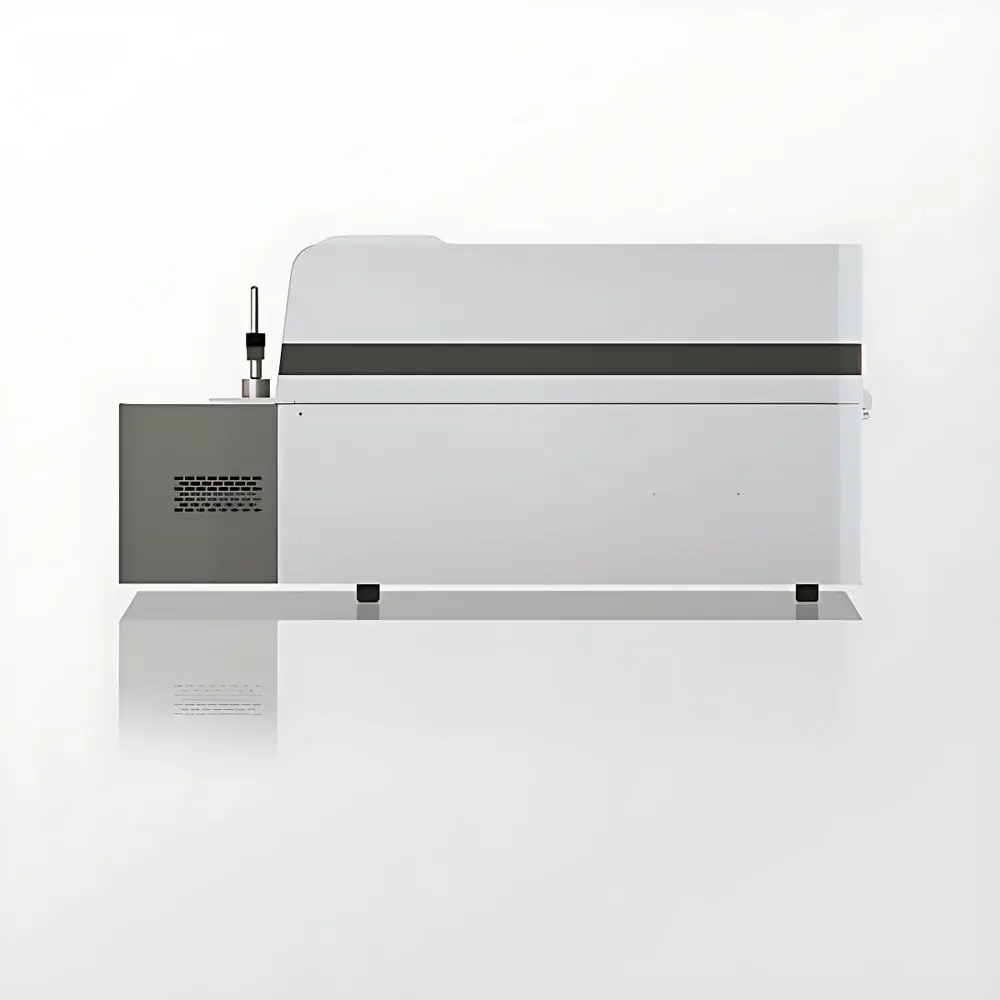
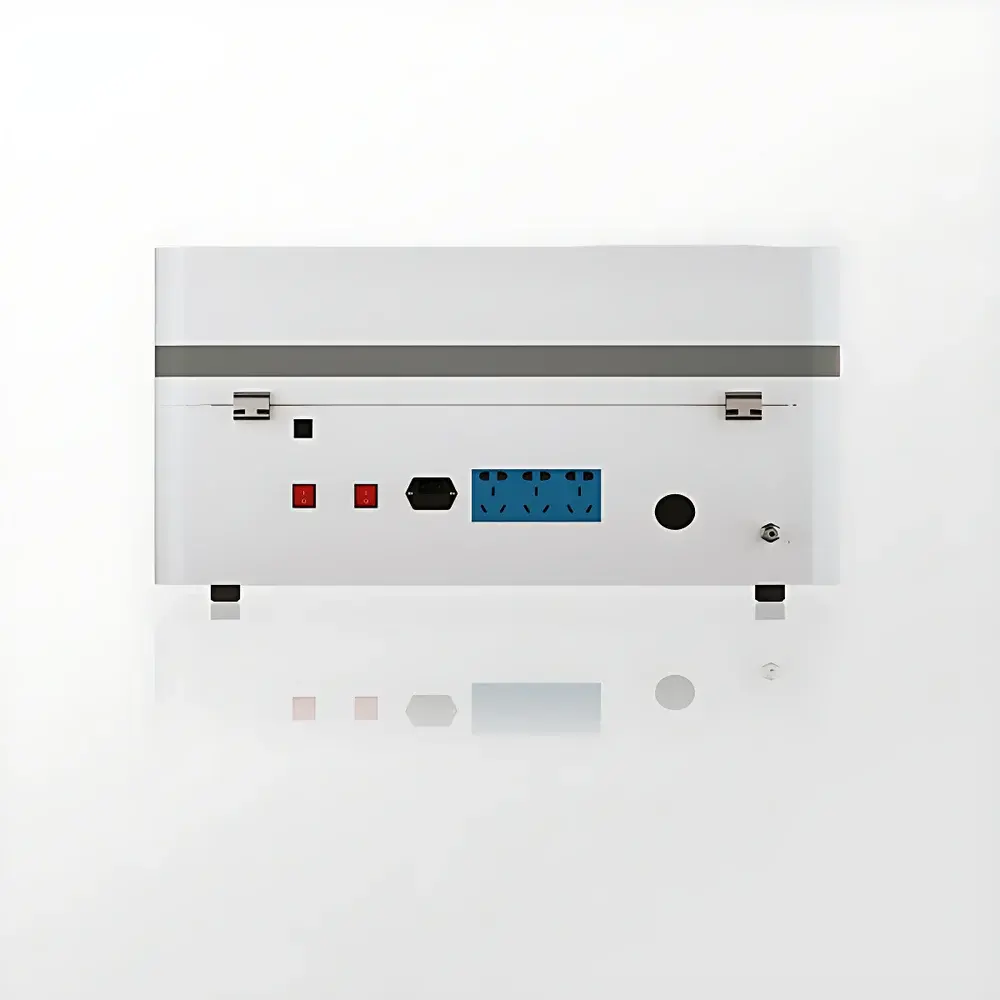
JB Innovate T5 Direct-Reading Optical Emission Spectrometer (OES)
| Brand | JB |
|---|---|
| Origin | Jiangsu, China |
| Manufacturer Type | Authorized Distributor |
| Instrument Type | Benchtop |
| Excitation Method | Spark |
| Detector Type | CCD-based Multi-Channel Array |
| Focal Length | 401 mm |
| Grating Groove Density | 2400 lines/mm |
| Wavelength Range | 140–680 nm |
| Optical Configuration | Paschen–Runge Mount |
| Number of Simultaneous Analytical Channels | Not Applicable (Full-Spectrum CCD Acquisition) |
| Compliance | Meets ISO 11573:2021 (Metallic materials — Spark optical emission spectrometry), ASTM E415–22 (Standard Test Method for Analysis of Carbon and Low-Alloy Steel by Spark Atomic Emission Spectrometry) |
Overview
The JB Innovate T5 is a benchtop direct-reading optical emission spectrometer (OES) engineered for high-precision elemental analysis of solid metallic samples in industrial quality control and R&D environments. Based on spark source excitation and Paschen–Runge optical architecture, the system utilizes a fixed high-resolution monochromator with a 401 mm focal length and a 2400 lines/mm holographic grating to deliver stable spectral dispersion across the ultraviolet–visible range (140–680 nm). Unlike sequential or limited-channel OES systems, the Innovate T5 employs a high-sensitivity, back-thinned CCD detector array enabling full-spectrum acquisition without mechanical channel selection—supporting flexible method development, retrospective spectral re-evaluation, and multi-element quantification with high reproducibility. Its robust thermal management and vacuum-purged optical path minimize drift and ensure long-term calibration stability, making it suitable for GLP-compliant metallographic laboratories and production-floor QC labs operating under ISO/IEC 17025 or ASTM E415–22 frameworks.
Key Features
- Benchtop footprint with integrated argon purge system and auto-ignition spark source optimized for low-consumption, high-stability excitation
- Paschen–Runge mounting geometry ensuring minimal astigmatism and high linearity across the entire spectral range
- Back-illuminated, deep-depletion CCD detector with 2048 × 512 pixel resolution and thermoelectric cooling (–10 °C stabilized) for enhanced signal-to-noise ratio in UV region (140–200 nm)
- Real-time background correction and peak deconvolution algorithms embedded in firmware to mitigate inter-element interference (e.g., Fe I 238.204 nm / Cr I 238.203 nm)
- Pre-aligned optical train with sealed, maintenance-free optics; no user-accessible gratings or mirrors requiring recalibration
- Compliant with ASTM E415–22 and ISO 11573:2021 test protocols for carbon, sulfur, phosphorus, and trace alloying elements (e.g., Cu, Ni, Mo, V, Ti) in ferrous and non-ferrous alloys
Sample Compatibility & Compliance
The Innovate T5 accepts standard 32–40 mm diameter metallic discs (flat, polished, and clean per ISO 11573 Annex A) including cast iron, stainless steels, aluminum alloys, copper-based alloys, and titanium grades. Sample introduction is via a motorized, pressure-regulated electrode holder with automatic surface conditioning (pre-spark cleaning) and real-time arc gap monitoring. The instrument supports certified reference materials (CRMs) traceable to NIST SRMs or BCS/IRMM standards for daily recalibration. Data integrity complies with FDA 21 CFR Part 11 requirements through electronic signature support, audit trail logging, and role-based access control within the acquisition software. All analytical reports include metadata such as spark count, integration time, argon flow rate, and environmental temperature/humidity—enabling full traceability for GMP or ISO 9001 audits.
Software & Data Management
JB SpectraLink v5.2 software provides intuitive method setup, spectral visualization, and multivariate calibration (PLS and MLR) with cross-validation diagnostics. Raw spectral data (.spe binary format) and processed results (.csv/.xlsx) are stored in a local SQL database with configurable retention policies. The software supports LIMS integration via ASTM E1384-compliant XML export and includes built-in statistical process control (SPC) charts (X-bar/R, Cpk, Ppk) for real-time trend analysis. Audit trails record all user actions—including method edits, calibration updates, and result overrides—with timestamps and operator IDs. Optional cloud backup and remote diagnostic modules enable secure off-site data redundancy and OEM-level firmware update deployment.
Applications
- Quality assurance of incoming raw materials and finished castings in foundries (ASTM A48, A278, EN-GJS-400-15)
- Alloy grade identification and positive material identification (PMI) in petrochemical and power generation infrastructure
- Research-grade quantitative analysis of microalloying elements (e.g., B, Nb, Zr) in advanced high-strength steels (AHSS) and aerospace-grade Al-Li alloys
- Process validation for heat treatment and surface hardening operations where elemental segregation must be monitored (e.g., case depth profiling via controlled spark erosion)
- Failure analysis laboratories performing root cause investigation of brittle fracture, hydrogen embrittlement, or intergranular corrosion linked to impurity segregation (S, P, Sn, As)
FAQ
Does the Innovate T5 require external vacuum pumping?
No—the optical chamber is sealed and continuously purged with high-purity argon (99.999%) to eliminate atmospheric absorption below 190 nm.
Can it analyze non-conductive samples such as ceramics or coatings?
No—it is designed exclusively for conductive metallic solids. Non-metals require alternative techniques (e.g., LA-ICP-MS or XRF).
What is the typical detection limit for trace elements like Pb or Bi in aluminum matrix?
Under optimized conditions (≥100 sparks, 120 s integration), typical LODs range from 0.1–0.5 ppm depending on spectral line selection and matrix interference.
Is method transfer possible between different JB OES platforms?
Yes—spectral libraries and calibration models are compatible across the Innovate series (T3/T5/T7) via standardized .cal and .lib file formats.
How often does the spark stand require maintenance?
Electrode cleaning is recommended after every 500–1000 analyses; full spark stand inspection is advised quarterly or per 5,000 sparks, whichever occurs first.





