
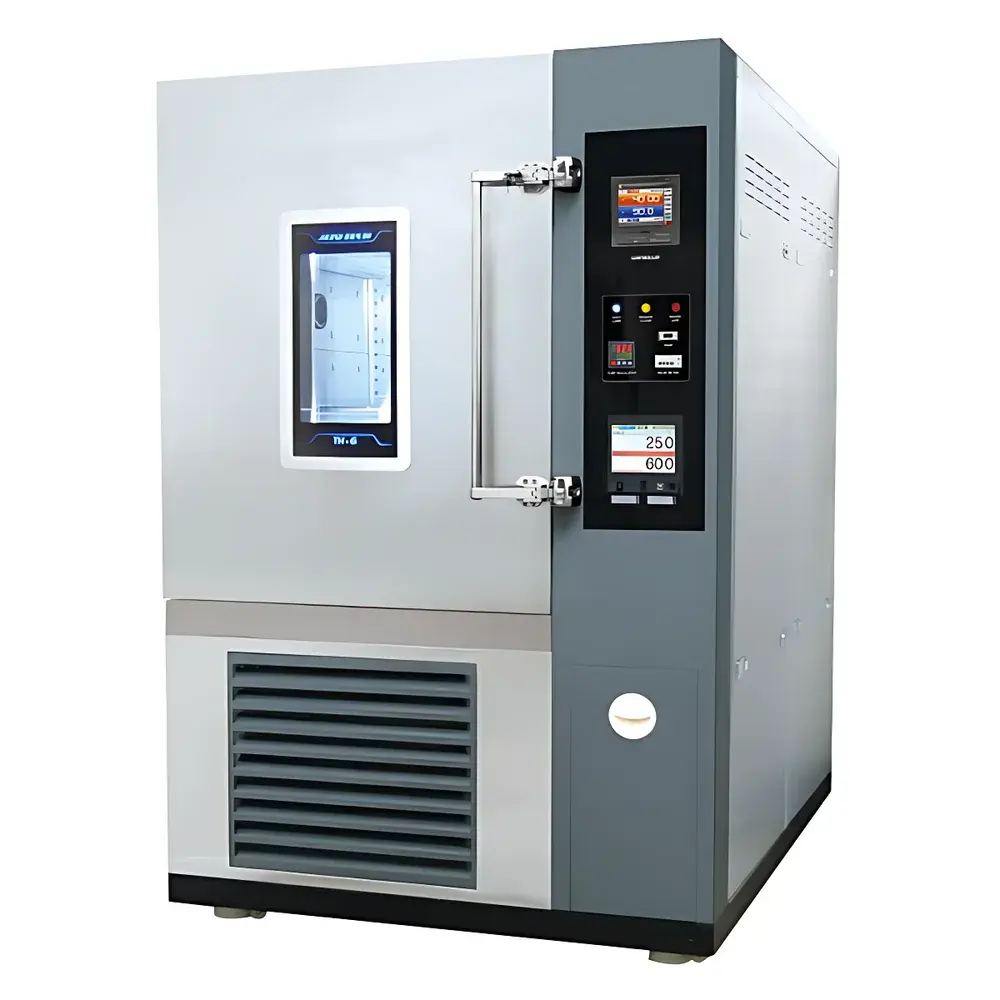
JeioTech TH-G-408 Temperature and Humidity Controlled Environmental Test Chamber
| Brand | JeioTech |
|---|---|
| Origin | South Korea |
| Model | TH-G-408 |
| Chamber Volume | 408 L |
| Temperature Range (dry) | −40 °C to +150 °C |
| Humidity Range | 25 %RH to 95 %RH |
| Temp. Uniformity (at 40 °C, 75 %RH) | ±0.5 °C |
| Temp. Stability (at 40 °C, 75 %RH) | ±0.3 °C |
| Humidity Stability (at 40 °C, 75 %RH) | ±0.4 %RH |
| Humidity Deviation (at 40 °C, 75 %RH) | ±3 %RH |
| Heating Rate | 2.6 °C/min |
| Internal Dimensions (W×D×H) | 600 × 850 × 800 mm |
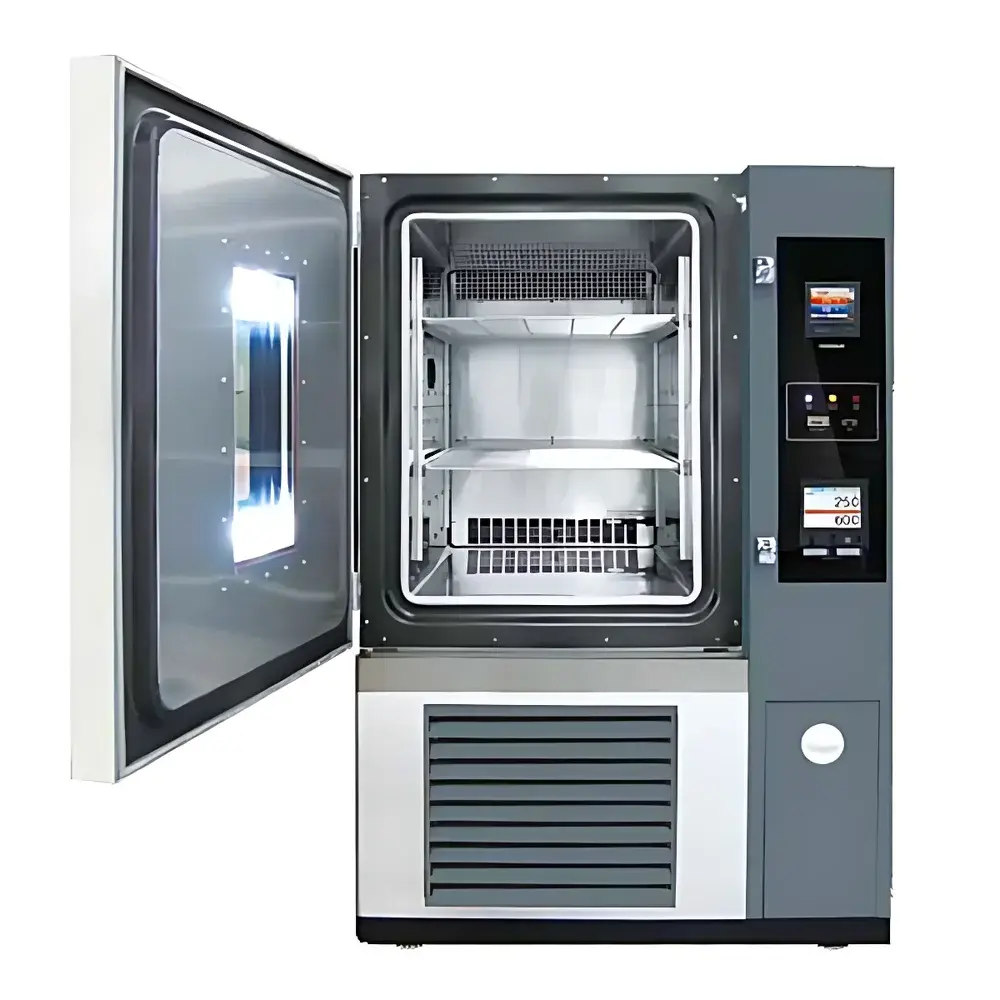
| Standard Shelving | 2 adjustable stainless steel shelves (max. 10), load capacity per shelf: 25 kg, total payload: 65 kg |
| Water Tank Capacity | 15 L |
| Net Weight | 410 kg |
| Power Supply | 3-phase 380–415 VAC, 50/60 Hz |
| Compliance | DIN 12880, IEC 60068 |
Overview
The JeioTech TH-G-408 is a precision-engineered, upright environmental test chamber designed for rigorous long-term stability testing under tightly controlled temperature and humidity conditions. Based on dual-loop PID control architecture with six-zone adaptive tuning, it delivers high reproducibility in both thermal and hygrometric regulation—critical for accelerated aging, reliability validation, and qualification testing across regulated industries. Its core measurement principle relies on high-accuracy platinum resistance thermometers (PT100) for temperature sensing and capacitive polymer humidity sensors calibrated traceably to NIST standards. The chamber employs a forced-air convection system with optimized airflow distribution and a dedicated external steam-generation humidification unit, ensuring minimal condensation risk and uniform chamber-wide conditions—even during extended dwell cycles at high RH levels. Designed and manufactured in South Korea, the TH-G-408 meets DIN 12880 (laboratory climate chambers) and IEC 60068-3-5 (environmental testing—part 3: guidance—chapter 5: verification of performance of temperature chambers), supporting compliance-driven workflows in R&D, quality assurance, and regulatory submission environments.
Key Features
- Dual-sealed door assembly with silicone gasket and mechanical latch system, validated per SEFA 1.1 for long-term air-tight integrity and thermal leakage resistance
- External steam-humidification system with self-cleaning capability—eliminates internal water reservoirs and reduces microbial growth risk during prolonged high-RH operation
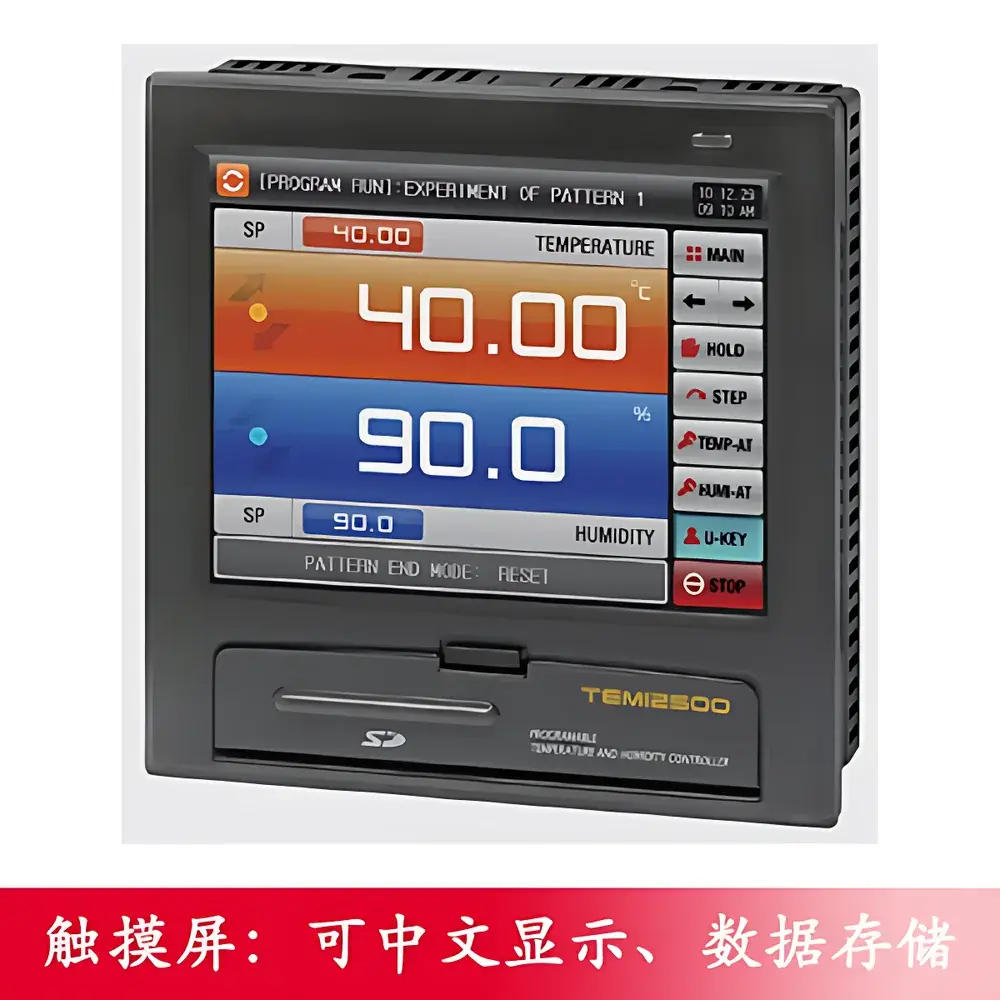
- 5.7-inch full-color TFT touchscreen controller with intuitive icon-based navigation, real-time trend graphs, and programmable multi-step profiles (up to 99 segments)
- Independent A-OT (Advanced Over-Temperature) electronic limiter with redundant PT100 sensor and B-OT mechanical backup—fully compliant with IEC 61000-6-2 and EN 60335-1 safety requirements
- Front-access drawer-type 15 L deionized water tank (pH 6.2–7.2, conductivity <20 µS/cm), enabling uninterrupted operation with top-up capability during active testing
- Integrated LED-lit tempered glass door with embedded heating wire to prevent fogging—enabling unobstructed visual monitoring without opening the chamber
- RS-232 standard interface and optional RS-485 expansion port, supporting daisy-chain configuration of up to 32 units for centralized monitoring via PC-based SCADA or LIMS integration
- Modular condenser access panel with quick-release grilles—facilitating routine maintenance and sustained cooling efficiency without disassembly
Sample Compatibility & Compliance
The TH-G-408 accommodates diverse sample configurations—including PCB assemblies, lithium-ion battery modules, pharmaceutical blister packs, automotive ECUs, optical lenses, and polymer composites—within its 408 L working volume. Its interior dimensions (600 × 850 × 800 mm) support standard ISO/IEC 17025-compliant shelving layouts, with two factory-installed stainless-steel shelves (25 kg capacity each) and provision for up to eight additional shelves (40 mm vertical pitch). The 50 mm diameter cable port enables seamless integration with external power supplies, data loggers, or stimulus equipment. All materials in contact with the test environment comply with RoHS Directive 2011/65/EU and are non-outgassing per ASTM E595. The chamber’s performance validation protocol aligns with ISO/IEC 17025 clause 6.4.2 for equipment suitability assessment and supports GLP/GMP audit readiness when paired with optional 21 CFR Part 11-compliant software packages.
Software & Data Management
The embedded controller logs timestamped temperature and humidity values at user-defined intervals (1 s to 60 min), storing up to 10,000 data points internally with automatic backup upon power cycle. Export is supported via USB flash drive in CSV format for post-processing in MATLAB, JMP, or statistical process control (SPC) platforms. Optional PC software (TH-Link Pro) provides remote supervision, alarm email notifications, electronic signature-enabled report generation, and audit trail functionality meeting FDA 21 CFR Part 11 requirements—including user access levels, change history, and immutable event logging. Data synchronization over Ethernet (via optional module) enables real-time dashboarding in enterprise MES or QMS environments.
Applications
The TH-G-408 serves as a foundational platform for environmental stress screening (ESS) and qualification testing across multiple sectors: accelerated life testing of microelectronic components per JEDEC JESD22-A108; thermal cycling and damp heat validation of medical devices per ISO 13485 Annex C; stability studies of pharmaceutical products under ICH Q1A(R2) conditions; corrosion resistance evaluation of coated metals using cyclic corrosion testing (CCT) protocols; and material degradation analysis of aerospace-grade composites under combined thermal-hygrometric loads. Its −40 °C to +150 °C dry range and stable 25–95 %RH capability make it suitable for both high-temperature bake-out procedures and low-humidity desiccation trials—particularly relevant for moisture-sensitive electronics (MSL level 2a and above) and hygroscopic polymer characterization.
FAQ
What deionized water specifications are required for optimal humidification performance?
Deionized water must maintain pH 6.2–7.2 and conductivity <20 µS/cm to prevent scaling on the steam generator and ensure sensor longevity.
Can the TH-G-408 be integrated into an existing laboratory automation network?
Yes—via optional RS-485 or Ethernet modules, supporting Modbus RTU/TCP communication for bidirectional control and data acquisition within SCADA or LIMS infrastructures.
Is calibration documentation provided with shipment?
Each unit ships with a factory calibration certificate traceable to national metrology institutes, covering temperature (−40 °C to +150 °C) and humidity (25–95 %RH) at three reference points per range.
How does the external humidification system improve test validity compared to internal reservoir designs?
By eliminating standing water inside the chamber, it prevents localized RH gradients, microbial contamination, and sensor drift—enhancing measurement fidelity and reducing maintenance downtime.
What safety certifications does the TH-G-408 hold?
It conforms to IEC 61010-1 (electrical safety), IEC 60068-2-1/2/14 (environmental testing), and carries CE marking under the EU Machinery Directive 2006/42/EC and EMC Directive 2014/30/EU.
Related Products



