
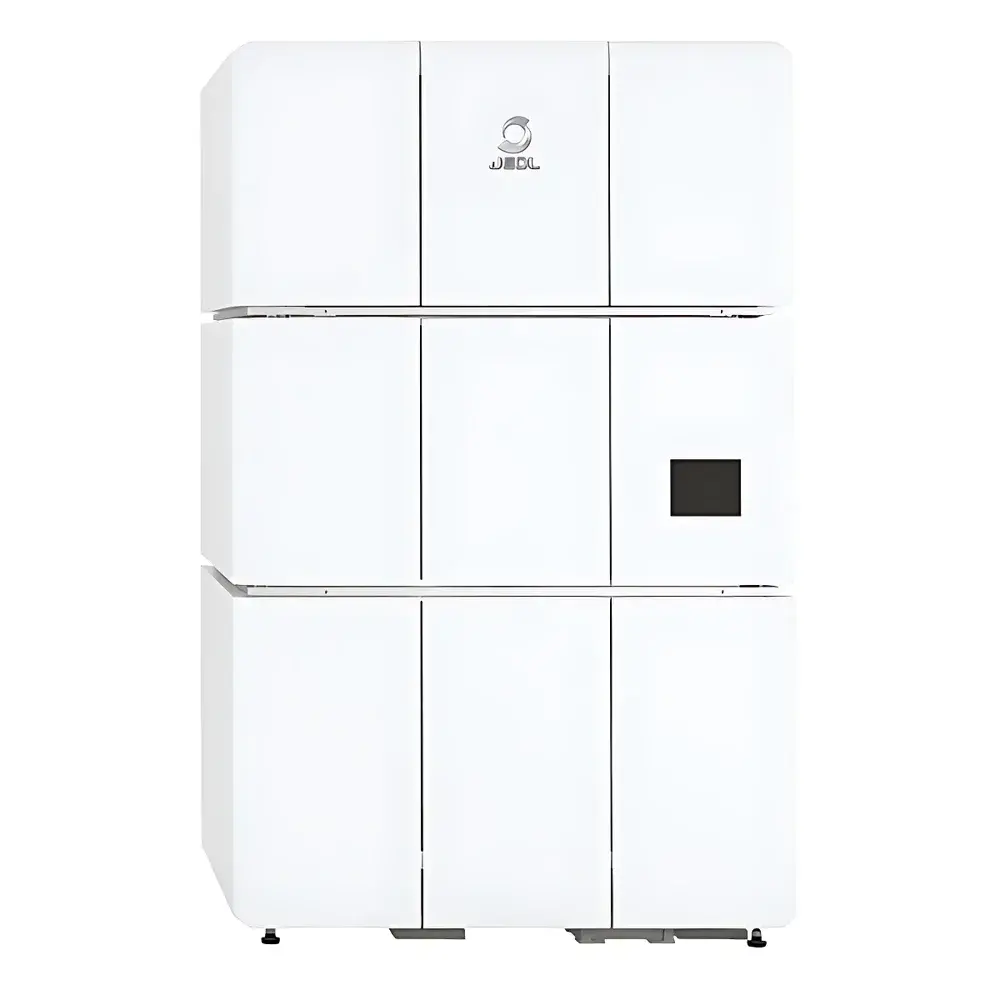
JEOL CRYO ARM™ 200 II (JEM-Z200CA) Cold Field Emission Cryo-Transmission Electron Microscope
| Brand | JEOL |
|---|---|
| Origin | Japan |
| Model | CRYO ARM™ 200 II (JEM-Z200CA) |
| Acceleration Voltage | 200 kV |
| Magnification Range | ×100 to ×1,000,000 |
| Spherical Aberration Coefficient (Cs) | 1.5 mm |
| Chromatic Aberration Coefficient (Cc) | 1.8 mm |
| Specimen Temperature | ≤100 K |
| Sample Storage Capacity | Up to 12 cryo-samples |
| Energy Filter | Integrated Omega-type Energy Filter |
| Optional Software | JEOL Automated Data Acquisition System (JADAS) |
Overview
The JEOL CRYO ARM™ 200 II (JEM-Z200CA) is a purpose-built 200 kV cold field emission transmission electron microscope engineered exclusively for high-resolution single-particle analysis (SPA) in structural biology. Unlike general-purpose or tomography-optimized TEM platforms, this instrument integrates a dedicated electron optical architecture—including a newly developed high-resolution objective lens pole piece, cold field emission gun (Cold FEG), and an integrated Omega-type energy filter—to maximize signal-to-noise ratio, contrast fidelity, and phase coherence at near-atomic resolution. Its design reflects JEOL’s response to the growing demand for reproducible, high-throughput cryo-EM workflows compliant with modern structural biology standards, including those required for de novo model building and ligand-density mapping in drug discovery pipelines.
Key Features
- Dedicated SPA-Optimized Electron Optics: Features a custom-designed objective lens with Cs = 1.5 mm and Cc = 1.8 mm, balancing high spatial resolution with strong low-contrast specimen visibility—critical for vitrified biological macromolecules.
- Cold Field Emission Source: Delivers exceptional beam coherence, long-term current stability (>8 hours without reflash), and minimal energy spread (<0.3 eV), enabling high-dose efficiency and reduced beam-induced motion artifacts.
- Integrated Omega Energy Filter: Provides zero-loss imaging and energy-selective imaging modes; supports post-acquisition energy filtering and improves contrast for low-dose imaging of radiation-sensitive specimens.
- Automated Omega Alignment & Fresnel Ring Suppression: Reduces operator dependency through real-time alignment feedback and dynamic correction of diffraction ring artifacts, accelerating setup time and enhancing data consistency across users and sessions.
- Enhanced Cryogenic Stability: Optimized vacuum architecture (base pressure <1×10⁻⁸ Pa in column) and dual-stage cryo-cooling system maintain stable specimen temperature ≤100 K during extended acquisition—minimizing ice contamination and thermal drift.
- 12-Slot Automated Cryo-Holder: Enables unattended multi-sample screening with precise thermal management and positional repeatability, supporting high-throughput grid evaluation and dose-symmetric tilt-series acquisition when combined with compatible stages.
Sample Compatibility & Compliance
The CRYO ARM™ 200 II accommodates standard 3.05 mm diameter cryo-EM grids (e.g., Quantifoil, UltrAuFoil, graphene oxide) mounted on JEOL-compatible autoloader cassettes. All cryo-handling protocols adhere to ISO/IEC 17025-aligned laboratory practices for specimen preparation traceability. The system meets mechanical and electromagnetic compatibility requirements per IEC 61000-6-3 and IEC 61000-6-4. When operated with JEOL JADAS software and audit-trail-enabled acquisition logs, it supports GLP-compliant documentation frameworks and can be configured to meet FDA 21 CFR Part 11 requirements for electronic records and signatures in regulated biopharmaceutical environments.
Software & Data Management
JEOL JADAS (JEOL Automated Data Acquisition System) provides fully scriptable, queue-based acquisition control—including motion correction, CTF estimation, particle picking, and real-time 2D classification—directly interfaced with Thermo Fisher EPU, UCSF ChimeraX, and RELION-compatible metadata formats. Raw image streams are stored in industry-standard MRC21 or TIFF formats with embedded acquisition parameters (dose rate, defocus gradient, stage position, filter slit width). All system logs—including gun emission history, vacuum status, lens excitation values, and user authentication timestamps—are archived in encrypted SQLite databases with configurable retention policies and exportable CSV reports for internal QA review or regulatory submission.
Applications
- Atomic-resolution structure determination of membrane proteins, viral capsids, and large ribonucleoprotein complexes via single-particle analysis
- Time-resolved cryo-EM studies using rapid plunge-freezing and automated grid screening
- Correlative light and electron microscopy (CLEM) workflows leveraging fiducial-based registration with fluorescence pre-screening modules
- Validation of cryo-EM map quality against orthogonal techniques (e.g., X-ray crystallography, NMR, HDX-MS) under shared coordinate frameworks
- Method development for low-dose imaging, dose-fractionation optimization, and aberration-corrected phase plate integration
FAQ
What is the primary application focus of the CRYO ARM™ 200 II?
It is specifically engineered for high-throughput, high-fidelity single-particle analysis—not tomography or scanning transmission imaging.
Does the system support GMP/GLP documentation requirements?
Yes, when deployed with JADAS and configured with audit-trail logging, electronic signature modules, and secure user access controls, it satisfies core elements of FDA 21 CFR Part 11 and ISO 13485-aligned quality systems.
Can third-party processing software interface directly with the microscope?
Yes—raw data output adheres to EMDB/MRC21 conventions; metadata fields are extensible via JEOL’s SDK for integration with Scipion, cryoSPARC, and cisTEM pipelines.
Is the Omega energy filter tunable for specific energy windows?
Yes—the slit width and dispersion are motorized and software-controlled, enabling adjustable energy windows from 0–100 eV with sub-eV precision.
What vacuum level is maintained in the specimen chamber during operation?
The column achieves and sustains a base pressure better than 1×10⁻⁸ Pa, critical for minimizing radiolysis and hydrocarbon deposition on frozen-hydrated samples.




