
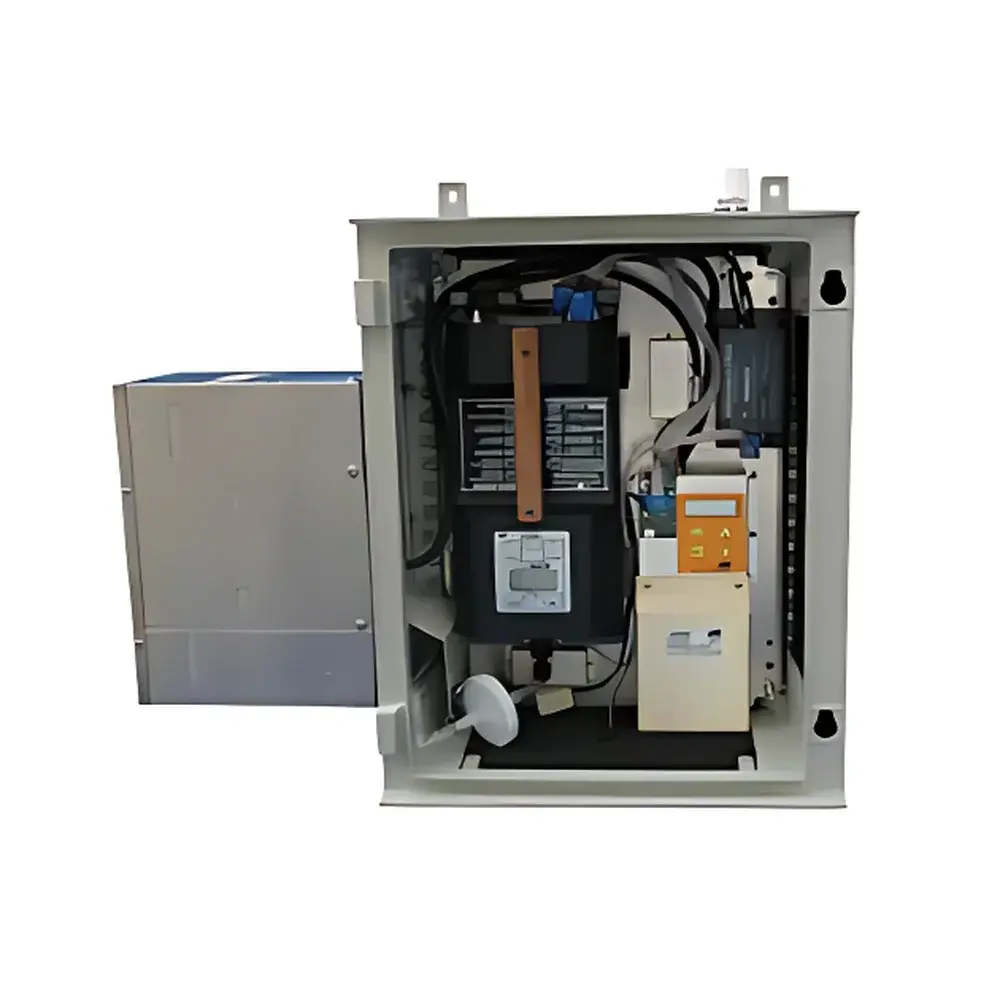
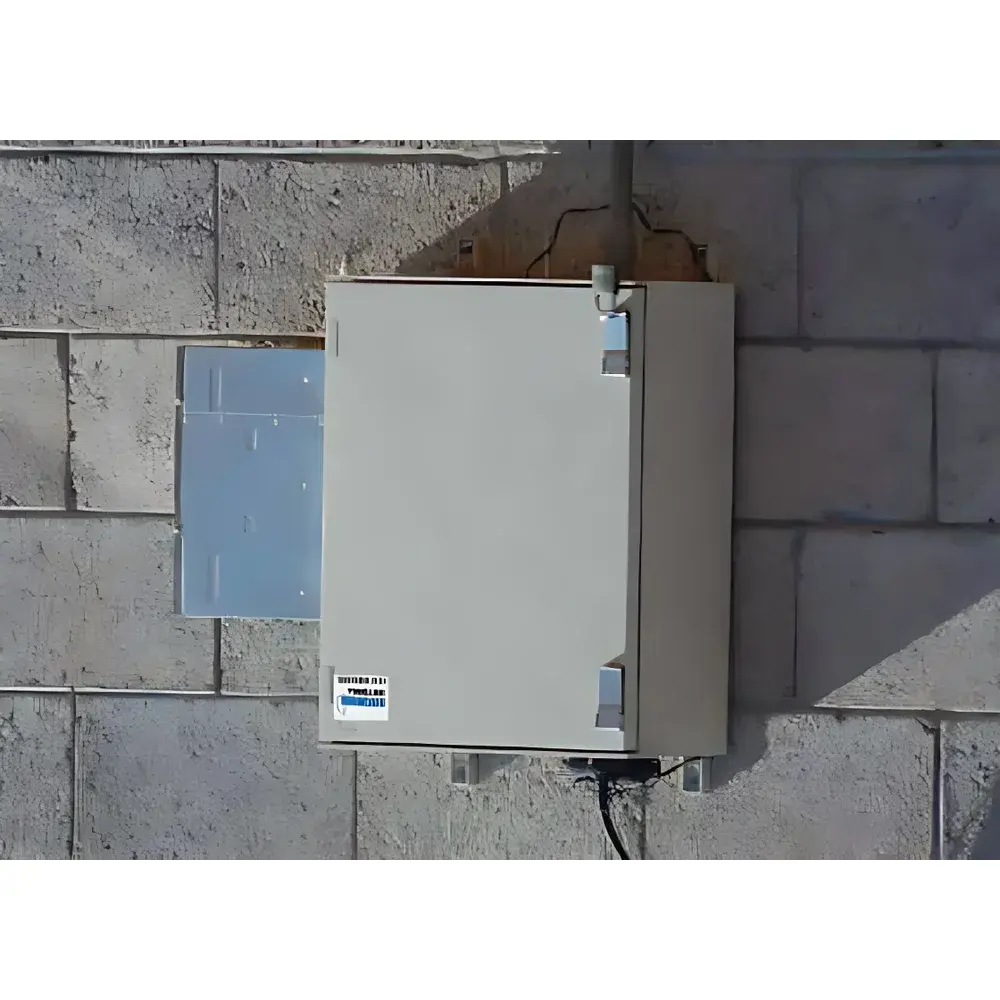
Jerome 651 Hydrogen Sulfide Online Monitoring System
| Brand | Brookfield |
|---|---|
| Origin | USA |
| Manufacturer Type | Manufacturer |
| Origin Category | Imported |
| Model | 651 |
| Instrument Type | Online Gas Monitor |
| Target Gas | Hydrogen Sulfide (H₂S) |
| Response Time | ≤60 s |
| Measurement Accuracy | ±0.005 ppm |
| Measurement Range | 3 ppb (0.003 ppm) to 50 ppm |
Overview
The Jerome® 651 Hydrogen Sulfide Online Monitoring System is an engineered, field-deployable ambient air quality monitoring platform designed for continuous, real-time quantification of hydrogen sulfide (H₂S) in demanding industrial and environmental settings. Developed by AMETEK Arizona and manufactured under Brookfield Engineering’s quality systems, the system employs proprietary gold-film electrochemical sensing technology—validated over 35 years of operational use across landfill gas management, wastewater treatment plants, biogas facilities, and municipal boundary monitoring zones. Unlike portable or spot-check instruments, the 651 operates as a networked, fixed-site analyzer with active temperature stabilization, enabling high reproducibility under extreme ambient conditions (–40 °C to +55 °C). Its core measurement principle relies on selective catalytic oxidation at a gold-plated working electrode, generating a linear current response proportional to H₂S concentration—ensuring trace-level sensitivity down to 3 ppb while maintaining robustness against common interferents such as SO₂, CO, and volatile organic compounds.
Key Features
- Network-Ready Boundary Monitoring Architecture: Multiple 651 units can be deployed on poles, fences, or building façades and synchronized via Ethernet or cellular backhaul to form a georeferenced monitoring grid—enabling source localization through spatial concentration gradient analysis.
- Field-Validated Gold-Film Sensor Technology: Patented dual-electrode gold-film sensor with integrated humidity compensation and zero-drift correction algorithms, delivering long-term baseline stability without routine recalibration.
- Active Thermal Management: Integrated Peltier heating and cooling modules maintain internal sensor chamber temperature within ±0.5 °C of setpoint—critical for minimizing thermal drift in outdoor deployments across seasonal extremes.
- Integrated Meteorological Interface: Optional RS-485 or SDI-12 connectivity for third-party anemometers, wind vanes, and thermohygrometers—supporting wind-direction-weighted plume modeling and time-synchronized event correlation.
- Programmable Multi-Threshold Alerting: Configurable alarm logic supports up to four independent concentration thresholds with relay outputs, SMS/email notifications (via SMTP or LTE-M), and audit-trail logging compliant with ISO 17025 data integrity requirements.
- Modular Service Design: Hot-swappable sensor cartridges and field-replaceable power supplies reduce mean time to repair (MTTR) to under 15 minutes—minimizing operational downtime during scheduled maintenance or emergency response.
Sample Compatibility & Compliance
The Jerome 651 is optimized for continuous sampling of ambient air, stack effluents (with optional dilution module), and landfill gas headspace—without sample conditioning for typical applications. It meets EPA Method TO-15 compatibility criteria for low-concentration H₂S detection and conforms to ASTM D6785–22 for fixed-site gaseous pollutant monitoring. Units are certified to UL 61010-1 (industrial safety), IP65 ingress protection rating, and CE marking for EMC Directive 2014/30/EU. Data logging complies with 21 CFR Part 11 requirements when paired with validated software configurations—including electronic signatures, audit trails, and user-access controls. The system is routinely deployed under regulatory frameworks including US EPA 40 CFR Part 60 Subpart OOOOa, EU Industrial Emissions Directive (2010/75/EU), and provincial air quality standards in Alberta, Ontario, and New South Wales.
Software & Data Management
The system operates with JeromeView™ v5.2—a Windows-based configuration and visualization suite supporting role-based access control (RBAC), configurable time-weighted average (TWA) reports (8-hr, 15-min STEL), and GIS-integrated “Site View” dashboards displaying real-time concentration heatmaps overlaid on facility maps. All raw sensor data, calibration logs, alarm events, and firmware updates are timestamped and stored locally on a removable microSD card (up to 32 GB) with automatic rollover. Remote data retrieval is supported via secure HTTPS API endpoints or encrypted FTPS push—enabling integration into SCADA, CMMS, or enterprise environmental health & safety (EHS) platforms. Audit logs retain full traceability for GLP/GMP-aligned validation protocols.
Applications
- Landfill perimeter and leachate collection system H₂S monitoring for odor compliance and community impact assessment
- Wastewater treatment plant headworks, digesters, and biosolids handling areas
- Biogas upgrading facilities and anaerobic digestion co-location sites
- Oil & gas production sites with sour gas potential, especially in remote or unmanned locations
- Municipal boundary monitoring for regulatory reporting under ambient air quality standards (e.g., WHO 24-hr guideline: 0.0015 ppm)
- Industrial hygiene assessments in pulp & paper mills, tanneries, and chemical manufacturing zones
FAQ
What is the recommended calibration frequency for the Jerome 651?
Calibration is recommended every 90 days using NIST-traceable H₂S standard gas (e.g., 1 ppm in nitrogen); however, built-in zero/span verification routines allow daily automated checks.
Can the 651 operate without external power?
Yes—the unit supports dual power inputs: 100–240 VAC (50/60 Hz) and optional 12–24 VDC (solar/battery-backed configurations available).
Is the gold-film sensor replaceable in the field?
Yes—sensor cartridges are user-replaceable without tools; each includes factory calibration coefficients stored on an embedded EEPROM.
Does the system support Modbus RTU or TCP/IP communication?
Standard Ethernet interface supports Modbus TCP; RS-485 Modbus RTU is available via optional communications module.
How does the system handle high humidity or condensation?
An integrated hydrophobic membrane filter and heated sample path prevent moisture ingress; relative humidity compensation is applied algorithmically across 0–95% RH.
Related Products







