
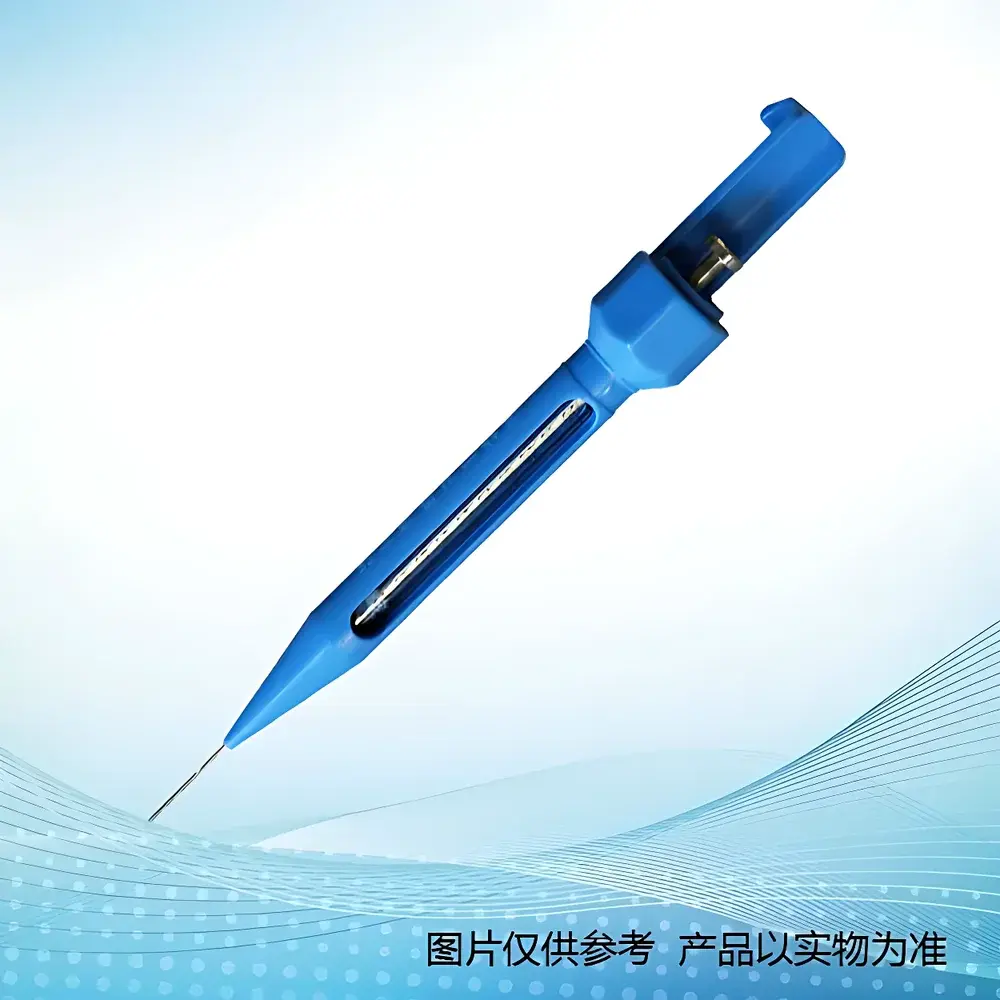
Jiada Xiaotian’e GDYQ-110SG Rapid Aging Grain Analyzer
| Brand | Jiada Xiaotian'e |
|---|---|
| Origin | Jilin, China |
| Manufacturer Type | Direct Manufacturer |
| Country of Origin | China |
| Model | GDYQ-110SG |
| Function Type | Single-Analyte Quantitative Detection (Fatty Acid Value) |
| Sample Compatibility | Multi-sample Universal (Paddy Rice, Milled Rice, Rice Flour, and Processed Rice Products) |
| Detection Principle | Micro-titration with Standardized KOH Solution |
| Lower Detection Limit | 5.0 mg KOH / 100 g |
| Measurement Range | 0.0–500.0 mg KOH / 100 g |
| Construction | Chemically Resistant Housing & Precision Micro-burette Assembly |
| Regulatory Alignment | Designed for compliance with GB/T 20569–2006 (Chinese National Standard for Fatty Acid Value Determination in Stored Rice) and supports GLP-aligned documentation workflows |
Overview
The Jiada Xiaotian’e GDYQ-110SG Rapid Aging Grain Analyzer is a field-deployable, single-analyte instrument engineered for the quantitative determination of fatty acid value (FAV) in paddy rice, milled rice, rice flour, and related cereal-based commodities. Fatty acid value serves as a well-established physicochemical indicator of lipid oxidation during post-harvest storage — a critical parameter directly correlated with grain aging, rancidity development, and overall storability. Unlike conventional benchtop titration systems requiring volumetric glassware, standardized laboratory environments, and trained personnel, the GDYQ-110SG implements a patented micro-titration methodology that maintains metrological integrity under non-laboratory conditions. Its operational principle relies on controlled delivery of standardized potassium hydroxide (KOH) titrant into a precisely prepared sample extract, with endpoint detection achieved via visual colorimetric transition (phenolphthalein indicator), validated through repeatable operator training protocols. The system is calibrated and verified against reference materials traceable to national metrology institutes per JJG 817–2018 (Calibration Specification for Titration Instruments).
Key Features
- Portable micro-titration architecture enabling reliable FAV quantification in laboratories, processing facilities, grain silos, inspection checkpoints, and field deployment scenarios.
- Integrated chemically inert burette assembly fabricated from PTFE-lined borosilicate glass and fluoropolymer components — resistant to alkaline corrosion and minimizing reagent adsorption or carryover.
- Precision-engineered dispensing mechanism delivering ±0.02 mL resolution per increment, supporting reproducible titrant delivery across ambient temperature ranges (10–35 °C).
- Pre-formulated, lyophilized reagent kits supplied in sealed, light-protected vials — eliminating on-site preparation errors, reducing analyst workload, and ensuring batch-to-batch consistency.
- Ergonomic handheld design with integrated sample vial holder, adjustable viewing window, and tactile endpoint confirmation feedback — optimized for extended use by quality control technicians with minimal titration experience.
Sample Compatibility & Compliance
The GDYQ-110SG accommodates solid and semi-solid rice matrices without homogenization preprocessing beyond standard milling and sieving per GB 5491–2008. Validated sample types include rough rice (paddy), brown rice, white rice, parboiled rice, and rice-based snacks. It conforms to the procedural requirements of GB/T 20569–2006 “Determination of Fatty Acid Value in Stored Rice”, and its measurement uncertainty profile aligns with ISO/IEC 17025:2017 clause 7.2.2 for method validation in accredited food testing laboratories. While not an automated regulatory instrument, its output supports audit-ready records compatible with internal QA documentation and third-party certification schemes including HACCP and ISO 22000.
Software & Data Management
The GDYQ-110SG operates as a standalone analytical platform with no embedded digital interface or firmware. All measurements are recorded manually in standardized logbooks or LIMS-integrated paper forms. However, its structured workflow — including defined sample mass (10.00 g ±0.02 g), extraction solvent volume (50.0 mL ethanol–ether mixture), and titrant concentration (0.01 mol/L KOH) — ensures full traceability and facilitates electronic transcription into compliant data management systems. Laboratories implementing 21 CFR Part 11–compliant LIMS may assign unique instrument identifiers, maintain calibration logs, and archive raw observation sheets with digital signatures — satisfying GLP documentation requirements for routine surveillance testing.
Applications
- Storage facility monitoring: Routine assessment of FAV trends across warehouse lots to inform rotation schedules and prevent distribution of degraded stock.
- Mill quality assurance: In-process verification of rice batches prior to packaging, ensuring compliance with national limits (e.g., ≤30 mg KOH/100 g for Grade I milled rice per GB 1354–2018).
- Regulatory inspection: On-site verification by provincial grain bureaus and market supervision authorities during seasonal audits and emergency response deployments.
- Research applications: Supporting studies on antioxidant efficacy, modified atmosphere storage, and post-harvest drying optimization where rapid FAV screening is required at scale.
FAQ
What is the primary analyte measured by the GDYQ-110SG?
Fatty acid value (FAV), expressed as milligrams of potassium hydroxide required to neutralize free fatty acids in 100 grams of sample.
Does the instrument require external power or consumables beyond the provided reagent kits?
No. It operates entirely manually without batteries, electricity, or compressed gas. Only the supplied pre-weighed reagents, standardized KOH titrant, and indicator solution are required.
Can results be directly exported to a laboratory information management system (LIMS)?
Not natively — data entry is manual. However, standardized reporting templates and structured observation formats ensure seamless integration into validated LIMS workflows.
Is the GDYQ-110SG suitable for use outside China?
Yes, provided local regulatory frameworks accept GB/T 20569–2006–based methodology or recognize FAV as a valid aging marker; method equivalence validation is recommended prior to adoption.
How frequently must the titrant concentration be verified?
Per GB/T 20569–2006, KOH solution must be standardized daily using certified potassium hydrogen phthalate (KHP) reference material before initiating sample analysis.





