
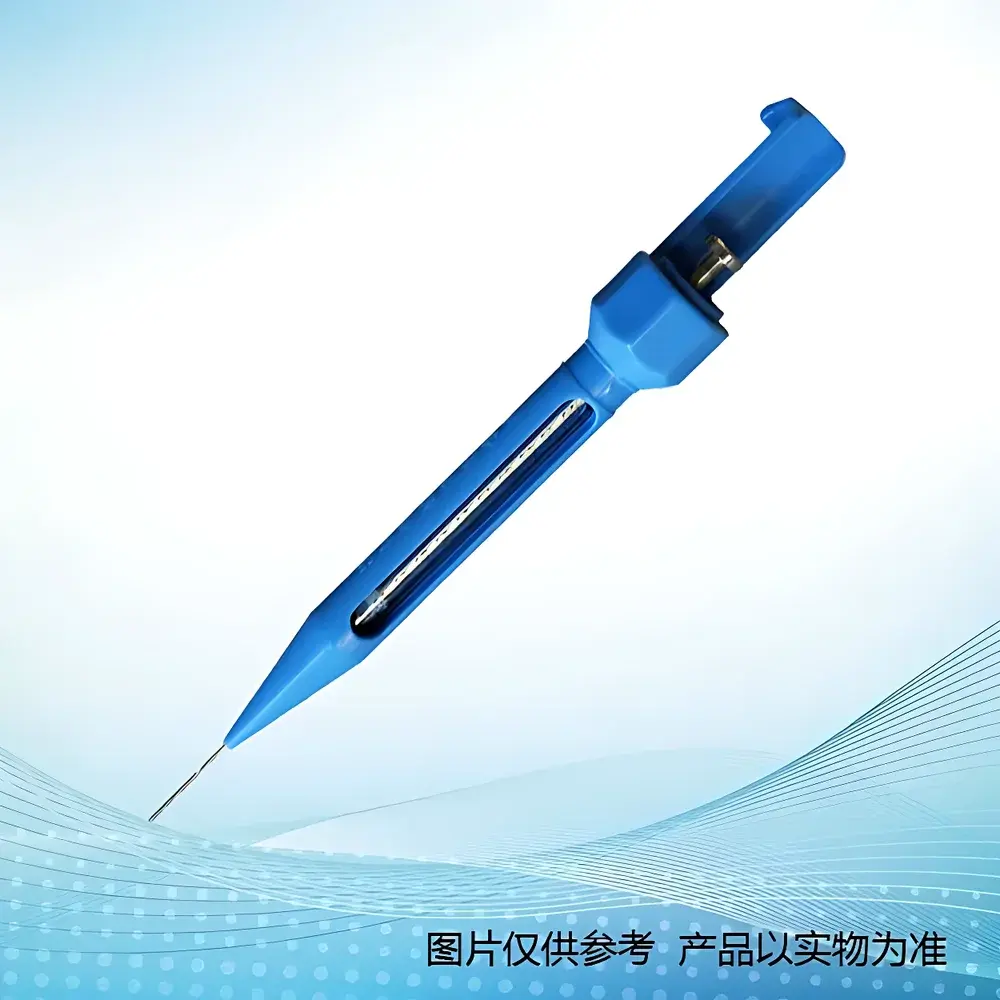
Jiada Xiaotian’e GDYS-103SI Portable Total Alkalinity Analyzer
| Brand | Jiada Xiaotian’e |
|---|---|
| Origin | Jilin, China |
| Manufacturer Type | Authorized Distributor |
| Country of Manufacture | China |
| Model | GDYS-103SI |
| Detection Principle | Colorimetric Endpoint Titration with Integrated Micro-Dosing System |
| Detection Limit | 0.5 mg/L as CaCO₃ |
| Measurement Range | 0.00–8.00 mg/L as CaCO₃ |
| Reagent Format | Pre-packaged Single-Use Vials |
| Enclosure | Rugged ABS Hand-Carry Case with Foam Inserts |
| Compliance | Designed to support ASTM D1067 and ISO 9963-1 field-adapted protocols |
Overview
The Jiada Xiaotian’e GDYS-103SI Portable Total Alkalinity Analyzer is a field-deployable, colorimetric endpoint titration system engineered for rapid, reliable quantification of total alkalinity in freshwater, wastewater, drinking water, and surface water samples. Total alkalinity—expressed as milligrams per liter of calcium carbonate (mg/L as CaCO₃)—is a critical parameter in corrosion control, coagulation optimization, aquatic ecosystem assessment, and regulatory compliance monitoring. Unlike benchtop potentiometric or automated titrators, the GDYS-103SI implements a miniaturized, gravity-fed micro-dosing mechanism coupled with a standardized phenolphthalein/methyl orange dual-indicator protocol. The system relies on visual endpoint detection under controlled ambient lighting conditions, eliminating dependence on power sources, software calibration, or electrode maintenance. Its design prioritizes operational robustness in non-laboratory environments while maintaining traceability to conventional titrimetric methods defined in ASTM D1067 (Standard Test Methods for Alkalinity of Water) and ISO 9963-1 (Water Quality — Determination of Alkalinity — Part 1: Titrimetric Methods).
Key Features
- Compact, hand-portable architecture housed in an impact-resistant ABS carrying case with custom-cut foam inserts—optimized for transport in vehicles, boats, or backpacks during field campaigns.
- Patented micro-dosing delivery system ensuring consistent 0.02 mL incremental titrant dispensing; minimizes operator-induced volumetric error and improves inter-analyst reproducibility.
- Chemically inert, corrosion-resistant housing and fluid path components—including PTFE-coated syringe barrels and borosilicate glass reaction vials—to prevent reagent degradation or cross-contamination.
- Pre-formulated, individually sealed reagent kits containing standardized sulfuric acid titrant (0.02 N), phenolphthalein indicator, methyl orange indicator, and buffer reference standards—eliminating on-site preparation and reducing procedural variability.
- Integrated sample measurement scale (0–50 mL) and calibrated viewing window for consistent sample volume introduction and endpoint observation under daylight or LED-assisted illumination.
- No external power requirement: fully manual operation with mechanical plunger actuation and tactile feedback for precise titrant control.
Sample Compatibility & Compliance
The GDYS-103SI is validated for use with clarified, low-turbidity aqueous matrices including potable water, river/lake water, effluent from municipal wastewater treatment plants, and cooling tower make-up water. Samples with suspended solids >25 NTU or free chlorine >0.5 mg/L require pre-filtration (0.45 µm membrane) or dechlorination (sodium thiosulfate quenching) prior to analysis. The instrument supports documentation workflows aligned with GLP principles: each test kit includes lot-specific certificate of analysis, expiration dating, and batch-traceable reagents. While not a 21 CFR Part 11-compliant digital system, its paper-based recordkeeping format—including annotated titration volume logs, sample ID fields, and analyst signatures—is compatible with ISO/IEC 17025-accredited environmental testing laboratories conducting field screening per EPA Method 310.1 (Alkalinity, Titrimetric) and APHA Standard Method 2320 B.
Software & Data Management
The GDYS-103SI operates without embedded firmware or proprietary software. Data acquisition is performed manually using the included logbook template, which provides dedicated fields for date/time stamp, sample location (GPS coordinates optional), analyst ID, initial/final burette readings, calculated alkalinity value, and observational notes (e.g., endpoint clarity, color transition fidelity). For laboratories integrating field data into LIMS, the analyzer’s standardized output format (mg/L as CaCO₃, two decimal places) enables direct entry into validated spreadsheets or electronic lab notebooks. Optional companion PDF templates—available for download from the distributor’s technical resources portal—support audit-ready reporting, including uncertainty estimation based on volumetric tolerance (±0.01 mL) and reagent concentration uncertainty (±1.5%).
Applications
- Routine alkalinity profiling across watershed monitoring networks where battery-free, rapid-turnaround analysis is essential.
- Emergency response scenarios—such as post-spill or post-storm event assessments—requiring immediate on-site characterization of buffering capacity changes.
- Verification of lime-soda softening efficiency in small-scale water treatment facilities lacking automated instrumentation infrastructure.
- Educational field labs in environmental science curricula, providing students hands-on experience with classical titrimetric principles under real-world sampling constraints.
- QA/QC checks for portable pH meters and conductivity probes, as alkalinity serves as a secondary stability indicator for carbonate system equilibrium.
FAQ
What is the recommended storage condition for unopened reagent kits?
Store at 4–30 °C in a dry, dark environment. Do not freeze. Shelf life is 18 months from manufacture date when sealed.
Can the GDYS-103SI measure alkalinity in seawater or brackish samples?
No. High ionic strength (>10,000 µS/cm) and chloride interference compromise endpoint sharpness and stoichiometric accuracy. Use only for freshwater and low-salinity wastewater applications.
Is calibration required before each use?
No formal calibration is performed. However, daily verification using the supplied 2.00 mg/L CaCO₃ standard solution is strongly recommended to confirm reagent activity and operator technique.
How is measurement uncertainty estimated for field use?
Combined standard uncertainty is ±0.15 mg/L (k=2), derived from volumetric delivery tolerance (±0.01 mL), reagent concentration uncertainty (±1.5%), and endpoint judgment variability (±0.05 mL equivalent).
Are replacement parts and consumables available separately?
Yes. Syringe assemblies, indicator vials, titrant cartridges, and logbooks are stocked under part numbers GDYS-103SI-SYR, GDYS-103SI-IND, GDYS-103SI-TIT, and GDYS-103SI-LOG respectively.







