
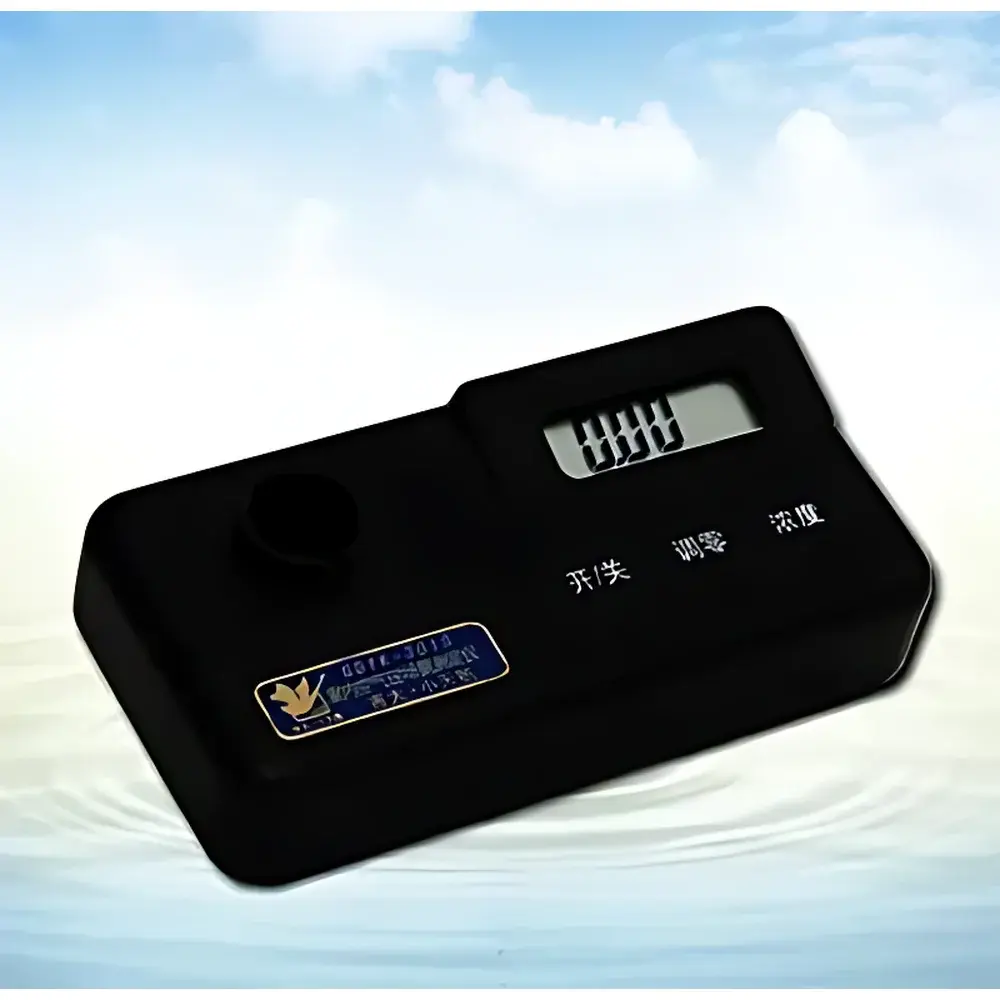
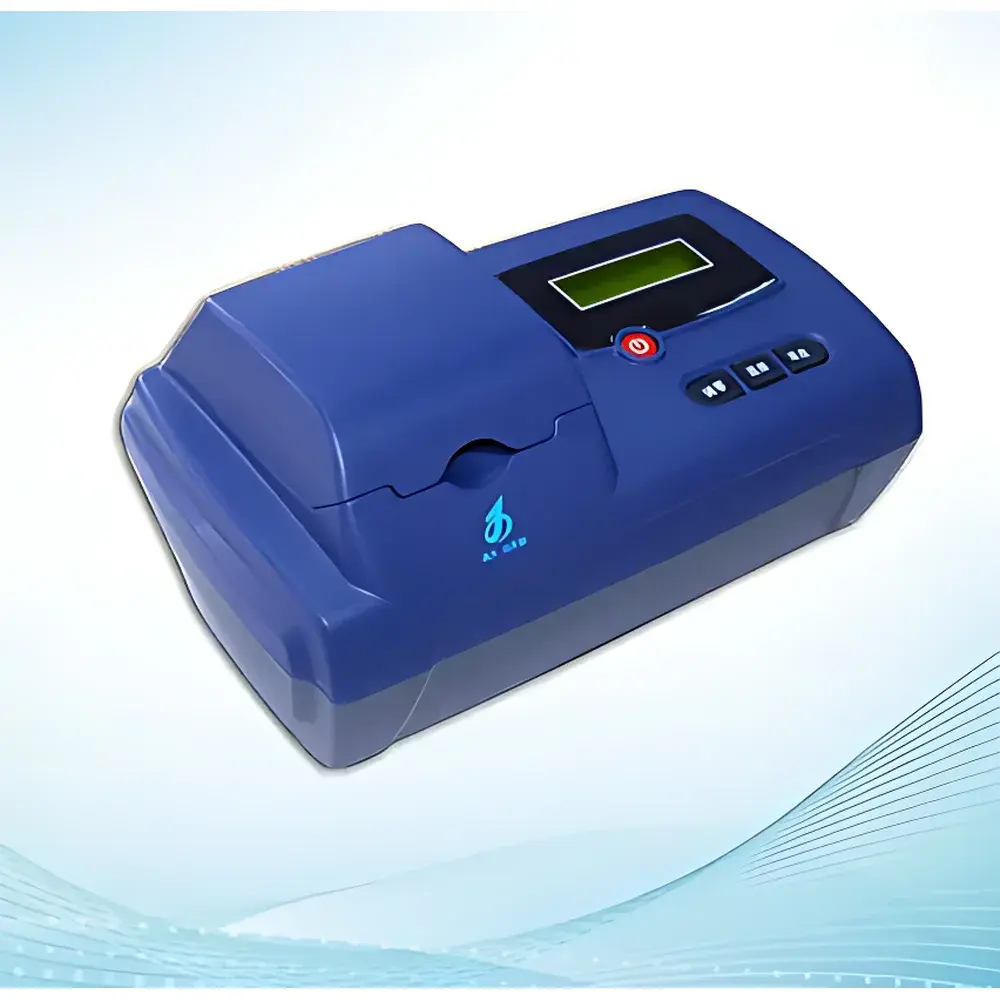
Jiada Xiaotianshe GDYK-301S Portable On-Site Ammonia Analyzer for Indoor Air
| Brand | Jiada Xiaotianshe |
|---|---|
| Model | GDYK-301S |
| Type | Portable Gas Analyzer |
| Measurement Principle | Nessler’s Reagent Colorimetric Method (GB/T 18204.25–2000) |
| Detection Limit | 0.1 mg/m³ |
| Range | 0.0–5.0 mg/m³ |
| Accuracy | ±5% FS |
| Compliance | GB/T 18204.25–2000 |
| Sample Throughput | One analysis in ≤10 minutes |
| Kit Configuration | Integrated pre-treatment module + single-use reagent cartridges |
| Power Supply | Rechargeable Li-ion battery (≥8 h operation) |
| Operating Environment | 5–40 °C, RH ≤85% non-condensing |
Overview
The Jiada Xiaotianshe GDYK-301S Portable On-Site Ammonia Analyzer is a field-deployable, colorimetric gas analyzer engineered for rapid, quantitative determination of gaseous ammonia (NH₃) in ambient air matrices. It implements the standardized Nessler’s reagent spectrophotometric method per China’s national standard GB/T 18204.25–2000, ensuring analytical traceability and regulatory alignment for indoor air quality (IAQ) assessment. Unlike diffusion-based electrochemical or metal-oxide semiconductor sensors, the GDYK-301S employs a controlled air-sampling protocol followed by chemical derivatization—where ammonia reacts with alkaline iodomercuric potassium iodide to form a yellow-brown colloidal complex—quantified via integrated solid-state photometry at 425 nm. This optical endpoint detection eliminates drift-related errors common in analog sensor platforms and delivers high reproducibility across variable humidity and temperature conditions typical of residential, commercial, and industrial indoor environments.
Key Features
- Field-validated methodology compliant with GB/T 18204.25–2000—enabling direct comparability with laboratory reference data and regulatory reporting requirements.
- Integrated sample preconditioning unit: includes calibrated axial-flow pump, particulate filter, and moisture trap to minimize interferences from dust, aerosols, and condensable vapors prior to reagent reaction.
- Single-use, factory-preloaded reagent cartridges: eliminate manual reagent preparation, reduce operator error, and ensure batch-to-batch consistency; each cartridge supports ≥50 analyses under controlled storage.
- Dedicated photometric detection module with temperature-compensated LED source and silicon photodiode detector—optimized for absorbance linearity within 0.0–5.0 mg/m³ range (R² > 0.999).
- Onboard microprocessor with real-time calibration verification: performs zero and span checks using built-in reference standards before each measurement cycle.
- Portable ergonomic design: weighs < 1.2 kg, operates on rechargeable lithium-ion battery with ≥8 hours continuous runtime and USB-C charging interface.
Sample Compatibility & Compliance
The GDYK-301S is validated for direct analysis of undiluted ambient air samples collected from enclosed or semi-enclosed spaces—including residential dwellings, office buildings, schools, hospitals, livestock housing, fertilizer production facilities, municipal waste transfer stations, and hair salons where ammoniated products are used. It accommodates dynamic sampling volumes of 0.5–2.0 L at flow rates of 0.2–0.5 L/min, adjustable via integrated digital flow controller. The instrument meets the performance criteria outlined in GB/T 18204.25–2000 for sensitivity (detection limit ≤0.1 mg/m³), precision (relative standard deviation ≤5% at 1.0 mg/m³), and selectivity (no significant interference from CO₂, SO₂, NO₂, H₂S, or formaldehyde at typical indoor concentrations). While not certified to ISO 16000 series or EN 13725, its methodology aligns with the fundamental principles of passive/active sampling and colorimetric quantification recognized in international IAQ frameworks.
Software & Data Management
Data acquisition and reporting are managed through embedded firmware supporting GLP-compliant operation. Each measurement record includes timestamp, GPS coordinates (via optional Bluetooth pairing with mobile device), ambient temperature/humidity (measured internally), pump flow rate, calibration status, and raw absorbance values. Results are stored locally in non-volatile memory (≥2,000 records) and exportable via USB mass storage mode to CSV format. The system supports audit-trail functionality: all parameter changes, calibration events, and firmware updates are logged with user ID and timestamp. Though no proprietary desktop software is bundled, exported files are compatible with common statistical analysis tools (e.g., Excel, R, Python pandas) and integrate into LIMS environments via standardized flat-file ingestion protocols.
Applications
- Indoor air quality compliance monitoring in accordance with China’s GB/T 18883–2002 and JGJ/T 461–2019 standards.
- Rapid screening of ammonia exposure risks in occupational settings such as poultry barns, swine confinement units, and urea-based fertilizer handling zones.
- Verification of ventilation efficacy pre- and post-mitigation in newly renovated buildings or after HVAC system servicing.
- Field validation of fixed-site ammonia monitoring networks during commissioning or periodic QA/QC audits.
- Educational use in environmental science laboratories for teaching standardized gas analysis techniques and method validation principles.
FAQ
What is the recommended calibration frequency for routine field use?
Calibration verification using zero air and 2.0 mg/m³ span gas is required before each daily measurement session; full multi-point calibration is advised every 30 days or after 100 analyses.
Can the GDYK-301S be used outdoors or in high-humidity environments?
It is designed for indoor and sheltered semi-outdoor use (e.g., loading docks, open barns); operation above 85% RH or in rain/snow is not supported due to condensation risk in the optical path.
Are reagent cartridges compatible across GDYK-series instruments?
No—cartridges are model-specific and validated only for GDYK-301S; cross-model use invalidates accuracy claims and voids metrological traceability.
Does the instrument support remote data transmission?
Not natively; however, Bluetooth-enabled mobile apps (third-party) may access stored data via USB OTG or manual file transfer for cloud upload.
Is training provided for proper sampling technique and interference mitigation?
Yes—manufacturer-supplied documentation includes SOPs for sampling height selection, avoidance of localized emission sources, and interpretation of anomalous absorbance profiles indicative of co-contaminant interference.
Related Products







