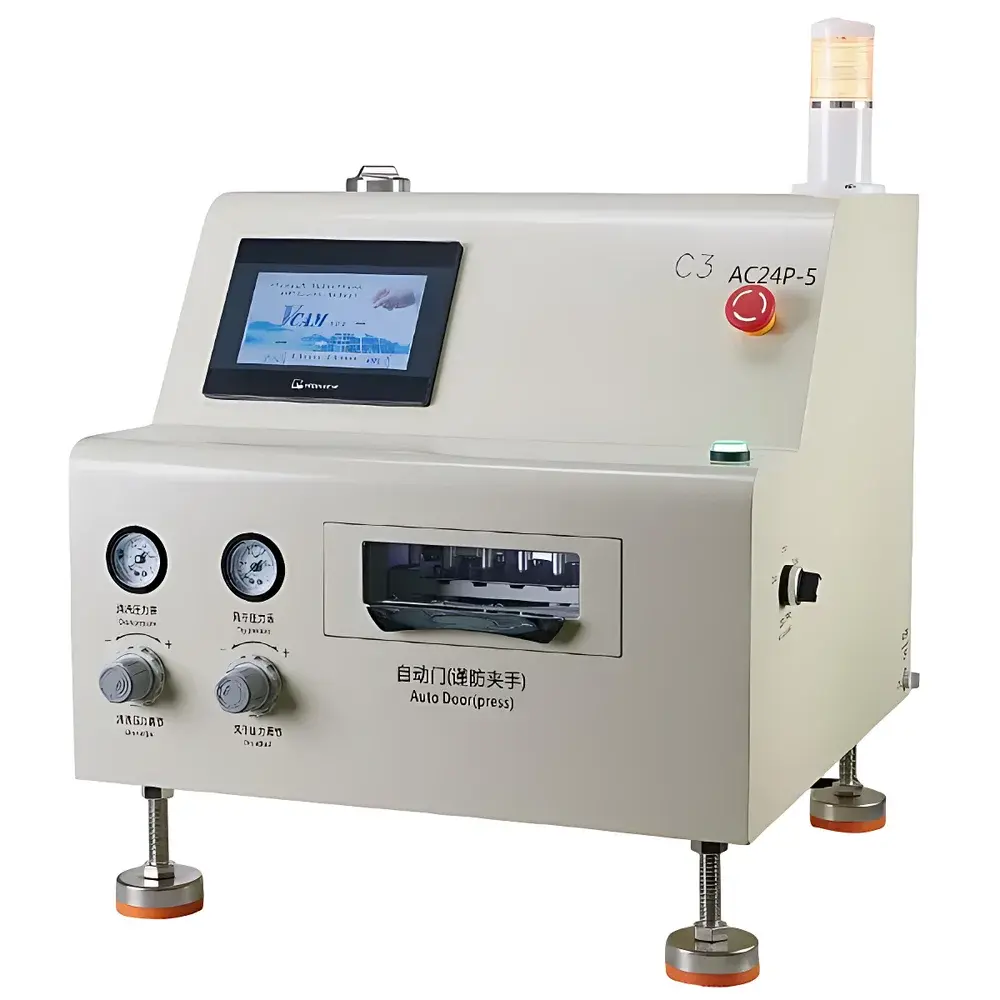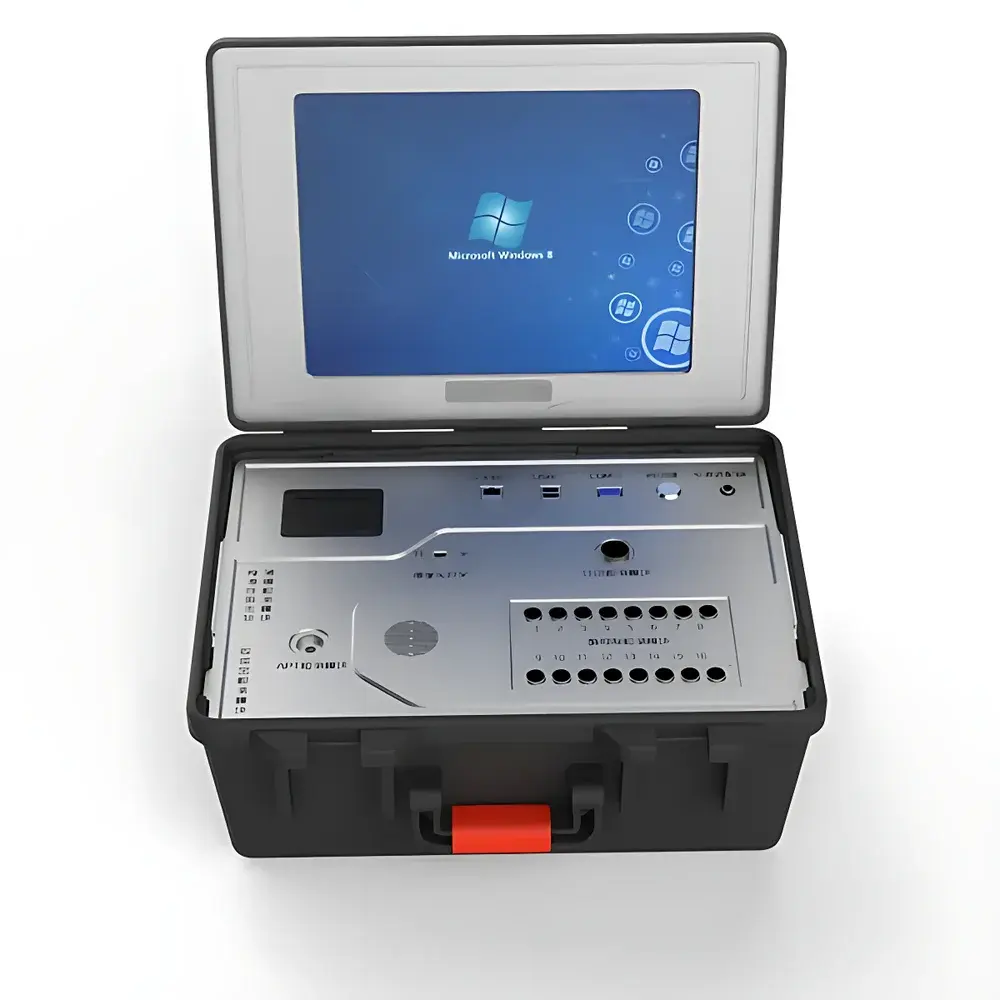
Jiada Xiaotianshe GDYQ-900M Multi-Parameter Food Safety Rapid Detection System
| Brand | Jiada Xiaotianshe |
|---|---|
| Origin | Jilin, China |
| Manufacturer Type | Direct Manufacturer |
| Region of Origin | Domestic (PRC) |
| Model | GDYQ-900M |
| Price Range | USD 7,000–14,000 (FOB) |
| Functionality | Multi-analyte (simultaneous detection of >20 food safety parameters) |
| Sample Versatility | Universal for solid, liquid, and semi-solid food matrices |
| Optical Detection Range | 495–530 nm |
| Repeatability | ≤ ±5% CV or ±5 RLUs |
| Detection Channels | 16 independent optical/analytical channels |
| Power Supply | AC/DC dual-mode |
| Display | 10.1" capacitive touchscreen, 1024 × 768 resolution |
| Data Storage | Internal SSD (≥64 GB) |
| Connectivity | Wi-Fi 802.11 b/g/n, Ethernet (RJ45), USB 2.0 × 2 |
| Output | Integrated thermal printer + external printer support via USB/Ethernet |
| Operating System | Windows Embedded Standard 7 |
| Software | Proprietary modular detection platform with remote OTA and local USB firmware update capability |
Overview
The Jiada Xiaotianshe GDYQ-900M Multi-Parameter Food Safety Rapid Detection System is an integrated, field-deployable analytical platform engineered for on-site screening of chemical, biological, and hygiene-related hazards in food and pharmaceutical supply chains. It operates across six complementary detection principles—colorimetric spectrophotometry, colloidal gold immunochromatography, dry chemistry, enzyme inhibition (e.g., acetylcholinesterase for organophosphate/carbamate pesticides), thin-layer chromatography (TLC) densitometry, ATP bioluminescence, and automated titration—enabling concurrent analysis of over twenty regulated analytes without sample transfer between instruments. Designed to meet the operational constraints of regulatory field labs, wholesale distribution centers, catering facilities, and farm-to-market inspection points, the system delivers quantitative or semi-quantitative results within 2–15 minutes per assay, depending on module configuration. Its optical architecture employs a stabilized LED light source and precision photodiode array calibrated across the 495–530 nm band—optimized for common chromogenic substrates (e.g., p-nitrophenyl phosphate, TMB) and colloidal gold signal capture—ensuring high reproducibility under variable ambient lighting conditions.
Key Features
- 16-channel parallel detection architecture, enabling simultaneous processing of up to 16 samples per run across heterogeneous assay types.
- Ruggedized portable enclosure fabricated from high-impact ABS polymer with IP54-rated dust/moisture resistance, electromagnetic interference (EMI) shielding, and drop-tested structural integrity (1.2 m height).
- 10.1-inch industrial-grade capacitive touchscreen with 1024 × 768 resolution and glove-compatible operation, supporting intuitive navigation across modular assay interfaces.
- Dual-power architecture: AC mains input (100–240 V, 50/60 Hz) and rechargeable lithium-ion battery providing ≥4 hours of uninterrupted operation—validated under ISO 9001-certified power cycling tests.
- Onboard data management: 64 GB SSD storage with encrypted database structure compliant with GLP audit trail requirements; automatic timestamping, user ID logging, and result versioning.
- Integrated thermal printer with auto-report generation (sample ID, lot number, detection date/time, concentration, unit, pass/fail flag, operator ID); supports external USB/Ethernet printers for PDF report export.
- Secure connectivity stack: IEEE 802.11n Wi-Fi, 10/100 Mbps Ethernet, and dual USB 2.0 ports—configured for TLS 1.2-secured data transmission to LIMS or national food safety surveillance platforms (e.g., China’s NIFDC FSSN system).
Sample Compatibility & Compliance
The GDYQ-900M accommodates raw, processed, and minimally prepared matrices—including fresh produce, aquatic products, meat and poultry tissues, dairy derivatives, grain-based commodities, herbal supplements, cosmetics, and dietary supplements—without requiring centrifugation or solvent extraction in >85% of included assays. Sample introduction uses standardized disposable cuvettes, lateral flow strips, TLC plates, and ATP swab cartridges—all pre-qualified against AOAC PTM and ISO/IEC 17025 reference methods. The system supports method validation documentation per ISO 13843 and aligns with national food safety standards including GB 5009 series (China), as well as cross-referenced protocols for EU Regulation (EC) No 396/2005 residue limits and US FDA Food Code Chapter 8 microbiological hazard controls. Firmware and assay libraries are updated to reflect annual revisions of China’s National Food Safety Standard Catalogue.
Software & Data Management
The embedded Windows Embedded Standard 7 OS hosts a proprietary, modular detection software suite with role-based access control (administrator, technician, auditor). Each assay module features a dedicated interface with guided workflow prompts, real-time calibration verification, and dynamic limit-of-detection (LOD) calculation based on batch-specific reagent lot data. All measurements generate structured XML metadata compliant with ASTM E1467-20 and HL7 v2.5.2 for interoperability with enterprise LIMS. Audit trails record every user action—including parameter modification, result override, and calibration event—with SHA-256 hashing and immutable timestamping, satisfying FDA 21 CFR Part 11 electronic record requirements when deployed in GMP-regulated environments. Remote firmware and assay updates are delivered via HTTPS-secured OTA channel or validated USB media, with cryptographic signature verification prior to installation.
Applications
- Routine surveillance of pesticide residues (organophosphates, carbamates, pyrethroids) in fruits, vegetables, and tea using enzyme inhibition and immunoassay modules.
- Quantitative detection of veterinary drug residues (chloramphenicol, nitrofurans, sulfonamides) in aquaculture and livestock products via colloidal gold strip densitometry.
- Hygiene monitoring through ATP bioluminescence (RLU quantification) on food contact surfaces, equipment, and utensils—aligned with ISO 22000 prerequisite programs.
- Adulterant screening (melamine, Sudan dyes, formaldehyde, borax) in dairy, spices, and starch-based foods using colorimetric and TLC-densitometric workflows.
- Microbial load estimation (total viable count, coliforms) via rapid enzymatic substrate hydrolysis assays compatible with ISO 16140-2 validation frameworks.
- Heavy metal screening (lead, cadmium, arsenic) in rice, infant formula, and herbal products using dry chemistry-based chelation-color development.
FAQ
What regulatory standards does the GDYQ-900M support for method validation?
It supports AOAC Official Methods of Analysis (OMA) performance criteria, ISO/IEC 17025 method verification templates, and GB/T 27404–2008 guidelines for rapid detection method validation in food laboratories.
Can the system be integrated into a centralized food safety information platform?
Yes—via its Ethernet/Wi-Fi interface and HL7-compliant data export, it connects directly to provincial-level Food Safety Surveillance Networks (FSSN) and enterprise LIMS using configurable API endpoints.
Is operator training required for assay interpretation?
Minimal training is needed due to context-sensitive on-screen guidance, but certified training modules (available in English and Mandarin) cover GLP documentation, calibration frequency, and outlier result investigation per ISO/IEC 17025 Clause 7.7.
How is measurement traceability maintained across field deployments?
Each instrument ships with NIST-traceable photometric calibration certificates; onboard optical verification uses factory-installed reference filters at 495 nm and 530 nm, checked automatically at startup and after every 100 measurements.
Does the system support multi-language UI for international deployment?
The base firmware includes English and Chinese language packs; additional language modules (Spanish, Vietnamese, Arabic) are available upon request and validated per ISO/IEC 17025 Annex A.3 for linguistic accuracy in technical terminology.
Related Products