
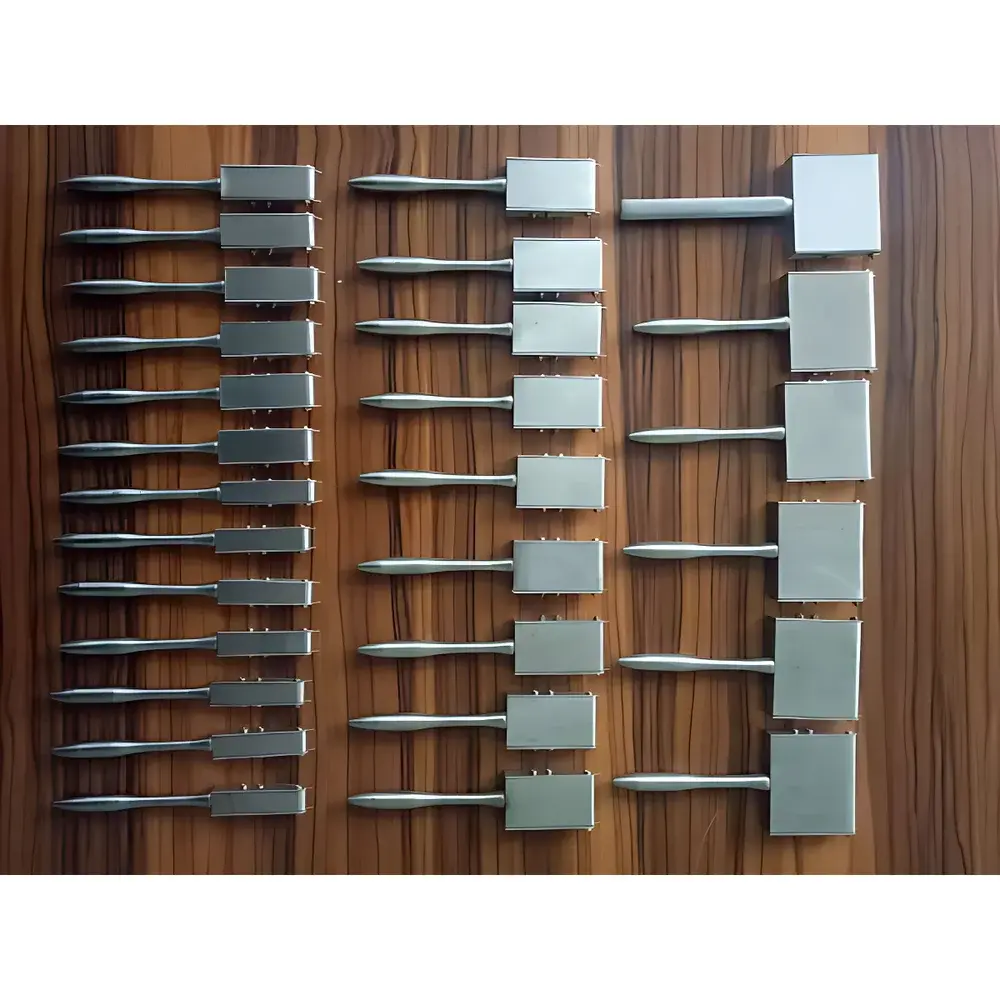
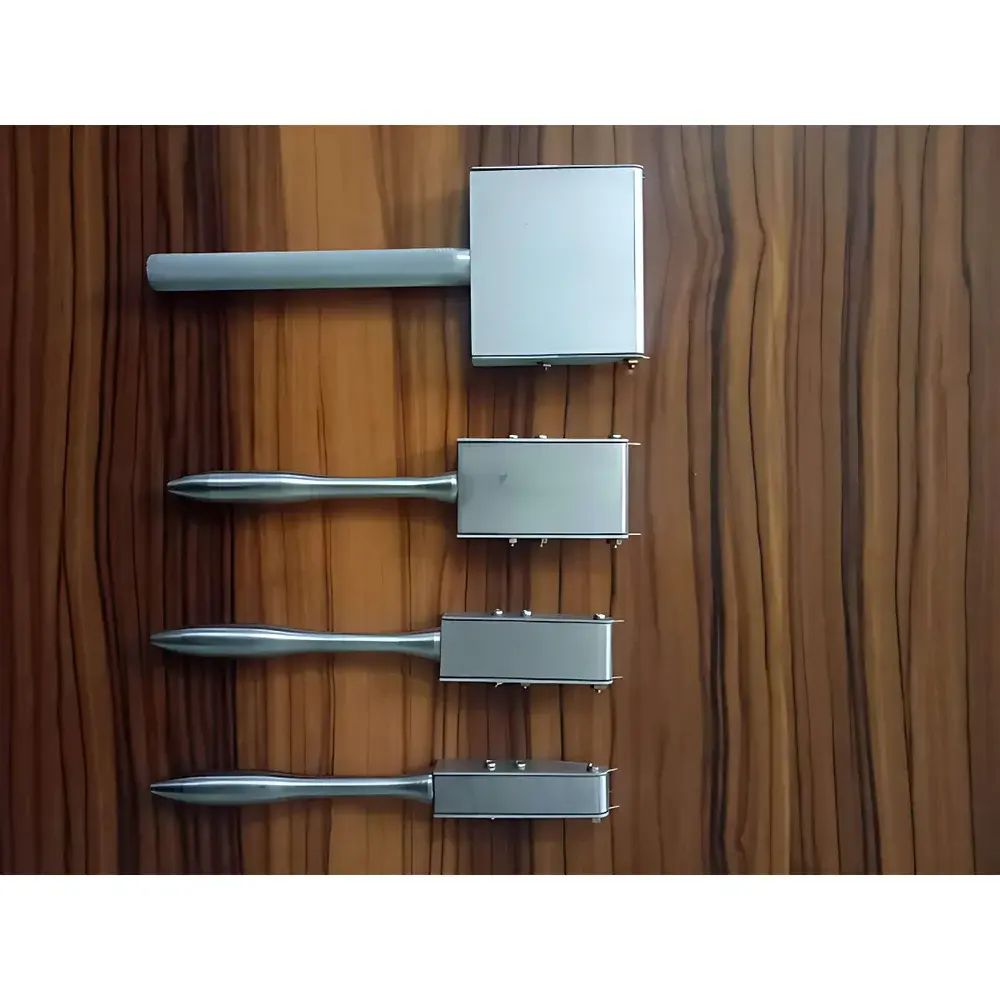
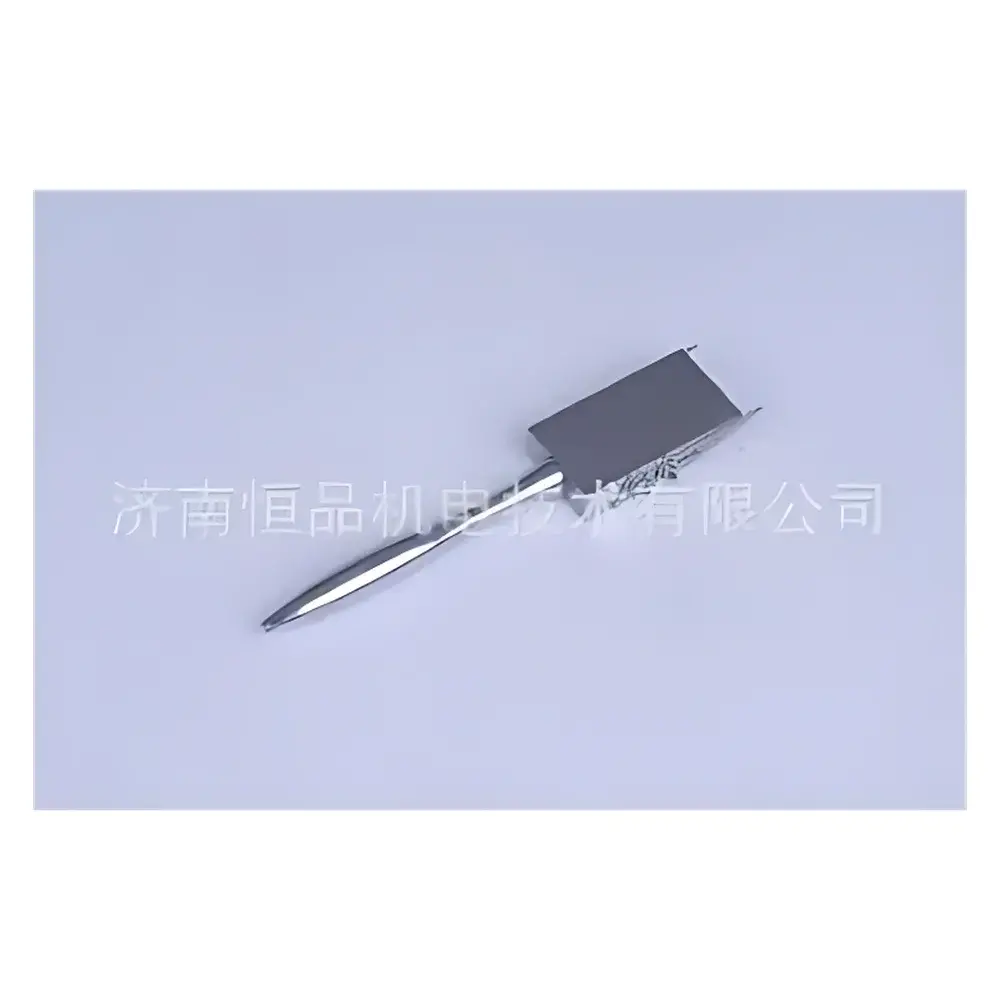
Jihengpin HP-CQYD Precision Film Sampling Cutter for Tensile & Peel Testing
| Brand | Jihengpin |
|---|---|
| Origin | Shandong, China |
| Manufacturer Type | Direct Manufacturer |
| Region | Domestic (China) |
| Model | HP-CQYD |
| Cutting Width Options | 10 mm, 15 mm, 20 mm, 25 mm, 30 mm, 50 mm |
| Tolerance | ±0.1 mm |
| Blade Material | High-Carbon Steel |
| Handle Material | Ergonomic ABS + Stainless Steel Reinforcement |
| Custom Length | Unlimited (user-defined specimen length) |
| Price | USD 52 (FOB Shandong) |
Overview
The Jihengpin HP-CQYD Precision Film Sampling Cutter is a manually operated, benchtop mechanical sampling tool engineered for high-accuracy specimen preparation in mechanical testing laboratories. Designed in accordance with standardized specimen geometry requirements for tensile strength, peel adhesion (90° and 180°), heat seal strength, and tack/holding power evaluation, this cutter ensures consistent cross-sectional width across diverse flexible sheet materials. Its operation relies on a precision-ground, fixed-blade shear mechanism—distinct from rotary or guillotine-style cutters—delivering repeatable edge quality and minimal material deformation during cutting. The HP-CQYD is not a measuring instrument per se, but a critical pre-test sample conditioning device whose dimensional fidelity directly impacts the validity of downstream ASTM D882, ISO 527-3, ASTM D3330, ASTM F904, and ISO 8510-2 test outcomes.
Key Features
- Precision-machined blade assembly with ±0.1 mm width tolerance across all standard configurations (10–50 mm), verified via calibrated optical micrometry prior to shipment.
- Interchangeable width inserts (optional accessory set) allow rapid reconfiguration without recalibration—ideal for labs handling multiple test standards simultaneously.
- Ergonomic dual-material handle (impact-resistant ABS polymer with stainless steel core) provides controlled downward force transmission and reduces operator fatigue during high-volume sampling.
- Integrated alignment guide rail ensures perpendicular blade engagement and eliminates lateral drift—critical for maintaining parallel edges required by ISO 527-3 Annex A.
- Non-slip rubber base pad included; compatible with standard laboratory cutting mats (e.g., self-healing polyethylene or neoprene surfaces) to preserve blade sharpness and prevent substrate slippage.
- Blade retention system enables tool-free replacement using standard hex keys; spare blades supplied with each unit meet GB/T 230.2 hardness specifications (HRC 58–62).
Sample Compatibility & Compliance
The HP-CQYD cutter accommodates a broad spectrum of thin-film substrates up to 0.5 mm thickness, including but not limited to: biaxially oriented polypropylene (BOPP), polyester (PET), polyethylene (PE), polyamide (PA), aluminum foil, silicone-coated release liners, pressure-sensitive adhesive tapes, laminated packaging films, lithium-ion battery separator membranes, and medical-grade barrier films. All cutting widths comply with minimum specimen width stipulations in ASTM D882 (≥10 mm), ISO 527-3 (10–25 mm preferred), and ASTM D3330 (25 mm for 180° peel). No electrical or pneumatic components are present; therefore, no CE, UL, or ATEX certification applies—however, its passive mechanical design conforms to ISO/IEC 17025 clause 6.4.2 regarding equipment suitability for intended use.
Software & Data Management
As a manual, non-electronic sampling instrument, the HP-CQYD does not incorporate embedded firmware, connectivity interfaces, or data logging capabilities. Its metrological traceability is maintained through documented calibration records (provided upon request), which include measurement uncertainty budgets per ISO/IEC 17025 Annex A.2. Laboratories implementing GLP or GMP workflows may integrate HP-CQYD usage into their SOPs under “Specimen Preparation Equipment” with defined maintenance intervals (blade replacement every 5,000 cuts or quarterly, whichever occurs first) and verification checks (width verification using certified gauge blocks before each testing shift).
Applications
- Tensile property characterization of flexible packaging films per ASTM D882 and ISO 527-3.
- Peel adhesion testing of pressure-sensitive adhesives (PSA) and laminated structures per ASTM D3330 and ISO 8510-2.
- Heat seal strength evaluation of thermoplastic seals in pouches and sachets (ASTM F88/F88M).
- Holding power (tack and shear resistance) assessment of tapes and labels (ASTM D1000, PSTC-101).
- Quality control sampling in film extrusion lines, converting facilities, and battery electrode coating operations.
- Research-grade specimen preparation for DMA, DSC, and permeation studies where edge uniformity affects thermal or barrier response.
FAQ
What safety precautions must be observed when operating the HP-CQYD cutter?
Always place the cutter on a certified self-healing mat; never operate on bare benchtops or metal surfaces. Keep fingers clear of the blade path—especially beneath the cutting base—and wear cut-resistant gloves during high-frequency use. Store the unit in its protective sheath when not in active service.
Can the HP-CQYD be used for brittle or highly elastic films?
Yes—provided the film thickness remains ≤0.5 mm and exhibits sufficient cohesion at ambient temperature. For low-modulus elastomers (e.g., TPU, silicone), pre-chilling the specimen to −10°C improves edge definition. Avoid use on embossed, heavily coated, or multi-layer composites with >15% thickness variation across the cut zone.
Is traceable calibration documentation available?
Yes—each unit ships with a Certificate of Conformance listing nominal width, measured width (via NIST-traceable optical comparator), and uncertainty budget. Full ISO/IEC 17025 calibration reports are available as a value-added service.
How frequently should the blade be replaced?
Under typical QC lab conditions (≤200 specimens/day), replace the blade every 90 days or after 5,000 cuts—whichever comes first. Visual inspection for micro-chipping or dulling should precede each shift.
Does Jihengpin offer width customization beyond 50 mm?
Yes—custom widths up to 100 mm are available upon engineering review; lead time extends by 3 weeks and requires formal dimensional drawing approval.






