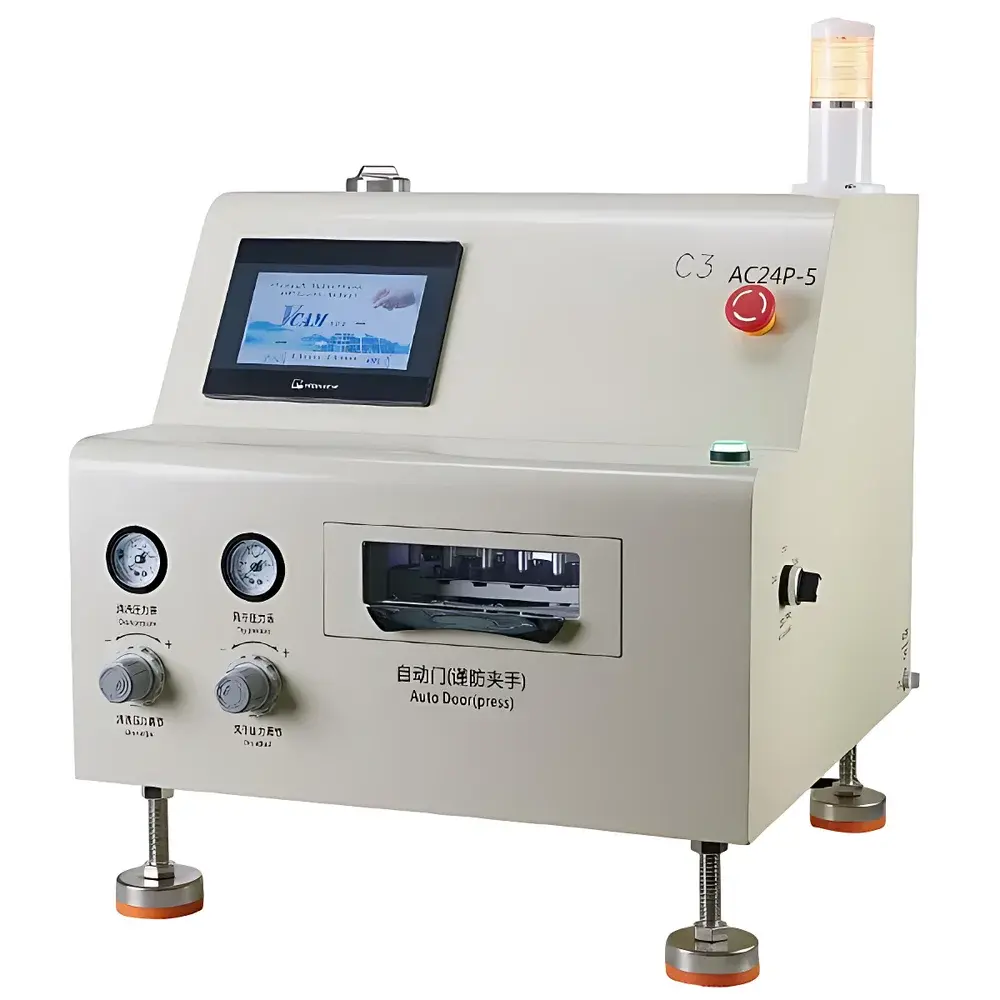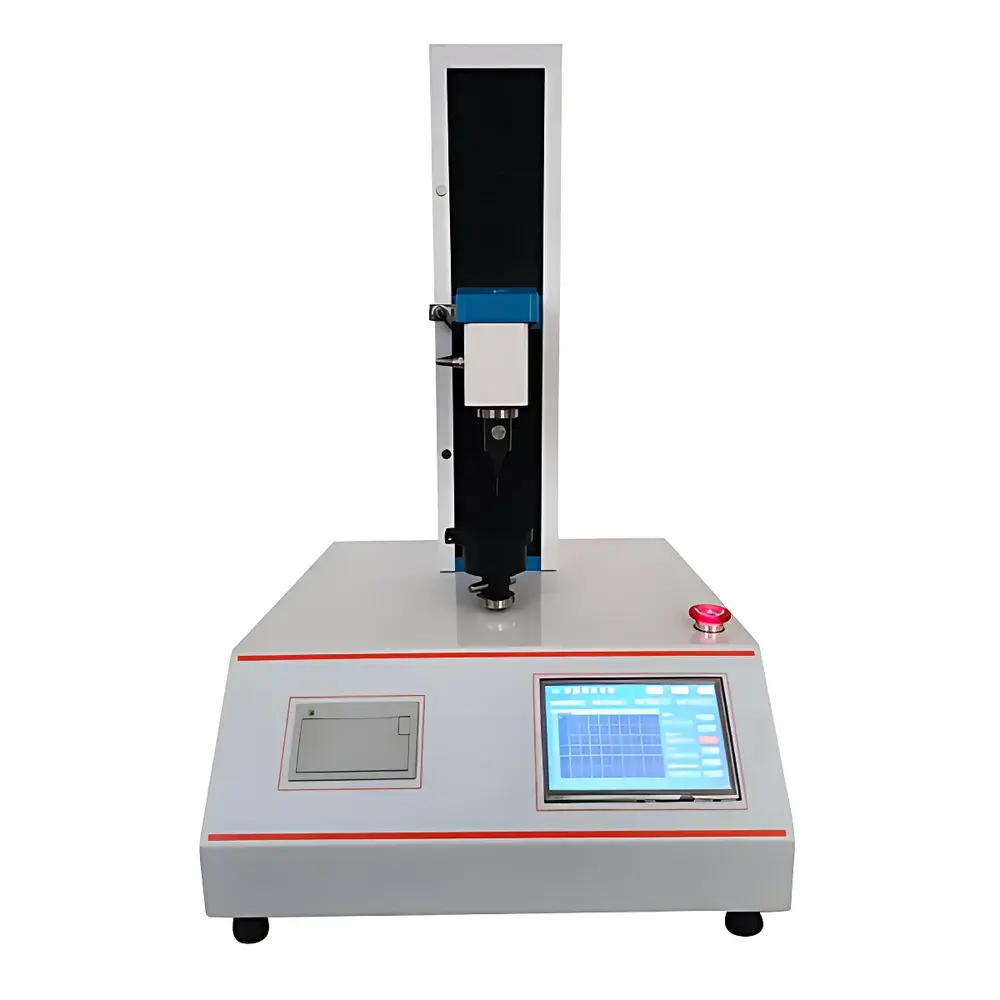
Jihengpin HP622 Sterile Medical Device Packaging Slow Puncture Resistance Tester
| Brand | Jihengpin |
|---|---|
| Origin | Shandong, China |
| Manufacturer Type | Direct Manufacturer |
| Model | HP622 |
| Compliance | YY/T 0681.13–2014, ASTM F1306–2016 |
| Force Range | 0–50 N |
| Resolution | 0.1 N |
| Accuracy | ±1% FS |
| Test Speed | 25 mm/min (adjustable 0–300 mm/min) |
| Sample Size | 75 mm × 75 mm |
| Clamp Aperture | Ø35 mm |
| Probe | Hemispherical, compliant with YY/T 0681.13 |
| Dimensions | 330 × 335 × 550 mm |
| Weight | ~55 kg |
| Power Supply | 220 V, 50 Hz |
Overview
The Jihengpin HP622 Sterile Medical Device Packaging Slow Puncture Resistance Tester is a precision-engineered mechanical testing system designed to quantify the resistance of flexible barrier materials used in sterile medical packaging to quasi-static puncture events. It operates on the principle of controlled-force penetration using a hemispherical probe (Ø35 mm aperture fixture, standardized hemispherical tip per YY/T 0681.13–2014) applied at a defined, low-velocity rate—typically 25 mm/min—under ambient laboratory conditions (23 ± 2 °C, 50 ± 5% RH unless otherwise specified). The instrument captures three primary physical outputs in real time: peak puncture force (N), total puncture energy (N·mm), and probe displacement depth (mm). These parameters collectively reflect the material’s structural integrity, ductility, and energy absorption capacity during slow, localized mechanical insult—critical performance indicators for maintaining sterility assurance throughout distribution, storage, and clinical handling.
Key Features
- Integrated 7-inch capacitive touchscreen interface with intuitive Chinese/English bilingual navigation; fully automated test sequence execution including preload application, ramped penetration, and post-test data freeze.
- High-fidelity load cell with ±1% full-scale accuracy and 0.1 N resolution, calibrated traceable to national metrological standards.
- Precision ball-screw-driven actuation system powered by a closed-loop servo motor, ensuring consistent speed control across the full 0–300 mm/min range with minimal backlash or thermal drift.
- Dedicated sample clamping assembly featuring a rigid 35 mm inner-diameter annular fixture optimized for 75 mm × 75 mm specimens—minimizing edge effects and ensuring uniform stress distribution during puncture.
- Real-time graphical display of force–displacement curves, with on-screen statistical summary (mean, SD, CV%) for multi-replicate runs; optional thermal micro-printer for immediate hardcopy output of raw data and summary metrics.
- Embedded microcontroller architecture with non-volatile memory for method storage, user access logs, and audit-ready test history (timestamped, operator-ID tagged).
Sample Compatibility & Compliance
The HP622 is validated for use with Class I–III sterile packaging substrates including polyolefin-based laminates, polyester/aluminum foil composites, Tyvek®-polyethylene coextrusions, and medical-grade paper-plastic pouches. Its mechanical configuration and procedural logic align strictly with two internationally recognized regulatory frameworks: YY/T 0681.13–2014 (“Test methods for sterile medical device packaging — Part 13: Slow puncture resistance of flexible barrier films and laminates”) and ASTM F1306–2016 (“Standard test method for slow rate penetration resistance of flexible barrier films and laminates”). These standards govern specimen conditioning, environmental control, probe geometry, loading rate tolerances, and pass/fail criteria for sterility barrier validation. While not inherently 21 CFR Part 11-compliant out-of-box, the system supports GLP/GMP-aligned documentation practices when paired with validated electronic lab notebook (ELN) integration or printed reports retained as controlled records.
Software & Data Management
Data acquisition and visualization are handled via embedded firmware supporting real-time curve plotting, automatic peak detection, and arithmetic derivation of puncture energy (area under the force–displacement curve). Export options include CSV-formatted datasets compatible with Excel, Minitab, or JMP for further statistical analysis (e.g., ANOVA across material lots, correlation with peel strength or burst pressure). The system stores up to 1,000 test records locally with timestamps, operator IDs, and method version numbers—enabling retrospective review without external software dependency. For regulated environments, users may implement supplementary data integrity controls such as periodic calibration certificate uploads, electronic signature workflows, and backup-to-network-drive protocols per internal SOPs.
Applications
- Validation of sterilization integrity for pre-filled syringe blisters, IV bag overwraps, and surgical kit pouches.
- Comparative assessment of new film formulations against legacy materials during packaging redesign projects.
- Root cause analysis of field failures linked to puncture-induced microbial ingress or moisture vapor transmission shifts.
- Supporting ISO 11607–1:2019 Annex C risk assessments for “mechanical stress” exposure pathways.
- Quality control release testing per internal specifications aligned with AAMI ST77 or EU MDR Annex I GSPRs.
FAQ
What standards does the HP622 directly support?
It is configured and verified for YY/T 0681.13–2014 and ASTM F1306–2016, including probe geometry, clamp dimensions, and speed tolerance requirements.
Can test speed be adjusted outside the default 25 mm/min?
Yes—the system allows manual setting between 0 and 300 mm/min in 0.1 mm/min increments, though deviations from standard rates require documented justification per validation protocols.
Is the hemispherical probe supplied with the unit?
Yes—a calibrated, stainless-steel hemispherical probe meeting YY/T 0681.13 dimensional tolerances is included as standard equipment.
Does the instrument meet FDA or EU regulatory requirements for QC labs?
The HP622 meets technical requirements for physical testing under ISO 13485 and provides data suitable for regulatory submissions; formal compliance depends on site-specific validation, calibration, and procedural controls.
How is measurement traceability maintained?
Load cell calibration certificates are provided with initial delivery and recommended annually; users must retain records demonstrating ongoing metrological traceability to SI units via accredited providers.