
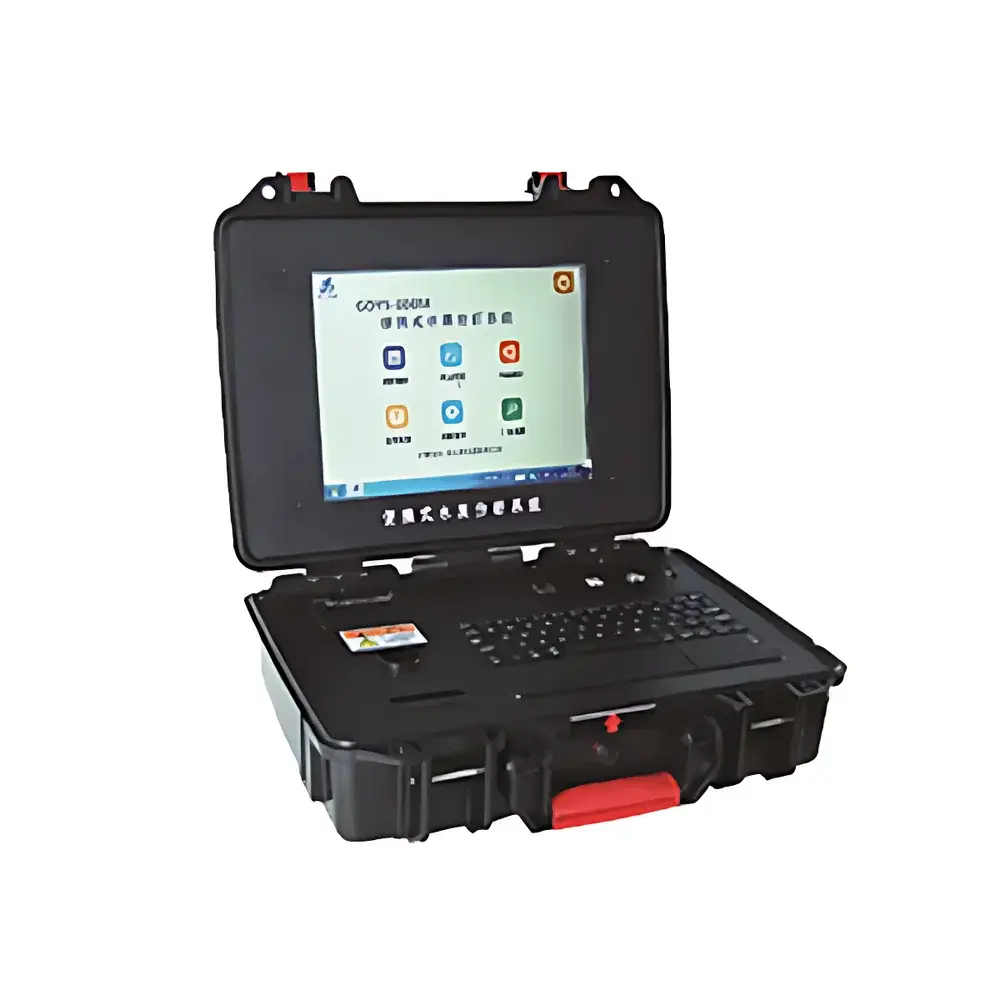
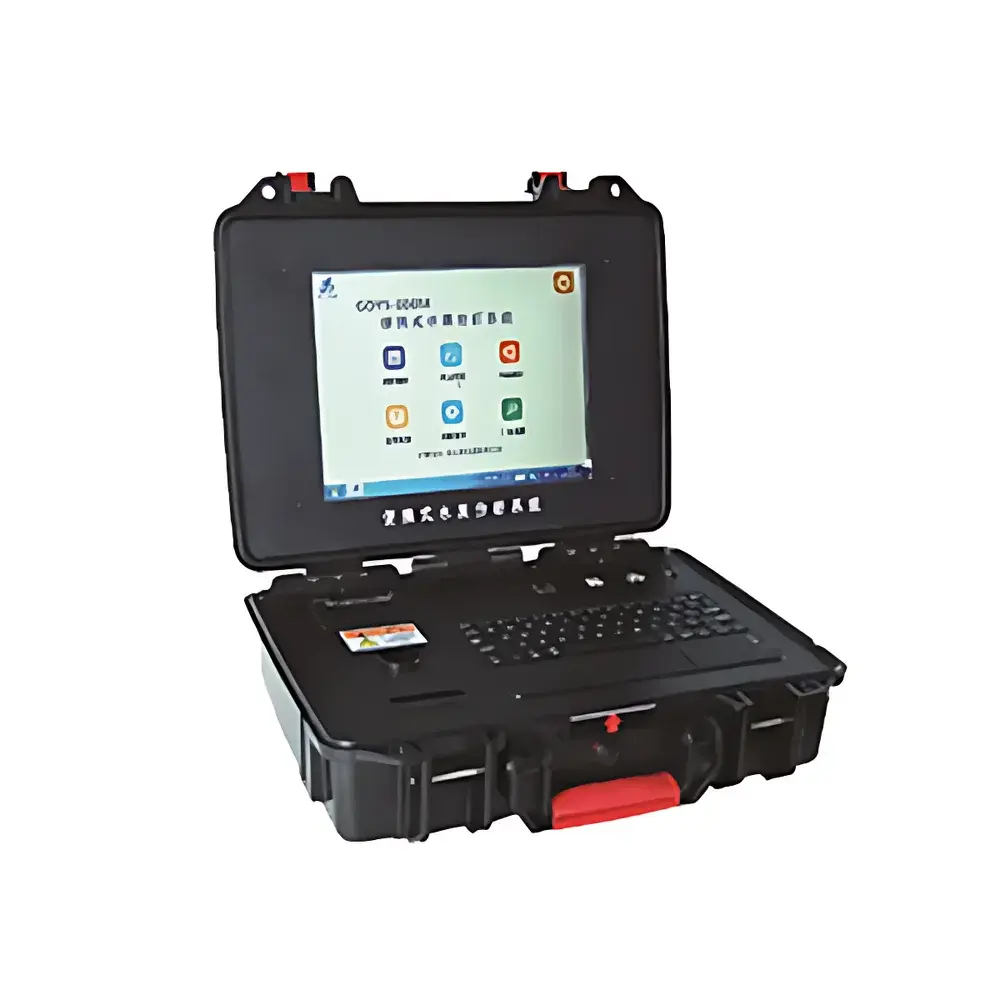
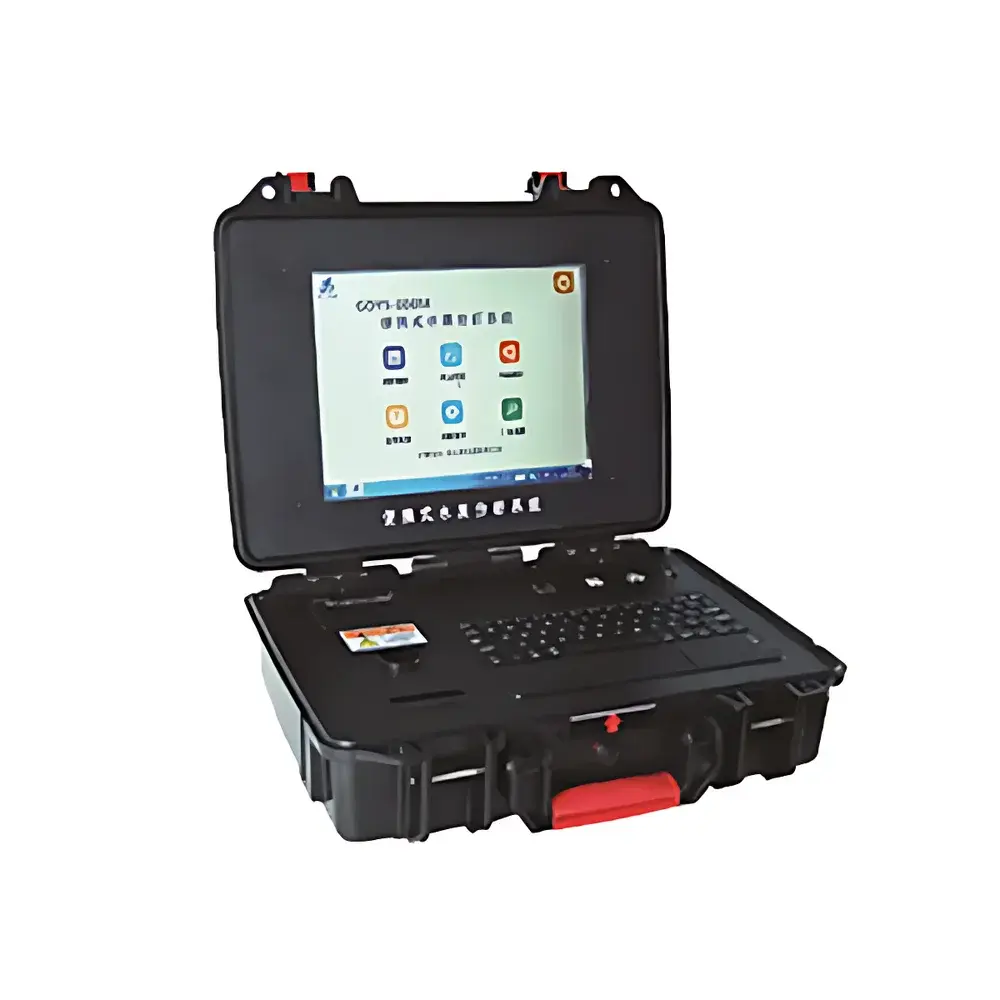
Jilin University & Little Swan GDYS-800M Portable Water Quality Analyzer
| Brand | Jilin University & Little Swan |
|---|---|
| Origin | Shanghai, China |
| Manufacturer Type | Authorized Distributor |
| Regional Classification | Domestic (China) |
| Model | GDYS-800M |
| Instrument Type | Portable / Handheld Water Quality Analyzer |
| Detection Principle | Spectrophotometry |
| Measurable Parameters | Free Chlorine, Chlorine Dioxide, COD (Permanganate Index), Total Hardness (as CaCO₃), Color, Turbidity, and 32 additional routine water quality indicators |
| Measurement Ranges | Free Chlorine: 0–5 mg/L |
| Total Hardness (as CaCO₃) | 0–500 mg/L |
| Photometric Stability | ≤0.005 Abs/h |
| Wavelength Options | 380, 430, 470, 520, 538, 595, 630 nm (configurable per parameter set) |
| Light Source | High-brightness LED |
| Detector | Integrated Photodiode Sensor |
| Sample Cell | Cylindrical Glass Cuvettes and Standard Glass Cuvette (10 mm pathlength) |
| Operating Environment | 5–40 °C |
| Display | 12-inch Multi-touch LCD |
| Connectivity | Ethernet, USB 2.0, Wi-Fi 802.11 b/g/n |
| Power Supply | AC Adapter (100–240 V) + Rechargeable Li-ion Battery (≥8 h continuous operation) |
| Data Output | Built-in Thermal Printer, CSV Export, Cloud Sync via Secure HTTPS API |
Overview
The Jilin University & Little Swan GDYS-800M Portable Water Quality Analyzer is a field-deployable spectrophotometric instrument engineered for rapid, on-site quantification of up to 35 regulatory-relevant water quality parameters. Based on standardized colorimetric reaction principles compliant with ISO 7888 (turbidity), ISO 7393-2 (free chlorine), and GB/T 5750 (Chinese Standard Methods for Examination of Drinking Water), the system employs discrete-wavelength LED excitation and high-stability photodiode detection to deliver reproducible absorbance measurements across a calibrated spectral range (380–630 nm). Its design targets compliance-driven applications in drinking water safety monitoring, source water assessment, and emergency response scenarios where laboratory access is limited or time-sensitive decisions are required. The instrument operates without optical moving parts—relying instead on solid-state illumination and detection—to ensure mechanical robustness under transport stress, temperature fluctuation, and ambient humidity common in field environments.
Key Features
- Modular wavelength configuration: Pre-aligned LED sources at 380, 430, 470, 520, 538, 595, and 630 nm enable method-specific optical selection per analyte—eliminating filter wheels and reducing calibration drift.
- Photometric stability ≤0.005 Abs/h over 8-hour operation, validated per ISO 10523 and ASTM D1208 protocols, ensuring measurement integrity during extended field campaigns.
- 12-inch industrial-grade multi-touch display with glove-compatible interface, supporting real-time spectral preview, calibration curve visualization, and step-by-step guided assay execution.
- Dual-power architecture: Integrated rechargeable lithium-ion battery (≥8 h runtime) plus universal AC adapter (100–240 V, 50/60 Hz) enables uninterrupted operation in laboratories, mobile labs, and remote sampling sites.
- IP65-rated portable carry case: Impact-resistant polymer housing with gasket-sealed compartments, shock-absorbing internal foam, and integrated moisture barrier—certified for transport per ISTA 3A standards.
- Thermal printer module with auto-labeling: Generates audit-ready reports containing sample ID, test date/time, operator ID, method version, calibration status, and raw absorbance values—formatted for GLP-compliant record retention.
Sample Compatibility & Compliance
The GDYS-800M accommodates standard 10 mm pathlength glass cuvettes and cylindrical borosilicate vials (10–25 mL), compatible with EPA Method 334.0 (chlorine), ISO 11290-1 (microbiological indicator correlation), and GB/T 5750.4–2023 (Chinese national standard for hardness and turbidity). All pre-formulated reagent kits are manufactured under ISO 9001-certified production controls and include lot-specific traceability documentation. The system supports method validation per ISO/IEC 17025:2017 requirements, including linearity verification (R² ≥ 0.999), limit of detection (LOD) confirmation, and inter-laboratory precision assessment. Data integrity safeguards align with FDA 21 CFR Part 11 expectations through electronic signature support, immutable audit trails, and role-based user authentication.
Software & Data Management
Embedded firmware (v4.2+) provides full method management, including customizable test sequences, multi-point calibration curve storage (up to 200 curves), and automatic blank subtraction. Raw data and processed results are exportable as timestamped CSV files via USB or network transfer. Wi-Fi connectivity enables secure cloud synchronization with Jilin University’s WaterSafe™ DataHub—a web-based platform supporting multi-site dashboard aggregation, automated alerting (e.g., exceedance thresholds), and PDF report generation with digital signatures. All communications utilize TLS 1.2 encryption; local database encryption (AES-256) ensures confidentiality during offline operation.
Applications
- Routine surveillance of municipal drinking water distribution systems (free chlorine residual mapping, turbidity hot-spot identification)
- Emergency response during natural disasters or infrastructure failure (rapid screening for disinfectant efficacy and physical contaminants)
- Regulatory compliance verification for rural water supply cooperatives and small-scale treatment plants
- Field validation of online sensor outputs (e.g., cross-checking SCADA-reported turbidity or chlorine levels)
- Educational use in environmental science curricula requiring hands-on spectrophotometric methodology training
- Pre-screening prior to certified lab analysis—reducing submission volume and turnaround time for priority samples
FAQ
Is the GDYS-800M compliant with international drinking water standards such as WHO Guidelines or EU Directive 98/83/EC?
Yes—the instrument implements analytical protocols aligned with ISO and ASTM methods referenced in Annex II of EU Directive 98/83/EC and WHO Technical Note 10 (2022), particularly for free chlorine, turbidity, and total hardness determination.
Can custom calibration curves be imported or modified by the user?
Yes—via USB or network upload, users may import CSV-formatted calibration data or adjust slope/intercept parameters within defined uncertainty bounds; all modifications are logged in the audit trail.
What is the expected service life of the LED light sources?
LEDs are rated for ≥50,000 hours of operation under nominal conditions, with output stability monitored continuously and compensated algorithmically to maintain photometric accuracy over time.
Does the system support multi-user access with permission levels?
Yes—administrator, operator, and viewer roles are configurable; password policies enforce complexity and expiration rules per organizational IT security policy.
Are reagents supplied with method-specific validation documentation?
Each reagent kit includes a Certificate of Analysis (CoA) listing batch-specific LOD, LOQ, recovery rates (n=6), and shelf-life under recommended storage (2–8 °C); CoAs comply with ISO/IEC 17025 clause 5.5.2.







