
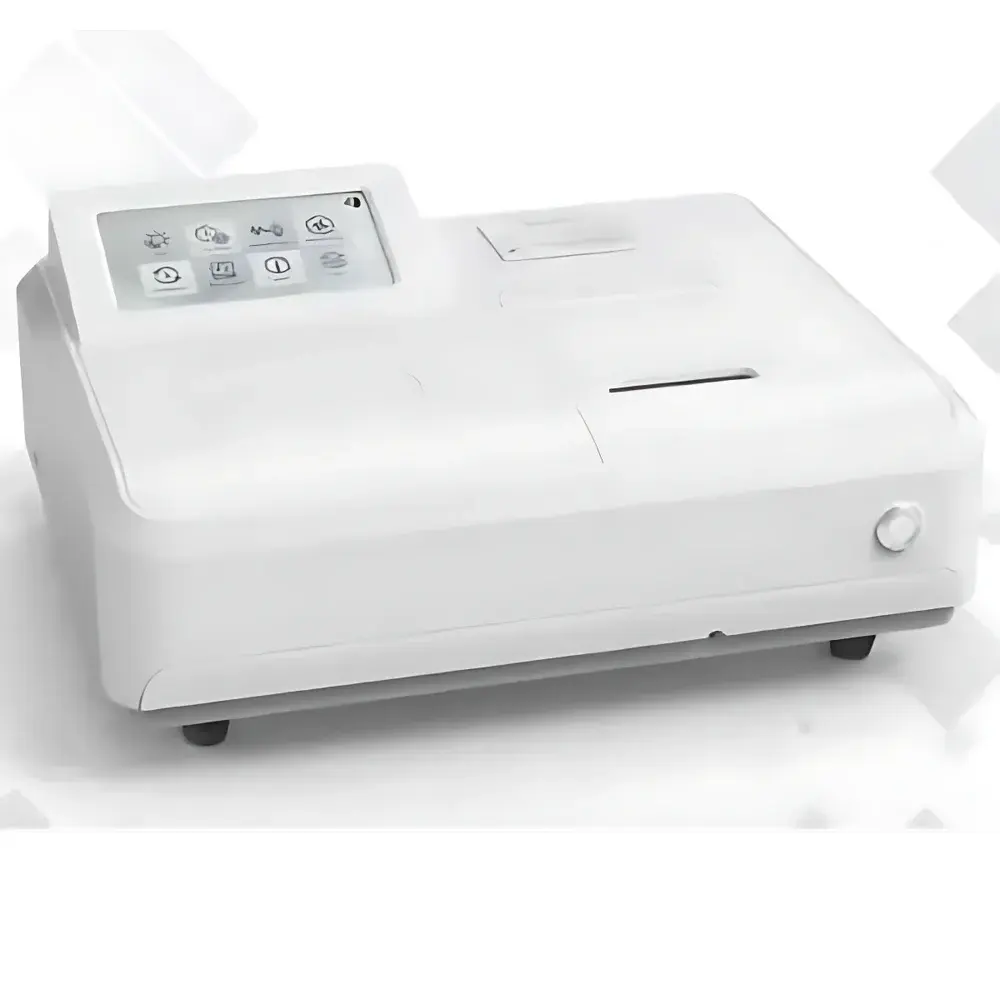
Jing Tuo CQD-2A Turbidity Analyzer for Pharmaceutical Clarity Testing
| Brand | Jing Tuo Instrument |
|---|---|
| Origin | Tianjin, China |
| Manufacturer Type | Direct Manufacturer |
| Model | CQD-2A |
| Measurement Principle | 90° Nephelometric Scattering |
| Light Source | 860 nm LED |
| Range | 0–10 NTU / 10–100 NTU / 100–1000 NTU (Auto-ranging) |
| Resolution | 0.01 NTU (0–10), 0.1 NTU (10–100), 1 NTU (100–1000) |
| Accuracy | ±2% F.S. |
| Repeatability | ≤0.5% |
| Zero Drift | ±0.5% F.S. |
| Calibration Points | 1–5-point automated calibration |
| Interface | USB |
| Operating Temperature | Ambient to 65°C |
| Power Supply | 220 V, 50 Hz |
Overview
The Jing Tuo CQD-2A Turbidity Analyzer is a dedicated nephelometric instrument engineered for quantitative clarity assessment of parenteral pharmaceuticals in strict compliance with Chapter 0902 “Clarity Testing” (Method II – Turbidimetric Method) of the Chinese Pharmacopoeia (ChP) 2020 Edition. It operates on the principle of 90° light scattering—measuring the intensity of scattered light from suspended particles in liquid samples illuminated by a stable 860 nm near-infrared LED source. This wavelength minimizes interference from sample coloration and intrinsic absorbance, ensuring high specificity for particulate matter detection in clear-to-slightly-hazy injectables, APIs, and sterile solutions. Designed for routine QC laboratories operating under Good Manufacturing Practice (GMP), the CQD-2A delivers traceable, auditable, and reproducible turbidity measurements across three auto-switching ranges (0–10, 10–100, and 100–1000 NTU), supporting both qualitative pass/fail evaluation and quantitative trending for stability studies and batch release.
Key Features
- Full-color capacitive touchscreen interface with intuitive navigation and real-time graphical display of turbidity trends and calibration status
- Four-tier user permission system (Administrator, Supervisor, Analyst, Viewer) aligned with ALCOA+ data integrity principles
- Comprehensive audit trail functionality—automatically records all critical events including method changes, calibration actions, result modifications, and user logins with timestamps and operator IDs
- Automated multi-point calibration (1–5 points) using certified Formazin or equivalent traceable standards; calibration history stored with metadata (date, standard lot, operator)
- Rugged optical path design with temperature-stabilized detector and low-drift LED source, enabling reliable operation up to 65°C ambient without performance degradation
- USB interface for secure data export (CSV format), firmware updates, and integration into laboratory network environments
Sample Compatibility & Compliance
The CQD-2A accommodates standard 25 mm round glass or quartz cuvettes (10 mm path length), compatible with aqueous and non-aqueous parenteral formulations, including saline-based infusions, dextrose solutions, lipid emulsions, and lyophilized reconstitutes. Its measurement geometry and signal processing meet the geometric and photometric requirements specified in ChP 0902 Method II. While primarily validated against ChP, the instrument’s 90° scattering configuration and NTU reporting align with ISO 7027-1:2016 principles for turbidity measurement. Data handling protocols—including electronic signatures, audit trail retention, and user access control—support compliance with FDA 21 CFR Part 11, EU Annex 11, and WHO TRS 992 Annex 5 for computerized systems in regulated pharmaceutical environments.
Software & Data Management
Embedded firmware provides local data storage for ≥10,000 test records with full metadata (sample ID, date/time, operator, method version, calibration ID). All results are timestamped and cryptographically signed upon finalization. Exported CSV files retain hierarchical structure—including raw scatter counts, calculated NTU values, range used, and associated calibration coefficients—for seamless import into LIMS or statistical process control (SPC) platforms. Audit logs are immutable and exportable as separate encrypted archives. No cloud connectivity or remote access capabilities are implemented—ensuring full data sovereignty and eliminating external attack vectors, consistent with GxP risk-based IT infrastructure assessments.
Applications
- Final container testing of sterile injectables (e.g., monoclonal antibodies, small-molecule APIs, vaccines) per ChP 0902 and USP <788>
- Stability-indicating clarity monitoring during accelerated and long-term storage studies
- In-process control of filtration steps in aseptic manufacturing lines
- Comparability assessments during formulation changes or site transfers
- Supporting regulatory submissions requiring documented clarity consistency (e.g., ANDA, BLA, CMC sections)
- Root cause analysis of haze formation in lyophilized product reconstitutes
FAQ
Does the CQD-2A comply with FDA 21 CFR Part 11 requirements?
Yes—the system implements role-based access control, electronic signatures with identity verification, and a tamper-evident audit trail meeting core Part 11 criteria for closed systems.
Can it be calibrated with standards other than Formazin?
It supports calibration with any NIST-traceable turbidity standard, provided its scattering cross-section and spectral response are certified at 860 nm; Formazin remains the reference standard for ChP alignment.
Is temperature compensation applied during measurement?
No active compensation is applied, but the optical module is thermally stabilized to minimize drift; users must conduct measurements within the specified ambient range (room temperature to 65°C) and document environmental conditions per SOP.
What is the minimum detectable turbidity level in the 0–10 NTU range?
The resolution is 0.01 NTU, with a limit of quantitation (LOQ) determined experimentally per ICH Q2(R2) guidelines—typically ≤0.1 NTU under controlled lab conditions.
How is data backup and recovery managed?
Local USB export enables manual archival; no automatic network backup is built-in—laboratories must implement their own validated backup procedures per IT security policy.







