
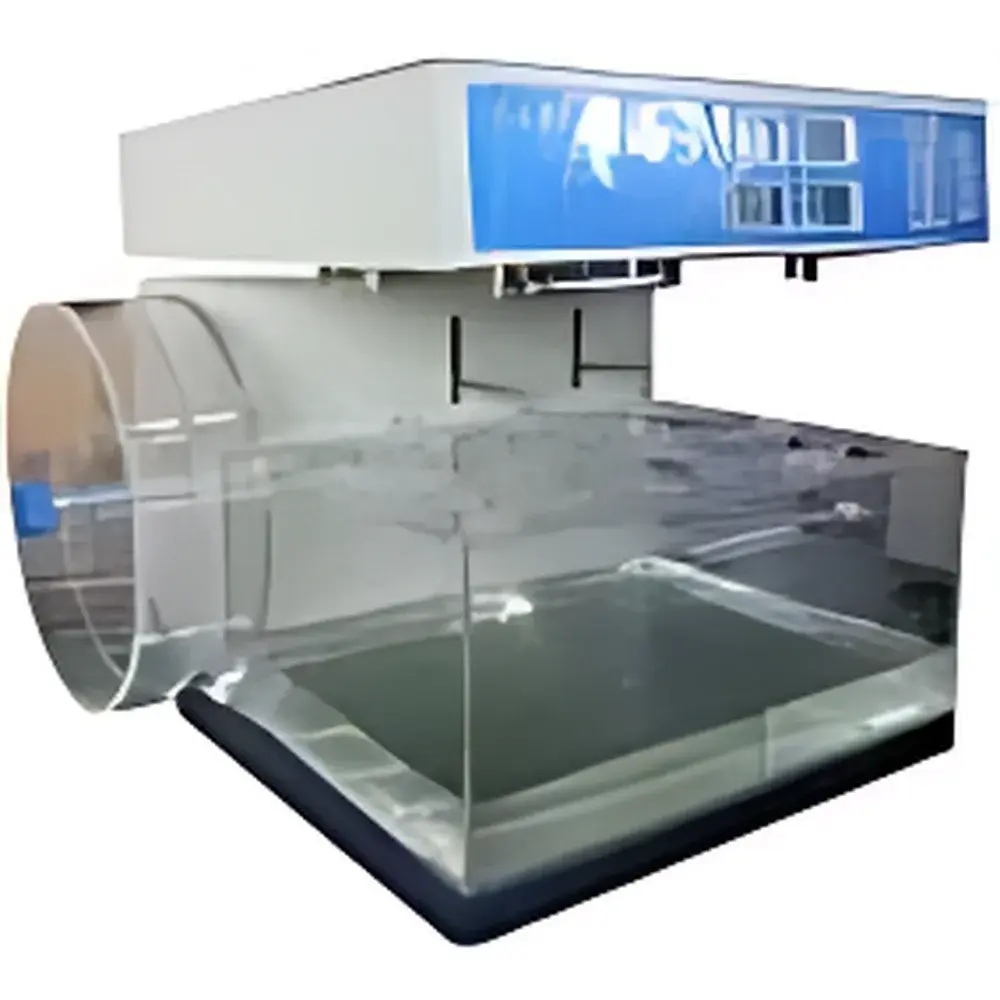
Jing Tuo ZPJ-6 Intelligent Tablet Quadruple Tester
| Brand | Jing Tuo Instrument |
|---|---|
| Origin | Tianjin, China |
| Manufacturer | Yes |
| Country of Origin | China |
| Model | ZPJ-6 |
| Dissolution Vessels | 6 |
| Temperature Control Range | 20–40 °C ±0.3 °C |
| Rotation Speed (Paddle/Basket) | 20–200 rpm ±2 rpm |
| Timing Range | 1–900 min ±0.5 min |
| Paddle Shaft Wobble | ±0.5 mm |
| Basket Wobble | ±1.0 mm |
| Disintegration Baskets | 2 |
| Reciprocating Frequency | 30–32 cycles/min |
| Stroke Distance | 55 mm ±2 mm |
| Friability Drums | 2 |
| Drum Inner Diameter | 286 mm |
| Drum Depth | 39 mm |
| Drop Height | 156 mm |
| Drum Rotational Speed | 25 rpm ±1 rpm |
| Drum Revolutions | 100 ±1 cycles |
| Hardness Measurement Range | 2–199 N ±1 N |
| Tablet Diameter Compatibility | 3–40 mm |
| Power Supply | 220 V / 50 Hz / 600 W |
| Dimensions (W×D×H) | 52×58×47 cm³ |
Overview
The Jing Tuo ZPJ-6 Intelligent Tablet Quadruple Tester is a fully integrated, benchtop pharmaceutical quality control instrument engineered for simultaneous or sequential execution of four critical compendial tests defined in USP General Chapters <701> Disintegration, <705> Friability, <711> Dissolution, and <1217> Tablet Hardness. It operates on established physical measurement principles: force transduction via high-precision load cells for hardness; mechanical impact and rotational abrasion under controlled geometry for friability; fluid dynamics-driven disintegration monitoring using dual reciprocating baskets; and hydrodynamic dissolution profiling across six independent vessels with paddle or basket apparatus per USP Apparatus 2 and 1. Designed for routine QC laboratories operating under GLP and GMP frameworks, the ZPJ-6 delivers repeatable, auditable results traceable to NIST-calibrated standards.
Key Features
- Four-in-one functionality eliminates inter-instrument variability and reduces lab footprint—hardness, friability, disintegration, and dissolution performed on a single platform with shared calibration and data governance.
- High-stability temperature regulation system employing magnetic-drive circulation pumps ensures uniform water bath thermal distribution (±0.3 °C) across all six dissolution vessels—critical for compliance with USP <711> thermal validation requirements.
- Dual independent disintegration stations operate in parallel with programmable stroke (55 mm ±2 mm), frequency (30–32 cpm), and auto-stop timing—enabling concurrent testing of two different formulations or batches.
- Friability testing uses two precision-machined stainless-steel drums (SUS316L), each rotating at 25 rpm ±1 rpm for exactly 100 ±1 revolutions—meeting USP <705> mechanical tolerance specifications.
- Hardness module integrates calibrated S-type load cells (2–199 N range, ±1 N accuracy) with motorized compression actuation, automatic peak-force capture, digital display, and cycle memory—supporting ASTM E384-compliant indentation force profiling.
- All motion-critical components—including paddle shafts (wobble ≤ ±0.5 mm), baskets (wobble ≤ ±1.0 mm), and drum alignment mechanisms—are manufactured from medical-grade SUS316L stainless steel to ensure corrosion resistance and long-term dimensional stability.
- Full parameter programmability: users define test duration, rotation speed, temperature setpoint, and stop conditions independently per test mode—with real-time overlay of setpoint vs. measured values on the front-panel LCD.
Sample Compatibility & Compliance
The ZPJ-6 accommodates tablets ranging from 3 mm to 40 mm in diameter across all four test modes. Its mechanical architecture conforms to dimensional tolerances specified in USP <711> (vessel geometry, paddle/basket dimensions), <701> (basket mesh, rack travel), <705> (drum internal diameter 286 mm, depth 39 mm, drop height 156 mm), and <1217> (anvil flatness, probe alignment). The system supports audit-ready operation under FDA 21 CFR Part 11 when paired with validated third-party LIMS or ELN software—enabling electronic signatures, change tracking, and secure user access control. All temperature and timing subsystems are factory-verified against ISO/IEC 17025-accredited reference instruments.
Software & Data Management
While the ZPJ-6 operates as a standalone instrument with embedded microcontroller-based logic, its analog and digital I/O ports support RS-232 and optional USB-to-serial interfaces for integration into centralized laboratory data systems. Raw measurement outputs—including hardness force curves, dissolution time-point absorbance equivalents (when used with external UV-Vis), disintegration endpoint timestamps, and friability mass loss percentages—are timestamped and exportable in CSV format. The firmware implements non-volatile parameter storage with version-locked configuration files, supporting retrospective review per ALCOA+ principles (Attributable, Legible, Contemporaneous, Original, Accurate, Complete, Consistent, Enduring, Available).
Applications
- Routine release testing of immediate-release and modified-release solid oral dosage forms per pharmacopoeial monographs.
- Formulation development studies assessing excipient influence on tablet mechanical integrity and dissolution profile robustness.
- Stability program monitoring—tracking hardness drift, friability increase, or dissolution lag time shifts over accelerated or real-time storage conditions.
- Supplier qualification of active pharmaceutical ingredients (APIs) and excipients where compressibility and flow behavior impact final tablet performance.
- Regulatory submission support: generating datasets compliant with ICH Q5A(R2), Q5C, and Q6A guidelines for physicochemical characterization.
FAQ
Does the ZPJ-6 meet USP <711> mechanical calibration requirements for dissolution apparatus?
Yes—the paddle wobble (≤ ±0.5 mm), basket wobble (≤ ±1.0 mm), centering tolerance, and vessel geometry comply with USP <711> Section 5 “Mechanical Calibration” specifications.
Can the instrument store and recall multiple test protocols?
Yes—up to 20 user-defined methods can be saved in non-volatile memory, each containing independent settings for temperature, speed, timing, and stop conditions per test mode.
Is the hardness module capable of continuous cyclic testing?
Yes—it supports automated sequence testing: manual tablet loading followed by motor-driven compression, peak detection, display lock, auto-reset, and immediate re-initiation—ideal for batch sampling.
What materials are used for wetted parts in dissolution and disintegration assemblies?
All fluid-contact components—including dissolution vessels, paddles, baskets, disintegration racks, and friability drums—are constructed from electropolished SUS316L stainless steel, certified to ASTM A967 for passivation and biocompatibility.
How is thermal uniformity verified across the six dissolution vessels?
The magnetic-coupled recirculation system, combined with dual PT100 sensors (one per vessel bank), enables closed-loop PID control and real-time thermal mapping—validated per USP <711> “Temperature Uniformity” protocol using calibrated thermistors.





