
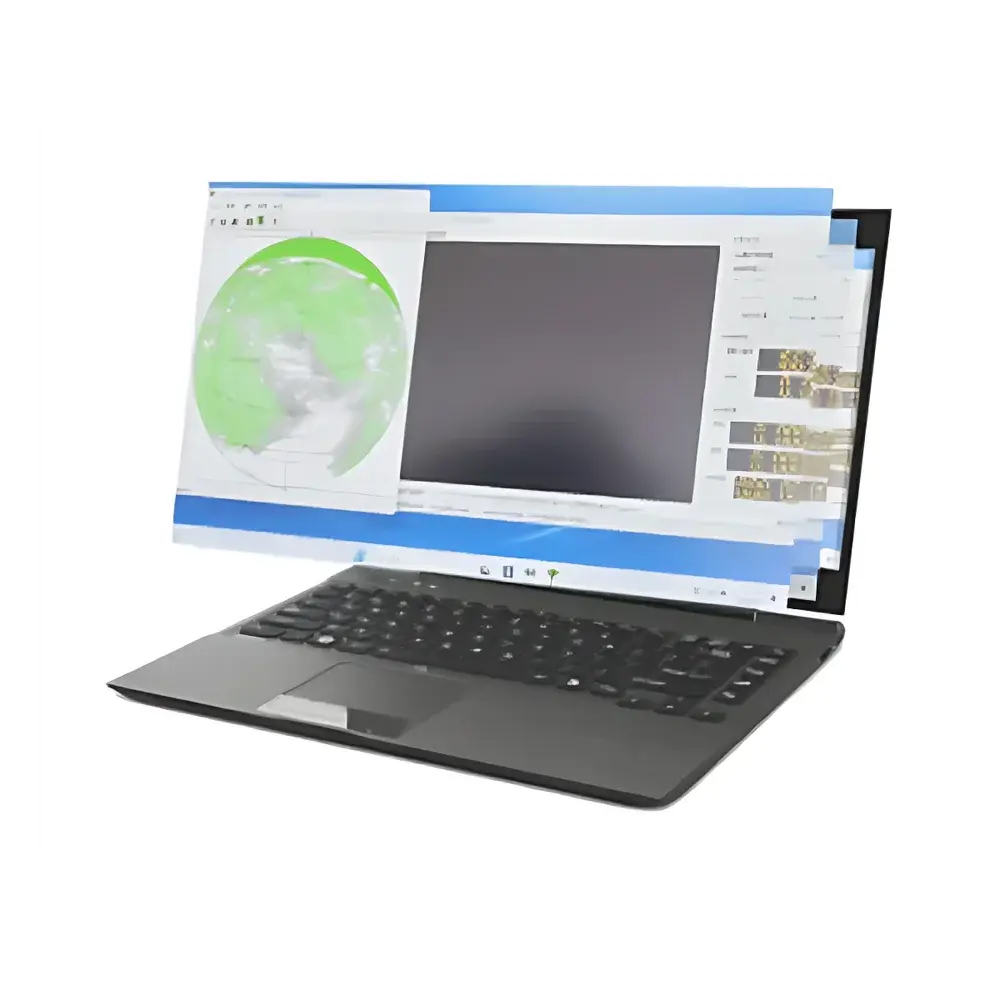
Jingcheng Huatai HT-GC30 Canopy Analyzer
| Brand | Jingcheng Huatai |
|---|---|
| Origin | Beijing, China |
| Model | HT-GC30 |
| Principle | Hemispherical Image Analysis (Fisheye Lens + CCD Imaging) |
| Type | Portable |
| Lens FOV | 150° (optional 180°) |
| Image Resolution | 2592 × 1744 |
| Zenith Angle Range | 0°–90° |
| PAR Spectral Range | 400–700 nm |
| PAR Measurement Range | 0–3000 µmol·m⁻²·s⁻¹ |
| Power Supply | External Rechargeable Li-ion Battery Pack |
| Interface | USB |
| Operating Temperature | −10 to 55 °C |
| Software | Plant Canopy Analysis System v3.x (with zenith/azimuthal zoning, dynamic thresholding, and georeferenced image tagging) |
Overview
The Jingcheng Huatai HT-GC30 Canopy Analyzer is a field-deployable hemispherical imaging instrument engineered for quantitative structural and radiative characterization of plant canopies. It operates on the principle of fisheye-lens-based hemispherical photography, capturing high-resolution (2592 × 1744) digital images of the sky–canopy interface from beneath the vegetation layer. These images are processed using validated radiometric and geometric algorithms to derive biophysically meaningful canopy architecture parameters—without physical contact or disturbance to the plant stand. Unlike point-based sensors or time-intensive manual methods, the HT-GC30 acquires a complete angular representation of light interception and gap distribution in a single exposure, enabling rapid, repeatable, and spatially representative sampling across heterogeneous field plots, forest understories, agroforestry systems, and controlled-environment trials.
Key Features
- Fisheye optical system with selectable 150° or optional 180° field-of-view lens, calibrated for accurate solid-angle projection and vignetting correction.
- Integrated PAR sensor (400–700 nm spectral response) co-located with the imaging plane, enabling synchronous measurement of photosynthetically active radiation flux under varying solar elevation angles.
- Motorized, handheld universal joint mount with automatic electronic leveling—ensures consistent nadir-aligned acquisition geometry independent of terrain slope or operator posture.
- Real-time GPS-tagged metadata embedding (latitude, longitude, timestamp, altitude), supporting georeferenced canopy mapping and longitudinal monitoring workflows.
- Configurable zenith–azimuthal partitioning: up to 10 zenith angle zones (e.g., 0°–10°, 10°–20°, …) and 10 azimuth sectors (0°–36°, 36°–72°, …) for directional analysis of leaf area density and light transmission anisotropy.
- Interactive threshold adjustment and region-of-interest masking tools within the analysis software—allowing exclusion of non-canopy elements (e.g., soil gaps, fence posts, edge-row artifacts, or equipment shadows) prior to parameter derivation.
- USB-connected operation with external rechargeable lithium-ion battery pack—supporting >8 hours of continuous field use without mains power dependency.
Sample Compatibility & Compliance
The HT-GC30 is compatible with herbaceous, shrub, and low-to-mid-height tree canopies (up to ~15 m height, depending on spatial resolution requirements). It has been validated for use in diverse ecosystems including maize and soybean fields, rice paddies, vineyards, orchards, temperate deciduous forests, and restoration plots. Data processing adheres to established methodologies described in ISO 11727:2022 (Optics and photonics — Measurement of canopy structure — Hemispherical photography procedures) and aligns with USDA ARS protocols for LAI validation. While not certified for GxP-regulated environments, its software supports audit-ready output logs (timestamped raw image files, parameter calculation history, and user-defined mask configurations), facilitating GLP-compliant documentation when integrated into institutional SOPs.
Software & Data Management
The proprietary Plant Canopy Analysis System (v3.x) runs on Windows-based laptops connected via USB. It provides a modular GUI for image import, geometric calibration, dynamic threshold optimization, multi-zone segmentation, and export of standardized metrics—including LAI, mean leaf inclination angle (MLA), diffuse non-interceptance (DNI), beam fraction at specified solar zenith angles, extinction coefficient (k), azimuthal LAI distribution, and PAR transmittance profiles. All outputs are generated in CSV and PDF formats; raw TIFF images retain EXIF metadata. The software does not require internet connectivity during acquisition and stores no cloud-based data by default—ensuring full local control over sensitive field datasets.
Applications
- Quantifying seasonal dynamics of leaf area index (LAI) in crop phenotyping trials and breeding programs.
- Evaluating canopy closure and light interception efficiency in precision agriculture management zones.
- Assessing structural heterogeneity in ecological restoration monitoring and biodiversity surveys.
- Validating outputs from radiative transfer models (e.g., SAIL, 4SAIL, FLUSPECT) and satellite-derived LAI products (e.g., MODIS, Sentinel-2).
- Supporting microclimate modeling by characterizing vertical and horizontal PAR gradients beneath canopies.
- Documenting canopy architecture changes following drought stress, nutrient treatments, or pest infestation in controlled experiments.
FAQ
What is the recommended minimum distance between the sensor and the ground for accurate LAI estimation?
For most herbaceous and row crops, a mounting height of 0.5–1.5 m above the soil surface is optimal; taller vegetation may require elevated platforms. The instrument’s 0°–90° zenith range ensures full hemispheric coverage regardless of height, provided the lens remains unobstructed.
Can the HT-GC30 be used under cloudy or overcast conditions?
Yes—diffuse sky conditions improve contrast for gap fraction estimation and reduce specular glare. However, direct-beam transmission parameters (e.g., k at specific solar angles) require concurrent sun position data, which the system records automatically via GPS-derived solar geometry.
Is the software compatible with macOS or Linux operating systems?
No—the Plant Canopy Analysis System is built exclusively for Windows 10/11 (64-bit) and requires .NET Framework 4.8. Virtualization or Boot Camp is not officially supported.
How is calibration performed for the PAR sensor?
The PAR sensor is factory-calibrated against NIST-traceable reference diodes. Field recalibration is not user-serviceable; users are advised to perform annual verification using a secondary quantum sensor in parallel measurements.
Does the system support automated batch processing of multiple images?
Yes—version 3.2+ includes a command-line interface (CLI) module for scripting repetitive analyses across large image sets, including batch masking, zone-specific exports, and metadata aggregation.
Related Products




