
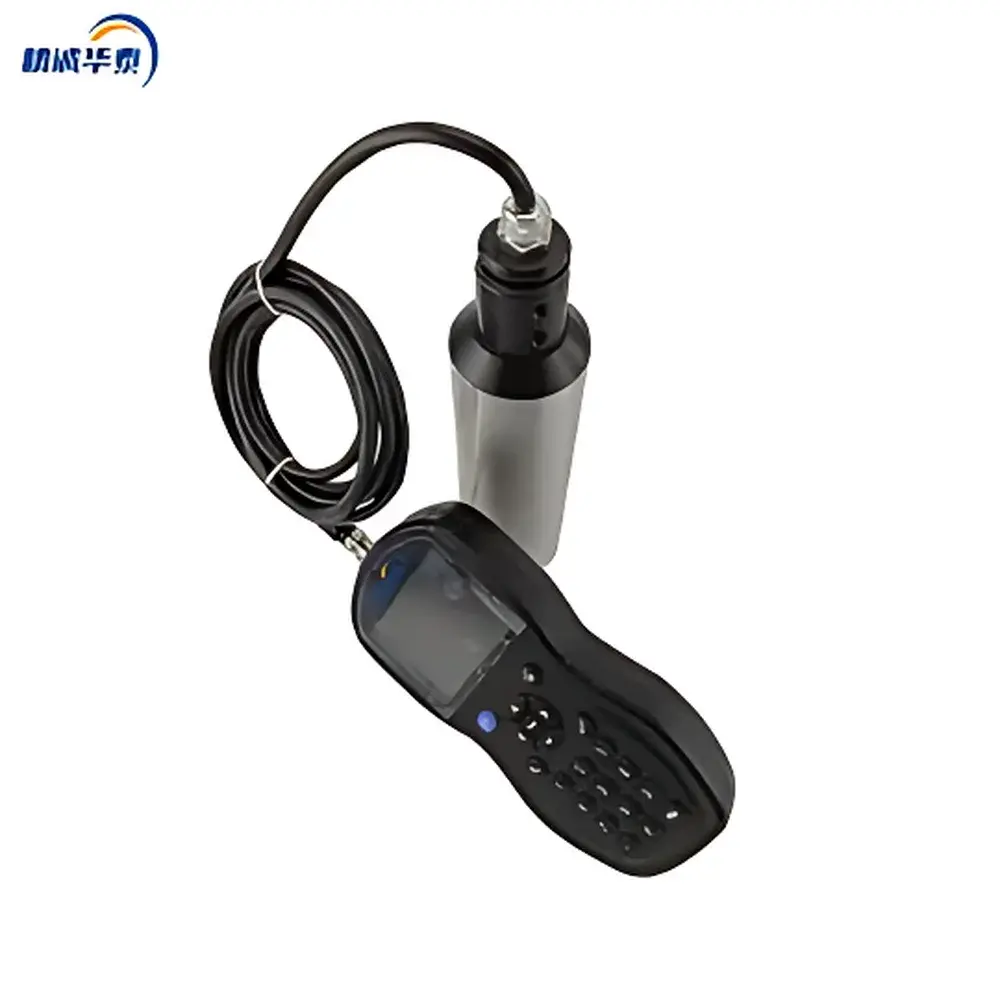
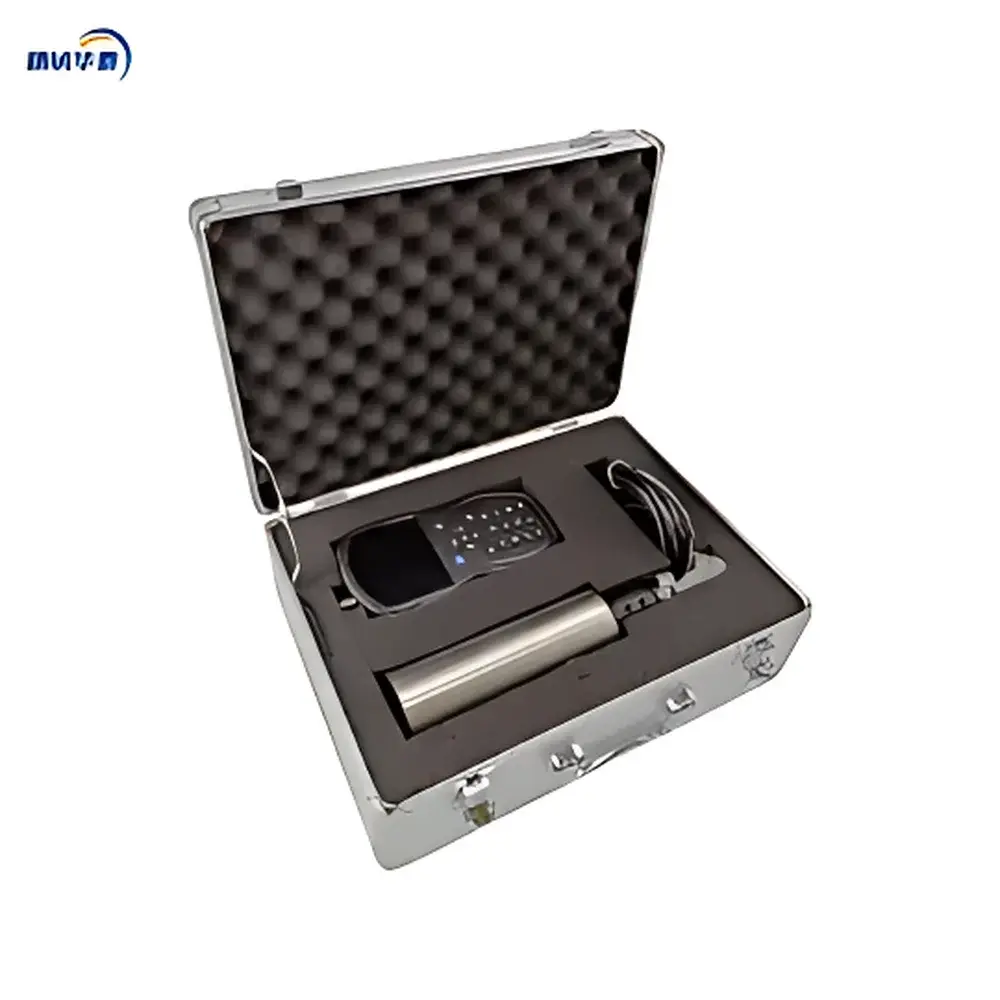
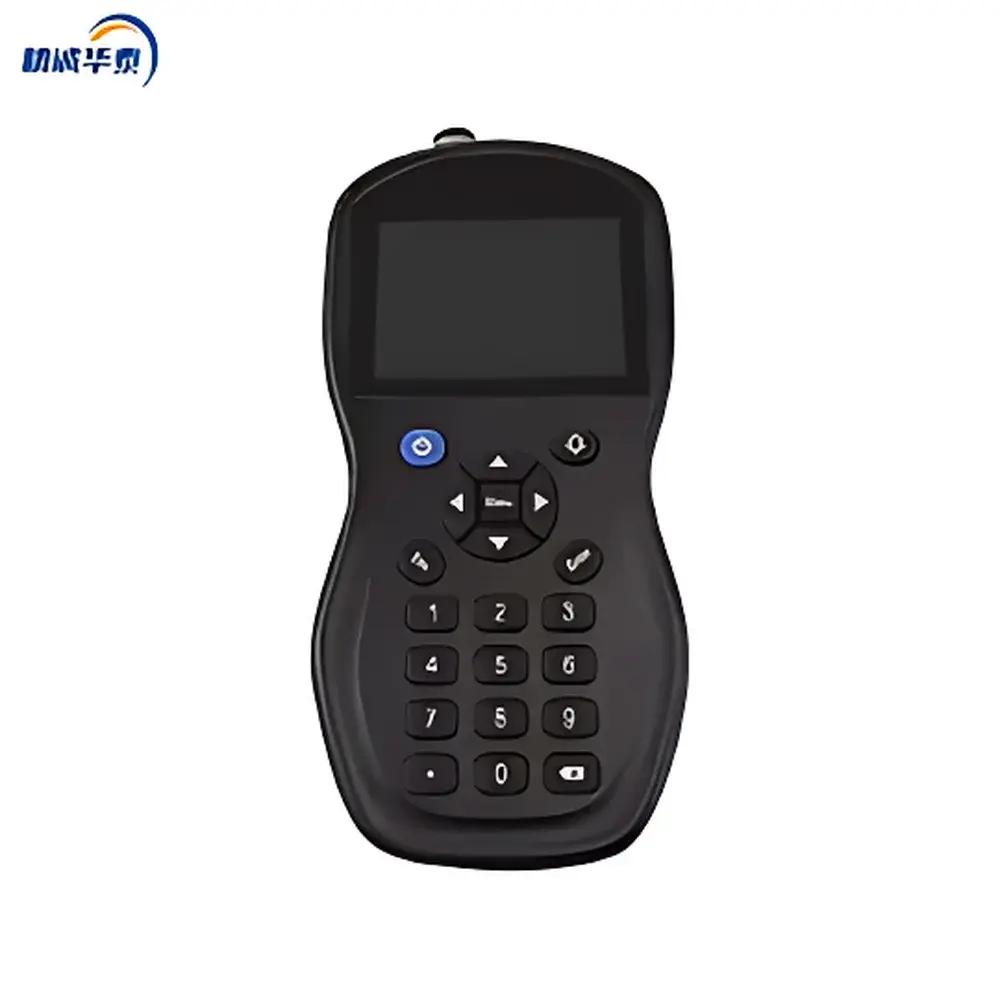
Jingcheng Huatai HT-SS-I Portable Suspended Solids Analyzer
| Brand | Jingcheng Huatai |
|---|---|
| Origin | Beijing, China |
| Manufacturer Type | Authorized Distributor |
| Country of Origin | China |
| Model | HT-SS-I |
| Instrument Type | Portable |
| Measurement Principle | ISO 7027-compliant dual-beam infrared light scattering and absorption |
| Range | 0.1–50,000 mg/L (customizable high-range options available) |
| Accuracy | ±5% of reading (dependent on sample homogeneity) |
| Resolution | 0.01–1 mg/L (scale-dependent) |
| Sensor Material | SUS316L stainless steel |
| Host Housing | ABS+PC polymer blend |
| Sensor IP Rating | IP68 |
| Host IP Rating | IP67 |
| Operating Temperature | 0–50 °C (non-freezing) |
| Storage Temperature | −15 to 60 °C |
| Sensor Dimensions | Ø60 mm × 254 mm, 1.65 kg |
| Host Dimensions | 203 × 100 × 43 mm, 0.5 kg |
| Standard Cable Length | 3 m (extendable) |
| Display | 3.5-inch color LCD with adjustable backlight |
| Data Storage Capacity | >100,000 records |
| Power | Rechargeable Li-ion battery, USB-C charging (no battery removal required) |
| Interface | USB data export |
| Calibration Options | Standard solution calibration and field water sample calibration |
| Auto-sensor recognition | Yes |
| Sensor configuration & calibration via host | Yes |
Overview
The Jingcheng Huatai HT-SS-I Portable Suspended Solids Analyzer is an engineered field-deployable instrument designed for rapid, reliable quantification of total suspended solids (TSS) and mixed liquor suspended solids (MLSS) in aqueous environments. It operates on the ISO 7027 standard principle—dual-beam infrared (850 nm) light scattering and absorption—to eliminate interference from water color, turbidity-causing dissolved organics, and ambient light. Unlike single-wavelength visible-light sensors, this infrared optical architecture ensures stable performance across diverse wastewater matrices, including activated sludge, digested biosolids, surface runoff, and industrial effluents. The system comprises a rugged handheld main unit and a submersible SS sensor, both optimized for real-time in-situ measurement without sample extraction or filtration—reducing analytical bias associated with settling, adsorption, or particulate redistribution during transport.
Key Features
- Ruggedized portable design with IP67-rated main unit and IP68-rated sensor—suitable for wet, dusty, and outdoor operational environments.
- Ergonomic curved housing with integrated rubberized grip strap for secure handling under humid or rainy conditions.
- 3.5-inch high-contrast color LCD with user-adjustable backlight—enabling legible operation in low-light or direct sunlight.
- Onboard data logging capacity exceeding 100,000 measurement records, timestamped and indexed by sensor ID and calibration status.
- USB-C interface supporting both power delivery (for battery recharge) and high-speed data export to Windows/macOS platforms—no proprietary drivers required.
- Automatic sensor recognition: the host detects connected probe type (e.g., HT-SS-I sensor) and dynamically loads appropriate measurement units, range scaling, and calibration parameters.
- Field-configurable calibration routines—including standard solution calibration (e.g., formazin or polymer-based standards traceable to NIST SRM 2134) and in-situ water sample calibration using gravimetric reference methods per ASTM D5907.
Sample Compatibility & Compliance
The HT-SS-I is validated for use with non-abrasive, non-corrosive aqueous suspensions exhibiting particle sizes ranging from ~1 µm to >1 mm—covering typical municipal and industrial wastewater solids distributions. Its SUS316L sensor body resists chloride-induced pitting and microbial corrosion common in secondary clarifiers and digesters. While not certified for explosive atmospheres (ATEX/IECEx), the device meets general-purpose electrical safety requirements per IEC 61010-1. For regulatory reporting, measurements align with ISO 7027:2016 (water quality—determination of turbidity) and support method validation protocols referenced in US EPA Method 160.1 and ISO 11923 (suspended solids—gravimetric determination). Data integrity complies with basic ALCOA+ principles (Attributable, Legible, Contemporaneous, Original, Accurate), though full 21 CFR Part 11 compliance requires integration with validated third-party LIMS software.
Software & Data Management
Raw measurement files are exported in CSV format via USB, containing columns for date/time stamp, measured concentration (mg/L), temperature (°C), sensor status flags (e.g., “clean”, “calibrated”, “out-of-range”), and user-defined site ID. No cloud connectivity or proprietary firmware is embedded—ensuring data sovereignty and compatibility with institutional IT security policies. Optional batch processing scripts (Python-compatible) are available upon request for automated QA/QC flagging—e.g., identifying outliers exceeding ±5% deviation from rolling 7-point median. Firmware updates are delivered as signed binary packages verified via SHA-256 checksum, installable through the same USB interface.
Applications
- Wastewater treatment plant operations: routine monitoring of influent, aeration basin, secondary clarifier, and return activated sludge streams.
- Environmental field surveys: rapid assessment of sediment load in rivers, lakes, stormwater outfalls, and agricultural drainage channels.
- Industrial process control: tracking solids carryover in cooling tower blowdown, oil-water separator effluent, and food processing wastewater.
- Academic and research laboratories: method development studies comparing optical vs. gravimetric TSS, or evaluating flocculant dosing efficiency in jar tests.
- Regulatory compliance verification: supporting discharge permit reporting under national water quality standards (e.g., China’s GB 3838-2002, EU WFD Annex V).
FAQ
What optical principle does the HT-SS-I employ, and why is it superior to visible-light turbidimeters?
It uses dual-beam infrared (850 nm) scattering per ISO 7027, minimizing interference from colored dissolved organic matter (CDOM) and reducing sensitivity to particle refractive index variation.
Can the sensor be immersed continuously in wastewater?
Yes—the IP68-rated probe is rated for indefinite submersion in non-aggressive aqueous media up to 10 m depth; periodic cleaning with soft brush and mild detergent is recommended every 7–14 days depending on fouling rate.
Is gravimetric validation required before field deployment?
Per ISO 11923 and US EPA guidance, initial correlation against lab-based gravimetric analysis is strongly advised for each new matrix type to establish site-specific correction factors.
Does the instrument support multi-point calibration?
No—it performs single-point calibration using one certified standard; however, users may store multiple calibration points manually and apply linear interpolation externally.
What is the battery life under typical field use?
Approximately 16 hours of continuous measurement at 1-sample-per-minute interval; standby current draw is <10 µA, enabling >6 months shelf life after full charge.







