
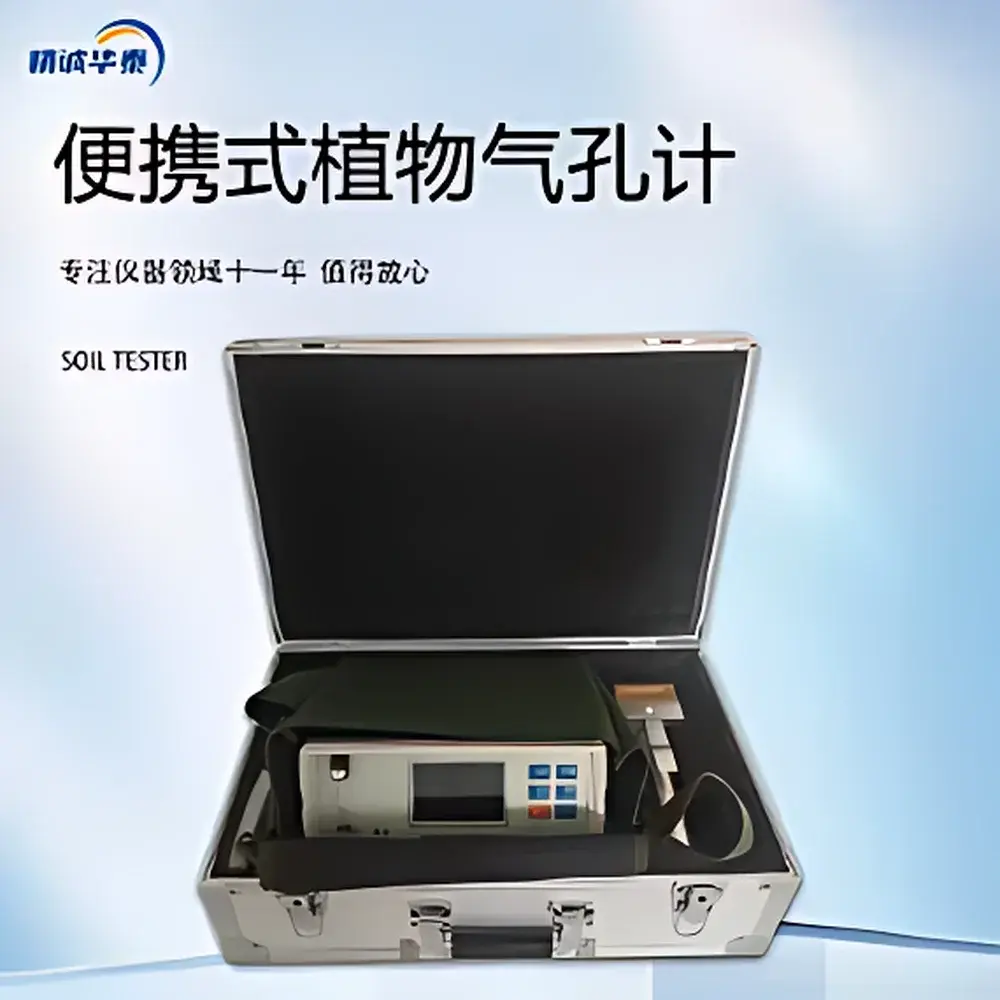
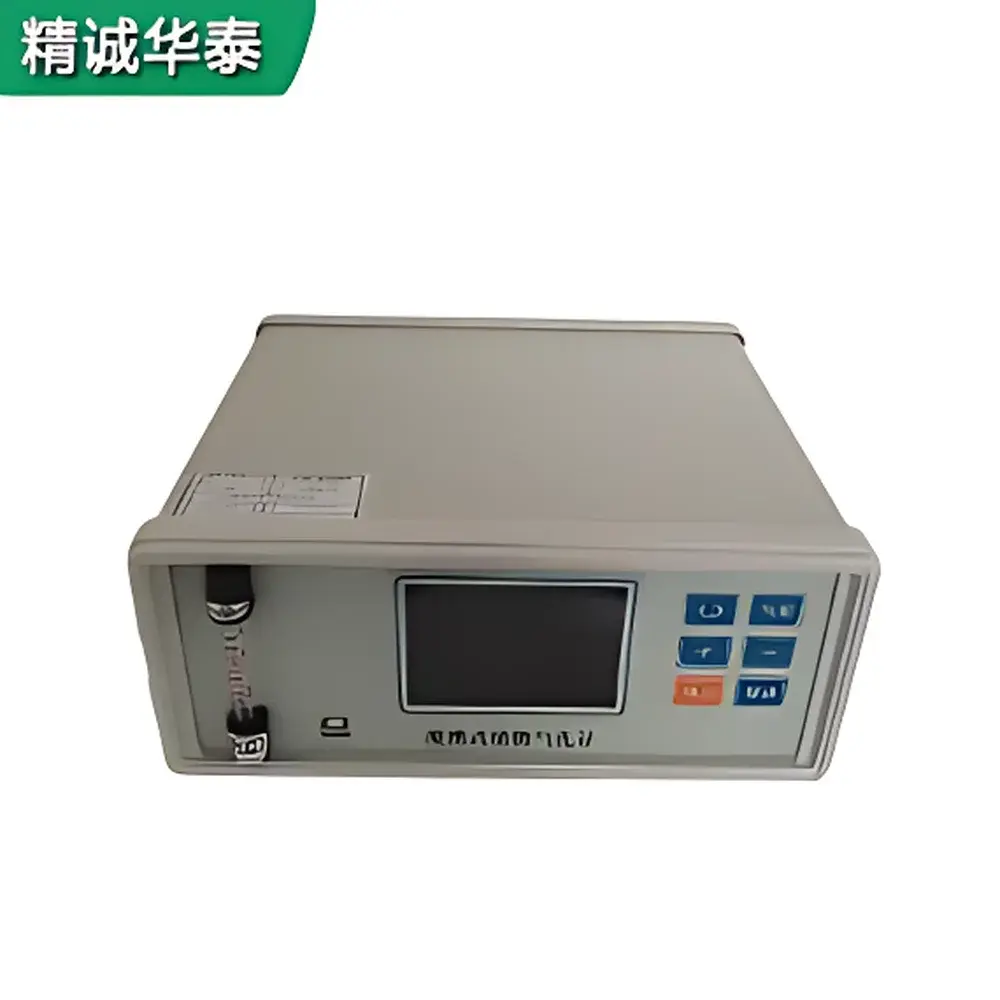
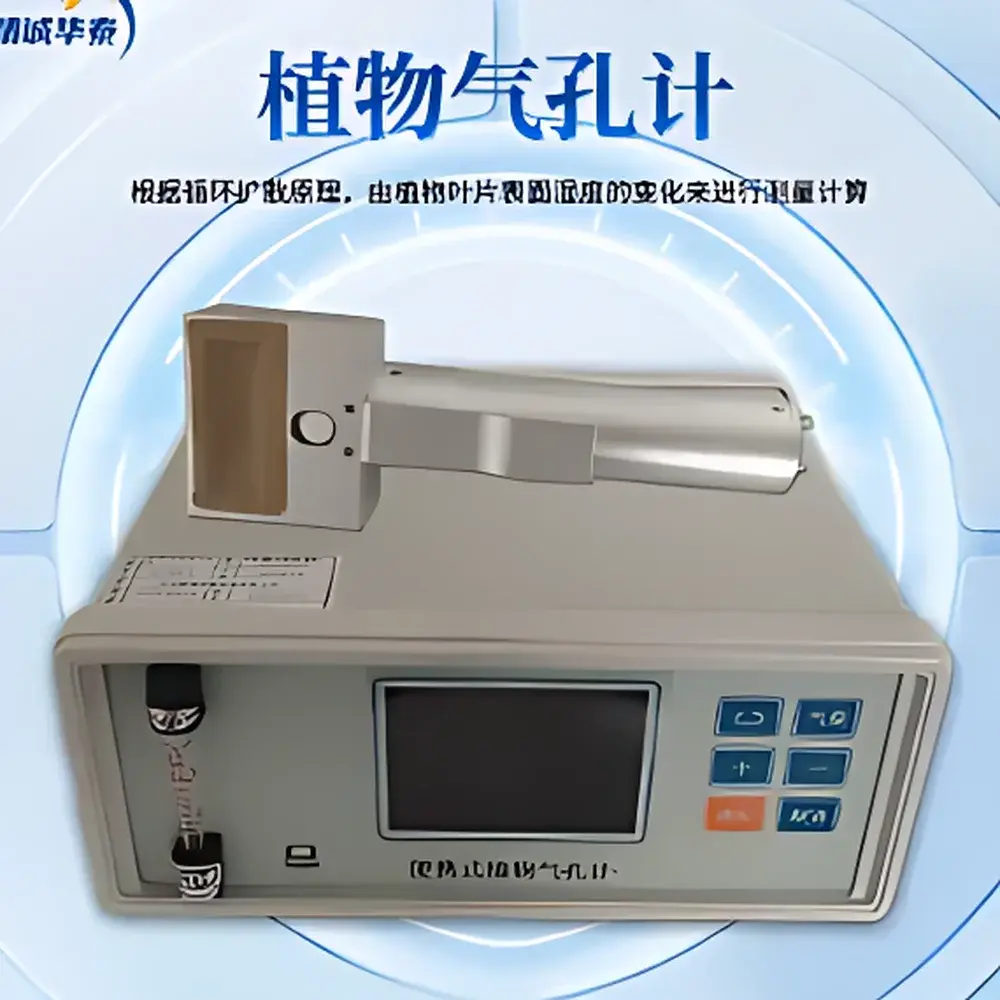
Jingcheng Huatai HT-ZWK-1 Portable Leaf Porometer
| Brand | Jingcheng Huatai |
|---|---|
| Origin | Beijing, China |
| Model | HT-ZWK-1 |
| Stomatal Resistance Accuracy | ±20% within 0–50 s·cm⁻¹ (±0.2 s·cm⁻¹ reference) |
| Air Temperature Range | −20 to 80 °C, Resolution: 0.1 °C, Accuracy: ±0.2 °C |
| Relative Humidity Range | 0–90% RH, Accuracy: ±3% RH |
| PAR Range | 0–3000 µmol·m⁻²·s⁻¹, Accuracy: <5 µmol·m⁻²·s⁻¹ |
| Flow Rate | 0–1.5 L·min⁻¹ (±1% full scale |
| Leaf Chamber Dimensions | Standard 55 × 20 mm |
| Operating Temp/Humidity | 0–50 °C / 10–90% RH |
| Battery Life | 20 h continuous operation |
| Data Storage | 16 GB internal memory (~1 million readings) |
| Display | 3.5″ TFT color LCD, 800 × 480 resolution |
| Weight | 3 kg (host only) |
| Interface | USB data export, RS232 optional |
| Power | Rechargeable Li-ion, 6 h charge time |
Overview
The Jingcheng Huatai HT-ZWK-1 Portable Leaf Porometer is a field-deployable, diffusion-based instrument engineered for quantitative assessment of stomatal physiology in intact leaves. It operates on the principle of steady-state diffusion: by maintaining a controlled, laminar airflow across a sealed leaf chamber, the device measures real-time changes in humidity gradient between the leaf surface and the reference airstream. From this differential vapor flux—combined with concurrent measurements of leaf temperature, ambient air temperature and relative humidity, photosynthetically active radiation (PAR), and chamber flow rate—the system computes stomatal conductance (gs, mol·m⁻²·s⁻¹), stomatal resistance (rs, s·cm⁻¹), and transpiration rate (E, mmol·m⁻²·s⁻¹) using established physical models derived from Fick’s law of diffusion and energy balance theory. Designed for reproducible, non-destructive monitoring under variable environmental conditions, the HT-ZWK-1 supports rigorous experimental design in plant ecophysiology, drought response studies, and crop water-use efficiency evaluation.
Key Features
- Integrated multi-sensor measurement suite: high-precision Swiss-made digital temperature sensors (air and leaf), calibrated silicon photodiode with PAR-specific optical filter (400–700 nm), and capacitive RH sensor—all factory-traceable and thermally compensated.
- Stable, adjustable airflow control via borosilicate glass rotameter (0–1.5 L·min⁻¹), with verified flow linearity and low hysteresis (<±0.2% error in operational range 0.2–1.0 L·min⁻¹).
- Optimized leaf chamber geometry (standard 55 × 20 mm aperture) ensures uniform boundary layer development and minimizes edge effects; custom chamber configurations available upon request for broadleaf or needle-type species.
- High-resolution 3.5″ TFT display (800 × 480) with anti-glare coating enables legible field reading under direct sunlight; intuitive menu navigation supports rapid parameter setup and real-time trace visualization.
- Onboard 16 GB flash memory enables autonomous logging of >1 million timestamped records—including all primary and derived variables—with automatic metadata tagging (date, time, chamber ID, operator code).
- Compliant power architecture: rechargeable lithium-ion battery provides ≥20 hours of continuous operation; full recharge completed in ≤6 hours; low-power sleep mode extends standby duration without data loss.
Sample Compatibility & Compliance
The HT-ZWK-1 accommodates a wide range of angiosperm and gymnosperm species, including herbaceous crops (e.g., wheat, maize, soybean), woody perennials (e.g., apple, poplar), and model systems (e.g., Arabidopsis thaliana rosettes when using miniaturized chambers). Its diffusion-based methodology avoids assumptions about leaf optical properties or chlorophyll content, making it suitable for senescing, variegated, or abaxial-dominated leaves where IR-based or fluorescence methods may yield ambiguous results. All firmware and data handling protocols adhere to GLP-aligned principles: each measurement record includes embedded audit trail metadata (sensor calibration IDs, firmware version, UTC timestamp), and raw sensor outputs are stored unprocessed to support retrospective reanalysis. While not certified to ISO/IEC 17025, the instrument’s metrological traceability follows NIST-compatible reference standards for temperature, humidity, and PAR calibration—documented in the supplied Certificate of Conformance.
Software & Data Management
Data retrieval is accomplished via standard USB 2.0 interface; no proprietary drivers required. Exported files follow comma-separated values (CSV) format with UTF-8 encoding and header rows compliant with FAIR data principles (Findable, Accessible, Interoperable, Reusable). Column headers include standardized units (e.g., “T_leaf_C”, “RH_ambient_pct”, “PAR_umol_m2_s”, “gs_mol_m2_s”) and flag fields for quality assurance (e.g., “flow_stable_flag”, “condensation_alert”). Optional RS232 output enables integration into automated greenhouse monitoring networks or SCADA systems operating at 9600 baud. Firmware updates are distributed as signed binary packages; version history and changelogs are published in the manufacturer’s technical documentation portal, accessible via secure HTTPS without regional restrictions.
Applications
- Quantifying diurnal dynamics of stomatal conductance in response to light intensity gradients and vapor pressure deficit (VPD) shifts.
- Evaluating genotype-specific differences in stomatal responsiveness during progressive soil drying or osmotic stress treatments.
- Validating stomatal closure thresholds in herbicide mode-of-action studies (e.g., ABA analogs, photosystem II inhibitors).
- Calibrating and ground-truthing canopy-scale evapotranspiration (ET) models used in precision irrigation scheduling.
- Supporting undergraduate and graduate laboratory curricula in plant physiology, environmental botany, and climate change biology—fully compatible with inquiry-based learning frameworks.
- Field validation of remote sensing indices (e.g., PRI, NDVI) linked to actual stomatal behavior under heterogeneous microclimates.
FAQ
What physical principle does the HT-ZWK-1 use to calculate stomatal conductance?
It applies Fick’s first law of diffusion in conjunction with simultaneous measurement of vapor concentration gradients, leaf-to-air temperature differentials, and precisely regulated chamber airflow—yielding conductance values traceable to SI base units.
Can the instrument be used on conifer needles or small dicot leaves?
Yes; custom chamber inserts (e.g., 15 × 15 mm or tapered apertures) are available to maintain laminar flow and minimize leakage artifacts in narrow or irregularly shaped samples.
Is the PAR sensor cosine-corrected for angular response?
The integrated silicon photodiode employs a diffuser-based cosine correction optimized for incidence angles up to 80° from normal, meeting ASTM E892 spectral responsivity requirements for photosynthetic photon flux density (PPFD) measurement.
Does the device meet FDA 21 CFR Part 11 requirements for electronic records?
While not formally validated for regulated pharmaceutical or clinical trials, its audit trail functionality (immutable timestamps, user ID logging, and raw-data preservation) satisfies foundational ALCOA+ criteria for research-grade data integrity in academic and agricultural R&D environments.
How often must the flow meter be recalibrated?
The glass rotameter is factory-calibrated against NIST-traceable mass flow standards; annual verification is recommended under heavy field use, using the included calibration plate and reference hygrometer.




