
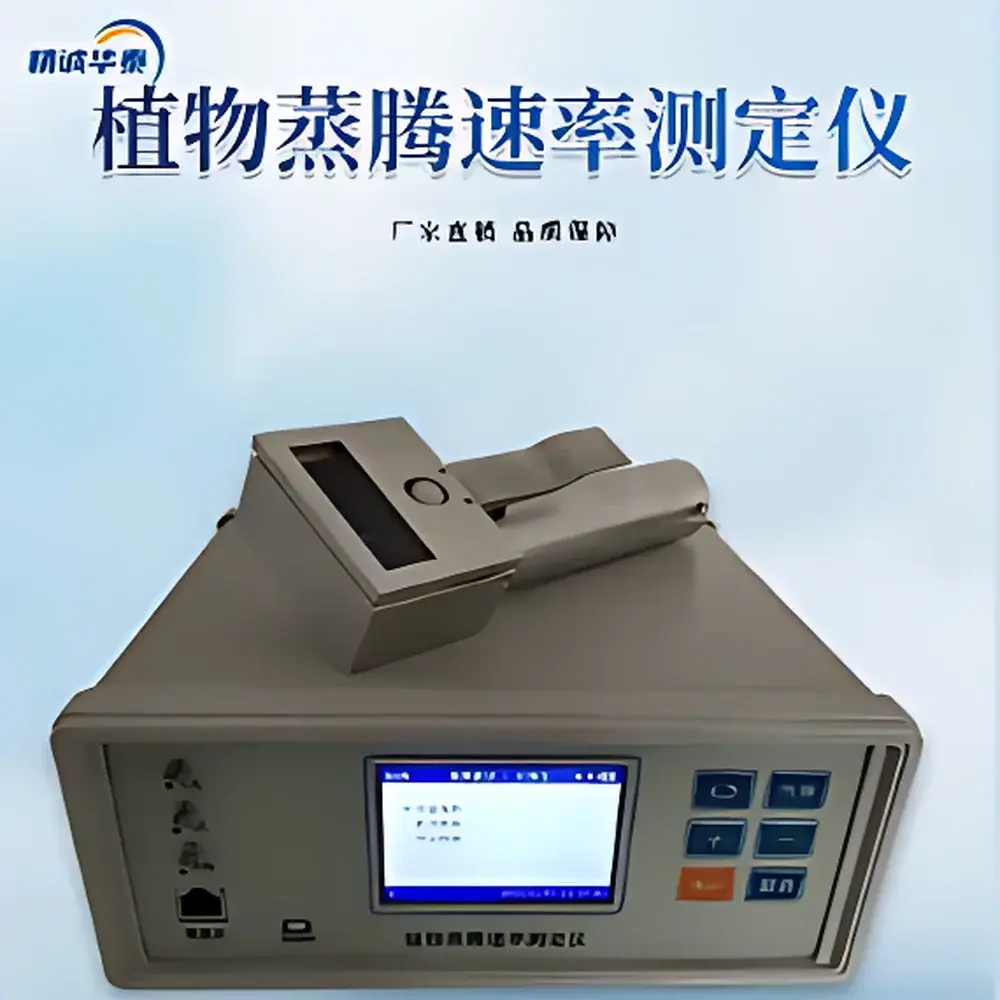
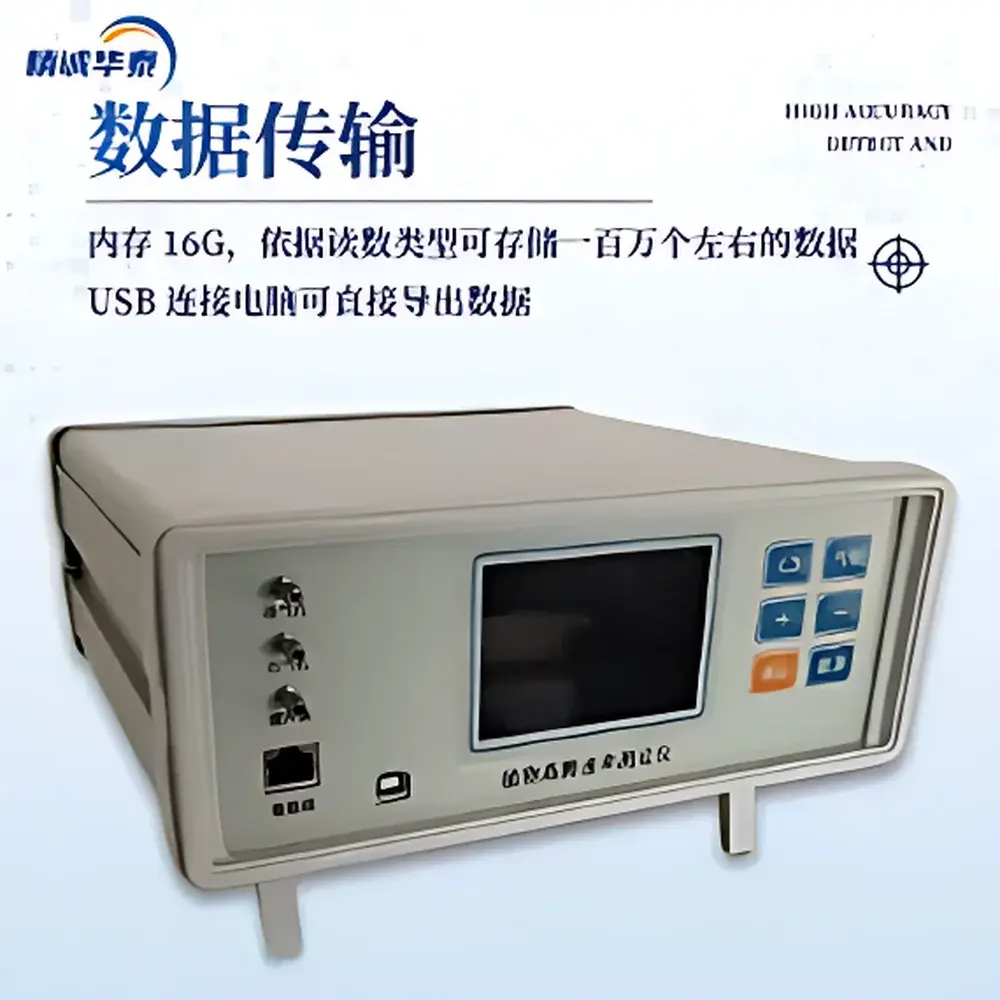
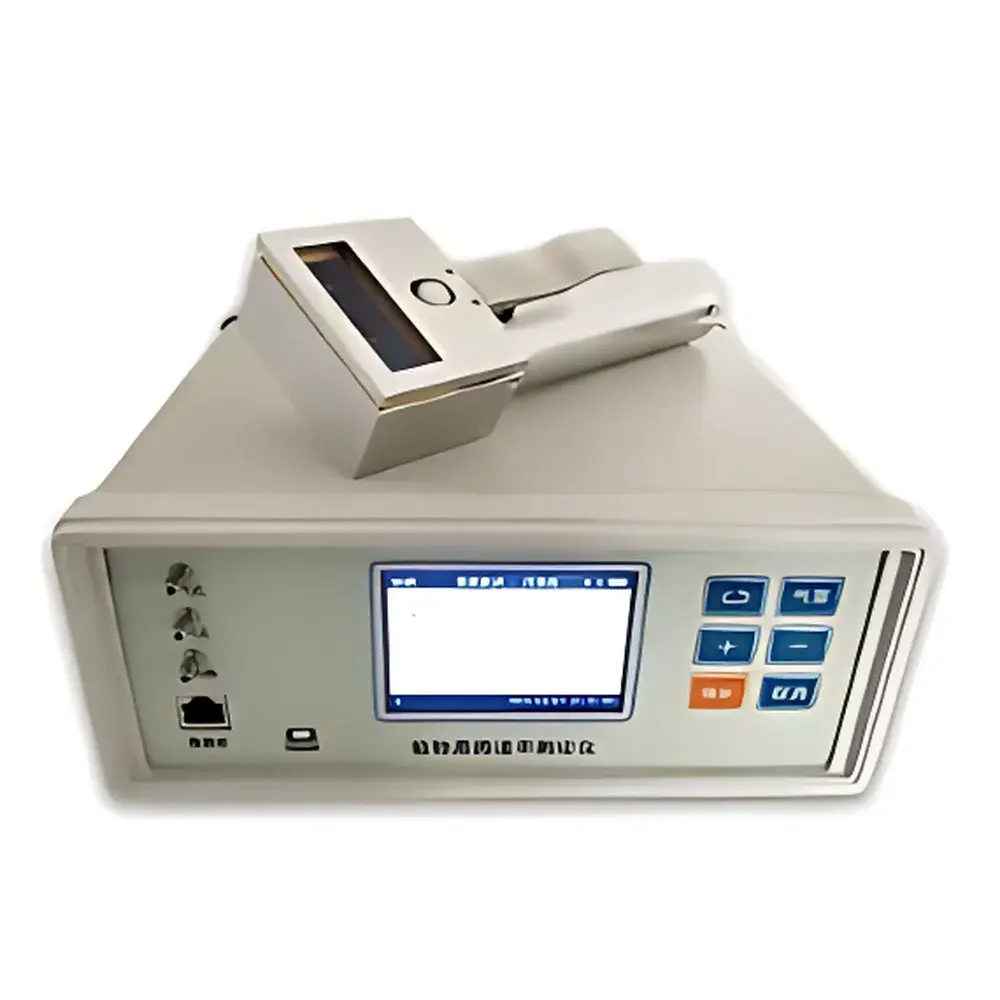
Jingcheng Huatai HT-ZWK-II Plant Transpiration Rate Analyzer
| Brand | Jingcheng Huatai |
|---|---|
| Origin | Beijing, China |
| Manufacturer Type | Authorized Distributor |
| Country of Origin | China |
| Model | HT-ZWK-II |
| Price | USD 3,950 (FOB Beijing) |
| Measurement Principle | Steady-state diffusion-based leaf chamber method |
| Key Metrics | Transpiration rate (mmol H₂O·m⁻²·s⁻¹), stomatal conductance (mol H₂O·m⁻²·s⁻¹), stomatal resistance (s·m⁻¹), leaf temperature (°C), air temperature (°C), relative humidity (% RH), photosynthetically active radiation (PAR, µmol·m⁻²·s⁻¹) |
| Temperature Sensors | Swiss-made digital thermistors (air: −20–80 °C, ±0.2 °C |
| leaf chamber | −5–55 °C) |
| Humidity Range | 0–90% RH, ±3% RH accuracy |
| PAR Sensor | Calibrated silicon photodiode with cosine-corrected filter, 0–3000 µmol·m⁻²·s⁻¹, <5 µmol·m⁻²·s⁻¹ uncertainty |
| Flow Control | Precision glass rotameter, 0–1.5 L·min⁻¹, stability ±0.2% (0.2–1.0 L·min⁻¹) |
| Leaf Chamber Dimensions | Standard 55 × 20 mm (customizable) |
| Display | 3.5″ TFT color LCD, 800 × 480 resolution |
| Data Storage | 16 GB internal flash memory (~1 million readings) |
| Interface | USB 2.0 for direct data export |
| Battery | Rechargeable Li-ion, 20 h continuous operation, 6 h full charge |
| Operating Environment | 0–50 °C, 10–90% RH |
| Weight | 3.0 kg |
Overview
The Jingcheng Huatai HT-ZWK-II Plant Transpiration Rate Analyzer is a portable, field-deployable instrument engineered for quantitative, real-time assessment of leaf-level water vapor exchange dynamics under controlled or ambient conditions. It operates on the steady-state diffusion principle within a sealed leaf chamber: a regulated airflow passes over a defined leaf area, and differential humidity and temperature measurements—across inlet and outlet gas streams—are used to compute transpiration rate (E), stomatal conductance (gs), and stomatal resistance (rs) using fundamental mass transfer equations derived from Fick’s law and the Penman–Monteith framework. Unlike empirical or indirect proxies, the HT-ZWK-II delivers traceable, physiologically grounded metrics essential for mechanistic studies of plant water relations. Its design prioritizes measurement reproducibility across diurnal cycles and environmental gradients, supporting both short-term physiological screening and longitudinal stress-response monitoring in crops, forest seedlings, and model species.
Key Features
- Integrated multi-sensor measurement suite: simultaneous acquisition of leaf temperature (infrared-compensated contact probe), air temperature (Swiss Pt1000 thermistor), relative humidity (capacitive sensor), and photosynthetically active radiation (PAR) via spectrally calibrated silicon photodiode with cosine correction.
- Precision gas flow regulation: glass rotameter with linearized scale enables stable, user-defined flow rates between 0.2 and 1.0 L·min⁻¹—optimized for minimizing boundary layer effects while maintaining laminar flow characteristics required for valid diffusion modeling.
- Modular leaf chamber: standard 55 × 20 mm aperture accommodates broadleaf specimens; optional custom chambers available for needle-leaved or epiphytic species, ensuring representative surface-area normalization without tissue compression artifacts.
- Rugged field-ready architecture: IP54-rated enclosure, sunlight-readable 3.5″ TFT display (800 × 480), and 20-hour battery endurance enable uninterrupted operation across remote agro-ecological sites, greenhouses, and canopy access platforms.
- Onboard data integrity: timestamped logging at user-selectable intervals (1 s to 60 min); automatic zero-drift compensation for humidity sensors; internal diagnostics flagging flow instability or thermal gradient anomalies during acquisition.
Sample Compatibility & Compliance
The HT-ZWK-II supports intact, attached leaves from herbaceous angiosperms, woody dicots, and gymnosperms—with validated performance on species including Zea mays, Triticum aestivum, Populus tremuloides, and Pinus sylvestris. Measurements adhere to ISO 17025-aligned procedural rigor: calibration certificates traceable to NIM (China National Institute of Metrology) are provided for all primary sensors. The instrument satisfies data recording requirements under GLP-compliant plant physiology trials and aligns with ASTM E2913-22 guidelines for environmental sensor validation in biological field instrumentation. While not FDA 21 CFR Part 11-certified (as it is non-clinical research equipment), its audit-ready data export protocol—including raw sensor voltages, computed parameters, and metadata headers—facilitates integration into validated laboratory information management systems (LIMS).
Software & Data Management
Data retrieval occurs via USB 2.0 interface using vendor-neutral CSV format, compatible with R, Python (Pandas), MATLAB, and commercial statistical packages (e.g., SAS, JMP). The included desktop utility (Windows/macOS) permits batch annotation, outlier filtering based on user-defined PAR or ΔT thresholds, and automated generation of diurnal gs–Anet response curves when paired with concurrent photosynthesis data. All stored records include embedded GPS coordinates (when connected to external GNSS module), operator ID, chamber ID, and environmental context tags—enabling FAIR (Findable, Accessible, Interoperable, Reusable) data practices per FORCE11 recommendations. Internal 16 GB NAND flash retains >1 million timestamped entries, with overwrite protection enabled only after explicit user confirmation.
Applications
- Genotype-by-environment (G×E) screening for drought tolerance traits in breeding programs, quantifying stomatal responsiveness to vapor pressure deficit (VPD) and soil moisture depletion.
- Evaluation of antitranspirant efficacy in horticultural production systems, measuring dose-dependent reductions in E and rs under standardized light and temperature regimes.
- Canopy-scale upscaling: ground-truthing of eddy covariance flux tower data by constraining leaf-to-canopy scaling parameters (e.g., stomatal density, boundary layer conductance).
- Ecophysiological education: hands-on demonstration of coupled CO2–H2O exchange theory, illustrating how stomatal conductance modulates both carbon gain and water loss—a cornerstone concept in plant functional ecology curricula.
- Urban forestry assessments: comparing transpiration cooling potential of native vs. invasive tree species under heat island conditions, integrating PAR, leaf T, and E to estimate latent heat flux.
FAQ
What is the recommended calibration frequency for the HT-ZWK-II?
Annual recalibration against NIST-traceable humidity and temperature standards is advised; field verification using saturated salt solutions (e.g., LiCl for 11% RH, NaCl for 75% RH) and certified PT100 probes is recommended before each major campaign.
Can the instrument measure transpiration on detached leaves?
No—measurements require physiologically intact, transpiring tissue with functional xylem continuity; detached leaves exhibit rapid hydraulic failure and nonrepresentative stomatal behavior within minutes.
Is PAR measurement spectrally corrected for leaf absorption characteristics?
The sensor employs a factory-applied spectral correction factor derived from quantum yield action spectra of Spinacia oleracea and Arabidopsis thaliana, ensuring reported µmol·m⁻²·s⁻¹ values reflect biologically effective photon flux rather than raw irradiance.
How does the device handle high-VPD conditions (>3 kPa) that induce stomatal closure?
The flow control system dynamically maintains laminar flow integrity, while the high-resolution humidity sensor (±3% RH up to 90% RH) preserves signal fidelity even during rapid desiccation-induced rs increases—critical for capturing threshold responses in stress phenotyping.
Does the software support automated compliance reporting for ISO/IEC 17025 audits?
Yes—the desktop application generates audit logs containing calibration history, sensor drift reports, operator actions, and raw-to-derived parameter transformation algorithms, fully exportable as PDF or XML for regulatory review.
Related Products



