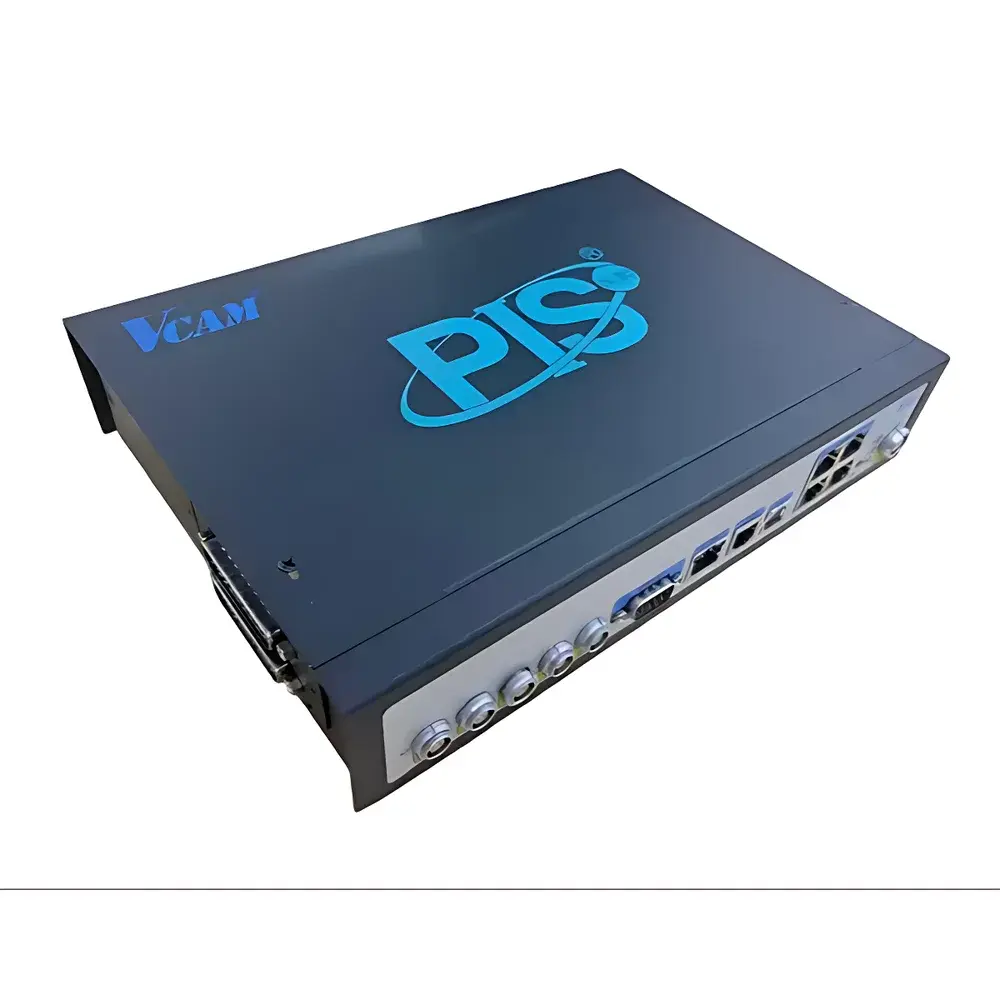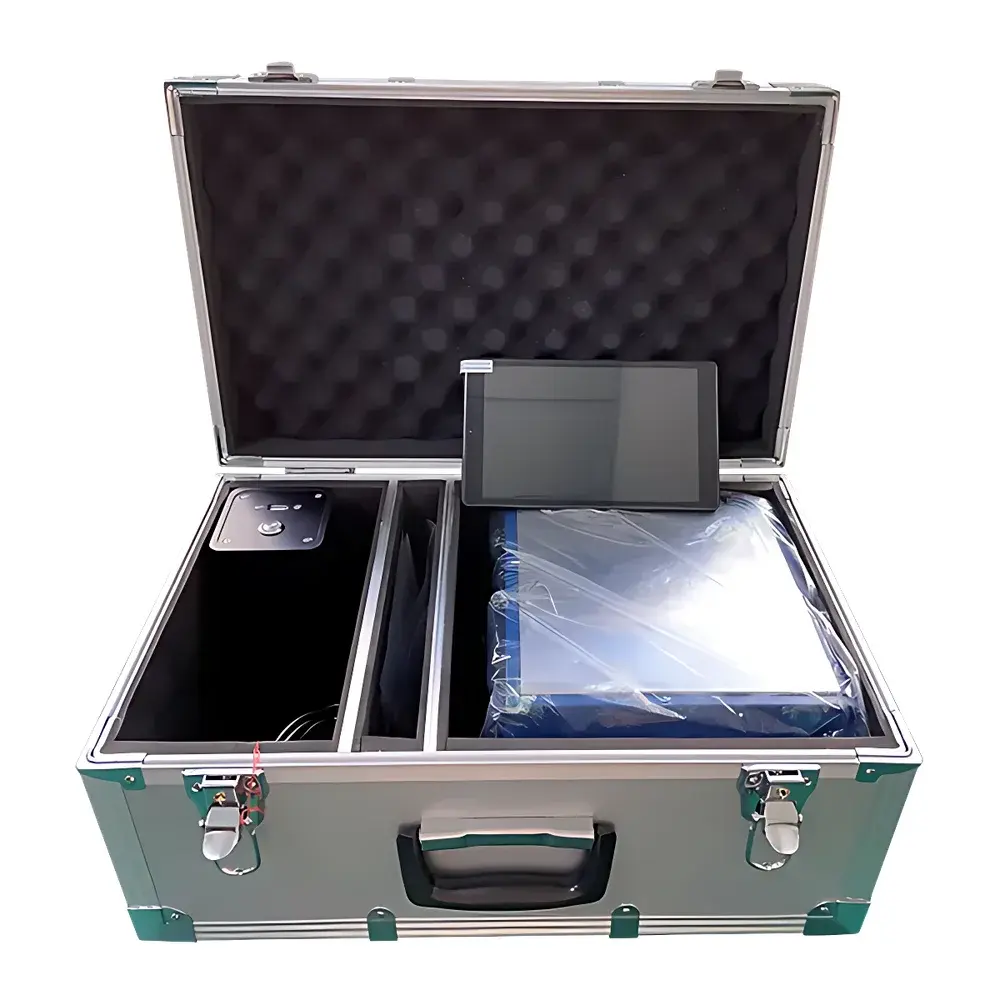
Jingpu Technology JP-AQL2 Portable Hemispherical Emissivity Measurement System
| Brand | Jingpu Technology |
|---|---|
| Origin | Henan, China |
| Manufacturer Type | Authorized Distributor |
| Country of Origin | China |
| Model | JP-AQL2 |
| Pricing | Available Upon Request |
| Repeatability | ±1% |
| Sample Aperture | 150 × 70 mm |
| Measurement Resolution | 0.01 |
| Emissivity Range | 0.00–0.99 |
Overview
The Jingpu Technology JP-AQL2 Portable Hemispherical Emissivity Measurement System is a field-deployable, benchtop-capable instrument engineered for the quantitative determination of hemispherical spectral emissivity (εh) of building envelope materials—primarily reflective insulation coatings, low-emissivity films, and thermally functional architectural surfaces. It operates on the principle of comparative radiometric measurement under controlled thermal equilibrium conditions: a calibrated blackbody reference source and the test specimen are sequentially irradiated by a broadband high-intensity tungsten-halogen lamp, and the resulting infrared radiant flux is captured by a vacuum thermopile detector with extended spectral response (2.5–25 µm). The system computes emissivity as the ratio of sample-to-reference radiant exitance at thermal equilibrium, conforming to the fundamental definition εh = Ms/Mb, where Ms and Mb denote hemispherical radiant exitance of the sample and ideal blackbody at identical temperature. Designed explicitly for compliance-driven building energy auditing and R&D validation, the JP-AQL2 bridges laboratory-grade metrology with on-site operational flexibility.
Key Features
- Direct-ratio radiometric architecture: Eliminates reliance on iterative calibration curves by implementing real-time analog signal proportioning between sample and reference channels—enhancing long-term stability and reducing drift-induced uncertainty.
- Broadband high-energy illumination source: A stabilized tungsten-halogen lamp delivers uniform spectral irradiance across the mid-infrared range critical for building material emissivity assessment (3–14 µm), ensuring representative integration over the atmospheric transmission window relevant to building heat transfer.
- Vacuum thermopile infrared detector: Sourced from a Tier-1 European manufacturer, this detector provides high responsivity (>50 V/W), low noise equivalent power (<15 nW/√Hz), and intrinsic immunity to ambient thermal gradients—critical for field measurements without active cooling.
- Dedicated Windows-based control and analysis software: Features real-time spectral preview, automated baseline correction, user-defined temperature offset compensation, and export of emissivity values in CSV and XML formats compliant with ISO 18434-1 metadata conventions.
- Modular mechanical design: Compact footprint (320 × 240 × 180 mm) and integrated rechargeable Li-ion power supply enable operation at construction sites, façade testing labs, or third-party certification facilities without AC dependency.
Sample Compatibility & Compliance
The JP-AQL2 accommodates flat, opaque, and non-transmissive specimens up to 150 × 70 mm in dimension and ≤25 mm in thickness—including elastomeric roof coatings, ceramic-particle reinforced paints, metallized polymer films, and fired clay tiles. Surface curvature is limited to radii >500 mm to maintain aperture-field uniformity. The system implements measurement protocols aligned with JG/T 235–2014 (Section 6.4), JGJ/T 287–2014, and JGJ B2502.3 for coating emissivity evaluation. While not certified to ASTM C1371 or ISO 10545-10, its radiometric methodology is traceable to NIM (National Institute of Metrology, China) blackbody standards, and raw data files retain full audit trail metadata required under GB/T 27025–2019 (equivalent to ISO/IEC 17025) for accredited testing laboratories.
Software & Data Management
The bundled Jingpu Emissivity Suite v3.2 supports instrument control, live signal monitoring, multi-point spatial mapping (via optional motorized X-Y stage interface), and statistical reporting per batch. All measurement sessions log operator ID, ambient temperature/humidity, sample ID, lamp stabilization time, and thermopile voltage history. Exported datasets include uncertainty estimates derived from repeatability testing (±1% at k=2), and support direct import into MATLAB, Python (NumPy/Pandas), or LIMS platforms via standardized JSON schema. Audit logs comply with GLP principles, recording timestamped edits, software version, and digital signature fields for QA sign-off.
Applications
- Verification of low-emissivity performance claims for cool roof coatings during product certification and post-application quality assurance.
- In-field emissivity screening of aged or weathered façade systems to assess thermal degradation and inform retrofit decisions.
- R&D support for formulation optimization of IR-reflective pigments and nanocomposite additives in architectural coatings.
- Third-party validation for green building rating programs including China’s Green Building Evaluation Standard (GB/T 50378) and LEED v4.1 MR Credit: Building Product Disclosure and Optimization – Material Ingredients.
- Calibration verification of fixed-mount building envelope monitoring sensors used in continuous energy performance tracking.
FAQ
Does the JP-AQL2 require external cooling or purge gas?
No. The vacuum thermopile detector operates passively at ambient temperatures; no liquid nitrogen, Peltier coolers, or dry-air purging is needed.
Can it measure curved or textured surfaces?
It is optimized for flat, smooth surfaces. For slightly curved substrates (radius ≥500 mm), a custom aperture adapter is available upon request.
Is measurement traceable to international standards?
Yes—NIM-traceable blackbody calibration certificates are supplied with each unit, and annual recalibration services are available through Jingpu’s ISO/IEC 17025-accredited service center in Zhengzhou.
What is the typical measurement time per sample?
Approximately 90 seconds per reading, including lamp stabilization, dual-channel acquisition, and automatic emissivity calculation.
Does the software support multi-language interfaces?
The standard release includes English and Simplified Chinese UIs; additional language packs (German, Spanish, Arabic) can be licensed separately.