
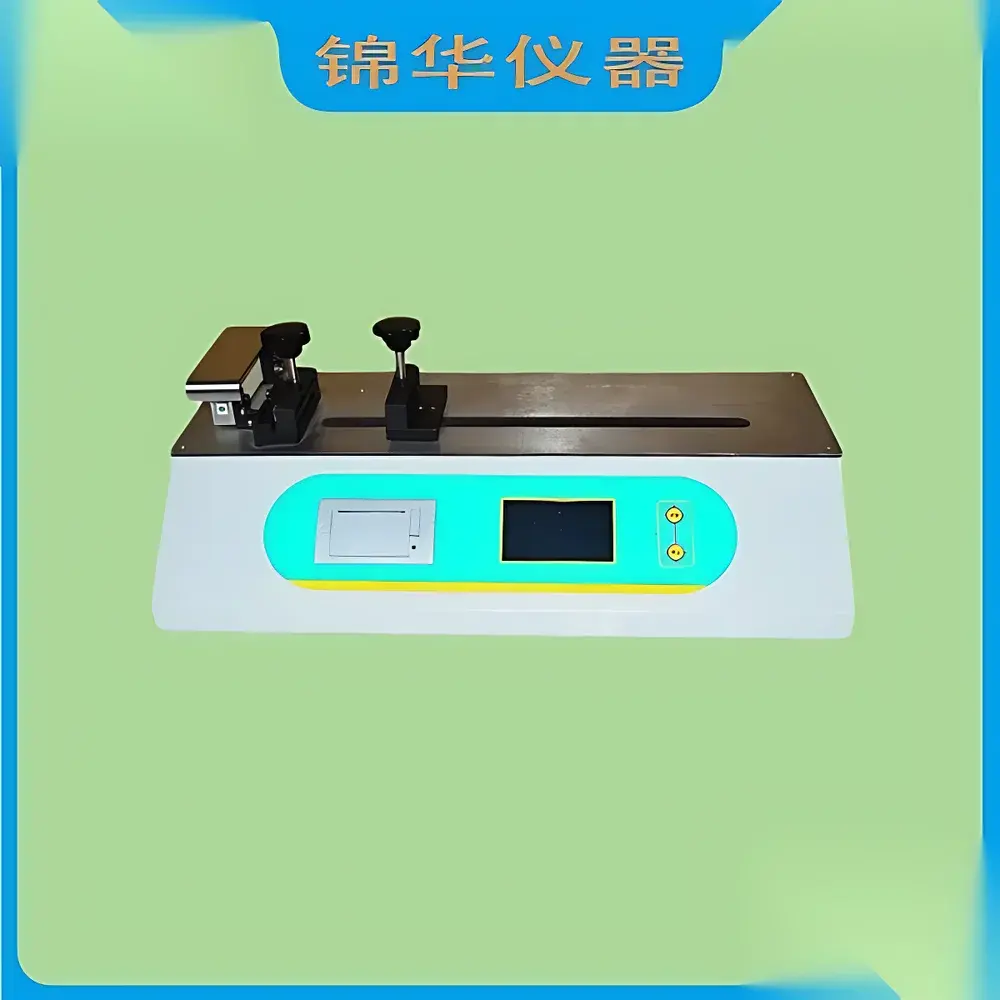
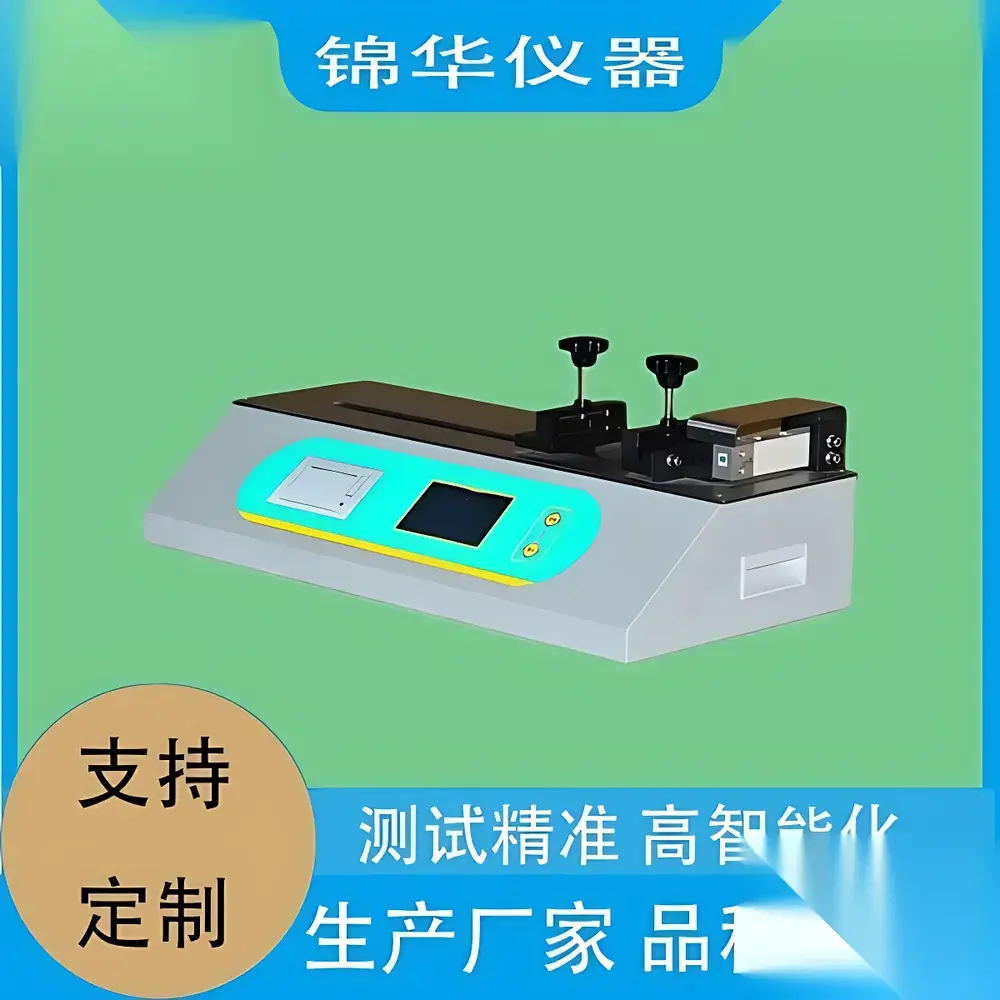
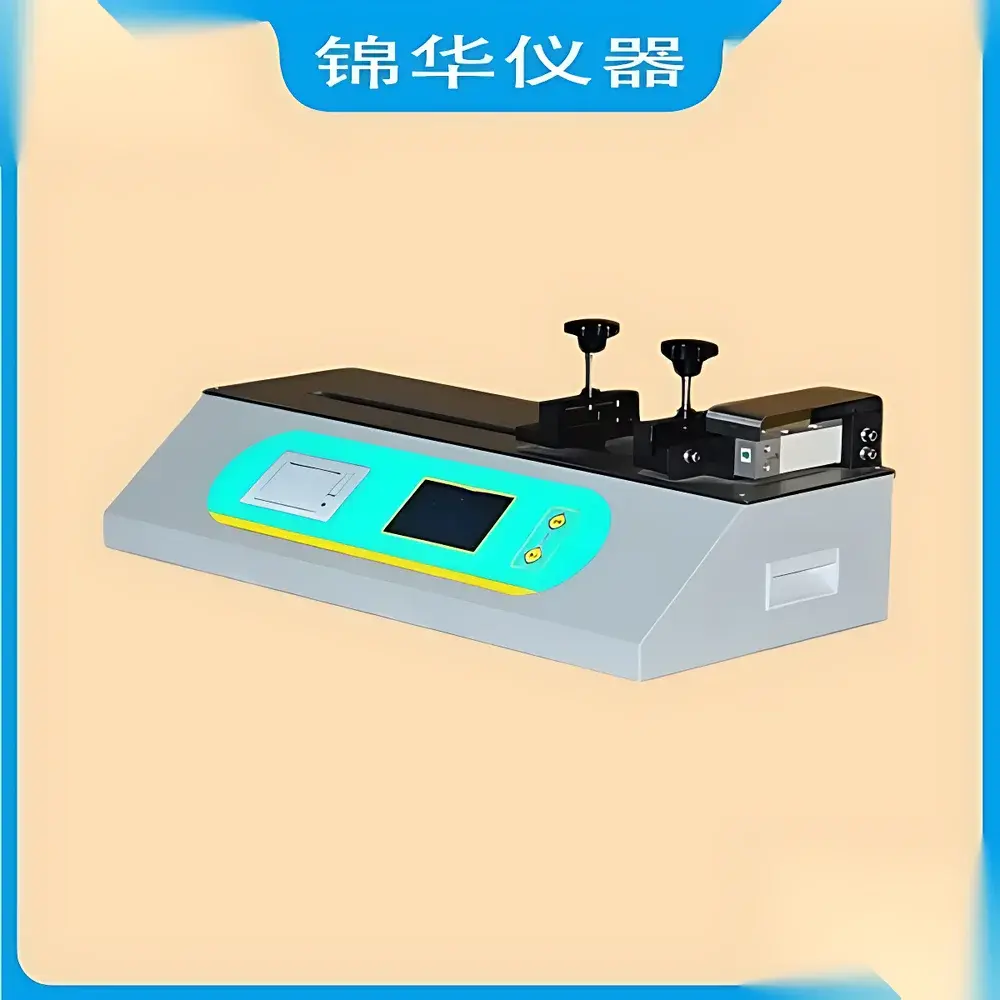
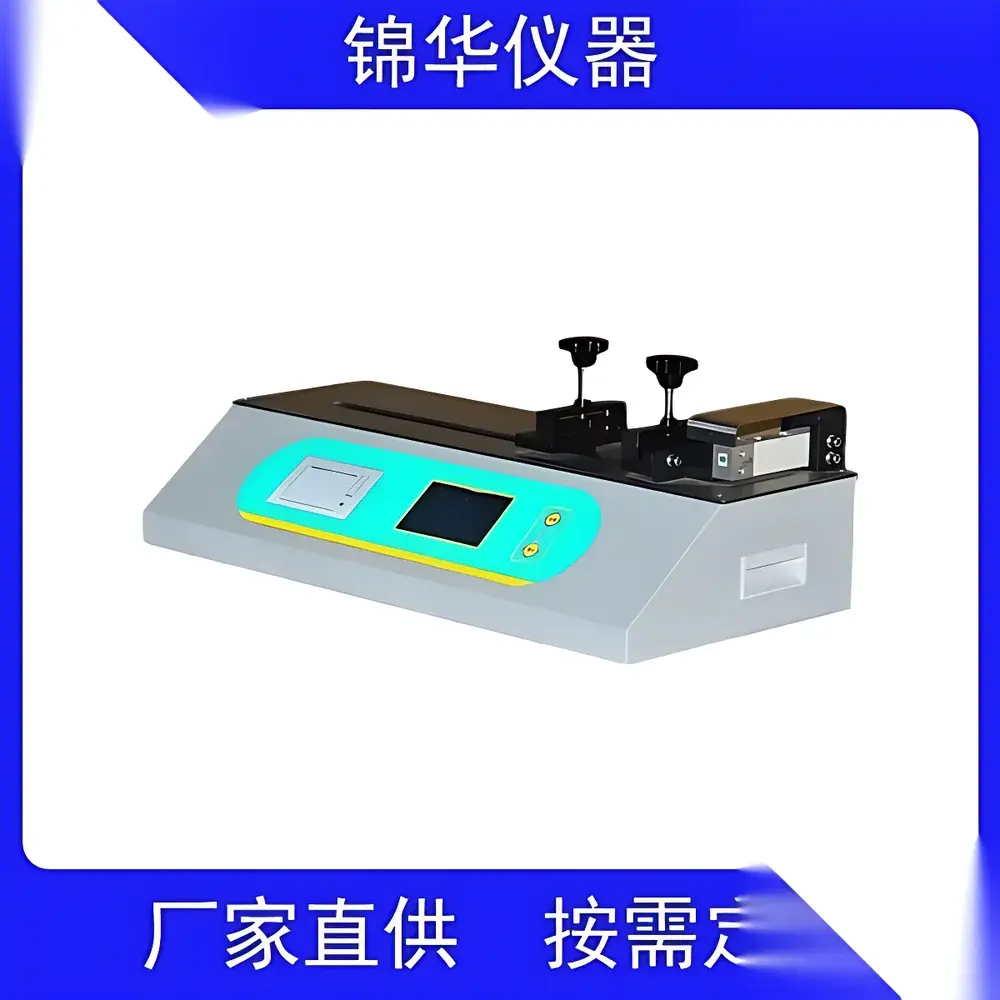
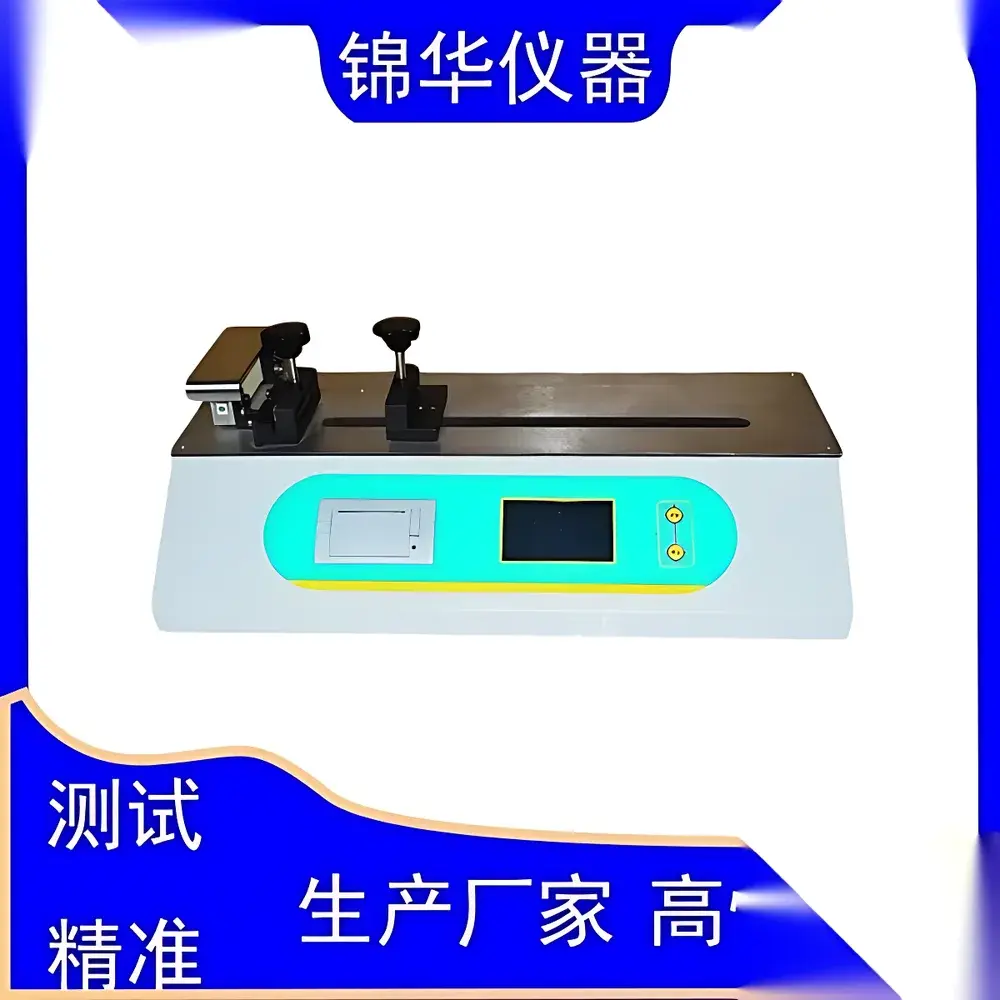
Jinhuatester BLD-01 Label Peel Adhesion Tester
| Brand | Jinhuatester |
|---|---|
| Model | BLD-01 |
| Test Principle | 180° peel adhesion measurement per ASTM D3330, ISO 8510-2, and GB/T 2792 |
| Load Capacity | 200 N (standard) |
| optional ranges | 5 N, 10 N, 30 N, 50 N, 100 N, 300 N |
| Accuracy Class | 0.5 |
| Force Resolution | 0.001 N |
| Speed Range | 1–500 mm/min (infinitely variable) |
| Effective Travel | 330 mm |
| Displacement Resolution | 0.01 mm |
| Specimen Width Range | < 55 mm |
| Peel Angle | 180° horizontal |
| Power Supply | AC 220 V, 50 Hz |
| Power Consumption | 30 W |
| Dimensions (L×W×H) | 635 × 300 × 200 mm |
| Net Weight | 22 kg |
Overview
The Jinhuatester BLD-01 Label Peel Adhesion Tester is a microprocessor-controlled universal testing instrument engineered for precise quantification of peel adhesion performance in pressure-sensitive materials. It operates on the standardized 180° peel test configuration defined in ASTM D3330 (Standard Test Method for Peel Adhesion of Pressure-Sensitive Tape), ISO 8510-2 (Adhesives — Determination of peel resistance — Part 2: 180° peel test), and Chinese national standard GB/T 2792. During operation, a specimen—such as adhesive tape, label stock, medical transdermal patch, release liner, or laminated film—is bonded to a standardized stainless steel test plate using a calibrated rubber roller (available as optional accessory). After conditioning per relevant standards, the specimen is clamped and peeled at 180° at a controlled, user-selectable rate. A high-fidelity load cell captures real-time tensile force throughout the peel front propagation, and peel strength is calculated as force divided by specimen width (N/mm or N/25 mm). The system’s mechanical architecture integrates a precision ground ball-screw drive mechanism with closed-loop speed control, ensuring stable velocity maintenance across the full 1–500 mm/min range and minimal mechanical hysteresis.
Key Features
- Microcomputer-based control system with 4.3-inch TFT capacitive touchscreen interface and PVC membrane keypad for intuitive navigation and real-time graphical display of force–displacement curves
- High-accuracy load cell certified to ISO 376 Class 0.5; factory-calibrated with automatic zero-point compensation at power-on
- Force resolution of 0.001 N and displacement resolution of 0.01 mm enable detection of subtle adhesion transitions and interfacial failure modes
- Infinitely variable crosshead speed (1–500 mm/min) supported by brushless DC motor and precision timing belt transmission, delivering low-noise, vibration-free operation
- Comprehensive safety logic including programmable upper/lower limit switches, overload cutoff, automatic return-to-start after test completion, and power-loss memory retention
- Modular mechanical design with standardized mounting interfaces for rapid tooling changes between peel, tensile, and tear configurations
Sample Compatibility & Compliance
The BLD-01 accommodates specimens up to 55 mm wide and is routinely deployed for quality assurance and R&D validation of pressure-sensitive adhesives (PSAs), self-adhesive labels, protective films, release liners, pharmaceutical transdermal patches, hygiene product tapes, and multilayer packaging substrates. Its test methodology aligns with regulatory expectations for adhesive performance documentation under ISO 13485 (medical devices), ICH Q5C (biopharmaceutical stability), and GLP-compliant laboratory environments. Optional calibration kits and NIST-traceable reference standards support audit readiness for FDA 21 CFR Part 11–enabled data integrity workflows when paired with validated software modules.
Software & Data Management
While the base unit includes an integrated thermal mini-printer for immediate hard-copy output, optional PC-based software provides extended functionality: automated report generation (PDF/Excel), statistical analysis (mean, SD, CV%, min/max), pass/fail thresholding against specification limits, and raw data export with time-stamped metadata. The software supports audit trail logging, electronic signature capture, and configurable user roles—features essential for laboratories operating under GMP or ISO/IEC 17025 accreditation requirements. Communication occurs via RS-232 or USB virtual COM port; no proprietary drivers are required.
Applications
- Quantitative evaluation of label adhesion to glass, PET, HDPE, and corrugated board substrates
- Comparative assessment of aging effects on PSA performance after thermal/humidity cycling (per ASTM D1000)
- Quality control of release liner peel forces in silicone-coated papers and films
- Tensile property characterization of tissue paper, towel stock, and medical gauze (tensile strength, elongation at break, energy-to-break)
- Validation of adhesive formulation changes during new product development
- Supplier qualification testing per automotive OEM specifications (e.g., GMW14872, Ford FLTM BO 137-01)
FAQ
What peel angle configurations does the BLD-01 support?
The instrument is configured exclusively for 180° horizontal peel testing per ASTM D3330 and ISO 8510-2. Custom angular fixtures (e.g., 90° or T-peel) are not included but may be developed as application-specific accessories.
Is the load cell internally calibrated or does it require external recalibration?
The system performs automatic zero-point calibration at startup. Full-scale calibration requires periodic verification using traceable dead-weight standards; recommended interval is every 6 months or per internal QA schedule.
Can the BLD-01 be integrated into a centralized LIMS or MES environment?
Yes—when equipped with optional communication cables and validated software, the device supports structured data export compatible with common LIMS platforms via CSV or XML schema.
Does the instrument meet electromagnetic compatibility (EMC) requirements for laboratory use?
It complies with IEC 61326-1:2013 for laboratory equipment, including immunity to electrostatic discharge (ESD), radiated RF fields, and fast transient bursts.
What maintenance is required to sustain long-term measurement accuracy?
Routine maintenance includes periodic cleaning of the ball screw and guide rails with lint-free cloth and light machine oil, inspection of grip serrations for wear, and verification of roller alignment for specimen bonding consistency.



