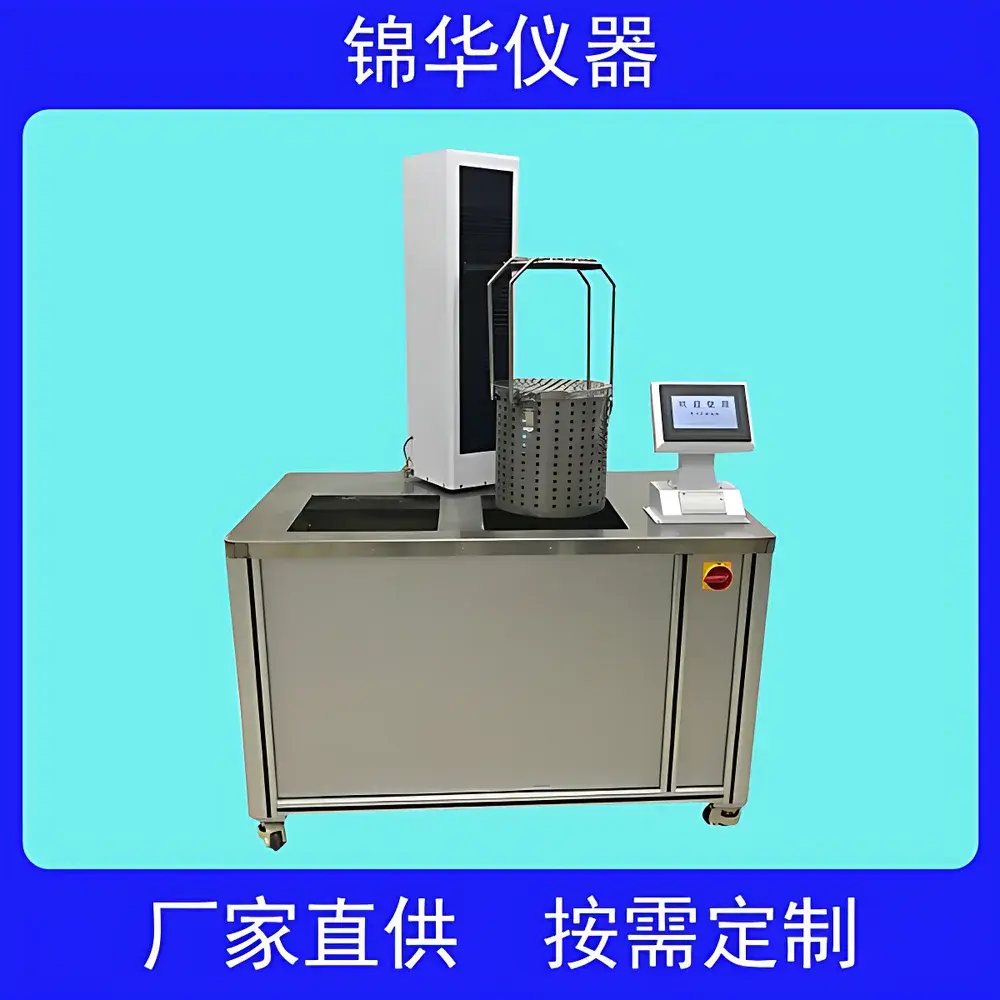
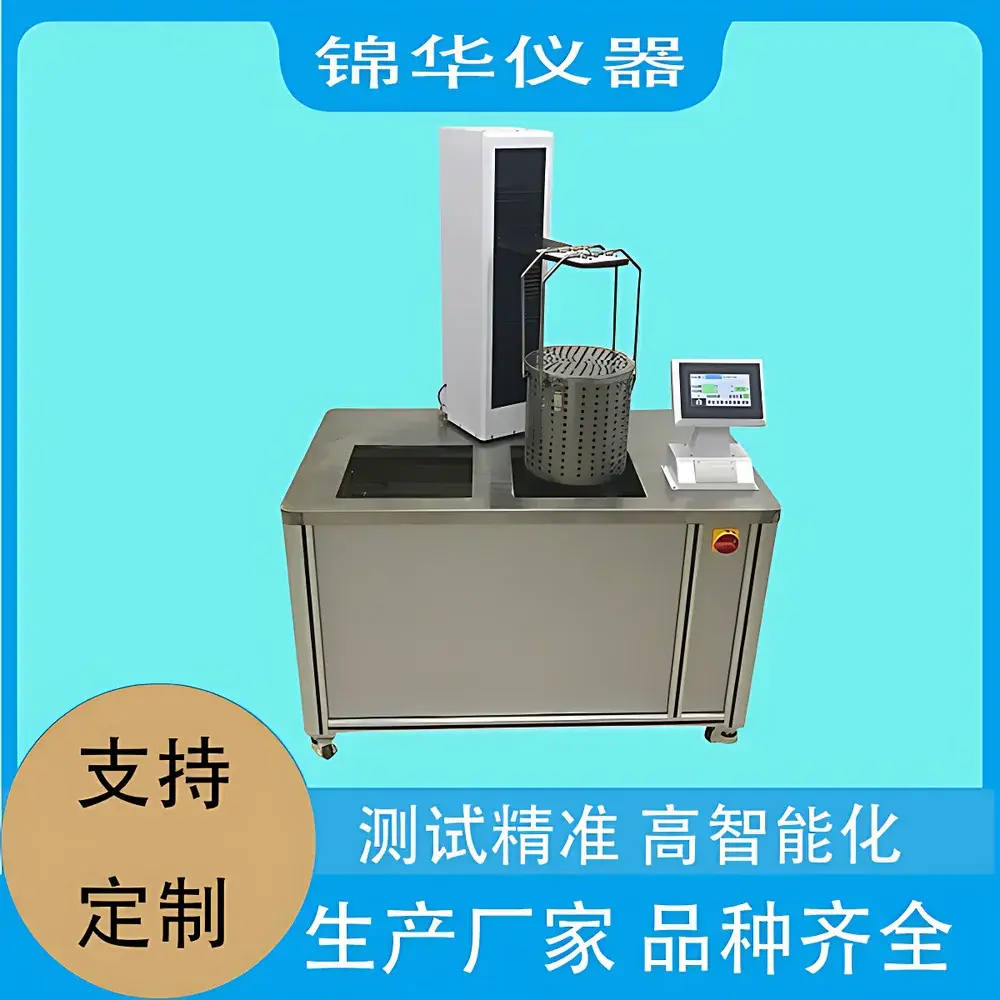
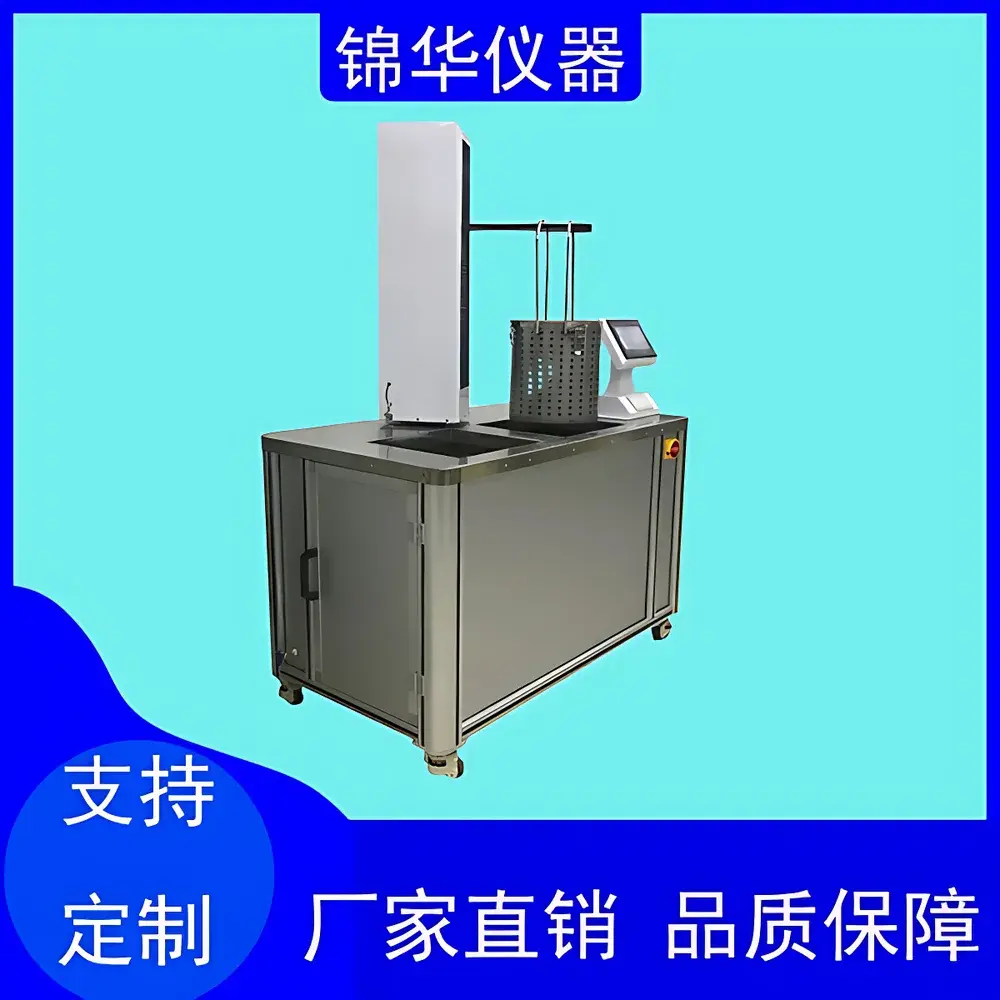
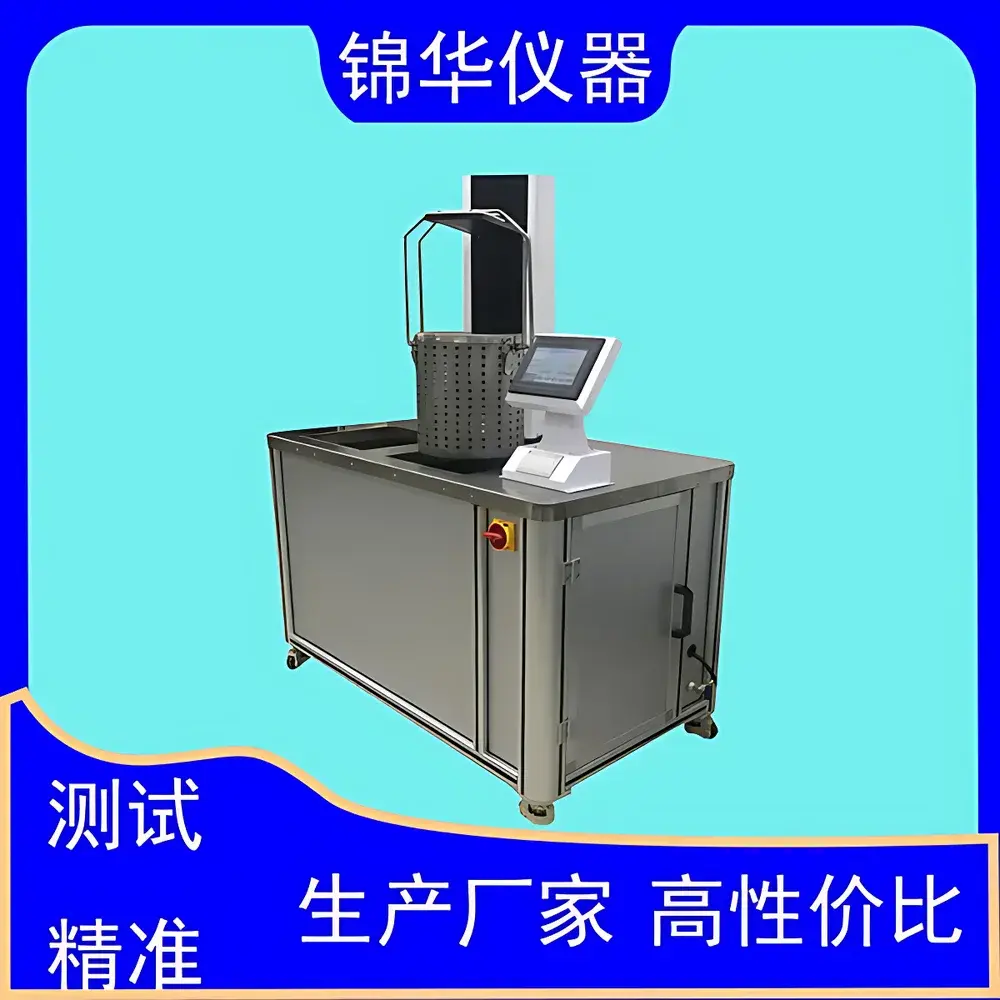
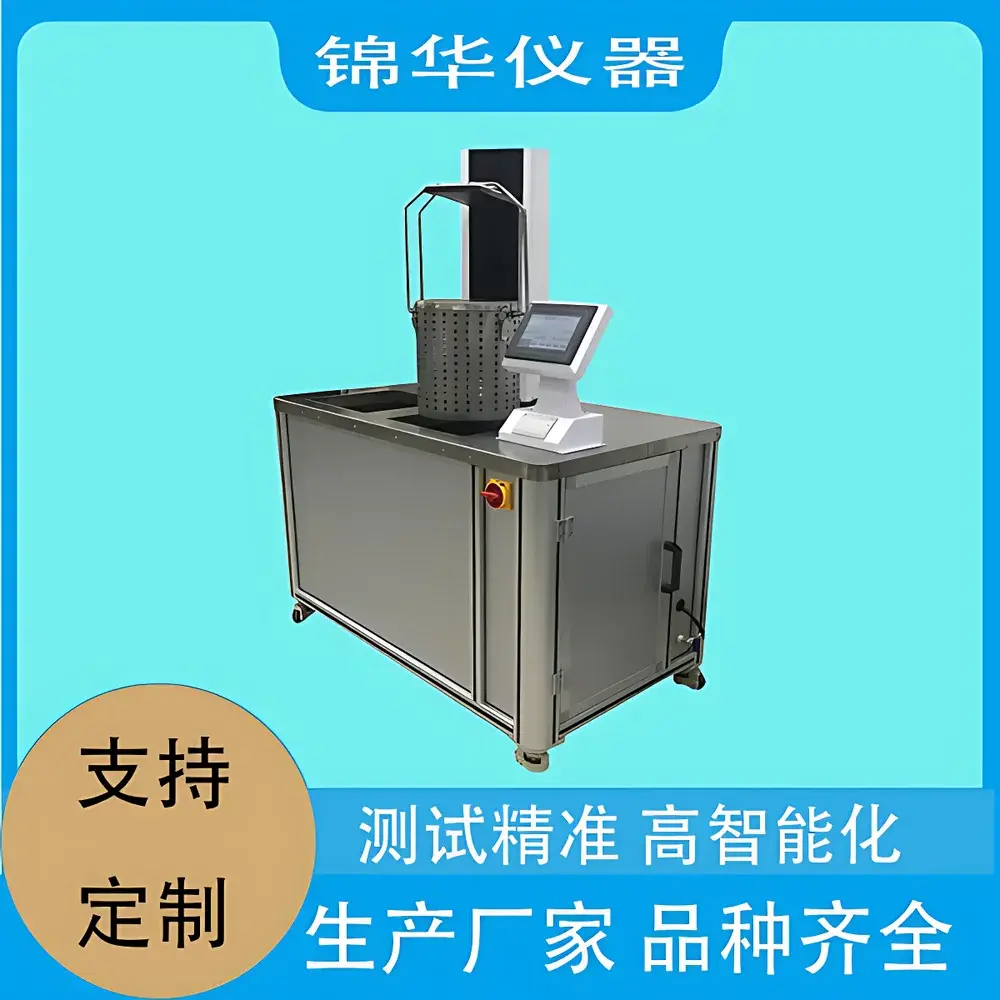
Jinhuatester RCJ-01 Thermal Shock Tester for Glass Containers
| Brand | Jinhuatester |
|---|---|
| Model | RCJ-01 |
| Application | Thermal shock resistance testing of glass pharmaceutical and beverage containers |
| Standards Compliance | GB/T 4547–2007, YBB 00182003–2015 |
| Temperature Range | 10–90 °C |
| Temperature Accuracy | ±0.5 °C |
| Hot/Cold Bath Capacity | 70 L each |
| Power Consumption | 6500 W |
| Lift Load Capacity | 30 kg |
| Basket Dimensions | Ø280 × 320 mm |
| Overall Dimensions | 1000 × 780 × 1600 mm |
| Weight | 185 kg |
| Control System | 7-inch color touchscreen with PID temperature control |
| Construction | Stainless steel hot/cold baths and motorized lifting basket |
| Safety | Integrated earth-leakage circuit breaker |
| Environmental Operating Conditions | 10–40 °C ambient, ≤50% RH |
Overview
The Jinhuatester RCJ-01 Thermal Shock Tester is an automated, dual-bath instrumentation system engineered for quantitative assessment of thermal shock resistance in rigid glass containers—primarily used in pharmaceutical, biotechnology, and beverage manufacturing sectors. It operates on the principle of controlled rapid temperature transition: glass specimens are preconditioned in a high-temperature bath (up to 90 °C), then mechanically transferred—within defined time thresholds—into a low-temperature bath (as low as 10 °C). The resulting thermal gradient induces transient stress across the container wall; failure modes (cracking, fracture, or shattering) are recorded to determine thermal shock tolerance under standardized conditions. This method directly reflects real-world sterilization and cold-fill process challenges, where glass vials, infusion bottles, ampoules, and wine bottles undergo abrupt thermal cycling during autoclaving, lyophilization, or post-filling cooling. The RCJ-01 implements a deterministic, repeatable mechanical transfer protocol—eliminating manual handling variability—and ensures compliance with the physical test requirements specified in GB/T 4547–2007 (equivalent to ISO 7885:1994) and YBB 00182003–2015 (Chinese Pharmacopoeia packaging standards).
Key Features
- Fully automated dual-bath system with motorized stainless-steel sample basket, enabling precise, reproducible immersion and transfer between hot and cold zones without operator intervention
- Independent PID-controlled temperature regulation for both baths, maintaining ±0.5 °C stability across the full 10–90 °C operational range
- Configurable test parameters via 7-inch capacitive touchscreen interface: number of cycles, dwell time per bath, target failure count, and specimen quantity (up to full-basket capacity)
- Stainless steel construction throughout—including baths, lift mechanism, and basket—ensuring corrosion resistance, cleanability, and long-term dimensional stability under repeated thermal cycling
- Integrated earth-leakage protection and high-speed embedded controller architecture for reliable operation, reduced test cycle latency, and fault diagnostics
- Ergonomic design with electric vertical lift (30 kg load rating) minimizing manual handling effort and reducing operator fatigue during high-throughput QC workflows
Sample Compatibility & Compliance
The RCJ-01 accommodates a broad spectrum of cylindrical and tapered glass containers, including but not limited to: pharmaceutical infusion bottles (e.g., 100–1000 mL Type I/II borosilicate), antibiotic vials, lyophilization-ready serum bottles (e.g., 2–30 mL), parenteral glass ampoules, and beverage-grade containers such as beer and wine bottles (up to Ø280 mm diameter and 320 mm height). Its 70-liter bath volume per zone supports simultaneous testing of multiple units—critical for batch release verification. All test protocols adhere strictly to the procedural definitions, timing tolerances, and pass/fail criteria outlined in GB/T 4547–2007 (Glass containers — Thermal shock resistance and thermal shock endurance — Test methods) and YBB 00182003–2015 (Thermal shock and thermal shock strength test for pharmaceutical packaging materials). While not inherently 21 CFR Part 11 compliant, the system supports optional data logging software (available as accessory) that can be validated for GLP/GMP environments requiring audit trails and electronic signatures.
Software & Data Management
The base RCJ-01 operates via an embedded real-time OS with local parameter storage and cycle logging. Optional PC-based software (sold separately) enables remote configuration, automated report generation (PDF/CSV), and long-term trend analysis of thermal shock failure rates across production lots. When deployed with communication cable and compatible Windows host systems, the software captures timestamped bath temperatures, transfer timing, dwell durations, and user-entered pass/fail annotations per specimen group. Audit-trail functionality—including operator ID, modification history, and electronic signature fields—can be implemented in accordance with internal SOPs aligned with ISO/IEC 17025 and FDA guidance for computerized systems used in regulated quality control laboratories.
Applications
- Pharmaceutical QA/QC: Routine verification of thermal shock performance for glass containers prior to sterile fill validation or lyophilization cycle qualification
- Beverage industry R&D: Comparative evaluation of new bottle designs, annealing profiles, or glass composition changes against thermal stress limits
- Container supplier certification: Third-party testing labs use the RCJ-01 to issue compliance certificates per YBB or GB standards for regulatory submissions
- Process troubleshooting: Correlating observed field failures (e.g., vial cracking post-autoclave) with laboratory-reproduced thermal shock thresholds
- Raw material screening: Assessing batch-to-batch consistency of incoming glass tubing or molded vials from suppliers
FAQ
What standards does the RCJ-01 comply with?
It is designed and verified against GB/T 4547–2007 and YBB 00182003–2015. These define test methodology, equipment specifications, and acceptance criteria for thermal shock resistance in glass packaging.
Can the RCJ-01 test non-cylindrical containers?
Yes—provided the specimen fits within the basket’s internal dimensions (Ø280 × 320 mm) and remains fully submerged during dwell periods. Irregular shapes require custom fixture validation to ensure uniform thermal exposure.
Is calibration traceability provided?
The instrument includes factory calibration documentation for temperature sensors (NIST-traceable reference points). Users must perform periodic in-house verification using calibrated PT100 probes per ISO/IEC 17025 requirements.
What maintenance is required?
Routine tasks include descaling baths every 200 cycles (using food-grade citric acid solution), inspecting O-rings and lift guide rails quarterly, and verifying thermocouple drift annually with certified reference sources.
Does the system support integration into LIMS or MES?
Via optional RS-232/USB communication module and vendor-provided API, raw test logs can be exported for ingestion into enterprise quality management systems—subject to customer-side validation.