
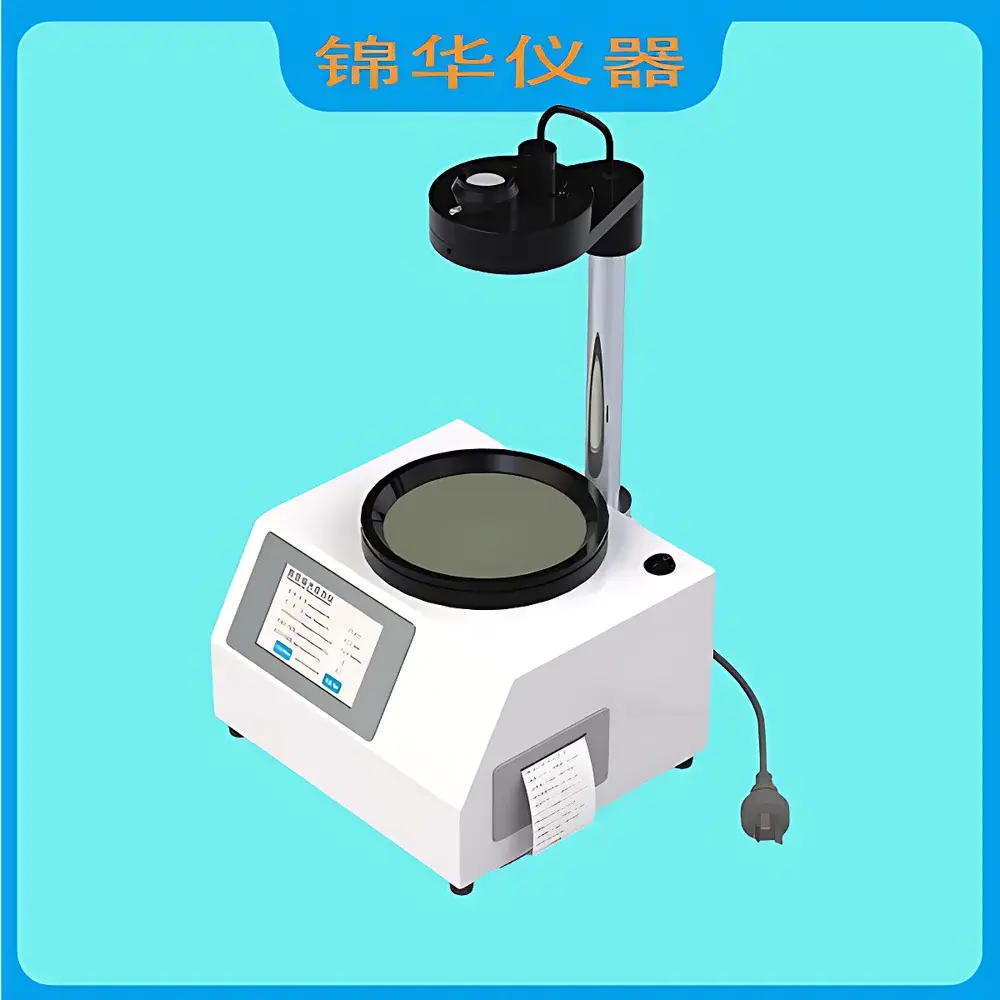
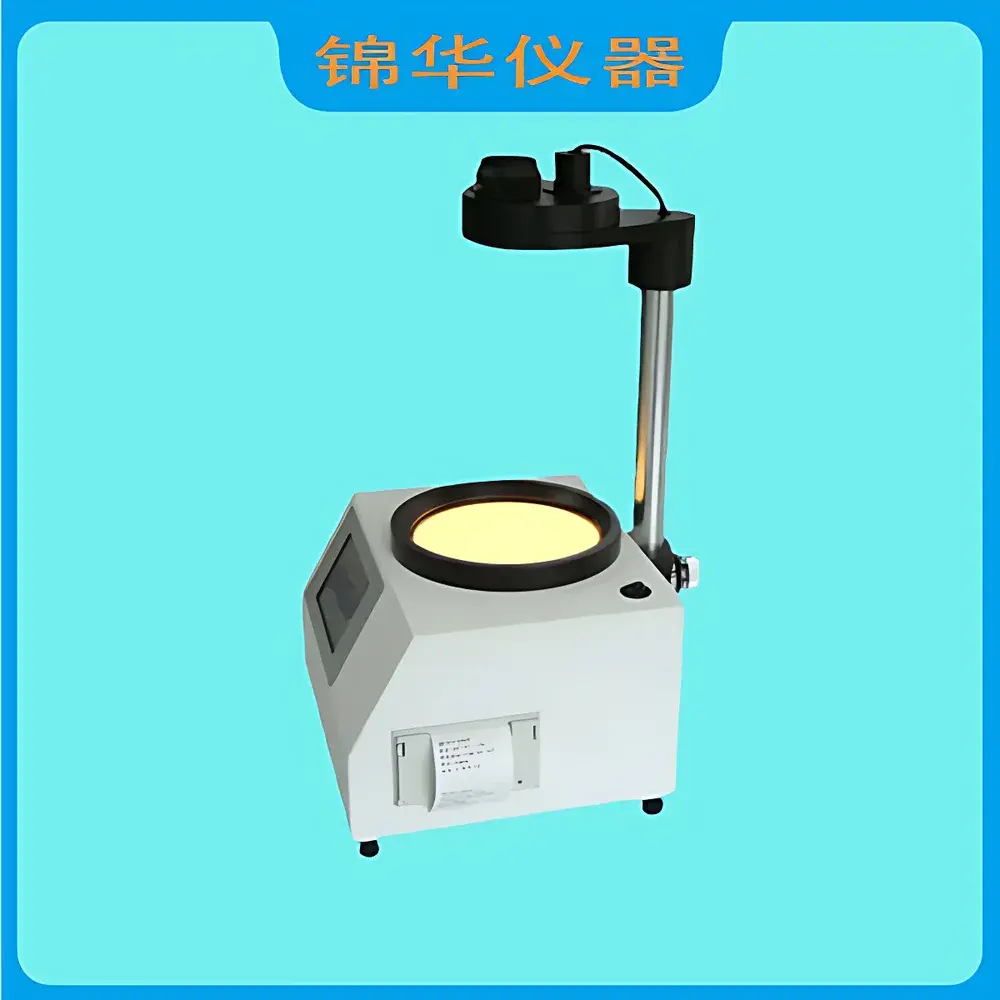
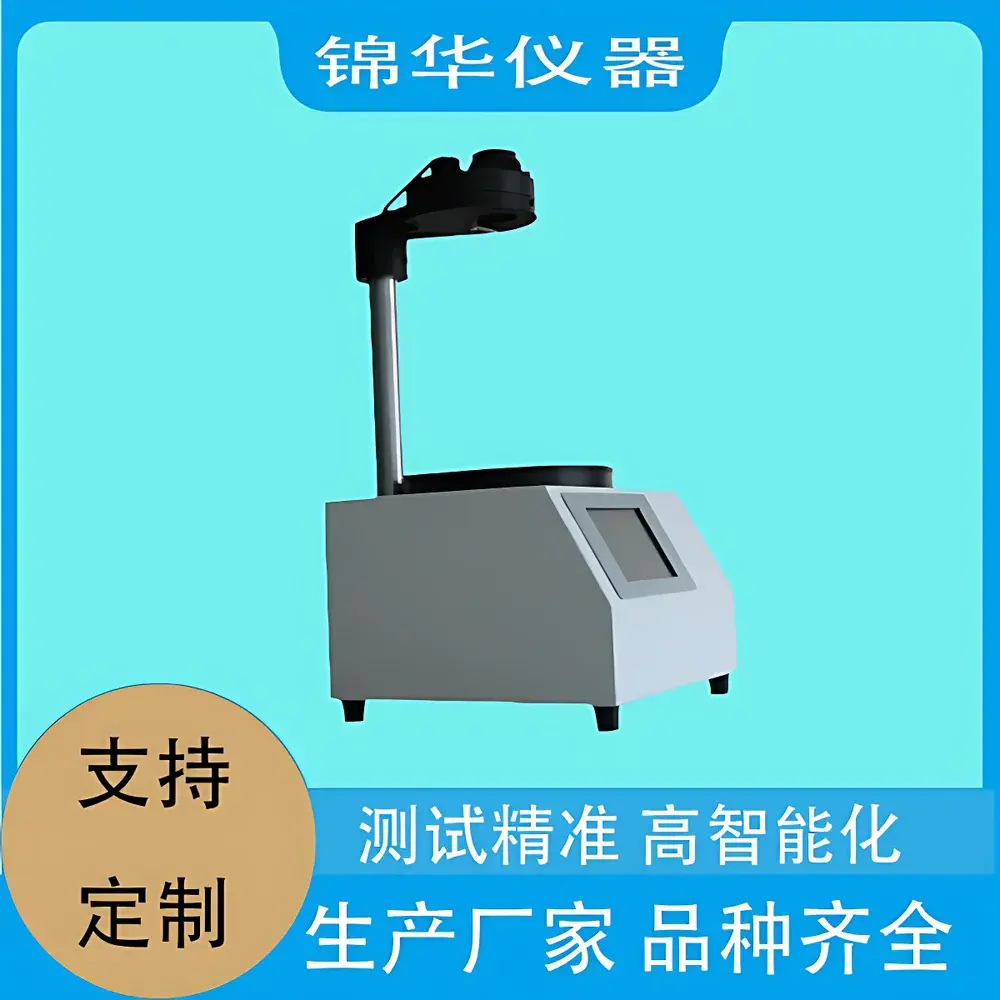
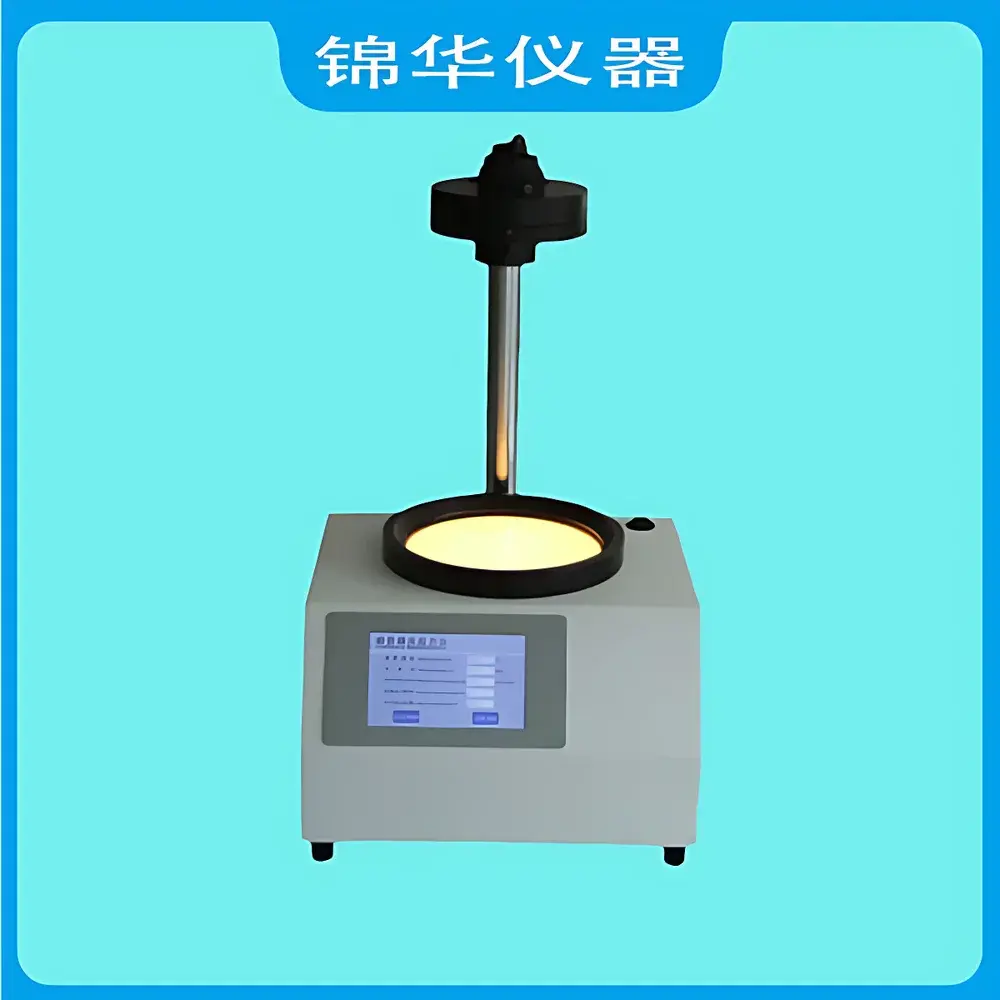
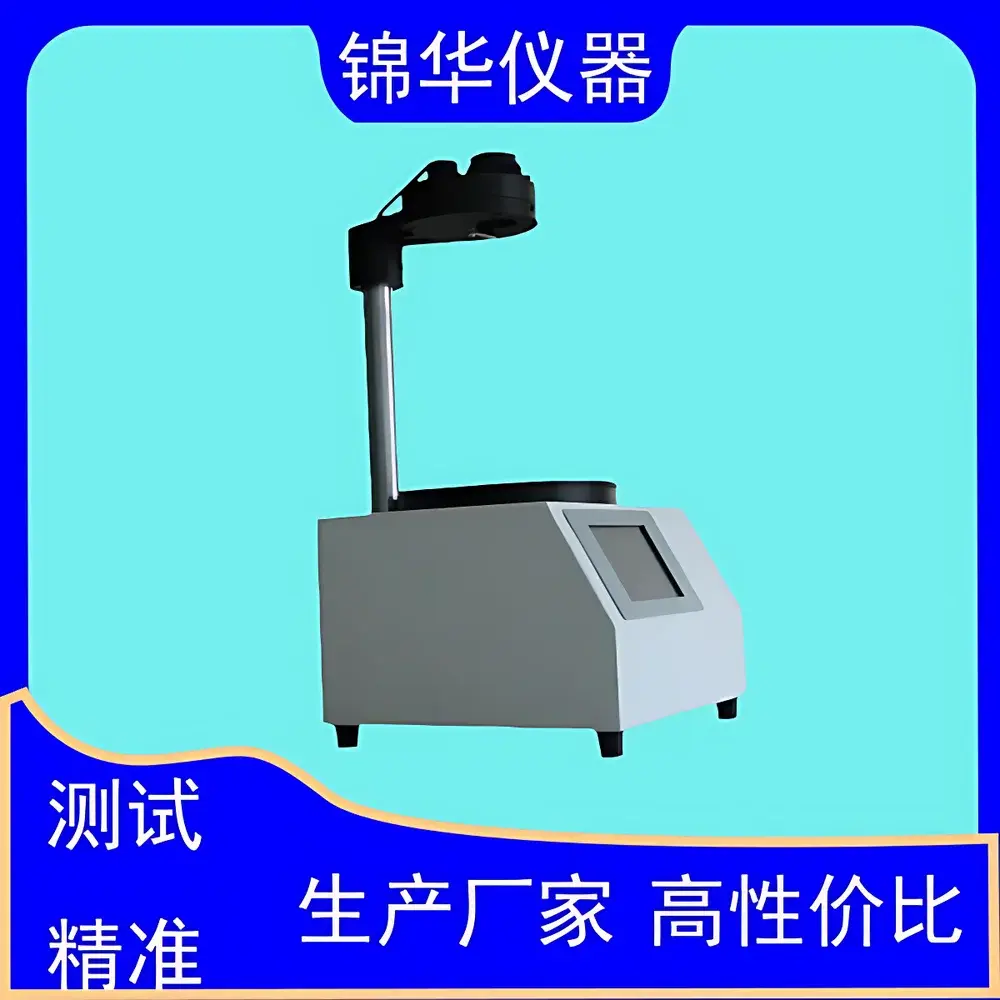
Jinhuatester YLY-01C Polarizing Stress Meter
| Brand | Jinhuatester |
|---|---|
| Origin | Shandong, China |
| Manufacturer Type | Direct Manufacturer |
| Model | YLY-01C |
| Measurement Accuracy | ≤2 nm |
| Retrace Error | ≤2 nm |
| Optical Path Difference Resolution | 0.1 nm |
| Angular Resolution | 0.1° |
| Polarization Field Diameter | 150 mm |
| Analyzer Rotation Range | 360° (±180°) |
| Luminance | >120 cd/m² |
| Adjustable Sample Spacing | 80–250 mm |
| Max Power Consumption | <30 W |
| Light Source | LED (3500 K) |
| Power Supply | AC 220 V, 50 Hz |
| Net Weight | 10 kg |
| Compliance Standards | GB/T 4545, GB/T 12415, GB/T 15726, GB/T 18144, YBB00162003, JC/T 655, JC/T 915, ASTM C148 |
Overview
The Jinhuatester YLY-01C Polarizing Stress Meter is a precision optical instrument engineered for quantitative and qualitative assessment of residual birefringence in transparent isotropic materials—primarily glass and rigid transparent plastics. It operates on the fundamental principle of photoelasticity, leveraging controlled polarized light interference to detect stress-induced anisotropy. When internal mechanical stress is present in otherwise optically isotropic materials, it induces temporary birefringence proportional to the local stress magnitude. The YLY-01C quantifies this effect via two complementary optical methods: compensation (using a calibrated quarter-wave plate) for absolute stress measurement in nm optical path difference (OPD), and colorimetric evaluation (using a full-wave plate) for rapid spatial mapping of stress distribution based on standardized interference color charts per ASTM C148 and GB/T 18144. Designed for regulatory-compliant environments—including pharmaceutical packaging QA/QC labs and metrology service providers—the instrument delivers traceable, repeatable measurements without routine zero-point recalibration, ensuring long-term measurement stability and operator independence.
Key Features
- High-resolution angular detection with encoder-based rotation system achieving ≤2 nm measurement accuracy and ≤2 nm retrace error—critical for detecting subtle stress gradients in thin-walled pharmaceutical vials and precision optics.
- 5-inch color LCD touchscreen interface supporting dual-language operation (English/Chinese), enabling intuitive parameter entry and real-time display of five concurrent metrics: measured angle (°), optical path difference (nm), unit-thickness OPD (nm/mm), apparent stress grade, and true stress grade.
- Zero-drift optical architecture: eliminates need for periodic dark-field calibration; maintains factory-set zero reference throughout operational life, reducing operator-dependent variability and improving inter-laboratory reproducibility.
- Dual-mode optical configuration: includes interchangeable quarter-wave and full-wave retardation plates to support both quantitative compensation measurements (per GB/T 15726 and YBB00162003) and qualitative stress mapping (per JC/T 655 and ASTM C148).
- LED illumination system (3500 K CCT, >120 cd/m² luminance) ensures spectral stability, low thermal load, and >50,000-hour service life—minimizing photometric drift and enabling continuous operation in GLP/GMP-aligned workflows.
- Ergonomic modular chassis with motor-assisted analyzer rotation (360° ±180° range) and adjustable sample spacing (80–250 mm) accommodates diverse geometries—from 2 mL ampoules to 1 L beverage bottles—without mechanical reconfiguration.
Sample Compatibility & Compliance
The YLY-01C is validated for use across regulated and industrial applications involving transparent silicate and polymer substrates. It supports stress evaluation of volumetric glassware (e.g., Class A pipettes, burettes), parenteral packaging (glass vials, syringes, infusion bottles per YBB00162003 and USP <660>), tableware (wine glasses, tumblers), and beverage containers (beer, spirits, soft drink bottles). Its measurement methodology conforms to international standards governing optical stress verification, including ASTM C148 (Standard Test Method for Photoelastic Examination of Glass Containers), ISO 12778 (Glass—Determination of Residual Stress), GB/T 4545 (Glass—Determination of Internal Stress), and JC/T 915 (Stress Testing of Float Glass). All reported values are traceable to NIM (National Institute of Metrology, China) calibration protocols and fully compatible with audit requirements under FDA 21 CFR Part 11 when integrated with compliant data management software.
Software & Data Management
While the YLY-01C operates as a standalone benchtop instrument with embedded firmware, its USB interface enables direct export of measurement logs (CSV format) containing timestamped OPD, angle, thickness input, and calculated stress grades. Raw data files retain full metadata—including operator ID, sample ID, environmental conditions (optional sensor integration), and instrument serial number—to satisfy ALCOA+ principles (Attributable, Legible, Contemporaneous, Original, Accurate, Complete, Consistent, Enduring, Available). For laboratories requiring electronic record integrity, optional PC-based software provides audit trail functionality, user access controls, electronic signatures, and automated report generation aligned with GLP and GMP documentation standards. All exported datasets are compatible with statistical process control (SPC) platforms and LIMS integration via standard ODBC drivers.
Applications
- Pharmaceutical packaging QA: Quantitative verification of residual stress in borosilicate Type I glass vials post-annealing, ensuring compliance with YBB00162003 and preventing delamination or breakage during lyophilization or transport.
- Optical component manufacturing: Detection of localized stress concentrations in lenses, prisms, and laser windows that may induce wavefront distortion or polarization degradation.
- Food & beverage container certification: Assessment of thermal stress distribution in tempered glass bottles to validate heat-treatment efficacy and predict mechanical reliability under pressure cycling.
- Metrology service laboratories: Accredited calibration of stress reference standards (e.g., quartz wedges, calibrated stress plates) per ISO/IEC 17025 requirements.
- Research & development: Correlation of annealing parameters (time/temperature profiles) with stress relaxation kinetics in novel glass compositions or polymer blends.
FAQ
Does the YLY-01C require annual recalibration?
Yes—while the zero-point remains stable, annual traceable calibration against certified stress standards (e.g., NIM-certified quartz wedges) is recommended to maintain compliance with ISO/IEC 17025 and regulatory audit expectations.
Can the instrument measure plastic materials such as PMMA or polycarbonate?
Yes, provided the material exhibits measurable photoelastic response and sufficient optical clarity; however, stress-optic coefficients must be manually entered for accurate conversion from OPD to MPa.
Is the LED light source replaceable by the user?
The LED module is field-replaceable using standard M3 tools and requires no optical realignment; replacement kits include pre-calibrated intensity verification protocols.
What is the minimum sample thickness the YLY-01C can evaluate?
The system supports samples as thin as 0.5 mm, though optimal signal-to-noise ratio is achieved at ≥1.0 mm thickness for quantitative compensation measurements.
Does the instrument support automated pass/fail judgment per pharmacopoeial limits?
Yes—user-defined acceptance thresholds (e.g., ≤50 nm OPD for Grade A vials) can be programmed into the interface to trigger visual/audible alerts and auto-classify results during batch testing.




