
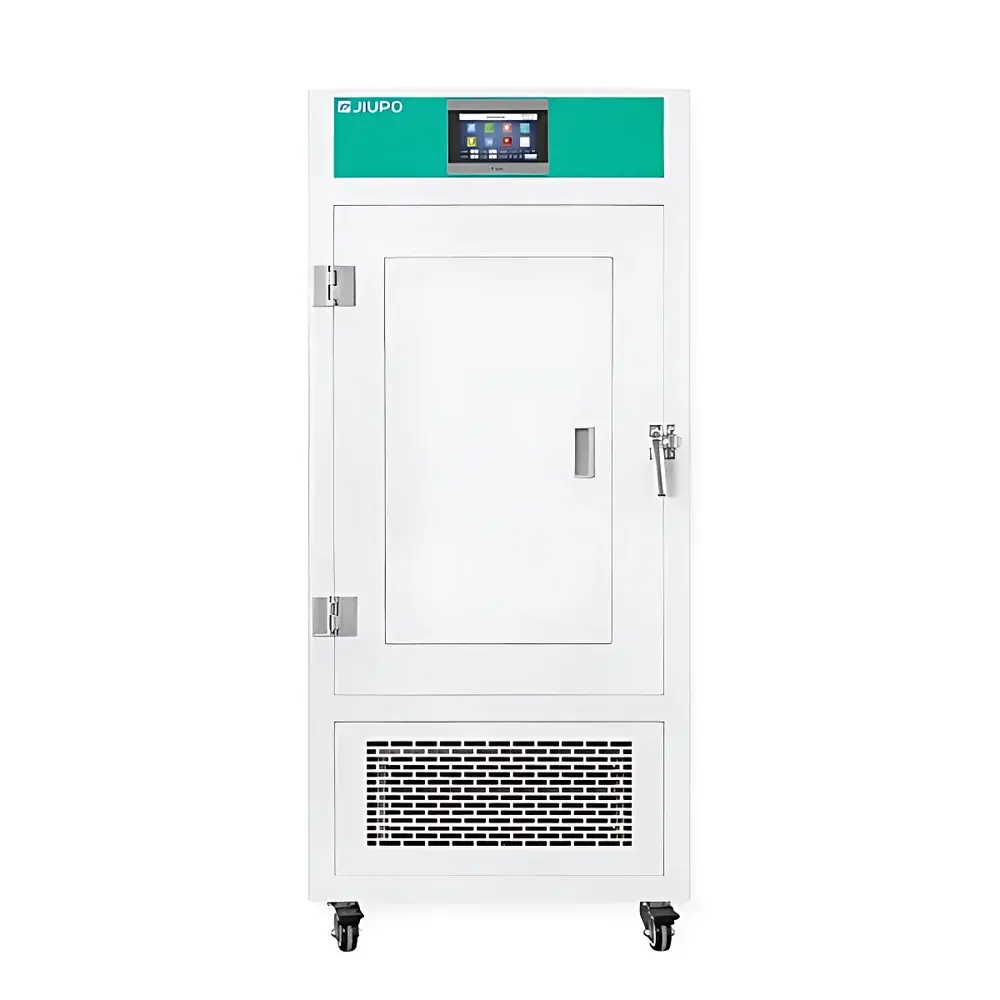
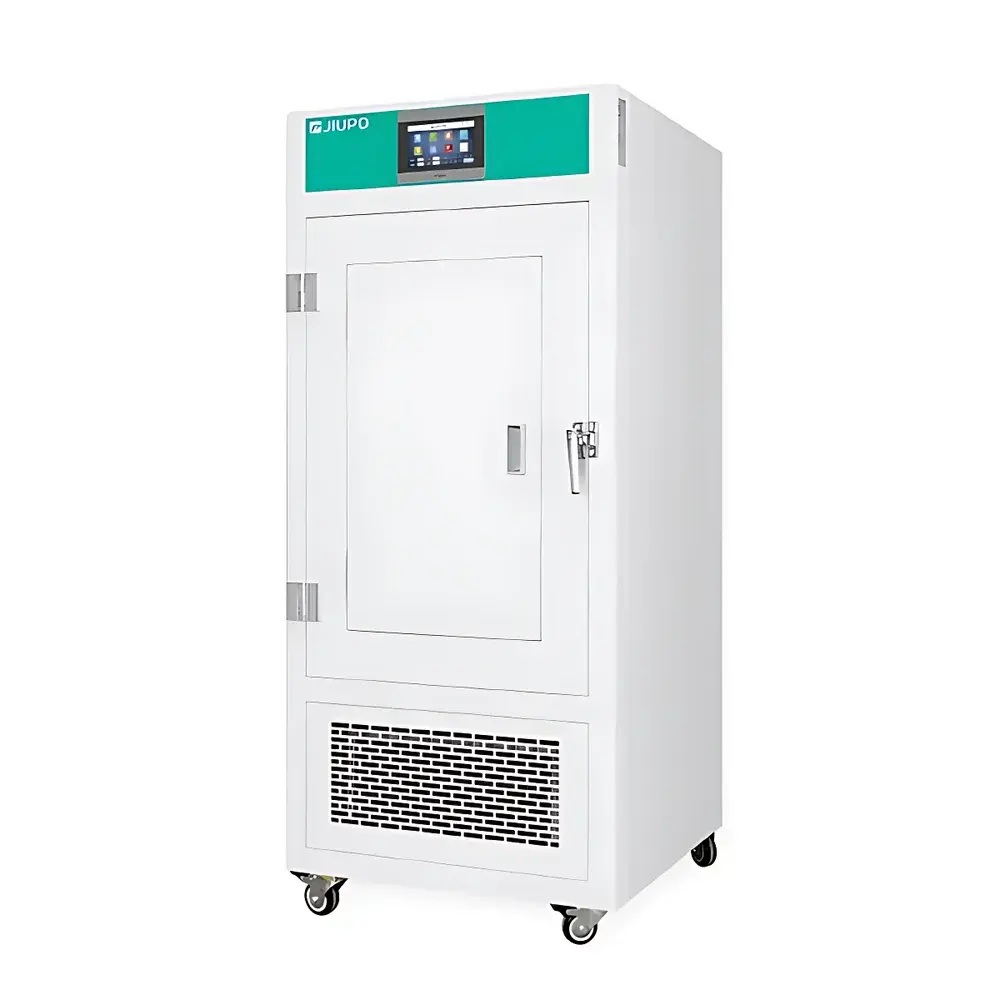
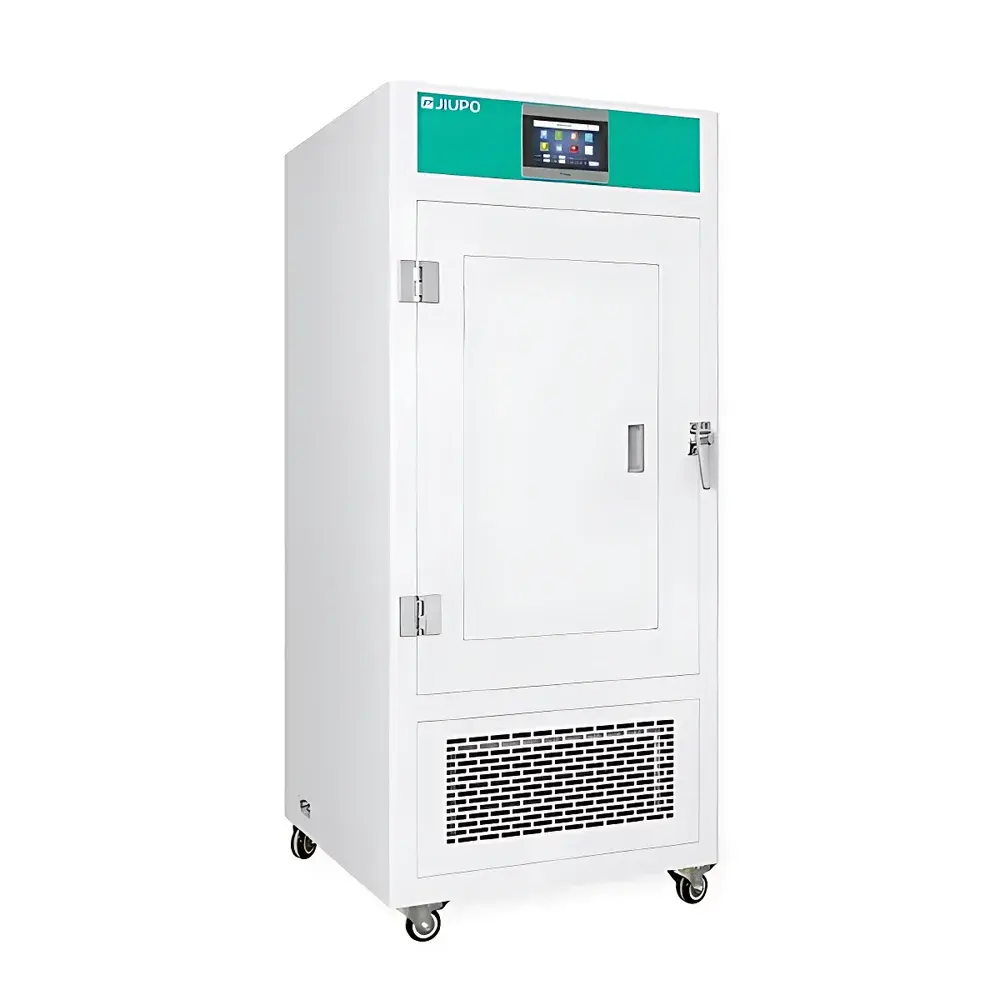
JIUPO TCC300 Plant Tissue Culture Incubator
| Brand | JIUPO |
|---|---|
| Origin | Fujian, China |
| Manufacturer Type | Direct Manufacturer |
| Product Category | Domestic |
| Model | TCC300 |
| Capacity Range | 0–500 L |
| Light Source Type | Multi-spectral LED Array |
| Temperature Range | 3–45 °C (optional low-temp: −10–45 °C) |
| Internal Volume | 329 L |
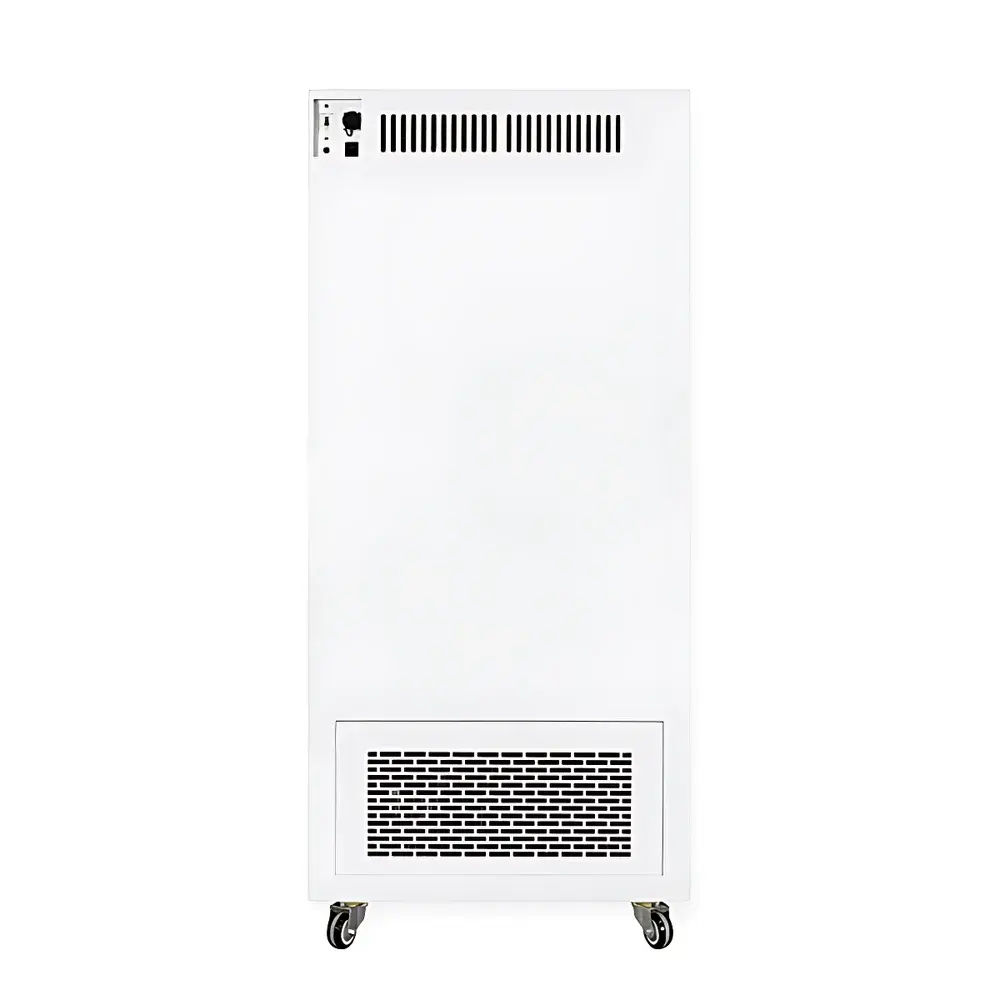
| External Dimensions | 770 × 720 × 1760 mm |
| Temperature Uniformity | ±2 °C |
| Temperature Fluctuation | ≤0.5 °C |
| Temperature Resolution | 0.1 °C |
| Illumination Intensity | 0–100% adjustable (250 μmol/m²·s @ 10 cm, full-spectrum white LED) |
| Spectral Options | Monochromatic (450 nm ±5 nm, 660 nm ±5 nm, 735 nm ±5 nm), Tri-band (RBFR), Quad-band (RBFR + White), 18-band, UVA/UVB/UVC |
| Air Circulation | Vertical bottom-to-top convection |
| Power Consumption | 2.7 kW (220 VAC / 50 Hz) |
| Operating Ambient | 5–35 °C |
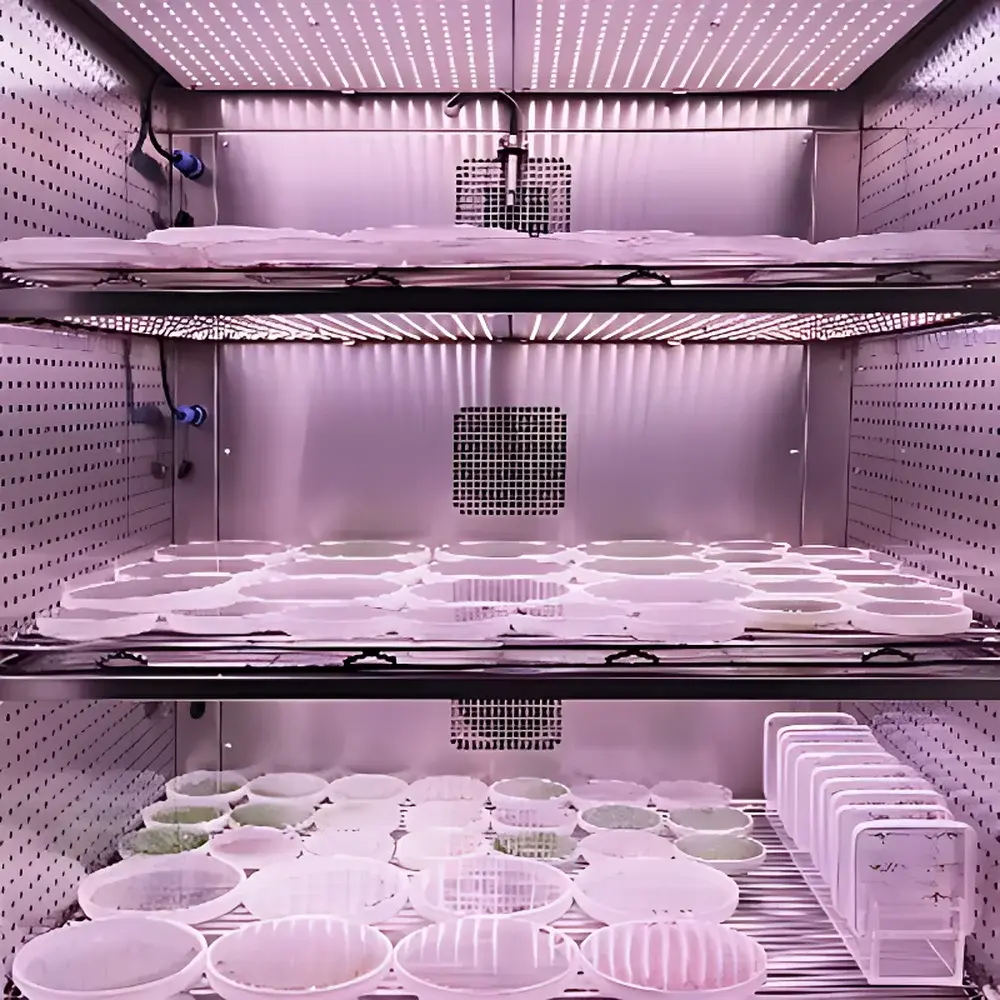
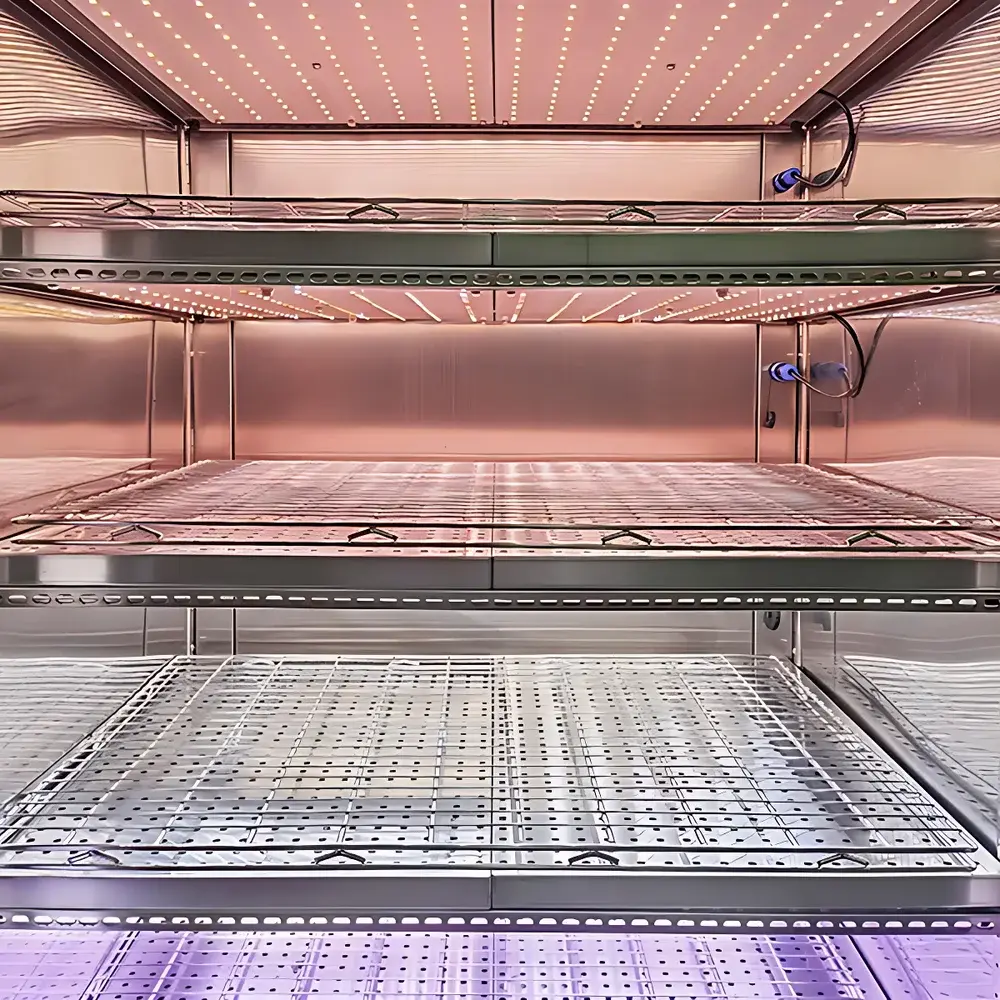
| Standard Light Layers | 4 layers (23 cm spacing), total cultivation area: 1.3 m² |
Overview
The JIUPO TCC300 Plant Tissue Culture Incubator is an engineered environmental control platform designed specifically for sterile in vitro propagation, callus induction, shoot regeneration, and photomorphogenic studies in plant biotechnology laboratories. Unlike general-purpose incubators, the TCC300 integrates precision thermoregulation with spectrally tunable, biologically relevant illumination—enabling researchers to replicate diurnal light cycles, developmental stage-specific photon flux densities, and wavelength-dependent physiological responses. Its core architecture employs a vertical air circulation system that establishes laminar, low-turbulence airflow from the base upward, minimizing condensation on culture vessel lids—a critical factor in preventing microbial contamination during long-term subculturing. The unit operates continuously under GLP-aligned conditions, supporting unattended 7×24 operation with thermal stability validated across all shelf levels per ISO 17025 traceable protocols.
Key Features
- Patented Thermal Recovery System: Dynamically modulates radiant and convective heat transfer based on real-time lighting load, reducing energy consumption by >50% versus conventional tissue culture cabinets—aligned with ISO 50001 energy management frameworks.
- Multi-Spectral LED Architecture: Delivers continuous PAR (380–780 nm) output at 250 μmol/m²·s (measured at 10 cm), with optional narrowband channels (450 nm ±5 nm, 660 nm ±5 nm, 735 nm ±5 nm) and extended configurations including UVA/UVB/UVC and 18-channel spectral libraries.
- Vertical Convection Design: Bottom-mounted centrifugal blower and top-integrated return ducting ensure uniform temperature distribution (±2 °C) and minimal stratification—even with stacked culture trays occupying full internal volume.
- Programmable Environmental Logic: Dual-parameter scheduling allows independent time-segmented control of temperature setpoints and irradiance intensity, enabling simulation of sunrise/sunset gradients or photoperiod-shift experiments without external controllers.
- Robust Structural Integrity: All-stainless-steel interior chamber; polyurethane foam insulation (≥50 mm thickness, CFC-free); piano-finish powder-coated steel exterior; hermetically sealed double-glazed observation door (optional).
- Remote Monitoring & Control: Embedded Wi-Fi module supports native iOS/Android application interface with audit-trail logging, alarm push notifications, and firmware-over-the-air (FOTA) updates compliant with FDA 21 CFR Part 11 data integrity requirements.
Sample Compatibility & Compliance
The TCC300 accommodates standard tissue culture formats—including Magenta boxes, Petri dishes (90–150 mm), glass jars, and multiwell plates—across four independently accessible shelves (23 cm vertical spacing, 1.3 m² total surface area). Its sealed chamber design meets ISO 14644-1 Class 8 (100,000) cleanroom equivalency when operated with HEPA-filtered intake (optional add-on). Temperature performance conforms to ASTM E2777-21 for incubator validation, while lighting output is calibrated per CIE S 026/E:2018 photobiological safety standards. The system supports IQ/OQ documentation packages for GMP-compliant botanical pharmaceutical production environments.
Software & Data Management
The embedded controller runs a deterministic real-time OS with dual PID loops (temperature + light feedback). All operational parameters—including setpoints, ramp rates, duty cycles, and alarm thresholds—are stored in non-volatile memory with timestamped versioning. The companion mobile application provides role-based access control (admin/operator), exportable CSV logs (min/max/mean per 15-min interval), and configurable email/SMS alerts for deviations exceeding user-defined tolerances. Audit trails comply with ALCOA+ principles (Attributable, Legible, Contemporaneous, Original, Accurate, Complete, Consistent, Enduring, Available) and support retrospective review for regulatory submissions.
Applications
- In vitro micropropagation of orchids, strawberries, and elite cultivars requiring precise photomorphogenic cues
- Secondary metabolite induction via UV-B priming or red/far-red ratio modulation
- Hormone-response screening under controlled photoperiods (e.g., vernalization mimicry)
- CRISPR-edited line stabilization under stress-mimicking light spectra
- Teaching laboratory use for undergraduate plant physiology and biotechnology courses
- Seed germination assays with spectral discrimination (e.g., phytochrome A vs. B activation)
FAQ
Does the TCC300 support validation documentation for regulated environments?
Yes—factory-issued IQ/OQ protocols, calibration certificates (NIST-traceable thermistors and quantum sensors), and electronic audit trail exports are available upon request.
Can I integrate the TCC300 into a centralized lab monitoring network?
The unit supports Modbus TCP and MQTT protocols for integration with building management systems (BMS) or enterprise LIMS platforms.
What maintenance intervals are recommended for long-term reliability?
Filter replacement every 6 months; annual verification of temperature uniformity and photosynthetic photon flux density (PPFD) distribution using third-party accredited service providers.
Is the stainless-steel interior electropolished for enhanced sterility?
Standard configuration features brushed 304 stainless steel; electropolished finish (Ra ≤ 0.4 µm) is available as a custom option.
How does the thermal recovery system interact with lighting changes?
The system monitors instantaneous LED driver power draw and adjusts compressor duty cycle and fan speed preemptively—reducing thermal overshoot during light-on transitions by up to 68% (per internal thermal imaging study, Report #TCC300-TR-2023-089).




