
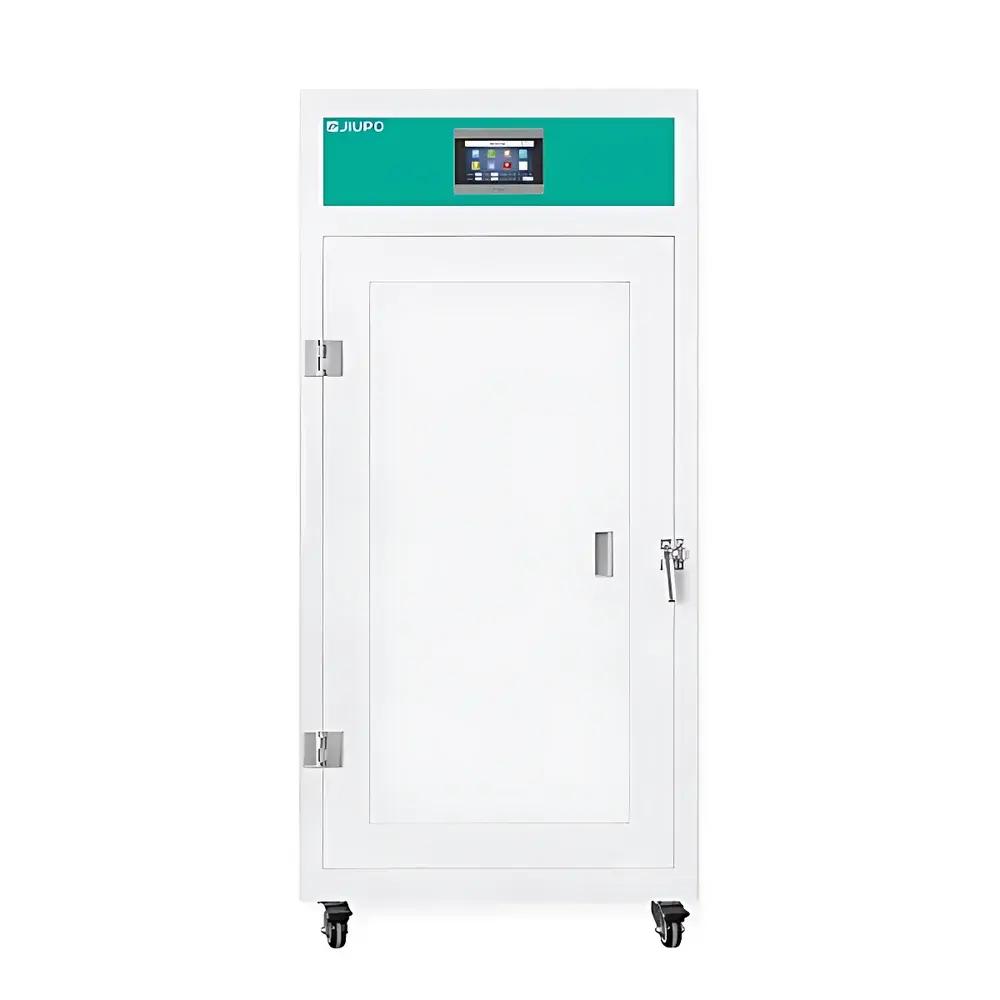
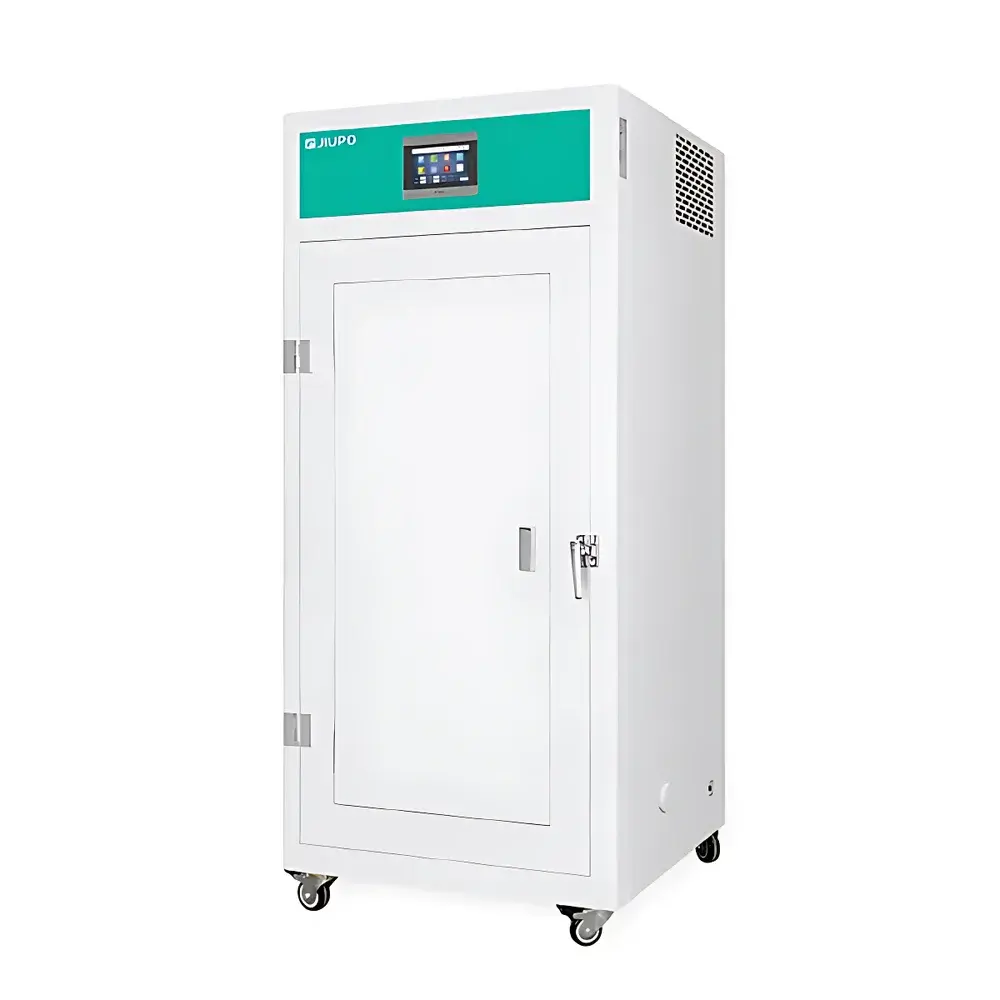
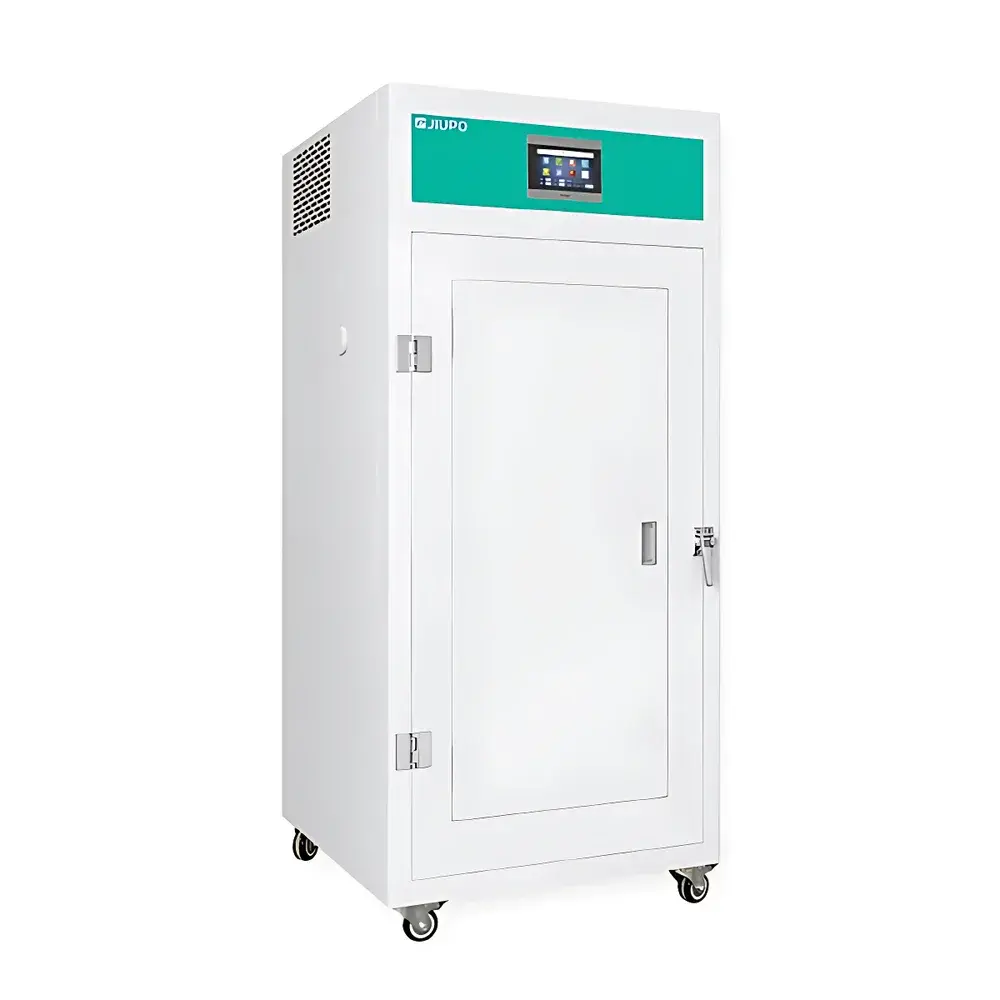
JIUPO TCC600 Plant Tissue Culture Incubator
| Brand | JIUPO |
|---|---|
| Origin | Fujian, China |
| Manufacturer Type | Direct Manufacturer |
| Product Category | Domestic |
| Model | TCC600 |
| Price Range | USD 9,100 – 9,800 (FOB) |
| Temperature Range | 3–45°C (optional low-temp: −10 to 45°C) |
| Internal Volume | 620 L |
| External Dimensions (W×D×H) | 900 × 800 × 1940 mm |
| Internal Dimensions (W×D×H) | 755 × 558 × 1474 mm |
| Temperature Uniformity | ±2°C |
| Temperature Fluctuation | ≤0.5°C |
| Temperature Resolution | 0.1°C |
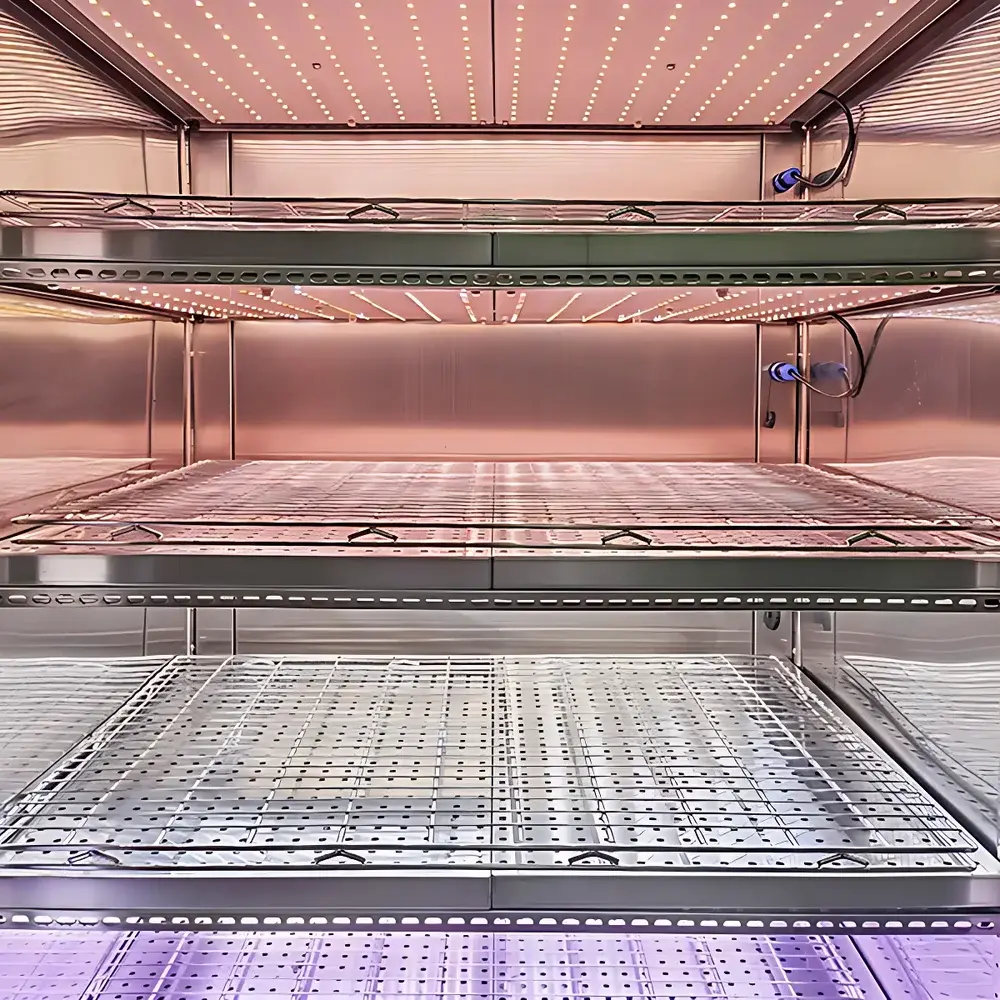
| Standard Lighting | Full-spectrum LED (380–780 nm), 300 µmol/m²·s @ 10 cm |
| Optional Spectra | Monochromatic (450 nm ±5 nm, 660 nm ±5 nm, 735 nm ±5 nm), RBIR, RBIRW, 18-band, UVA/UVB/UVC |
| Lighting Control | 0–100% intensity, programmable time-based profiles |
| Power Consumption | 2.9 kW (peak, 220 VAC / 50 Hz) |
| Operating Ambient Temperature | 5–35°C |
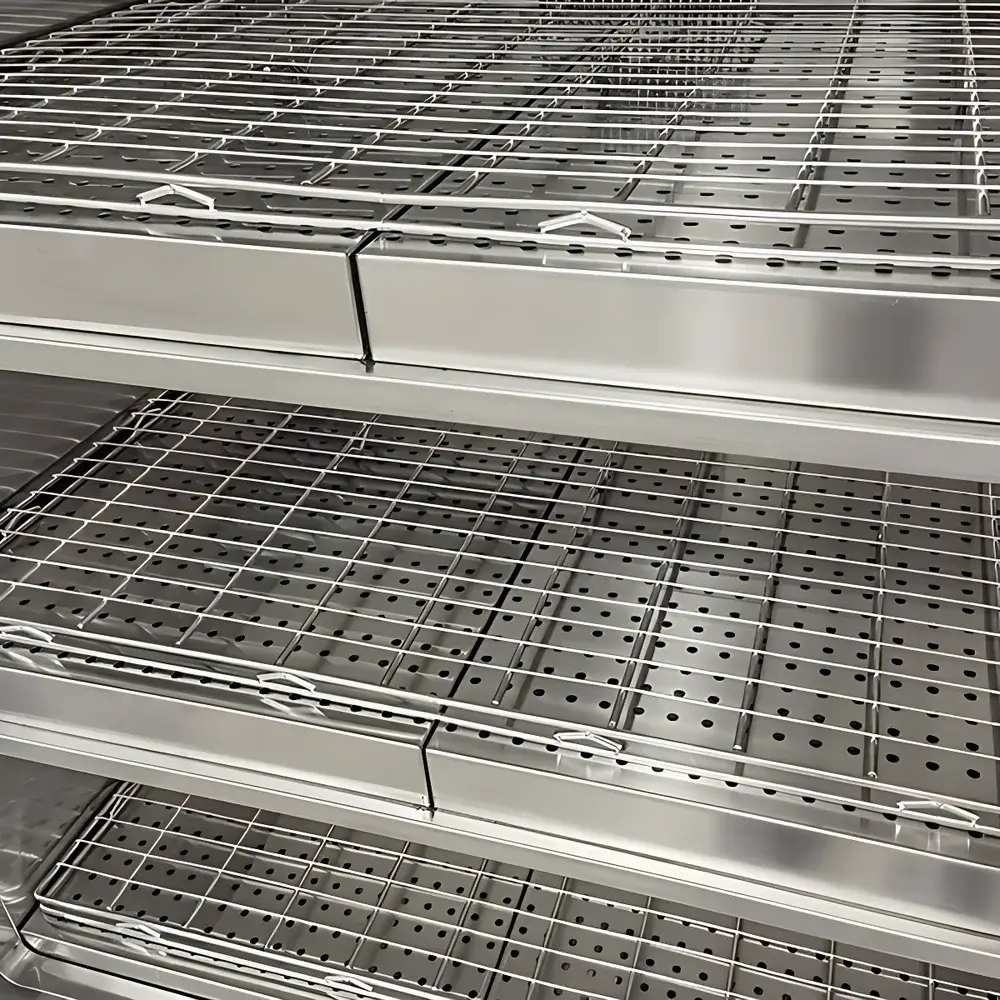
| Construction | Stainless steel interior, polyurethane foam insulation, piano-finish exterior |
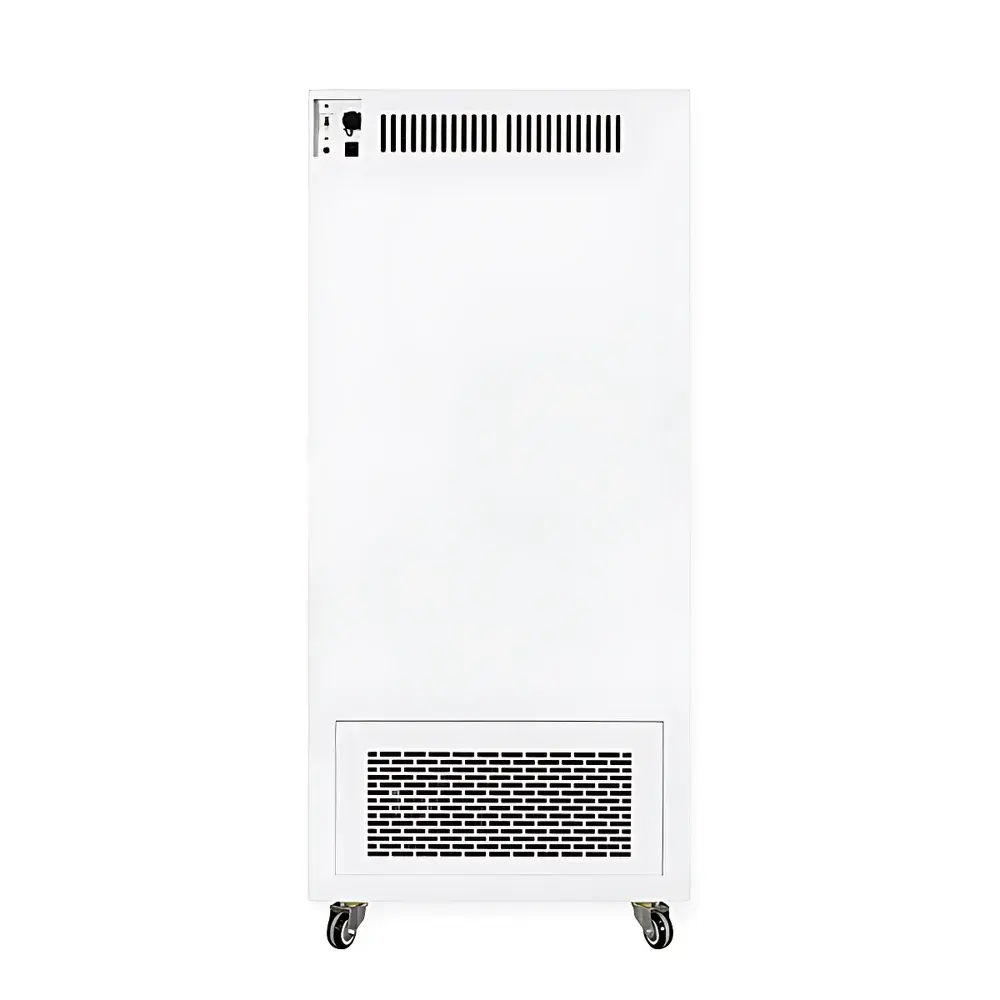
| Airflow Design | Vertical bottom-to-top circulation |
| Compliance | Designed for GLP-compliant plant tissue culture workflows |
Overview
The JIUPO TCC600 Plant Tissue Culture Incubator is an engineered environmental control platform specifically designed for reproducible, long-term in vitro propagation of plant explants, callus cultures, and micropropagated shoots. It operates on a precisely regulated thermodynamic and photobiological principle—integrating PID-controlled air heating/cooling with spectrally tunable, intensity-modulated LED illumination—to replicate physiologically relevant growth conditions across developmental stages. Unlike general-purpose incubators, the TCC600 incorporates a vertically oriented airflow architecture that ensures thermal homogeneity across all five standard shelving levels, minimizing vertical temperature gradients that compromise morphogenic consistency. Its structural integrity—featuring full stainless-steel internal chambers, high-density polyurethane insulation (≥80 mm), and hermetic door sealing—supports uninterrupted 24/7 operation under controlled humidity and CO₂-lean atmospheres typical of sterile laminar-flow hood-integrated workflows.
Key Features
- Patented vertical air circulation system: Bottom-mounted centrifugal blower with top-return ducting achieves ≤±2°C temperature uniformity across full 620 L internal volume.
- Thermal recovery technology: Integrated heat-exchange module recaptures waste thermal energy during cooling cycles, reducing net power draw by >50% versus conventional Peltier or compressor-based systems.
- Programmable spectral lighting engine: Standard 380–780 nm continuous photosynthetically active radiation (PAR) spectrum; optional discrete-band configurations (e.g., 450 nm blue, 660 nm red, 735 nm far-red) enable phytochrome-mediated developmental staging (e.g., photomorphogenesis, de-etiolation, flowering induction).
- Multi-layer independent control: Each of the five 27-cm-high shelving tiers supports individual light intensity scheduling (0–100%), enabling simultaneous cultivation of species with divergent photoperiodic requirements.
- Embedded environmental controller with audit trail: Touchscreen HMI logs all setpoint changes, alarm events, and runtime parameters; data export via USB or cloud sync (via optional Wi-Fi module) complies with basic GLP documentation standards.
- Dual-mode remote management: Native Android/iOS app enables real-time monitoring, alarm push notifications, and emergency parameter override—without requiring third-party IoT gateways.
Sample Compatibility & Compliance
The TCC600 accommodates standard tissue culture vessels—including Magenta boxes, glass jars (100–500 mL), Petri dishes (90–150 mm), and multiwell plates—across its 2.1 m² total shelf area. Its stainless-steel interior resists ethanol, sodium hypochlorite, and hydrogen peroxide decontamination protocols. While not certified to ISO 14644-1 Class 5 or USP <797>, the unit’s low particulate emission (<10⁴ particles/m³ ≥0.5 µm) and absence of internal fans with exposed bearings make it suitable for use downstream of ISO Class 5 biosafety cabinets. It meets CE safety directives (2014/35/EU Low Voltage, 2014/30/EU EMC) and conforms to IEC 61000-4 immunity standards for laboratory environments. Firmware supports configurable password-protected user roles (operator, supervisor, administrator), satisfying foundational requirements for 21 CFR Part 11–aligned electronic recordkeeping when paired with timestamped log exports.
Software & Data Management
The embedded controller runs deterministic real-time firmware (RTOS-based) with non-volatile memory retention for up to 12 months of 1-minute interval logging. All operational data—including temperature history, light intensity profiles, door-open events, and fault codes—are timestamped and exportable as CSV files. The mobile application provides graphical trend visualization, customizable alert thresholds (e.g., temperature deviation >1°C for >5 min), and scheduled firmware updates via signed OTA packages. For integration into centralized LIMS or ELN platforms, optional RS-485 Modbus RTU or Ethernet TCP/IP interfaces support read-only access to live sensor values and historical datasets—enabling automated metadata tagging of culture batches.
Applications
- Micropropagation of elite cultivars (e.g., orchids, strawberries, banana) under standardized photoperiodic regimes.
- Callus induction and somatic embryogenesis studies requiring precise thermal ramping (e.g., 25°C day / 18°C night cycles).
- Photoreceptor signaling research using monochromatic irradiation (e.g., phyA/phyB activation via 735 nm far-red pulses).
- Pre-acclimatization conditioning of in vitro-grown plantlets prior to greenhouse transfer.
- Long-term germplasm maintenance of slow-growing species (e.g., conifers, medicinal herbs) at reduced metabolic setpoints (e.g., 12°C + low PAR).
FAQ
Does the TCC600 support CO₂ enrichment?
No—this model is optimized for ambient-air tissue culture applications. CO₂ control requires external gas blending modules and is not integrated.
Can I validate temperature uniformity per ASTM E145-22?
Yes—nine-point mapping (per ASTM E145 Annex A3) is supported using the built-in 12-channel thermistor array; calibration certificates are provided with NIST-traceable reference sensors.
Is the lighting spectrum compliant with CIE S 026:2018 photobiological safety guidelines?
Yes—all standard and optional LED configurations meet IEC 62471 Risk Group 0 (Exempt) classification for retinal blue-light hazard and near-infrared exposure.
What is the expected service life of the LED arrays?
Rated L90 lifetime exceeds 50,000 hours at 25°C ambient; output degradation is monitored in real time and reported via the HMI.
Does the unit include a validation protocol package?
A complete IQ/OQ template set (in English) is supplied, aligned with ISO/IEC 17025 principles and referencing ASTM E2500-21 for equipment qualification in regulated labs.






