
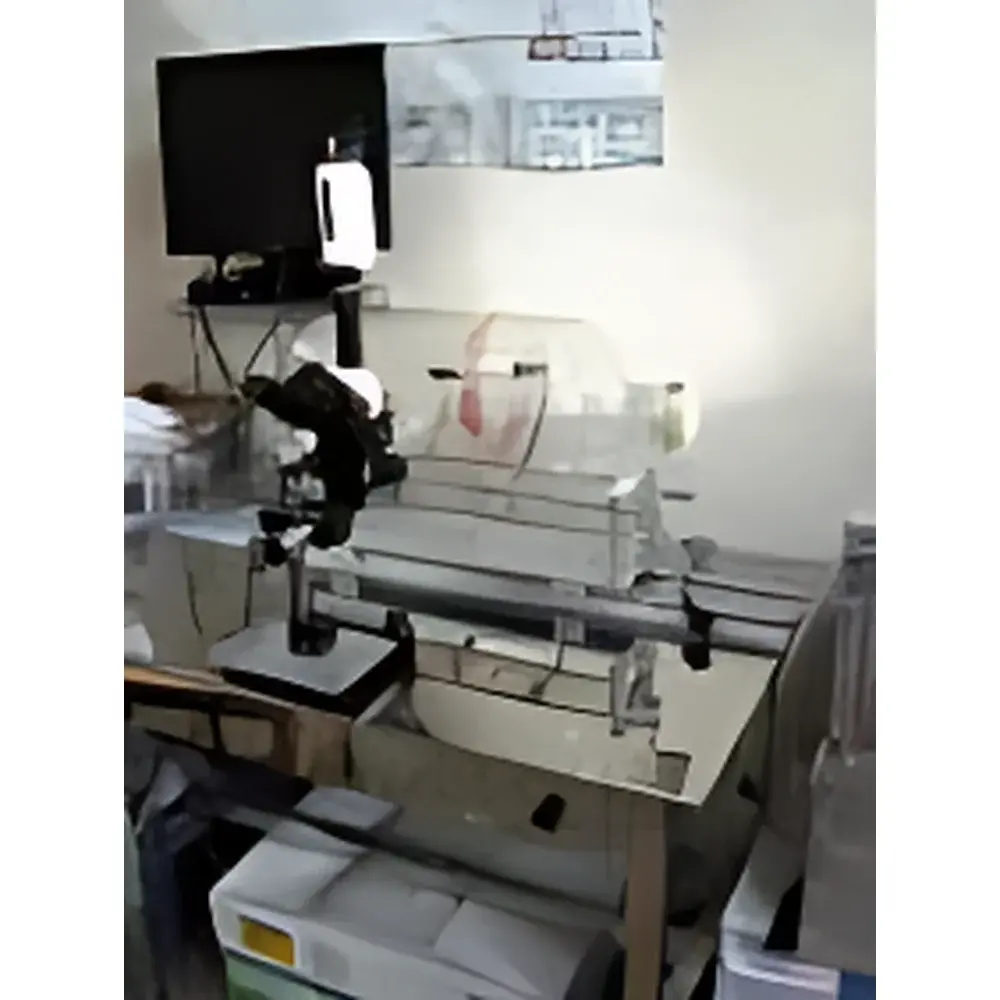
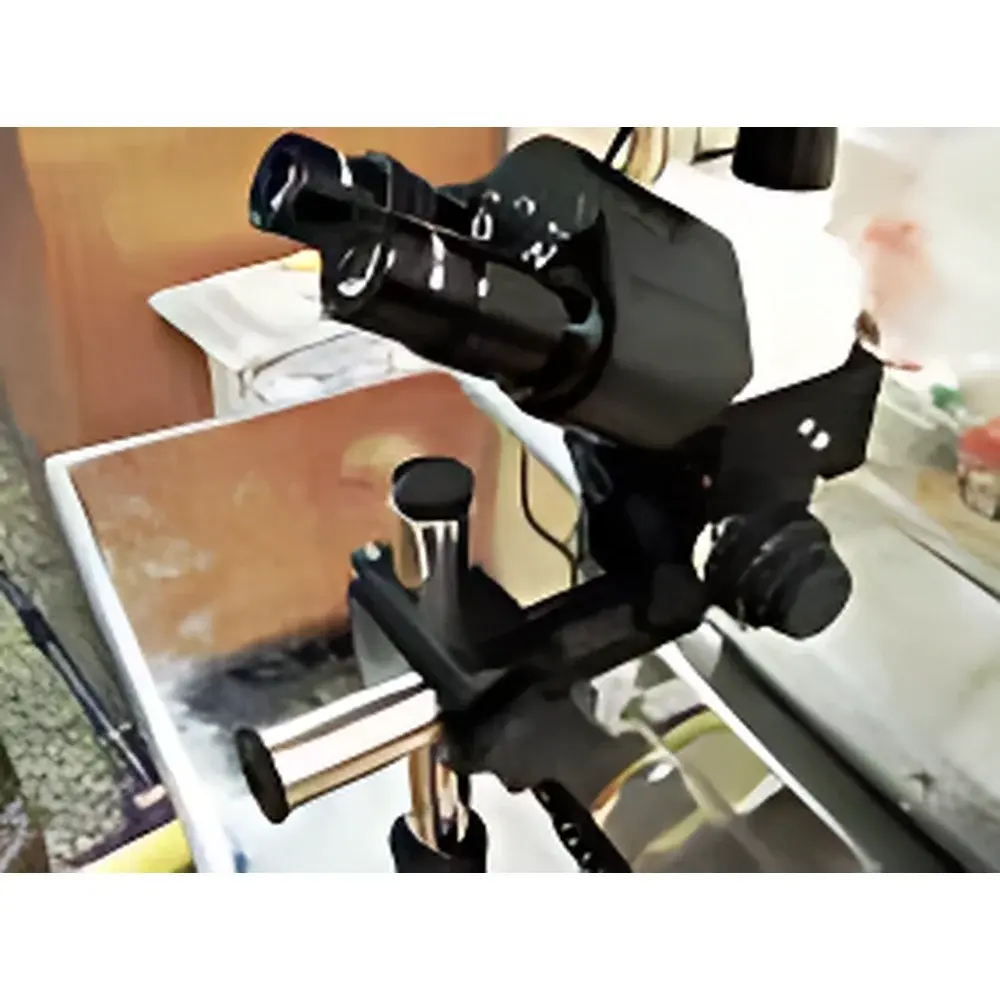
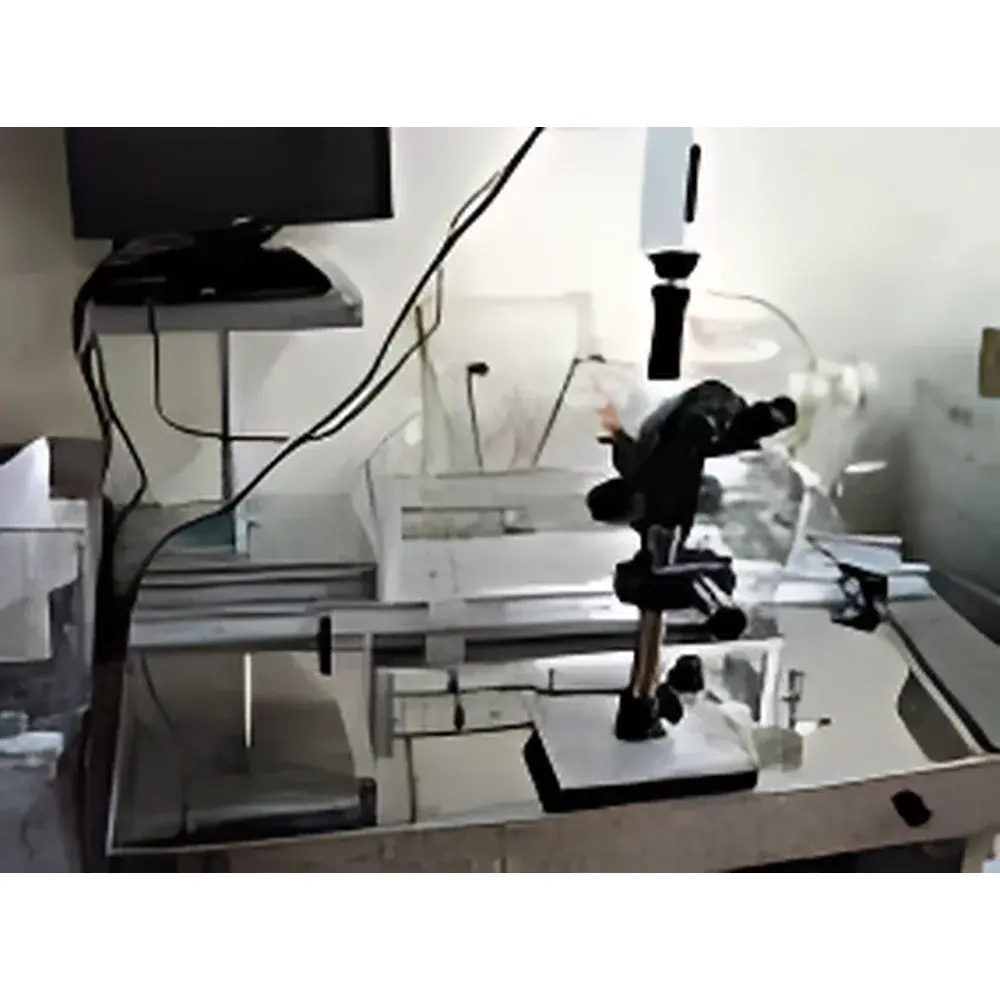
JJD JD-S Desktop Cell Observation System
| Brand | JJD |
|---|---|
| Origin | Beijing, China |
| Manufacturer Type | Authorized Distributor |
| Product Category | Domestic |
| Model | JD-S |
| Price Range | USD 14,000–42,000 |
| System Type | Integrated Cell Observation Platform |
| Workbench Surface Finish | 8K Mirror-Polished Stainless Steel |
| Optical Magnification | 7×–180× |
| Video Magnification | 460× |
| Monitor Size | 17-inch LCD |
| Cold Light Source | 150 W, 21 V, 60 Hz, Uniformly Adjustable Intensity |
| Power Supply | 220 V, 50 Hz |
| Bench Dimensions | 1000 × 600 × 800 mm |
| Temperature Stability | Continuous operation at 37 °C ambient |
| Imaging Capability | Real-time capture, time-lapse recording, digital archiving |
| Stage Motion | Motorized X-Y translation platform |
| Objective Lenses | Standard 10× (optional 5× and 40×) |
| Camera | High-resolution digital CCD sensor |
| Illumination | Fiber-optic cold light delivery |
| Software Control | PC-based acquisition and annotation suite |
Overview
The JJD JD-S Desktop Cell Observation System is an integrated, benchtop-grade platform engineered for real-time, non-invasive monitoring of adherent and suspension cell cultures under controlled environmental conditions. Unlike conventional inverted microscopes or standalone imaging systems, the JD-S integrates a precision optical train, thermally stable stainless-steel workbench, motorized stage, fiber-optic cold illumination, and synchronized digital acquisition into a single ergonomic unit. Its design adheres to fundamental principles of phase contrast and brightfield microscopy—enabling high-fidelity visualization of cellular morphology, confluence progression, mitotic events, and early signs of cytotoxicity without requiring fluorescent labeling. The system operates continuously at 37 °C, making it suitable for extended observation sessions in standard CO₂ incubator-adjacent lab environments. It is not a flow cytometer; rather, it serves as a static, high-stability observation station optimized for longitudinal culture assessment—complementing, not replacing, analytical instruments such as flow cytometers or plate readers.
Key Features
- 8K mirror-polished stainless-steel workbench (1000 × 600 × 800 mm) with chemical resistance and seamless surface integrity—designed to minimize particulate retention and support ISO Class 5-compatible cleaning protocols.
- Trinocular microscope system with 7×–180× continuous optical zoom and up to 460× video magnification via high-sensitivity CCD camera—ensuring resolution sufficient for subcellular feature discrimination (e.g., nucleolar granularity, membrane ruffling).
- Fiber-optic cold light source (150 W, 21 V, 60 Hz) delivering uniform, heat-free illumination across the field of view—critical for maintaining thermal stability during prolonged imaging.
- Motorized X-Y translation stage with micrometer-scale repeatability—enabling precise repositioning for multi-location time-lapse studies and standardized field-of-view registration.
- Dedicated PC workstation with 17-inch LCD monitor and proprietary acquisition software supporting TIFF/PNG export, timestamped metadata embedding, and lossless compression for GLP-compliant data archival.
- Modular objective lens configuration (standard 10×; optional 5× for wide-field confluence mapping or 40× for detailed morphometric analysis)—allowing adaptability across primary cell lines, stem cells, and immortalized models.
Sample Compatibility & Compliance
The JD-S accommodates standard tissue culture vessels including 6-well to 96-well plates, Petri dishes (35–150 mm), T-flasks (25–225 cm²), and chambered coverglasses. Its open-stage architecture permits direct placement of commercial CO₂-permeable cultureware without mechanical interference. All optical components comply with ISO 10934-1 (microscope nomenclature) and IEC 61000-6-3 (EMC emission standards). The stainless-steel bench meets ASTM A480/A480M requirements for polished austenitic stainless surfaces. While not certified for GMP manufacturing environments, the system supports GLP-aligned documentation workflows—including user access logs, instrument calibration tracking, and audit-ready image metadata (EXIF + custom XML tags).
Software & Data Management
Acquisition and annotation are managed through JJD’s CellView Studio v3.x software, compatible with Windows 10/11 (64-bit). The application provides real-time histogram-based exposure control, region-of-interest (ROI) marking, automatic focus stacking (with Z-step incrementing), and batch export with embedded DICOM-SR–compatible structured reporting fields. All captured images retain embedded timestamps, operator ID, objective magnification, illumination intensity setting, and stage coordinates—facilitating traceability per FDA 21 CFR Part 11 requirements when deployed with electronic signature modules. Raw data is stored in vendor-neutral formats (TIFF, HDF5) to ensure long-term interoperability with third-party analysis tools such as ImageJ/Fiji, MATLAB, or Python-based scikit-image pipelines.
Applications
- Longitudinal monitoring of primary human fibroblast senescence and passage-dependent morphological drift.
- Qualitative assessment of iPSC colony formation, differentiation onset, and neural rosette emergence under feeder-free conditions.
- Endpoint validation of transfection efficiency prior to downstream functional assays (e.g., patch-clamp, ELISA).
- Documentation of cytopathic effects (CPE) in virus-host interaction studies using Vero or HEK293T monolayers.
- Training platform for undergraduate and graduate students in cell culture fundamentals—emphasizing aseptic technique, confluence estimation, and contamination recognition.
- Supporting QC release testing for biomanufacturing workflows where visual inspection remains a critical release criterion (e.g., ATMPs under EMA Guideline on Human Cell-Based Medicinal Products).
FAQ
Is the JD-S compliant with FDA 21 CFR Part 11 for electronic records?
Yes—when configured with optional audit trail logging and electronic signature modules, the system meets predicate rules for closed-system validation, including user authentication, action logging, and immutable record retention.
Can the system be integrated into a CO₂ incubator?
No—the JD-S is designed for ambient lab use adjacent to incubators; its electronics and optics are not rated for humidified, 5% CO₂ environments. For in-incubator imaging, JJD offers the separate JD-I series with IP54-rated enclosures.
What is the maximum duration for uninterrupted time-lapse imaging?
Under stable 37 °C ambient conditions and with active cooling of the CCD sensor, continuous acquisition is supported for ≥72 hours with 5-minute interval capture.
Does the system support fluorescence observation?
Not natively—the standard configuration uses brightfield and phase contrast only. Fluorescence capability requires retrofitting with LED excitation modules and filter cubes (sold separately as JD-S-FLUO kit).
Is service and calibration available outside mainland China?
Yes—JJD maintains authorized service partners in Germany, Singapore, and the United States, providing on-site preventive maintenance and NIST-traceable optical calibration certificates.





