
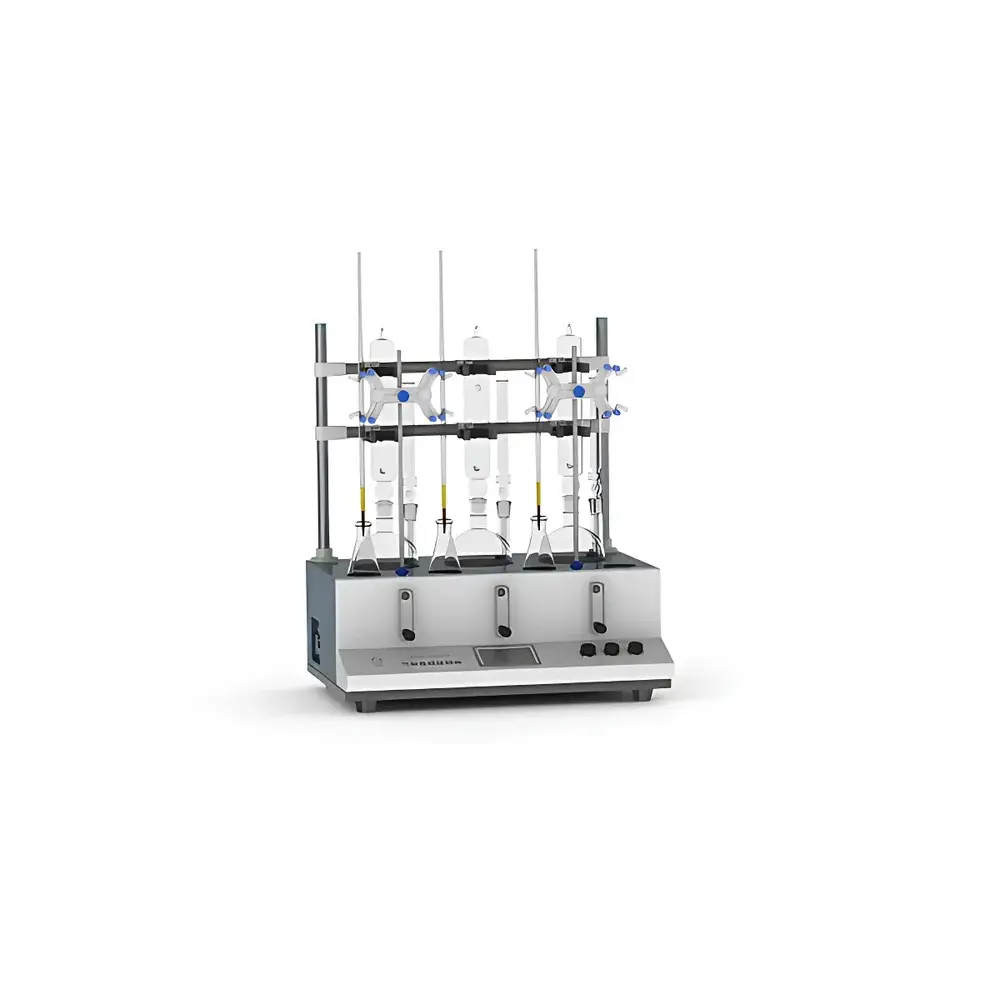
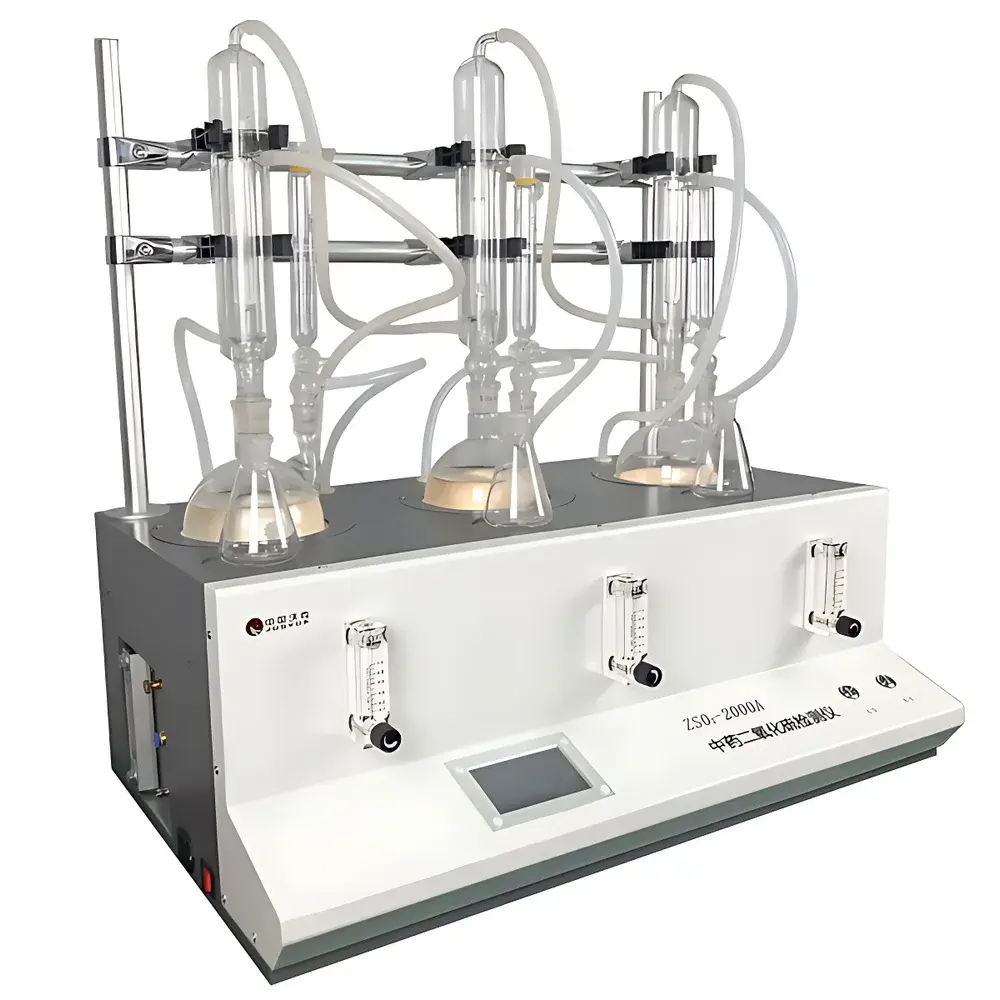
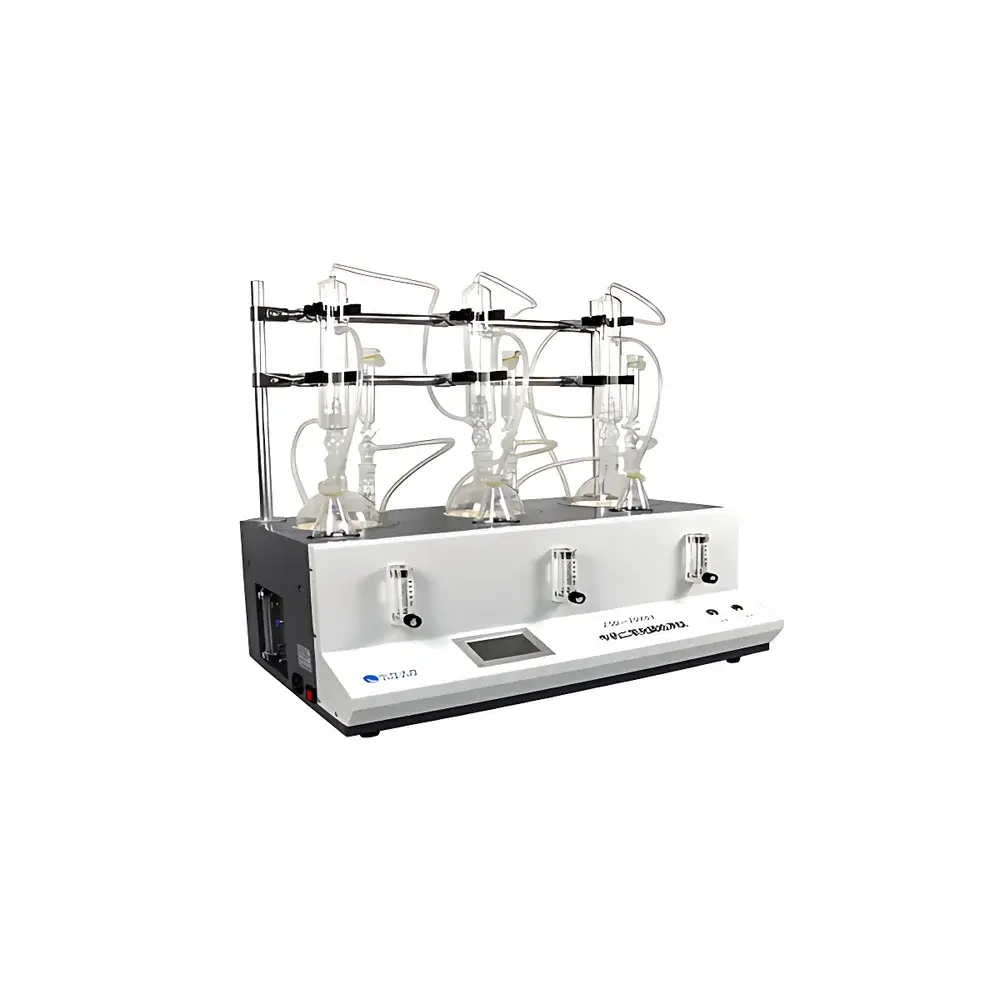
Josvok ZSO2-3000A Herbal Medicine Sulfur Dioxide Residue Analyzer
| Brand | Josvok |
|---|---|
| Origin | Tianjin, China |
| Manufacturer Type | Authorized Distributor |
| Country of Origin | China |
| Model | ZSO2-3000A |
| Detection Limit | 1 µg |
| Detection Range | 1–1000 µg |
| Instrument Type | Benchtop Dedicated Analyzer |
| Heating Method | Infrared Ceramic Heating (Flameless) |
| Display | LCD Touchscreen Interface |
| Cooling Option | External or Optional Built-in Recirculating Chiller |
| Nitrogen Flow Control | Precision Mass Flow Regulator |
| Power Control | Adjustable Independent Heating Zones with Countdown Timer and Audible Alert |
Overview
The Josvok ZSO2-3000A Herbal Medicine Sulfur Dioxide Residue Analyzer is a dedicated benchtop instrument engineered for accurate, reproducible quantification of residual sulfur dioxide (SO₂) in traditional Chinese medicinal materials and related botanical products. It operates on the principle of acid distillation coupled with nitrogen-assisted steam volatilization and subsequent iodometric titration or spectrophotometric detection—fully compliant with methodologies outlined in Chinese Pharmacopoeia (ChP) 2020 Edition, Volume I, General Test 2331, as well as harmonized protocols referenced in ISO 5725 (accuracy and precision of measurement methods) and AOAC Official Method 990.11 for sulfite analysis in food and herbal matrices. The system integrates four functionally isolated modules—programmable infrared heating, borosilicate glass distillation assembly, temperature-stabilized recirculating cooling, and digitally regulated nitrogen purge—to ensure stoichiometric recovery of volatile SO₂ while minimizing oxidation loss, carryover, or adsorption artifacts.
Key Features
- Infrared ceramic heating mantle with sealed design: eliminates open-flame hazards, improves thermal uniformity across sample vessels, and prevents spill-related short circuits or corrosion—critical for long-term operational stability in GLP-compliant QC laboratories.
- Three-tier adjustable heating rate control (high/medium/low): enables method-specific optimization for diverse matrix types (e.g., dense rhizomes vs. leafy herbs), reducing charring and ensuring complete SO₂ liberation without thermal degradation.
- Borosilicate 3.3 distillation apparatus: withstands repeated thermal cycling up to 400 °C; chemically inert surface minimizes analyte interaction and facilitates rapid cleaning between runs.
- Independent zone temperature control per heating position: supports simultaneous processing of heterogeneous samples under differentiated thermal profiles, enhancing throughput without cross-method interference.
- LCD touchscreen interface with embedded countdown timer and audible end-of-cycle alert: simplifies SOP execution, reduces operator dependency, and supports audit-ready process documentation.
- Integrated high-precision mass flow controller for nitrogen: delivers stable, calibrated gas flow (typically 0.5–2.0 L/min) across all positions; compatible with both external nitrogen cylinders and on-site nitrogen generators meeting ISO 8573-1 Class 1 purity standards.
Sample Compatibility & Compliance
The ZSO2-3000A accommodates standard 500 mL round-bottom flasks and is validated for use with dried herbal slices, powders, extracts, and processed decoction pieces—including but not limited to Angelica sinensis, Paeonia lactiflora, Glycyrrhiza uralensis, and Fritillaria thunbergii. Its design conforms to Good Laboratory Practice (GLP) requirements for trace residue analysis, supporting full traceability via time-stamped operation logs. While not intrinsically 21 CFR Part 11 compliant, the system’s deterministic hardware controls and non-editable run records facilitate integration into validated workflows requiring electronic record integrity under FDA or NMPA regulatory oversight.
Software & Data Management
The instrument operates via embedded firmware—no external PC required—supporting user-defined method storage (up to 20 protocols), real-time temperature monitoring per zone, and automatic shutdown upon completion. Raw operational parameters (heating duration, setpoint, nitrogen flow rate, cooling water inlet/outlet temperature) are logged locally and exportable via USB to CSV format for inclusion in analytical reports. When interfaced with laboratory information management systems (LIMS), the ZSO2-3000A provides consistent metadata structure aligned with ISO/IEC 17025 clause 7.5.2 on equipment data integrity.
Applications
- Routine SO₂ residue testing in GMP-certified TCM manufacturing facilities per ChP 2331 and provincial drug supervision guidelines.
- Method development and validation studies for alternative SO₂ quantification approaches (e.g., headspace GC–FPD or ion chromatography).
- Quality assessment of sulfur-fumigated agricultural commodities including dried fruits, mushrooms, and bee pollen where cross-contamination with herbal supply chains is a concern.
- Research applications in phytochemical stability studies evaluating SO₂-mediated degradation of labile constituents (e.g., polysaccharides, alkaloids, flavonoid glycosides).
- Regulatory reference testing by provincial Institute for Drug Control (IDC) laboratories conducting surveillance sampling of marketed herbal products.
FAQ
Is the ZSO2-3000A compatible with automated titration endpoints?
Yes—its distillate collection port is dimensionally standardized to accept common 250 mL iodine titration flasks; integration with motorized burettes or potentiometric titrators requires no mechanical modification.
What maintenance intervals are recommended for the cooling system?
For external chillers: biannual descaling and refrigerant pressure verification. For built-in units: quarterly filter inspection and annual coolant replacement using ethylene glycol–water (30:70 v/v) certified to ASTM D1384.
Can the instrument be used for SO₂ analysis in non-herbal matrices such as wine or fruit juice?
While optimized for solid herbal samples, the core distillation-nitrogen purge architecture is adaptable to liquid matrices via modified sample introduction (e.g., direct addition to distillation flask with carrier salt); method validation per AOAC 990.11 is required prior to routine use.
Does the system include calibration verification tools?
It ships with a certified SO₂ reference standard kit (1000 µg/mL Na₂SO₃ in dilute HCl), traceable to NIST SRM 1960; users perform daily system suitability checks using this material before sample batches.
How is data integrity ensured during power interruption?
The device features non-volatile memory retention for active method parameters and last-run log entries; however, ongoing distillation cycles will halt and require manual restart—thus uninterrupted power supply (UPS) integration is advised for unattended operation.





