
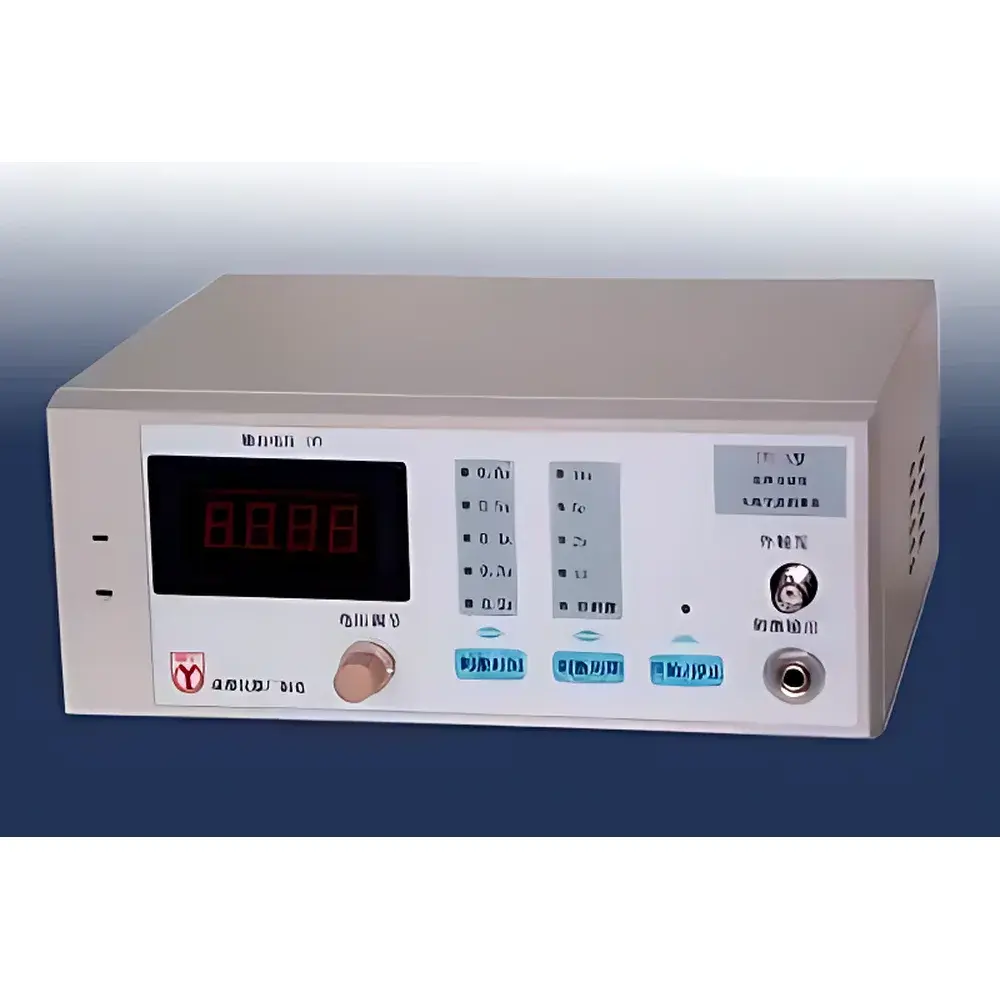
JTC-1 AC Stimulator for Seizure and Nociception Studies
| Origin | Sichuan, China |
|---|---|
| Manufacturer Type | Authorized Distributor |
| Origin Category | Domestic (PRC) |
| Model | JTC-1 |
| Pricing | Upon Request |
| Output Voltage Range | 0–120 V AC (50 Hz), Continuously Adjustable |
| Output Current | ≥100 mA |
| Stimulation Modes | Single Pulse, Continuous Train, Externally Triggered Programmable Mode |
| Stimulation Duration | 0.2, 0.3, 0.4, 0.5, 0.6 s |
| Inter-Stimulus Interval (ISI) | Single Pulse, 1, 2, 5, 10 s |
| Trigger Sources | Internal Clock or External TTL-Compatible Signal (5–15 V) |
Overview
The JTC-1 AC Stimulator is a dedicated, precision-engineered electrophysiological instrument designed for controlled delivery of sinusoidal alternating current (50 Hz) in preclinical behavioral neuroscience research—specifically for electroconvulsive seizure (ECS) induction and nociceptive threshold assessment in rodent models. Unlike generic stimulators, the JTC-1 operates on a fixed-frequency, low-impedance AC output architecture compliant with standard laboratory safety protocols for in vivo neural excitation studies. Its core function relies on regulated voltage amplitude modulation across a calibrated 0–120 V range, enabling reproducible activation of central and peripheral neural circuits under defined temporal parameters. The device adheres to fundamental principles of neurostimulation physiology: stimulation efficacy is governed by charge density (V × t / impedance), pulse duration, and inter-stimulus interval—all programmable via front-panel controls without software dependency. This makes it suitable for standardized ECS protocols aligned with OECD Test Guideline 426 and ICH S7B-compliant safety pharmacology screening.
Key Features
- Stable 50 Hz sinusoidal AC output with continuous 0–120 V amplitude control, optimized for consistent depolarization of neuronal membranes in intact animal preparations.
- Guaranteed minimum output current of 100 mA into typical biological load impedances (≤1.2 kΩ), ensuring reliable stimulus delivery across varying electrode-tissue interface conditions.
- Five discrete, factory-calibrated stimulation durations (0.2–0.6 s) and six inter-stimulus intervals (single pulse, 1–10 s), supporting both acute seizure threshold determination and repeated-trial hyperalgesia/analgesia assays.
- Dual-trigger architecture: internal timing circuitry for standalone operation; external TTL-compatible trigger input (5–15 V logic level) enabling synchronization with EEG acquisition systems, video tracking hardware, or automated behavioral platforms.
- Robust industrial-grade enclosure with isolated output stage, reinforced insulation barrier, and over-current protection—designed for daily use in GLP-compliant vivarium environments.
Sample Compatibility & Compliance
The JTC-1 is validated for use with standard rodent electroconvulsometry setups, including ear-clip or corneal electrodes, and common thermal/mechanical nociception paradigms requiring electrical reinforcement (e.g., tail-flick latency augmentation). It complies with IEC 61010-1:2010 for electrical safety in laboratory equipment and meets essential requirements for Class II medical electrical equipment per GB 9706.1–2020 (equivalent to EN 60601-1). While not intended for human application, its output characteristics align with widely cited rodent ECS parameters in peer-reviewed literature (e.g., Epilepsy Research, Journal of Pharmacological and Toxicological Methods). Device documentation supports audit readiness for institutional animal care and use committee (IACUC) reviews and NIH OLAW compliance verification.
Software & Data Management
The JTC-1 operates as a stand-alone hardware unit with no embedded firmware or proprietary software dependency. All parameter selection—including mode, duration, ISI, and trigger source—is performed via tactile rotary encoders and LED indicators, ensuring deterministic real-time control and eliminating software-induced latency or version compatibility issues. For laboratories requiring traceability, optional analog voltage monitoring outputs (0–5 V proportional to instantaneous output) can be interfaced with data acquisition systems (e.g., National Instruments DAQ, Spike2, or Axon pCLAMP) to log stimulus onset, amplitude, and timing with microsecond resolution. Audit trails generated externally satisfy FDA 21 CFR Part 11 requirements when paired with validated electronic lab notebooks (ELNs) and timestamped acquisition logs.
Applications
- Standardized electroconvulsive seizure threshold (EST) determination in mice and rats for antiepileptic drug evaluation.
- Pharmacodynamic assessment of centrally acting analgesics using electrically evoked pain behaviors (e.g., vocalization, hindlimb withdrawal).
- Neurodevelopmental studies involving repeated subconvulsive stimulation to model activity-dependent plasticity.
- Validation of transgenic or knockdown models exhibiting altered neuronal excitability or ion channel function.
- Training platform for electrophysiology core facility staff on fundamental principles of controlled neural excitation.
FAQ
Is the JTC-1 certified for use in GLP-regulated toxicology studies?
Yes—the device’s mechanical design, calibration stability, and traceable parameter settings meet instrumentation qualification requirements for GLP Annexes 1 and 2 when accompanied by documented operational qualification (OQ) and periodic performance verification.
Can the JTC-1 be integrated with third-party behavioral analysis software?
It supports hardware-level synchronization via its external trigger input (5–15 V TTL), enabling precise alignment with frame-synchronized video capture, force-plate recordings, or EMG acquisition systems without middleware.
What safety features prevent accidental overstimulation?
The unit incorporates dual-stage current limiting, automatic output shutdown after 2 s of continuous stimulation, and front-panel LED confirmation of active mode and duration selection—minimizing operator error during high-throughput screening.
Does the manufacturer provide calibration certificates?
Calibration reports (traceable to CNAS-accredited national standards) are available upon request and include voltage amplitude accuracy (±2% FS), timing deviation (<±10 ms), and trigger response latency (<50 µs).
Is technical support available for protocol optimization?
Authorized distributors offer application engineering consultation—including ECS protocol adaptation, electrode interface guidance, and IACUC documentation templates—for academic and industrial research teams.




