
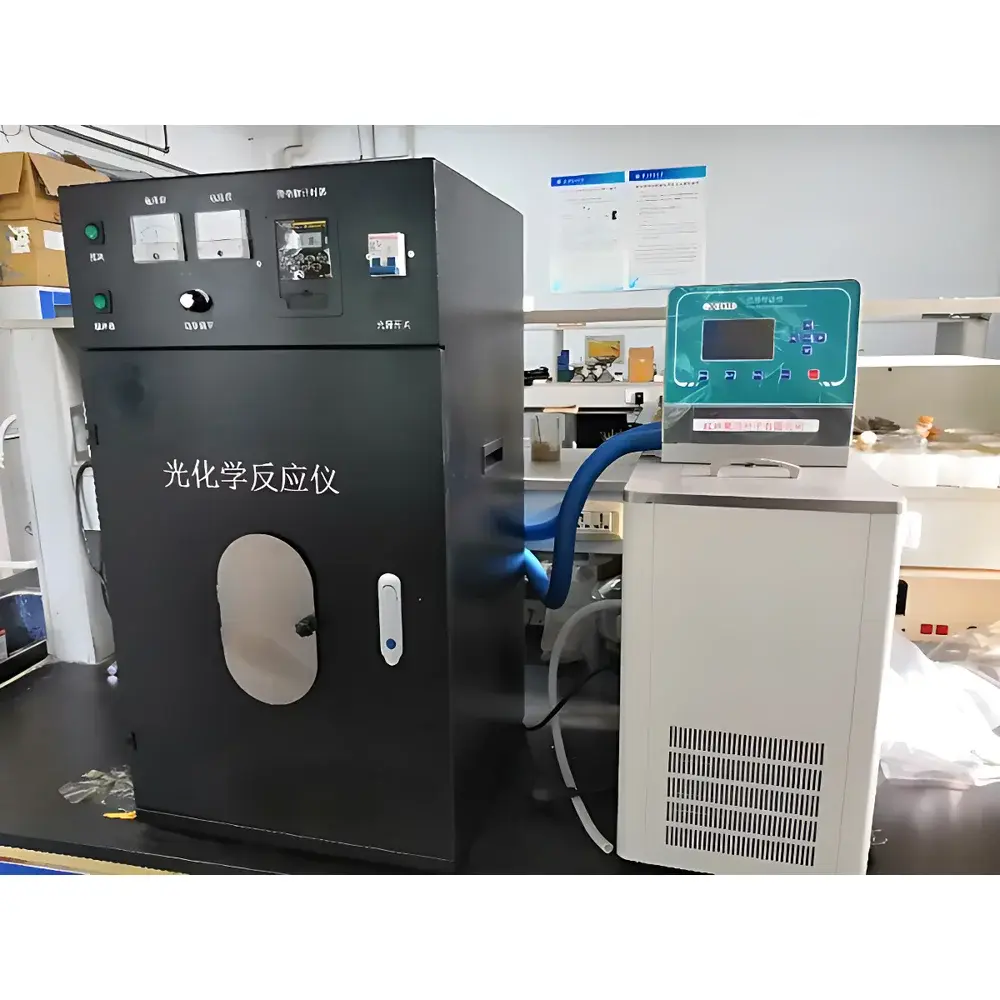
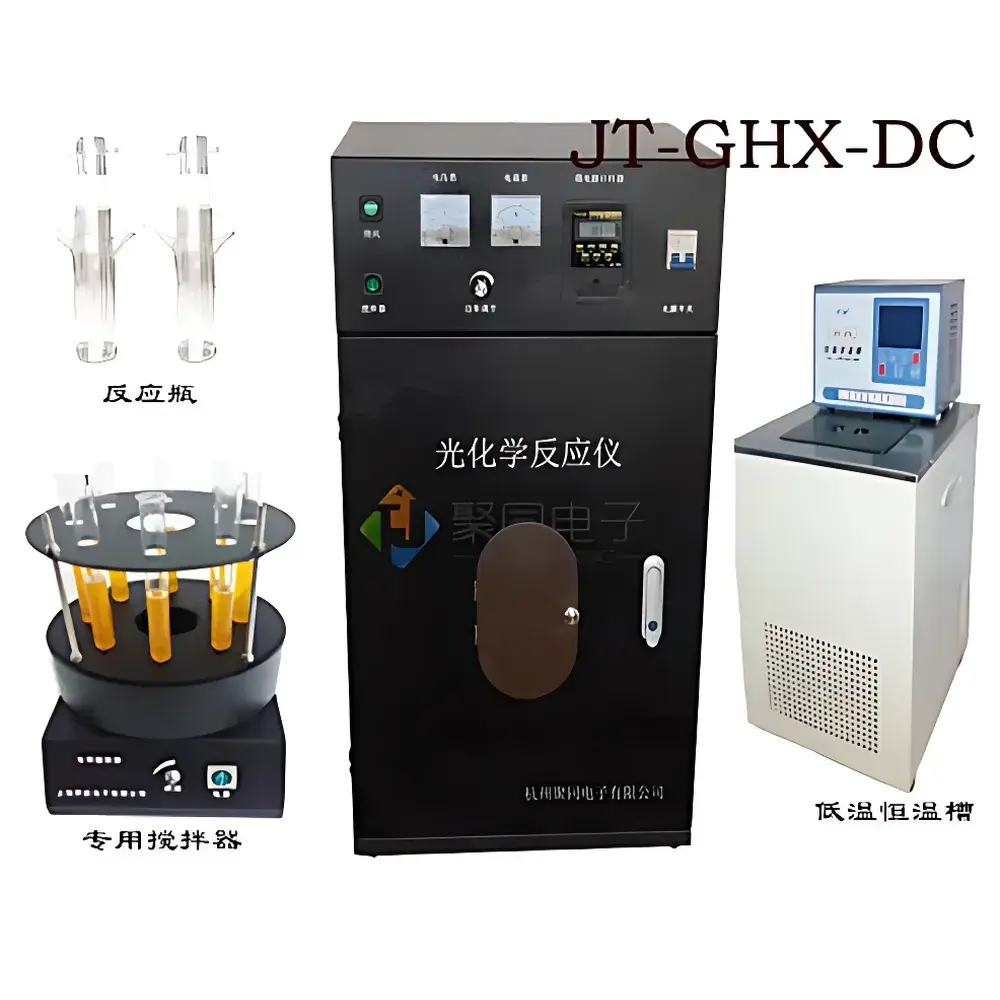
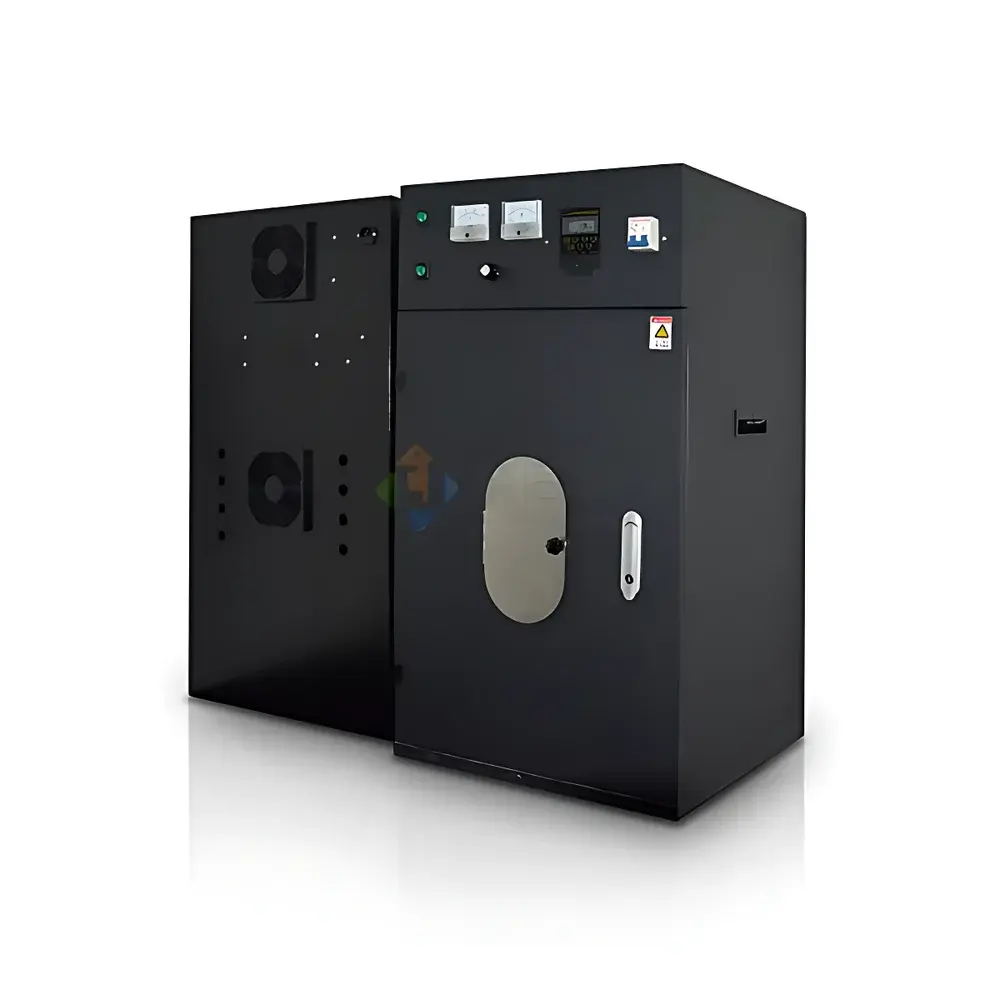
JTONE JT-GHX-DC Multi-Tube Photocatalytic Reactor with Temperature-Controlled Circulating Cooling System
| Brand | JTONE |
|---|---|
| Origin | Zhejiang, China |
| Model | JT-GHX-DC |
| Light Source Compatibility | Mercury, Xenon, and Metal Halide Lamps (0–1000 W for Hg/Xe |
| Reaction Vessel Options | Quartz tubes (30 mL, 50 mL) or custom sizes |
| Sample Capacity | 8-position magnetic stirring (configurable to 6 or 12) |
| Cooling System | Dual-layer quartz cold finger with external recirculating chiller (cooling capacity >1000 W |
| temp range | −5 °C to 100 °C) |
| Safety | Overtemperature cutoff, radiation-shielded dark chamber with observation window, high-voltage lamp housing, integrated power sockets for lamps and stirrers |
Overview
The JTONE JT-GHX-DC Multi-Tube Photocatalytic Reactor is an engineered platform for controlled, reproducible photochemical experimentation under precisely regulated thermal and irradiation conditions. Designed around the principles of heterogeneous photocatalysis—particularly TiO₂-mediated oxidation and reduction pathways—the system enables parallel reaction screening in liquid-phase or gas–liquid interfacial environments. Its core architecture integrates a radiation-shielded dark chamber with internal illumination geometry (in-situ light delivery), ensuring uniform photon flux distribution across multiple sample positions while minimizing ambient interference. The reactor supports both UV and simulated visible-light activation via interchangeable high-intensity arc lamps—including mercury vapor (up to 1000 W), xenon (up to 1000 W), and metal halide (up to 500 W)—each managed through a microprocessor-controlled power supply with continuous dimming capability and real-time voltage/current monitoring. This design aligns with fundamental requirements for quantum yield determination, kinetic parameter extraction, and comparative catalyst evaluation under standardized irradiance conditions.
Key Features
- Intelligent microcontroller-based operation with real-time display of lamp voltage, current, and elapsed irradiation time
- Integrated lamp driver supporting rapid source switching and stable output across full power range (0–1000 W for Hg/Xe; 0–500 W for MH)
- Modular 8-position magnetic stirring assembly—adjustable synchronously per station—with optional configurations for 6 or 12 tubes
- Radiation-absorbing interior lining and tempered observation window for safe visual monitoring during operation
- Dual-layer quartz cold finger enabling efficient heat dissipation from irradiated samples; compatible with external recirculating chillers
- Thermal management system featuring independent temperature setpoint control (−5 °C to 100 °C) and automatic overtemperature shutdown
- Dedicated dual-purpose power outlets inside the chamber for concurrent lamp and stirrer operation
- Robust mechanical construction with casters and bottom drain valve on chiller unit for laboratory mobility and maintenance
Sample Compatibility & Compliance
The JT-GHX-DC accommodates a broad range of sample formats: standard quartz reaction tubes (30 mL and 50 mL), custom-fabricated quartz vessels, and borosilicate glass reactors (250 mL, 500 mL, 1000 mL). Its modular stirring design ensures homogeneous suspension of photocatalyst powders—including P25 TiO₂, g-C₃N₄, and doped metal oxides—while maintaining consistent hydrodynamic conditions across all positions. The system complies with general laboratory safety standards for UV-emitting equipment (IEC 62471) and incorporates electrical isolation per IEC 61010-1. While not certified to specific regulatory frameworks such as ISO/IEC 17025 or GLP, its operational repeatability, thermal stability, and lamp output consistency support method validation in academic research and industrial R&D settings where traceable experimental parameters are required for publication or internal quality documentation.
Software & Data Management
The JT-GHX-DC operates without proprietary software dependency, relying instead on embedded firmware with local data logging capabilities. All operational parameters—including lamp power level, elapsed time, and thermal setpoint—are retained in non-volatile memory and accessible via front-panel interface. For integration into automated workflows, the system provides analog voltage outputs (0–5 V) corresponding to real-time temperature and lamp current, enabling connection to third-party data acquisition systems (e.g., LabVIEW, MATLAB, or PLC-based controllers). Audit trails are maintained manually via timestamped operator logs; while native 21 CFR Part 11 compliance is not implemented, the device’s deterministic behavior and hardware-level safety interlocks facilitate alignment with GxP-aligned documentation practices when paired with validated SOPs.
Applications
This reactor serves as a primary tool in advanced oxidation process (AOP) development, particularly for evaluating photocatalytic degradation kinetics of organic pollutants (e.g., phenol, methylene blue, pharmaceutical residues) in aqueous matrices. It supports comparative studies of catalyst loading, light intensity dependence, and wavelength-specific quantum efficiency. In synthetic photochemistry, it facilitates C–C bond formation, dehalogenation, and selective oxidations under mild conditions. Environmental researchers employ it for solar simulator–compatible experiments mimicking natural insolation spectra, while materials scientists use it for photoelectrochemical characterization of thin-film electrodes and hybrid perovskite systems. Its multi-position configuration also enables high-throughput screening of photocatalyst formulations under identical irradiance and thermal profiles—critical for structure–activity relationship modeling.
FAQ
What lamp types are supported, and how is power adjusted?
The system accepts mercury vapor, xenon, and metal halide lamps. Power is continuously adjustable via a digital controller with fine-resolution dimming (0–1000 W for Hg/Xe; 0–500 W for MH), ensuring precise irradiance control without spectral shift.
Can the reactor operate without external cooling?
No. The dual-layer quartz cold finger requires connection to an external recirculating chiller (≥1000 W cooling capacity) to maintain thermal equilibrium during prolonged irradiation; uncooled operation risks thermal degradation of samples and catalysts.
Is customization available for tube size or number of stations?
Yes. Standard configurations include 8-position magnetic stirring, but JTONE offers factory-customized versions with 6 or 12 stations, as well as bespoke quartz or glass vessel geometries upon request.
How is light uniformity ensured across multiple reaction tubes?
The internal illumination design positions the lamp centrally above vertically aligned tubes, with reflective chamber walls and optimized spacing to minimize shadowing and maximize photon flux homogeneity (±15% variation typical across 8 positions under calibrated conditions).
Does the system meet any international photoreactor performance standards?
While no formal certification exists, the JT-GHX-DC adheres to widely accepted photoreactor design criteria described in ASTM E2053 (Standard Guide for Use of Solar Simulators in Photocatalytic Reactivity Testing) and ISO 10678 (Photocatalytic Materials – Determination of Photocatalytic Activity).



