
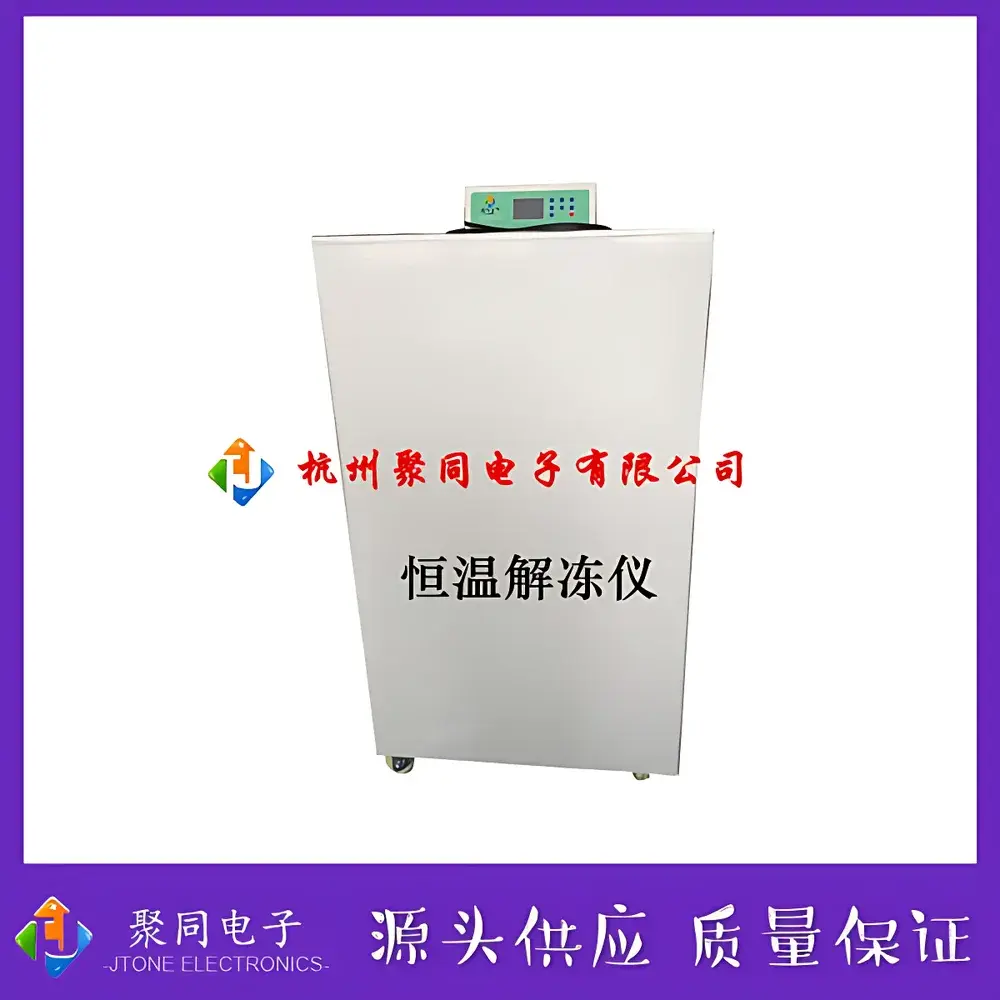
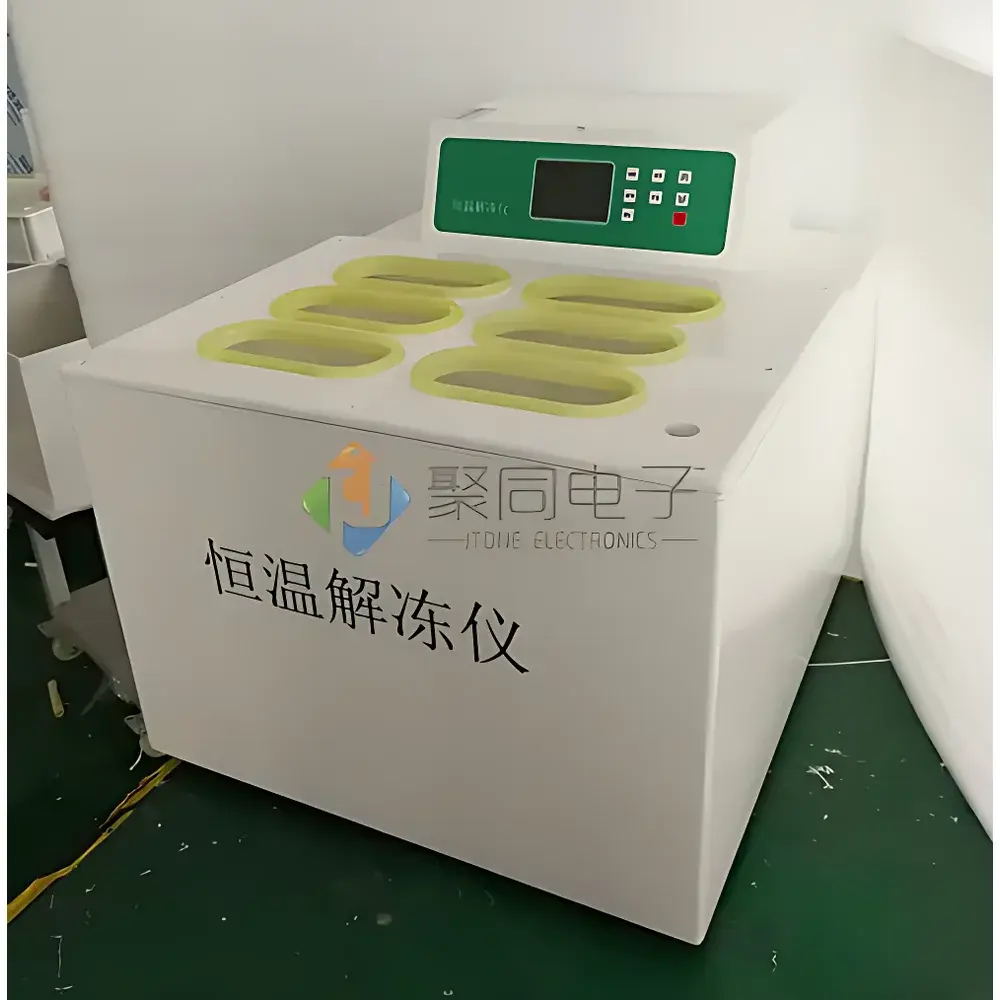
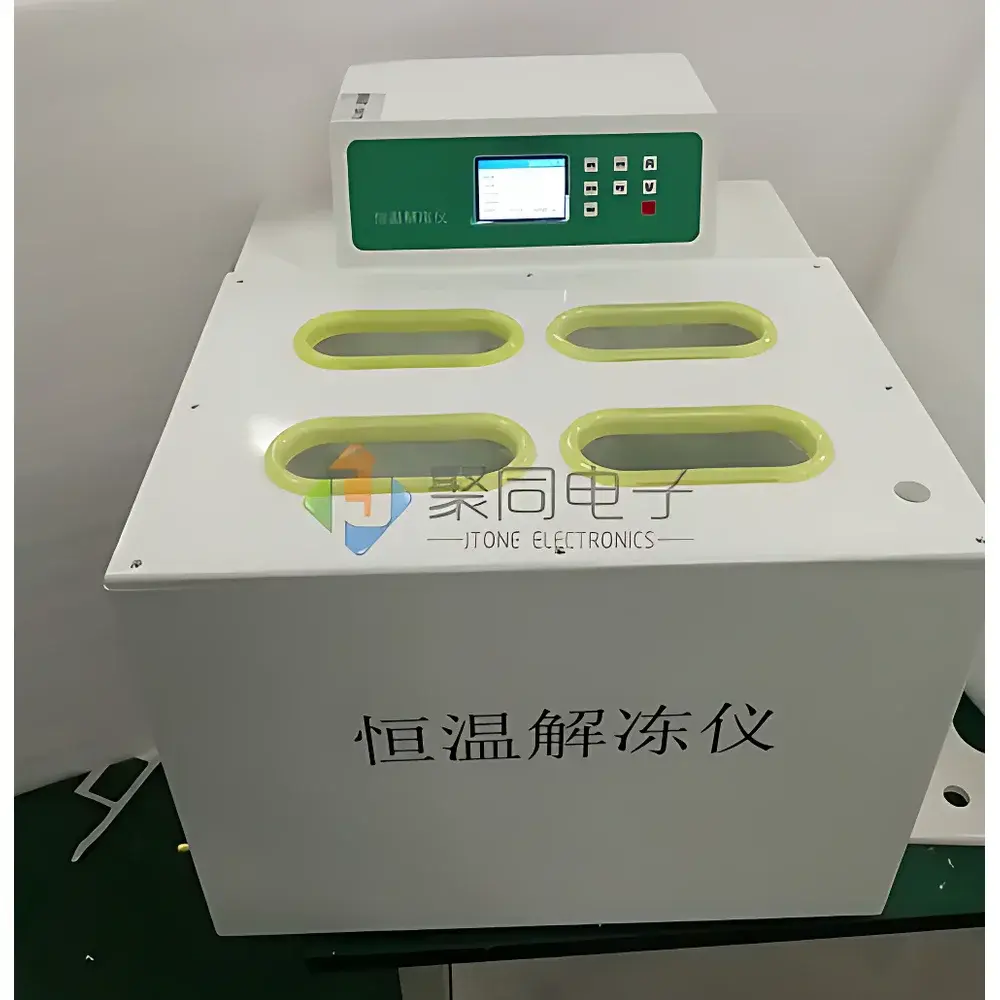
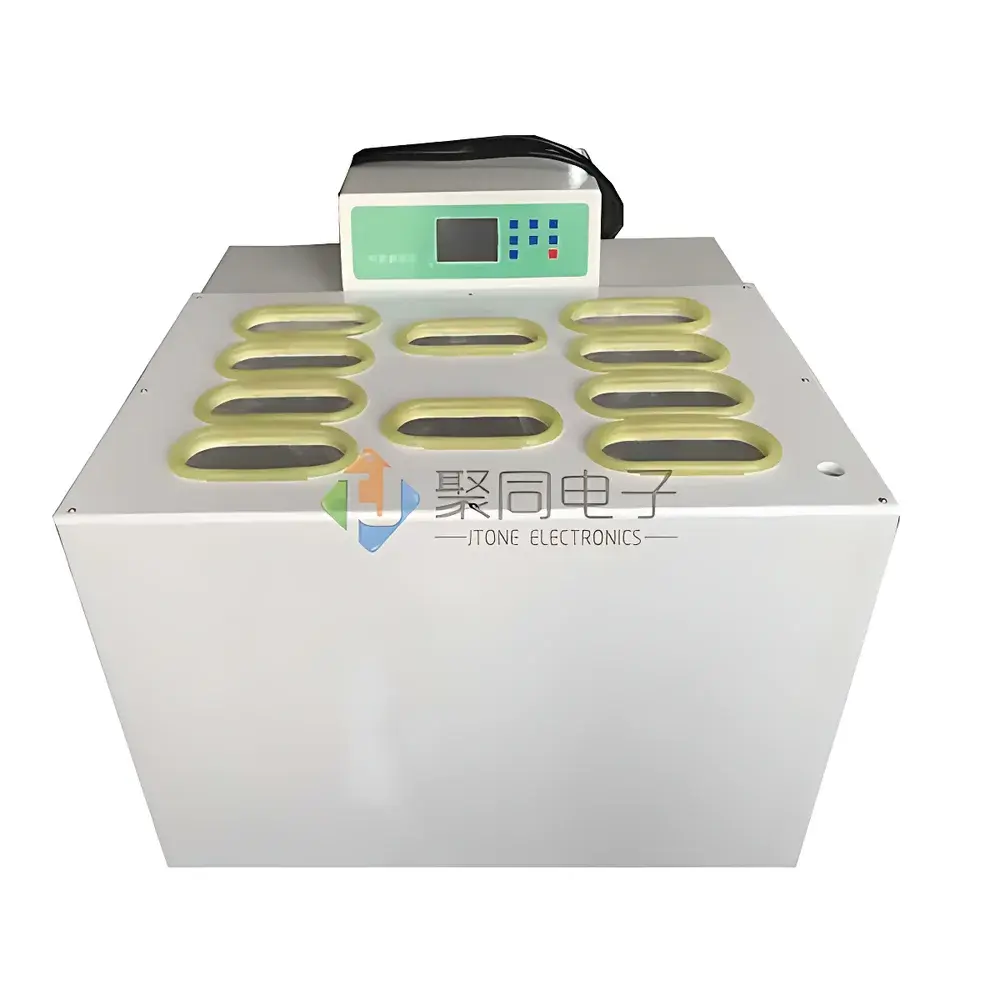
JTONE JTRJ-4D Automated Water-Jacketed Thawing System (4-Position Benchtop)
| Brand | JTONE |
|---|---|
| Origin | Zhejiang, China |
| Model | JTRJ-4D |
| Temperature Control Accuracy | ±0.5°C |
| Operating Temperature Range | 30–45°C |
| Capacity | 4 sample positions |
| Power Supply | 220 V / 50 Hz |
| Heating Power | ≥2.0 kW |
| Circulating Pump Flow Rate | 15 L/min |
| Display | Digital LCD with time/temperature readout |
| Timer Range | 1–999 minutes |
| Safety Features | Low-water-level alarm, over-temperature cutoff, power-loss memory retention |
| Construction | Polyurethane-insulated chamber, stainless steel water bath, medical-grade impermeable barrier membrane |
Overview
The JTONE JTRJ-4D Automated Water-Jacketed Thawing System is an engineered solution for controlled, uniform, and contamination-free thawing of biological specimens—primarily human plasma units—under strict thermal conditions. Unlike direct-immersion water baths, this system employs a closed-loop, barrier-mediated heat transfer architecture: heated water circulates through an external jacket surrounding a sealed, flexible polymer membrane chamber that holds the plasma bags. This design eliminates direct contact between the circulating water and the sample, thereby preventing label degradation, bag rupture, microbial ingress, and cross-contamination—critical requirements in blood bank and clinical transfusion environments. The unit operates within a tightly regulated 30–45°C range, optimized for rapid yet physiologically safe plasma recovery while preserving labile coagulation factors (e.g., Factor VIII, fibrinogen) and immunoglobulin integrity. Its benchtop footprint and modular scalability (with compatible 6-, 8-, 10-, and 12-position variants) make it suitable for mid-volume blood processing workflows in hospital transfusion services, regional blood centers, biopharmaceutical QC labs, and academic medical research facilities.
Key Features
- Fully automated operation with programmable timer (1–999 min) and real-time digital display of both bath temperature and remaining thaw time
- High-fidelity temperature control (±0.5°C stability) achieved via PID-regulated heating elements, dual NTC temperature sensors, and insulated polyurethane chamber construction
- Integrated water circulation loop (15 L/min flow rate) ensures uniform thermal distribution—eliminating hot/cold spots and transient thermal gradients across all sample positions
- Medical-grade, non-toxic, odorless barrier membrane isolates samples from the heating medium, complying with ISO 11137 and USP <1043> recommendations for sterile barrier integrity during thermal processing
- Comprehensive safety architecture: automatic shutdown on low water level detection, over-temperature cutoff (>47°C), and non-volatile memory retention to restore settings after power interruption
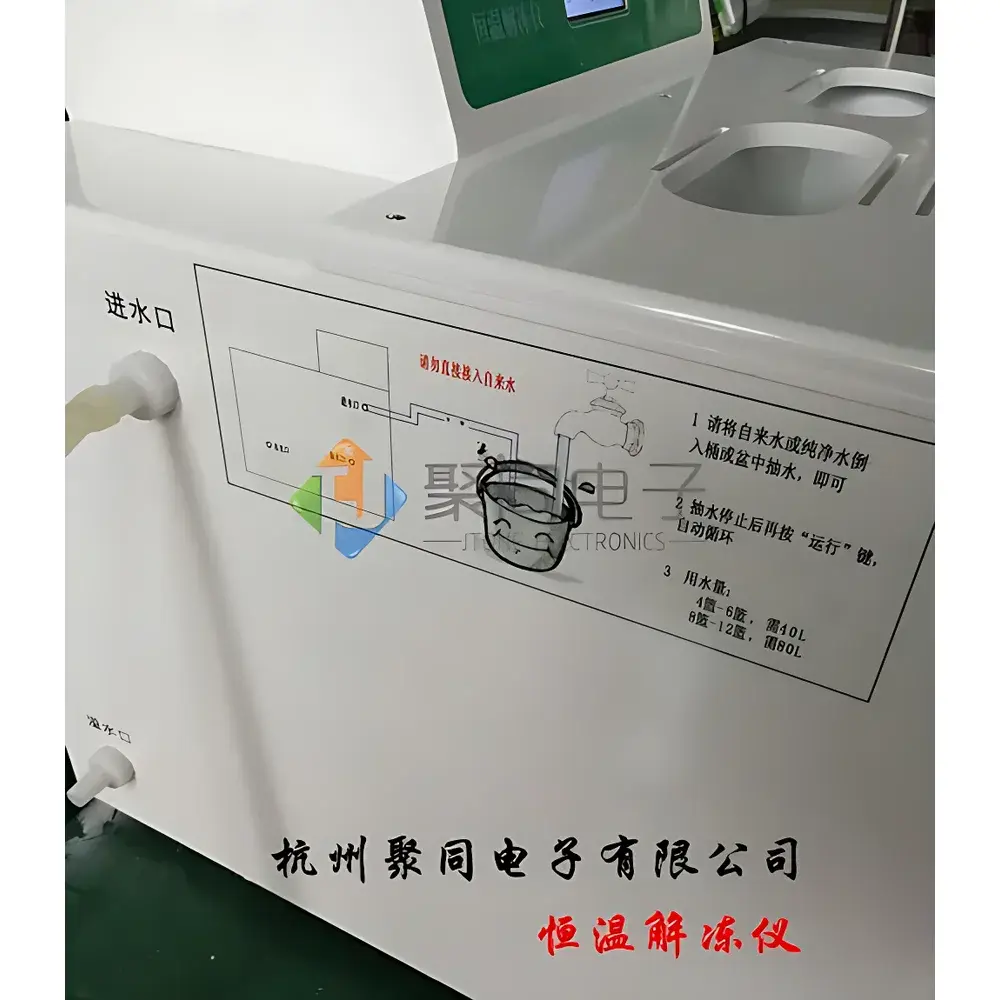
- Ergonomic design with large-open water bath access, quick-connect drainage port, and corrosion-resistant 304 stainless steel interior
- Energy-efficient operation enabled by high-density insulation and demand-based heating—reducing water consumption by up to 70% compared to conventional open-bath thawers
Sample Compatibility & Compliance
The JTRJ-4D accommodates standard blood bag formats (e.g., CPD/CP2D, EDTA, citrate-phosphate-dextrose anticoagulant systems) up to 500 mL volume per position. It supports both single-use and reusable plasma containers compliant with AABB Standard 5.11.2 and EN ISO 13485:2016 requirements for blood component handling equipment. While not classified as a Class II medical device under FDA 21 CFR Part 864 or EU MDR Annex VIII, the system meets essential performance criteria outlined in CLSI GP44-A4 (Procedures for the Handling and Processing of Blood Specimens) and is routinely validated for use in GLP- and GMP-aligned laboratories performing blood product release testing. Its barrier-based architecture aligns with risk mitigation strategies recommended in ISBT 128 Technical Specification v3.2.0 for reducing exogenous contamination during thawing.
Software & Data Management
The JTRJ-4D utilizes embedded microcontroller firmware without external PC dependency. All operational parameters—including setpoint temperature, timer duration, actual bath temperature, elapsed time, and alarm logs—are stored locally in non-volatile memory with timestamped records. While no native network interface or LIMS integration is provided, the system supports manual audit trail generation via printed or handwritten logbook entries—a common practice in facilities operating under CAP-accredited or ISO/IEC 17025-compliant quality systems. For enhanced traceability, users may integrate the unit into facility-wide environmental monitoring networks using optional analog 4–20 mA output modules (available upon request), enabling continuous data logging in accordance with FDA 21 CFR Part 11 Annex A guidelines for electronic record integrity.
Applications
- Routine thawing of fresh frozen plasma (FFP), cryoprecipitate, and solvent/detergent-treated plasma in hospital blood banks and regional transfusion centers
- Controlled reconstitution of lyophilized biological standards and reference materials in clinical chemistry and immunology laboratories
- Thermal conditioning of temperature-sensitive reagents prior to assay setup in molecular diagnostics and hematology workflows
- Pre-analytical sample preparation for coagulation factor assays requiring precise thermal history control (e.g., PT, aPTT, fibrinogen activity)
- Validation studies supporting process qualification of thawing protocols under ISO 13485 or ISO 9001 quality management systems
FAQ
Is the JTRJ-4D certified as a medical device?
No. It is classified as laboratory process equipment under CNAS and ILAC frameworks—not as an IVD or Class II medical device—due to its non-invasive, barrier-isolated thermal function.
Can it be used for thawing platelet concentrates?
No. Platelet units require storage at 20–24°C and must not be subjected to controlled thawing; this system is validated exclusively for plasma and cryoprecipitate.
What maintenance is required for long-term reliability?
Monthly descaling of the water jacket using 5% acetic acid solution and quarterly verification of temperature sensor calibration against a NIST-traceable reference thermometer.
Does it support multi-language interface?
The standard firmware displays English-only text; custom localization requires OEM firmware revision and is available for bulk procurement orders.
How is water quality managed to prevent biofilm formation?
Users must employ deionized or distilled water and replace the bath fluid every 72 hours of cumulative operation—or daily in high-throughput settings—to maintain microbial limits below 10 CFU/mL per CLSI M22-A3.
Related Products



