
JTONE JTRJ-4D Dry-Contact Water-Bath Constant-Temperature Thawing System
| Brand | JTONE |
|---|---|
| Origin | Zhejiang, China |
| Model | JTRJ-4D |
| Temperature Control Accuracy | ±0.5 °C |
| Operating Temperature Range | 30–45 °C |
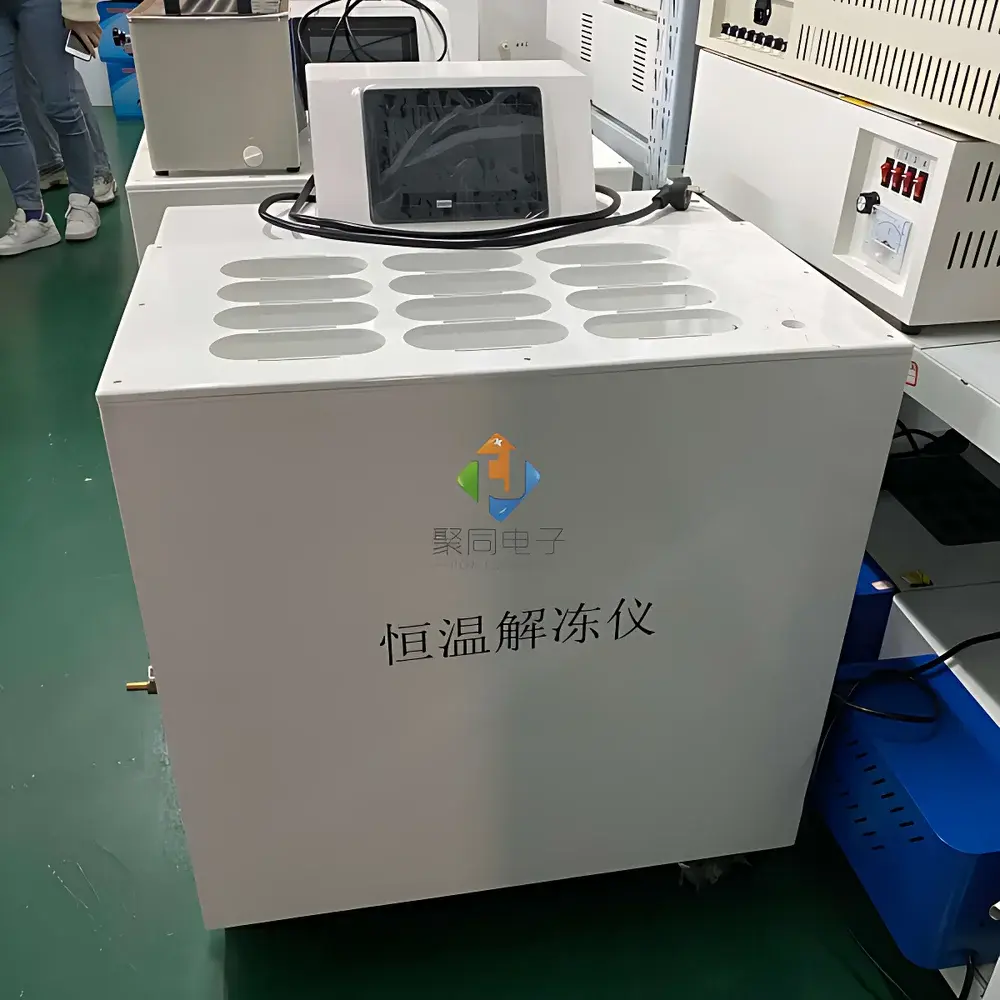
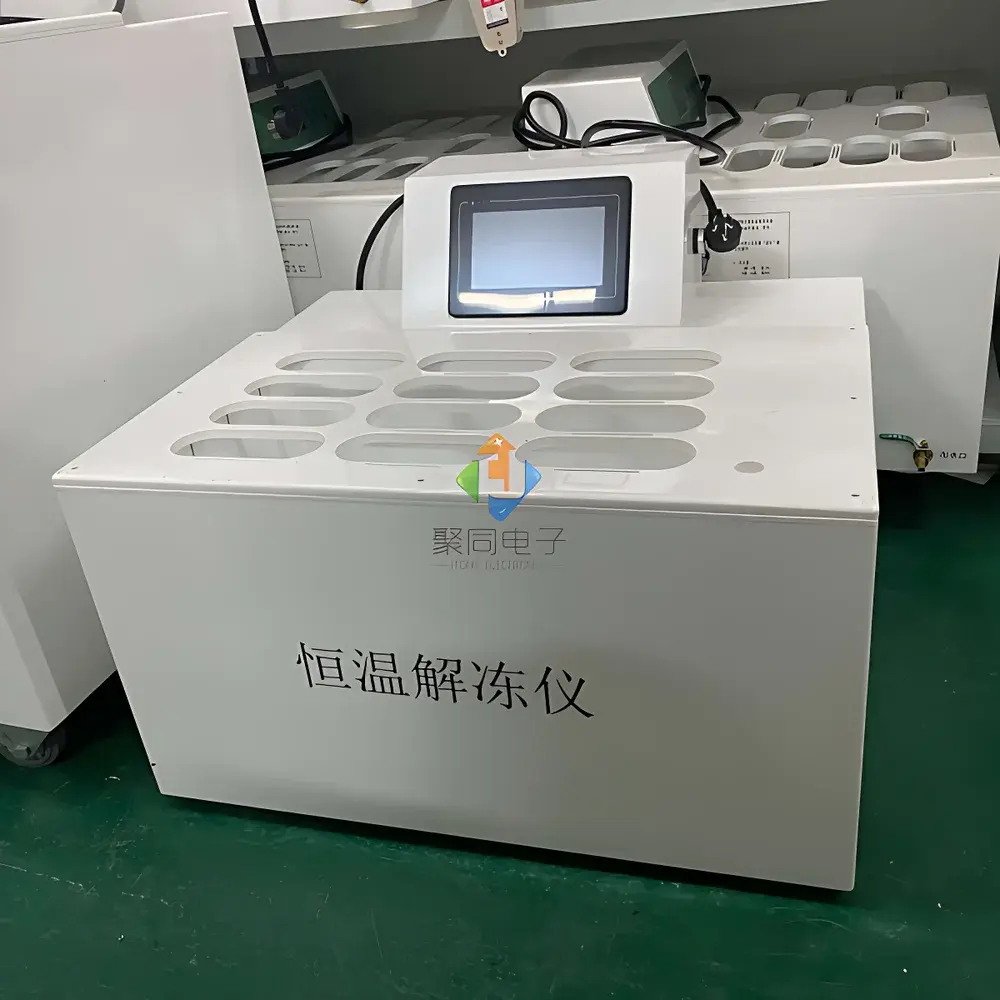
| Sample Capacity | 4–12 positions |
| Power Supply | 220 V / 50 Hz |
| Heating Power | ≥2.0 kW |
| Circulating Pump Flow Rate | 15 L/min |
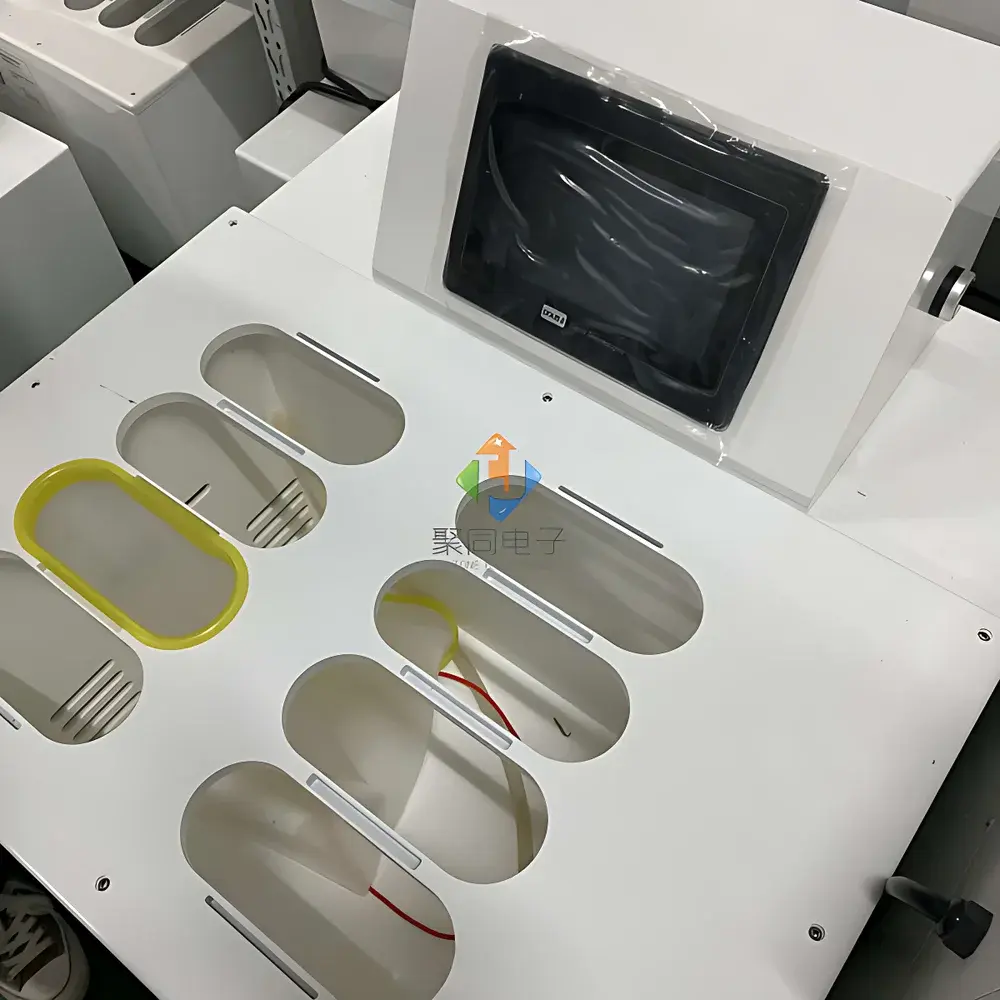
| Display | 7-inch touchscreen with real-time water temperature and remaining thaw time |
| Thawing Time | 10–20 min (for two 100–200 mL plasma bags, frozen at −20 °C) |
| Thawing Method | Dry-contact water-bath (membrane-isolated, non-immersive) |
| Agitation Mode | Programmable orbital oscillation |
| Compliance | Not classified as medical device per FDA/MDR |
Overview
The JTONE JTRJ-4D Dry-Contact Water-Bath Constant-Temperature Thawing System is an engineered solution for the controlled, reproducible, and contamination-free thawing of temperature-sensitive biological specimens—primarily frozen human plasma units—within clinical laboratories, blood banks, transfusion medicine departments, and biopharmaceutical R&D environments. Unlike conventional water-bath immersion systems, this instrument employs a dry-contact thermal transfer architecture: a high-conductivity, chemically inert polymer membrane physically separates the circulating warm water reservoir from the plasma bag surface. This design eliminates direct fluid contact, thereby preventing label delamination, bag integrity compromise, microbial ingress, and cross-sample contamination—critical failure modes in blood product handling per AABB Standards and ISO 13485–aligned quality systems. The system operates within a tightly regulated 30–45 °C range, optimized to preserve coagulation factor activity (e.g., Factor VIII, fibrinogen) and immunoglobulin conformation while ensuring uniform thermal penetration across heterogeneous bag geometries. Its core principle relies on convective heat transfer via a closed-loop, thermostatically controlled water circulation system coupled with synchronized low-frequency orbital agitation—enabling simultaneous thermal equilibration and gentle mechanical mixing to prevent localized cold spots or protein denaturation at the interface.
Key Features
- Dry-contact membrane isolation technology: Prevents direct water contact with plasma bags, eliminating risks of label loss, bag rupture, and microbiological contamination.
- High-precision microprocessor control: Digital PID algorithm maintains temperature stability within ±0.5 °C across the entire working range (30–45 °C), verified by traceable NIST-calibrated Pt100 sensor.
- Programmable orbital oscillation: Adjustable frequency and amplitude ensure homogeneous thawing without shear-induced damage to labile proteins or cellular components.
- 7-inch capacitive touchscreen interface: Real-time display of bath temperature, elapsed/remaining thaw time, system status, and alarm history; supports user-defined protocols with up to 999-minute timer.
- Multi-layer safety architecture: Includes dual independent overtemperature cutoff, auto-shutoff on low-water-level detection, power-failure memory retention, and audible/visual alarm escalation for critical events.
- Energy-efficient thermal design: Polyurethane foam insulation minimizes heat loss; recirculating pump (15 L/min flow rate) ensures rapid thermal response and spatial uniformity (<±0.3 °C zone-to-zone variation).
- Ergonomic and service-oriented construction: Benchtop footprint with wide-open bath access for easy cleaning; integrated drain port with quick-connect fitting; optional casters for mobility in multi-station workflows.
Sample Compatibility & Compliance
The JTRJ-4D is validated for use with standard medical-grade plasma bags (up to 200 mL, flat configuration, frozen at −20 °C or lower), cryoprecipitate units, and other sealed, flexible-container biologics requiring gentle thermal reconstitution. It is not intended for open-vessel applications or direct handling of whole blood or cellular products. While not registered as a Class II medical device under FDA 21 CFR Part 809 or EU MDR Annex VIII, its operational parameters align with AABB Technical Manual (21st ed.) Chapter 10 requirements for plasma thawing, including maximum exposure time limits and temperature excursion thresholds. The system supports audit-ready documentation when integrated into GLP or GMP environments—time-stamped event logs (optional 24-hour curve recording), calibration history tracking, and alarm register export are compatible with LIMS data ingestion protocols. All wetted materials comply with USP Class VI biocompatibility standards and are free of leachable plasticizers or heavy metals.
Software & Data Management
The embedded firmware provides full local control without external PC dependency. All operational parameters—including setpoint temperature, dwell time, oscillation profile, and alarm thresholds—are configurable and stored in non-volatile memory. Event logging captures timestamps for power-on, mode transitions, temperature deviations >±1.0 °C, low-water alerts, and manual intervention. Optional USB data export enables CSV-formatted records for QA review or regulatory submission. Though not natively 21 CFR Part 11 compliant, the system supports integration with third-party electronic lab notebook (ELN) platforms via RS-232 or Modbus RTU interfaces for secure, attributable, and retained process data—meeting ALCOA+ principles for data integrity in clinical sample prep workflows.
Applications
- Routine plasma thawing in hospital blood banks and regional transfusion centers.
- Pre-analytical processing of frozen serum, cryoprecipitate, and albumin solutions in clinical chemistry and immunology labs.
- Stability testing and lot release support in biologics manufacturing (e.g., IVIG, clotting factor concentrates).
- Thawing of reference standards and QC materials used in assay validation per CLSI EP26 and ISO 17511.
- Research-scale reconstitution of cryopreserved extracellular vesicles, exosomes, or liposomal formulations where thermal shock must be avoided.
FAQ
Is the JTRJ-4D certified as a medical device?
No. It is classified as laboratory sample preparation equipment under IEC 61010-1 and is not subject to FDA 510(k) or CE-MDR medical device regulations. Its design meets AABB and ISO 22870 requirements for non-device thawing systems.
Can it accommodate different bag sizes or formats?
Yes—it supports standard 100–200 mL flat plasma bags. Custom fixtures for alternative configurations (e.g., satellite bags, double-bagged units) can be fabricated upon request.
What maintenance is required?
Daily visual inspection of water level and membrane integrity; weekly descaling using citric acid solution if hard water is used; annual verification of temperature sensor accuracy against a calibrated reference thermometer.
Does it support remote monitoring or network connectivity?
Not out-of-the-box, but RS-232 serial output allows integration with building management systems (BMS) or centralized lab monitoring software via custom middleware.
How does it compare to dry-block thawers?
Unlike conductive metal-block systems, the JTRJ-4D’s water-coupled membrane delivery provides superior thermal uniformity and gentler energy transfer—critical for preserving labile coagulation factors that degrade rapidly above 45 °C or under thermal gradients.



