
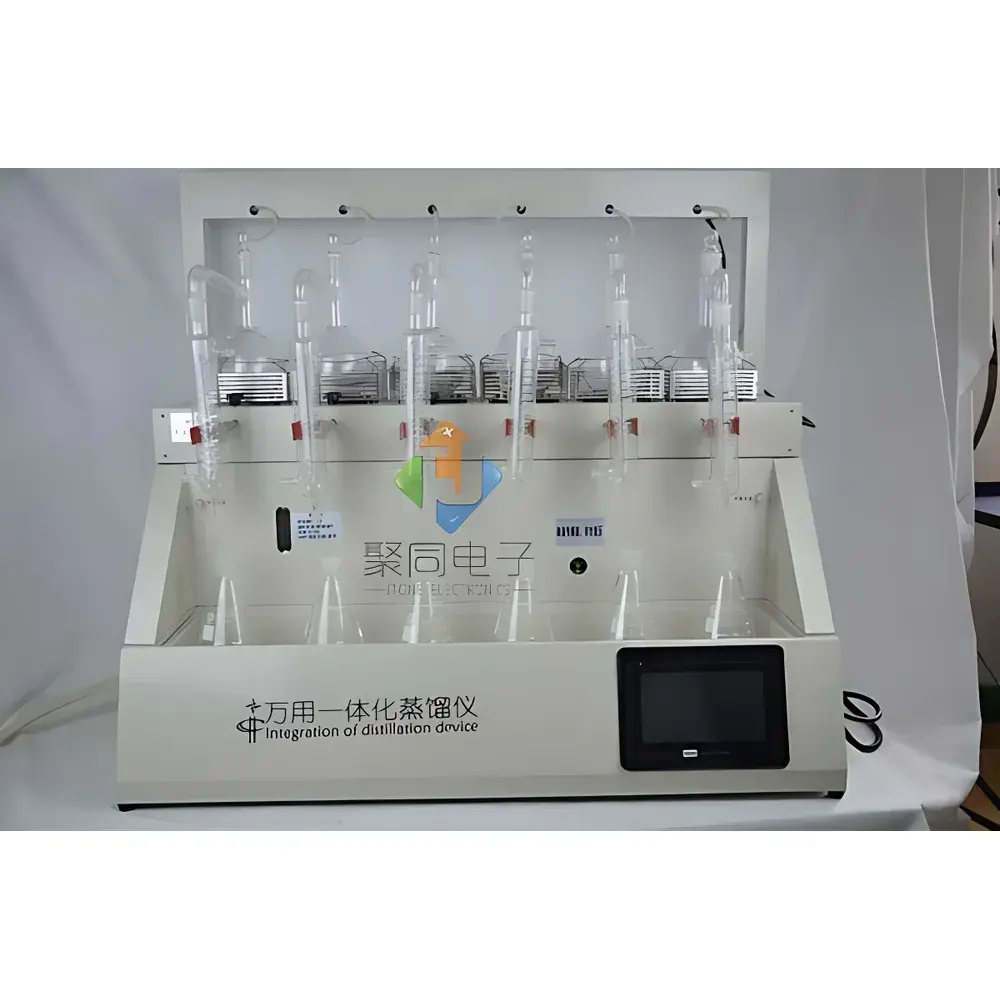
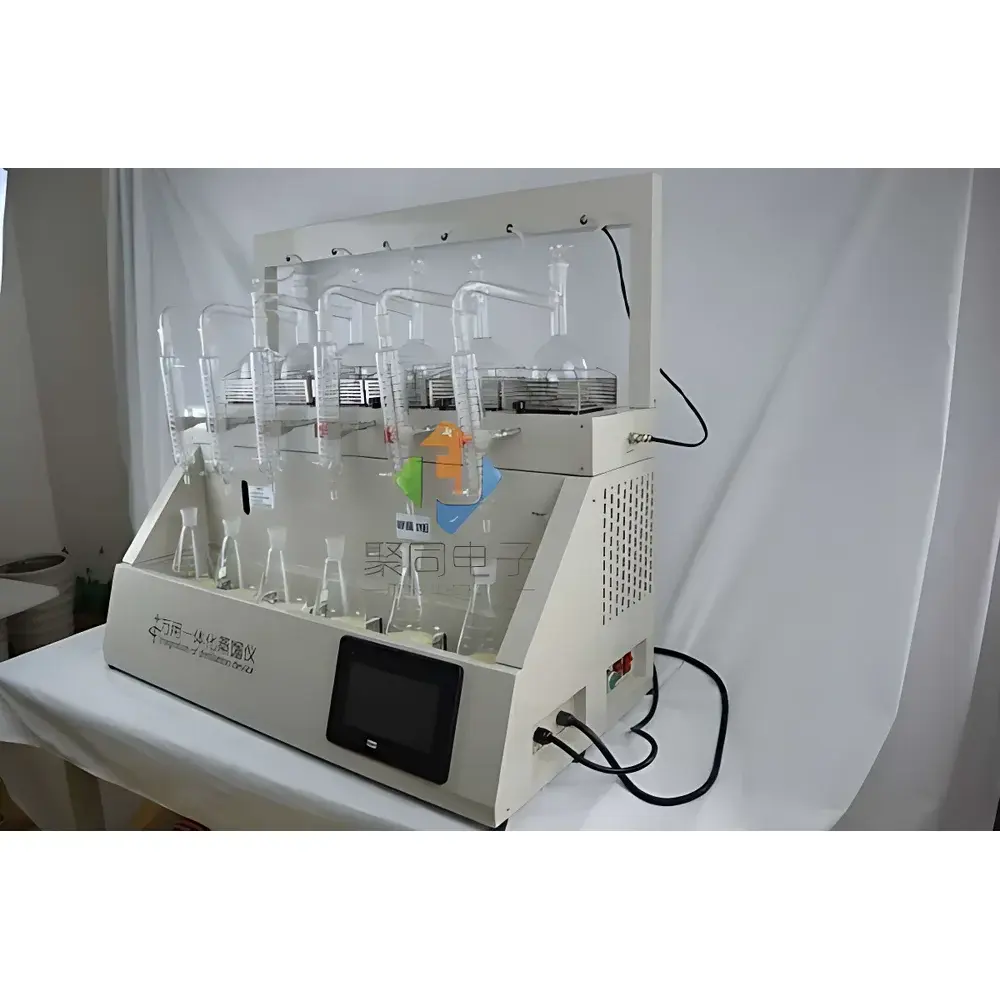
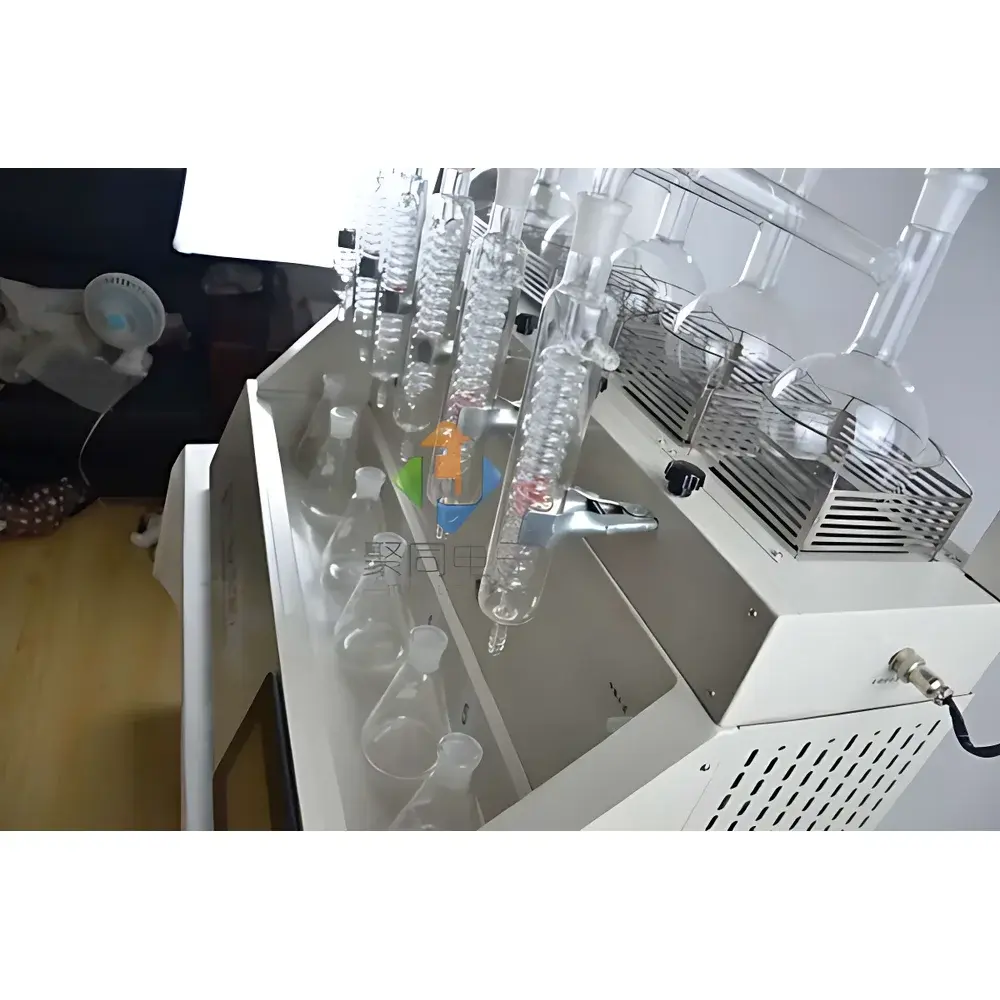
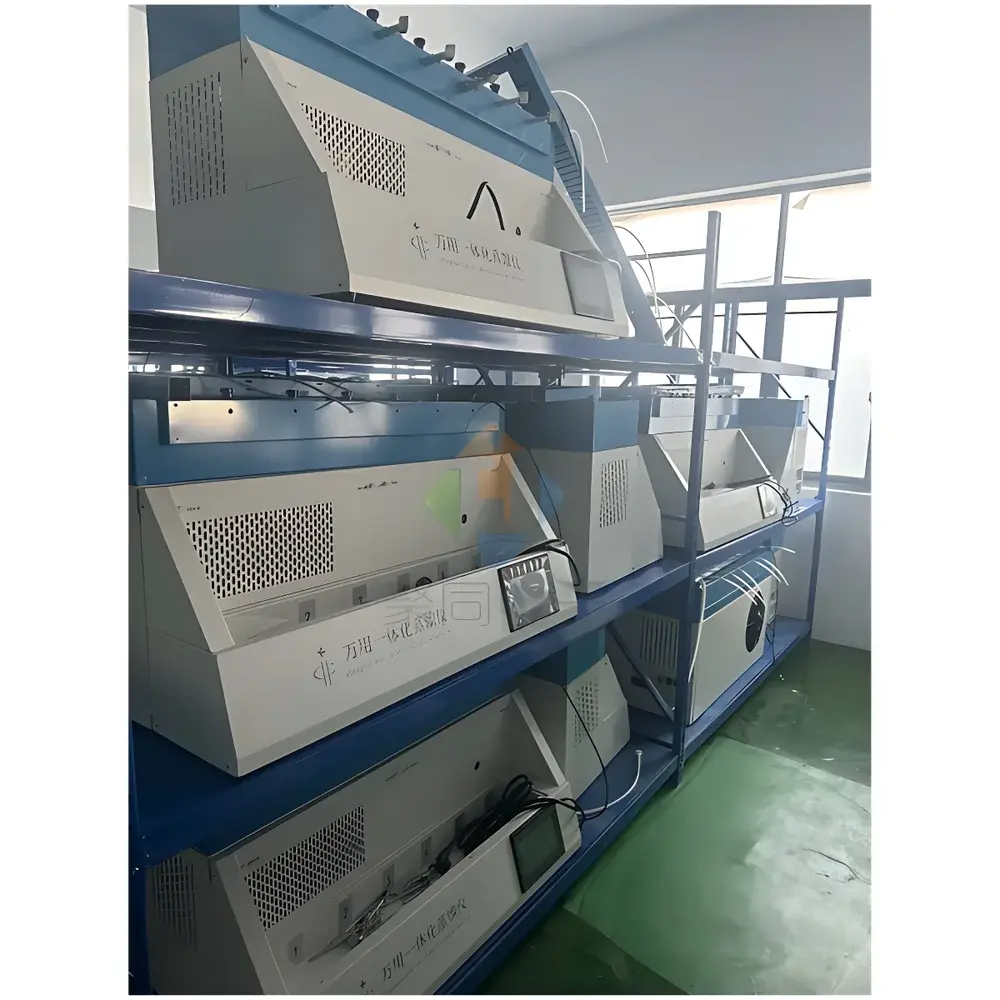
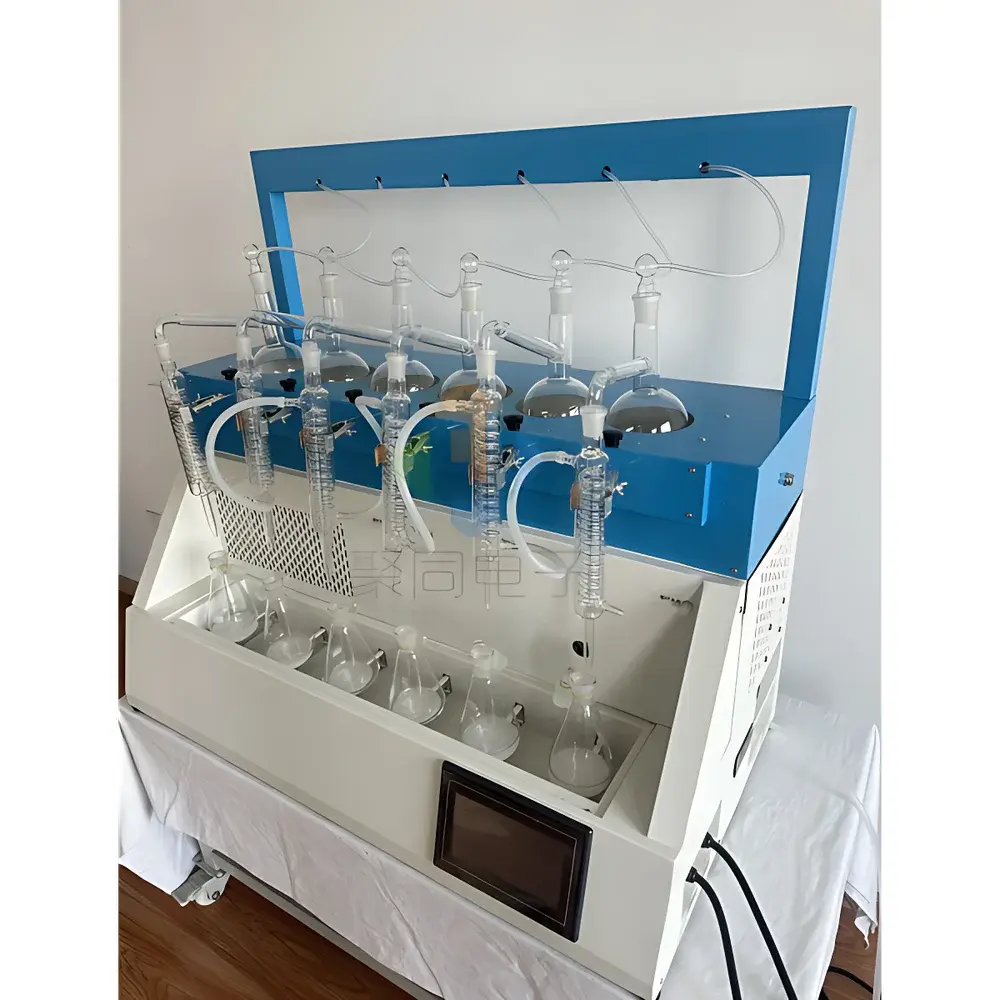
JTONE JTZL-6Y Fully Automated Volatile Phenol Distillation System
| Brand | JTONE |
|---|---|
| Origin | Guangdong, China |
| Model | JTZL-6Y |
| Instrument Type | Quartz Glass Distillation Apparatus |
| Heating Method | Far-Infrared Ceramic Heating |
| Cooling Method | Integrated Compressor-Based Refrigeration System |
| Distillation Rate | 12 mL/min |
| Heating Ramp Time | 5–20 min |
| Heating Units | 6 Independent Far-Infrared Ceramic Heaters |
| Temperature Control Range | Ambient to 400 °C |
| Endpoint Detection | Dual-Mode (Weight-Based ±2 mL Accuracy + Timer) |
| Power Supply | 220 V / 50 Hz |
| Distillation Vessel Capacity | 250 mL × 6 or 500 mL × 6 (Customizable) |
| Anti-Suckback Protection | Electromagnetic Vacuum Break Valve |
| Micro-Boil Regulation | Dynamic Power Modulation |
| Safety Features | Gold-Coated Thermal Insulation Base, Flame-Free Operation, IPX4 Water Resistance |
Overview
The JTONE JTZL-6Y Fully Automated Volatile Phenol Distillation System is an integrated, benchtop distillation platform engineered for precision, reproducibility, and regulatory compliance in environmental, food safety, and public health laboratories. It implements a controlled, open-system steam distillation process optimized for the quantitative recovery of volatile phenols, cyanides, ammonia nitrogen, Kjeldahl nitrogen, sulfur dioxide, formaldehyde, and ethanol from aqueous matrices. Unlike conventional reflux or batch distillation setups, the JTZL-6Y employs far-infrared ceramic heating elements—each independently controllable—to generate uniform, contactless thermal energy transfer directly to quartz distillation flasks. This eliminates hot-spot formation, minimizes thermal degradation of analytes, and ensures consistent vapor generation across all six channels. The system integrates a closed-loop refrigeration circuit with a built-in compressor and internal heat exchanger, delivering stable coolant temperatures between 2 °C and 15 °C without reliance on external tap water or chiller units—critical for high-throughput labs operating under variable ambient conditions.
Key Features
- Six-channel parallel distillation with individual far-infrared ceramic heater control (0–800 W per unit), enabling method-specific temperature ramping and micro-boil regulation to prevent bumping and foaming.
- Integrated compressor-driven cooling system with automatic water-level detection and one-touch reservoir fill; eliminates dependency on municipal water supply and supports uninterrupted operation during extended runs.
- Dual-mode endpoint detection: programmable timer (0–999 min) and high-resolution load cell-based weighing (1–500 g range, ±2 mL volumetric accuracy), with audible/visual alerts and automatic heating cutoff.
- Intelligent anti-suckback protection via electronically actuated vacuum break valve, preventing backflow during pressure equilibration—no manual intervention required.
- 7-inch capacitive touch HMI with embedded firmware for method storage, real-time temperature logging, and user-accessible calibration parameters; supports GLP-compliant audit trails when connected to networked LIMS.
- Quartz glass distillation train (500 mL or 250 mL flasks, optional) with hydrophobic PTFE fritted trap for selective analyte capture—retains volatile bases (NH₃, HCN) while excluding water vapor and condensate carryover.
Sample Compatibility & Compliance
The JTZL-6Y is validated for use in methods aligned with ISO 6439 (water quality — determination of volatile phenols), ISO 6777 (cyanide), ISO 5664 (ammonia nitrogen), US EPA Method 450.1 (phenols), and AOAC Official Method 990.22 (SO₂ in food). Its design conforms to IEC 61010-1:2010 safety standards for laboratory equipment, including electrical insulation, thermal management, and ingress protection (IPX4-rated housing). All wetted components—including quartz flasks, PTFE traps, and silicone-free tubing—are inert to acidic, alkaline, and oxidizing reagents commonly used in pretreatment (e.g., phosphoric acid for phenol liberation, tartaric acid for cyanide stabilization). The system supports traceability requirements under ISO/IEC 17025:2017 and FDA 21 CFR Part 11 when paired with JTONE’s optional data export module (CSV/Excel format with timestamped metadata).
Software & Data Management
The embedded control interface logs all operational parameters—including setpoint temperature, actual flask temperature (via Pt100 sensors), distillation time, final weight, and system status flags—for each channel independently. Data can be exported via USB port in timestamped CSV format, preserving method ID, operator ID, and run sequence number. Optional Ethernet connectivity enables remote monitoring and integration into centralized laboratory informatics systems. Firmware supports user-defined method templates with up to 10 stored profiles, each configurable for heating ramp rate, hold time, cooling setpoint, and endpoint logic. Audit trail functionality records all parameter changes, login events, and calibration actions—meeting GLP/GMP documentation requirements for regulated testing environments.
Applications
This system is routinely deployed in accredited environmental testing laboratories for EPA-compliant analysis of phenolic compounds in wastewater, surface water, and soil leachates. In food safety labs, it performs AOAC-validated SO₂ distillation in wines, dried fruits, and seafood; formaldehyde quantification in aquaculture feeds; and alcohol content determination in fermented beverages. Public health institutions utilize it for cyanide screening in clinical toxicology specimens and ammonia nitrogen profiling in drinking water compliance testing. Its modular architecture allows adaptation to non-standard applications—including solvent-free essential oil isolation, low-boiling-point compound purification, and volatile organic acid recovery—through custom flask geometry and trap configuration.
FAQ
What types of analytes can be reliably recovered using the JTZL-6Y?
Volatile phenols, free cyanide, ammonia nitrogen, Kjeldahl nitrogen, sulfur dioxide, formaldehyde, and ethanol—provided the sample matrix is compatible with steam distillation principles and pH-controlled liberation.
Is the system compliant with ISO/IEC 17025 documentation requirements?
Yes—when operated with enabled audit logging and exported data includes timestamps, operator IDs, and method versioning, it satisfies traceability clauses in Clause 7.7 of ISO/IEC 17025:2017.
Can the distillation volume endpoint be set below 10 mL?
Yes—the load cell resolution supports endpoint triggering as low as 1 g (≈1 mL for aqueous distillates), with accuracy maintained at ±2 mL across the full 1–500 mL range.
Does the compressor-based cooling system require periodic refrigerant servicing?
No—the sealed R134a refrigeration loop is maintenance-free for ≥5 years under normal lab conditions; only routine cleaning of the condenser coil is recommended.
Are replacement quartz components available through JTONE?
Yes—standard 250 mL and 500 mL distillation flasks, PTFE fritted traps, and connecting adapters are stocked and shipped globally with serialized calibration certificates.



