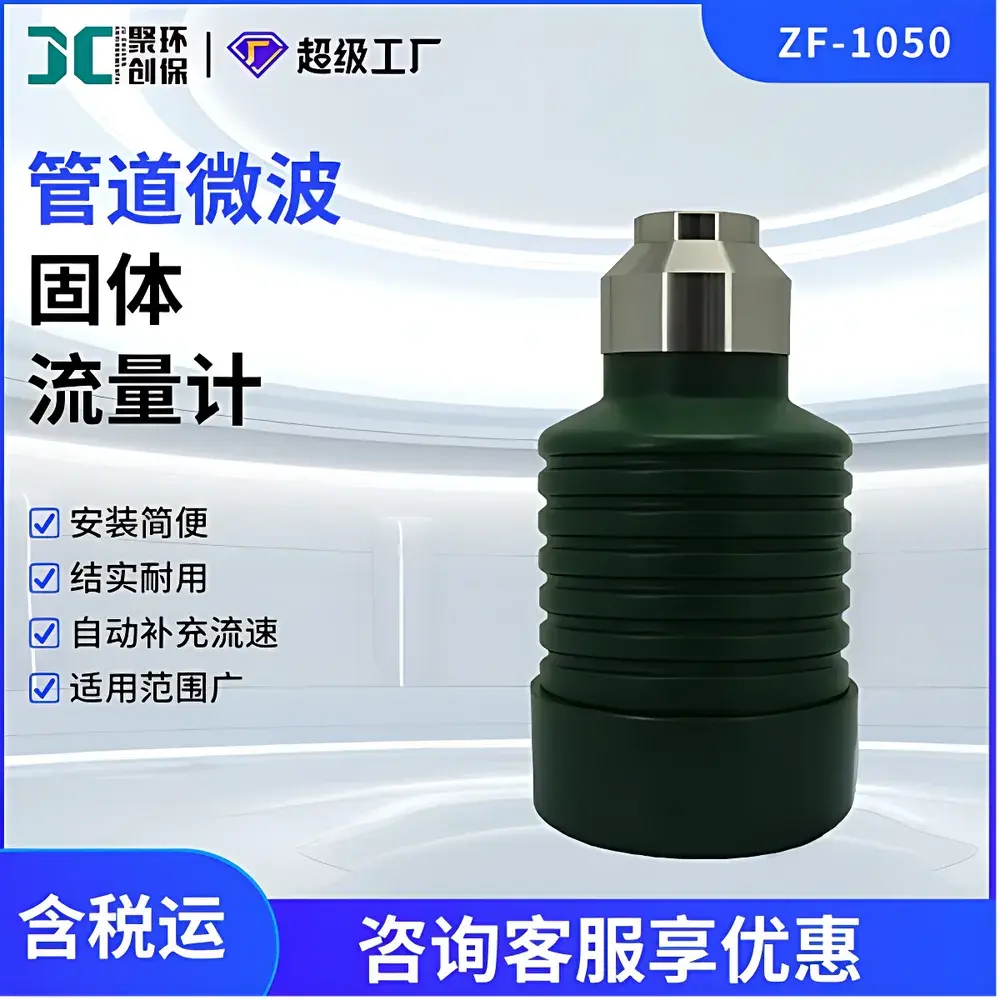
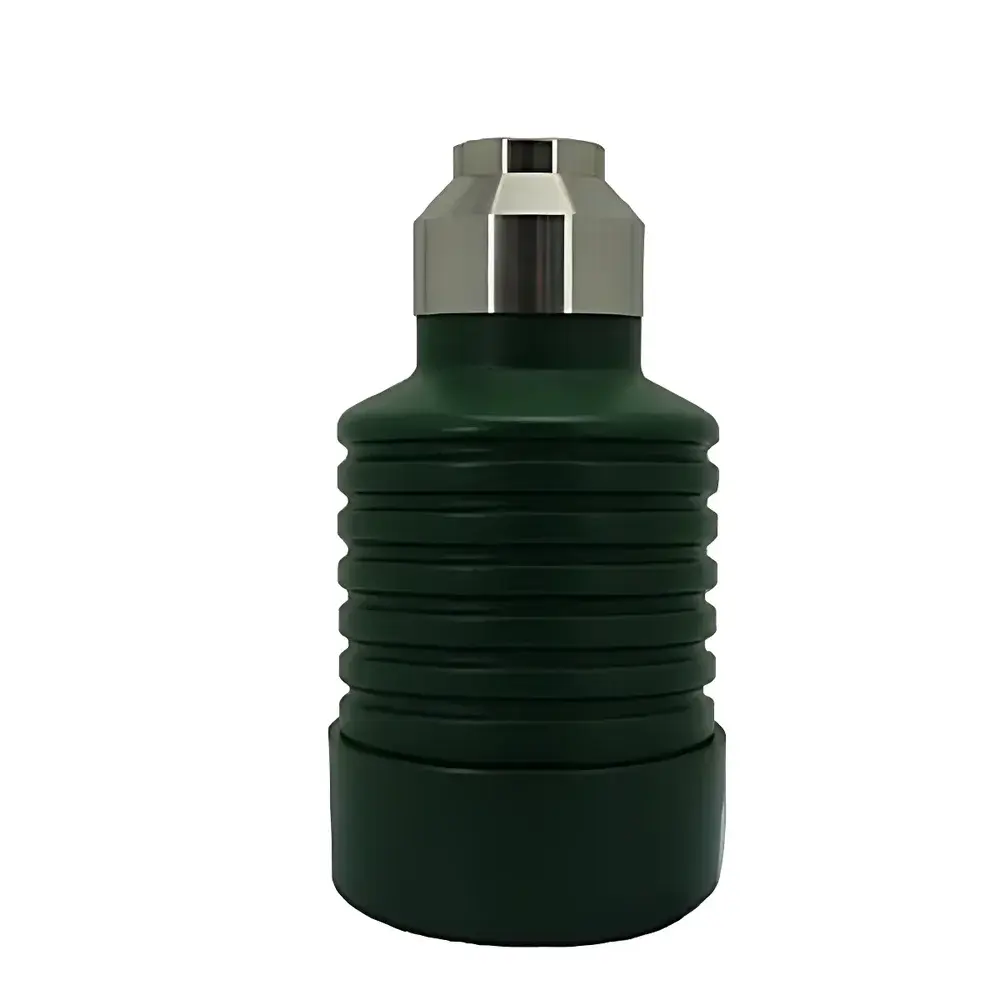
JU CHUANG ENVIRONMENTAL ZF-1050 Non-Contact Microwave Solid Flow Switch
| Brand | JU CHUANG ENVIRONMENTAL |
|---|---|
| Origin | Shandong, China |
| Manufacturer Type | Manufacturer |
| Country of Origin | China |
| Model | ZF-1050 |
| Dimensions (L × Ø) | 180 × 53 mm |
| Weight | 1.3 kg |
| Power Supply | DC 9–36 V |
| Power Consumption | 0.1 W |
| Operating Temperature Range | ≤350 °C |
| Output Options | Relay (NO) & 4–20 mA |
| Connection Port | ID 30 mm / OD 37 mm |
| Principle | Doppler-shift-based microwave sensing |
Overview
The JU CHUANG ENVIRONMENTAL ZF-1050 Non-Contact Microwave Solid Flow Switch is an industrial-grade flow presence detector engineered for continuous, real-time monitoring of solid material transport in pneumatic conveying systems, belt conveyors, chutes, hoppers, bucket elevators, vibratory feeders, and ducted pipelines. It operates on the physical principle of microwave Doppler frequency shift: a low-power, continuous-wave (CW) microwave signal (typically in the K-band, ~24 GHz) is emitted toward the moving solid stream; particles in motion reflect the signal with a measurable frequency offset proportional to their velocity relative to the sensor. By analyzing both amplitude modulation and Doppler spectral content, the device distinguishes between static bulk material, intermittent flow, and sustained mass flow—enabling reliable binary flow/no-flow detection without mechanical contact or intrusion into the process stream.
Key Features
- Non-invasive, non-contact operation: eliminates wear, contamination risk, and maintenance downtime associated with mechanical paddles or optical sensors.
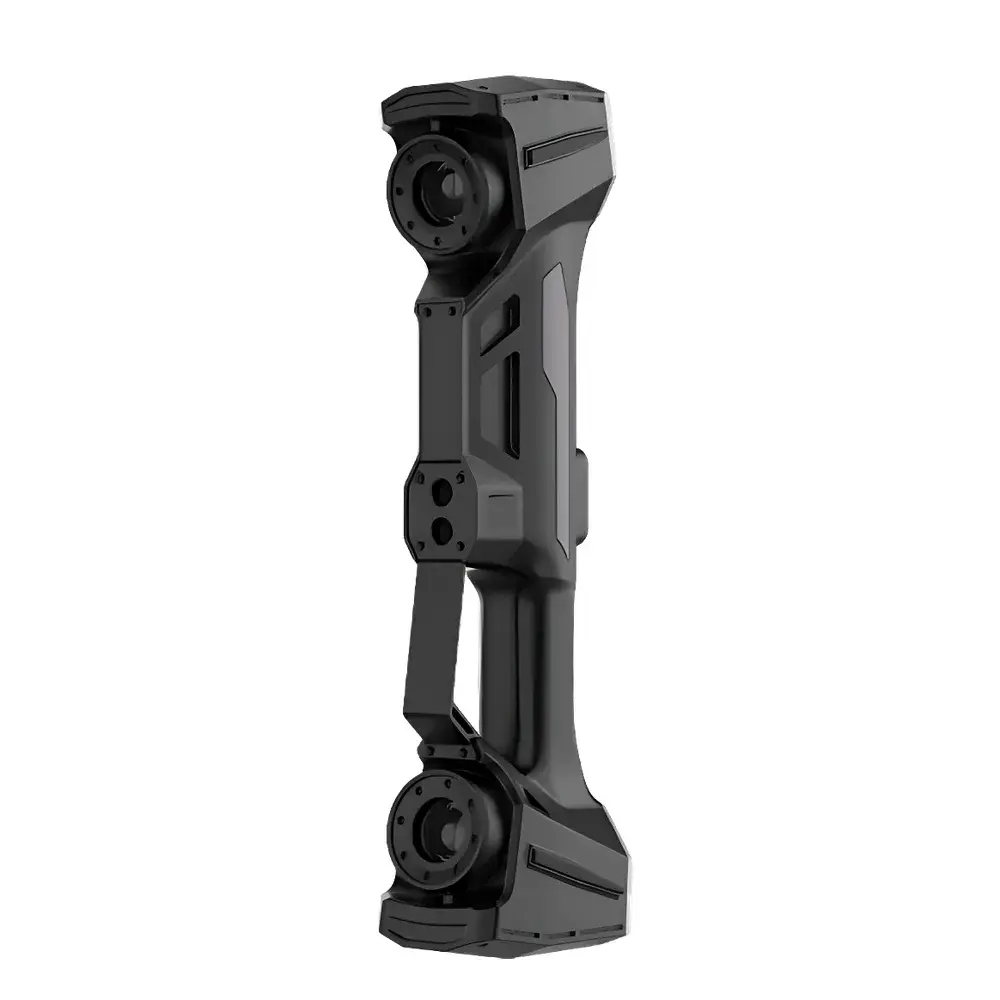
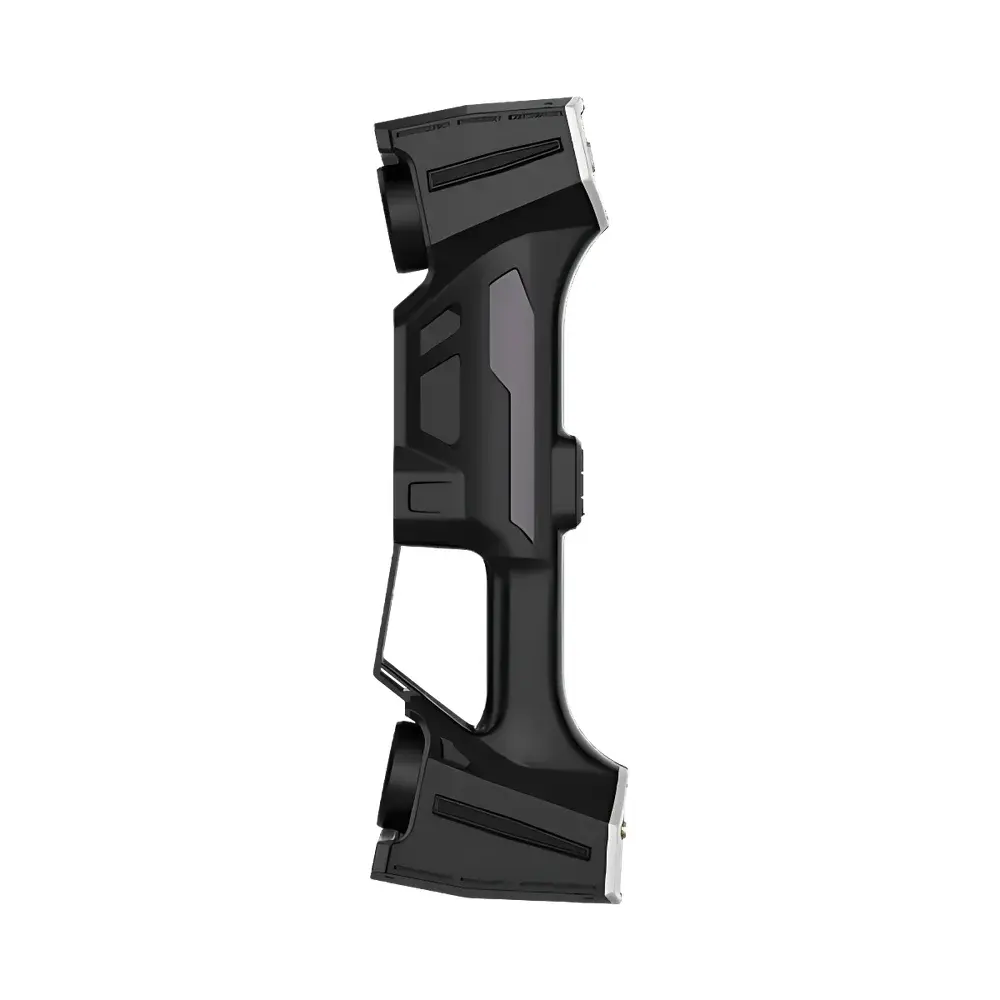
- Compact cylindrical housing (180 mm length × 53 mm diameter) designed for direct mounting on pipe walls, conveyor side frames, chute sidewalls, or duct flanges via standard threaded or clamp-on fixtures.
- Dual-output configuration: isolated relay (normally open) for PLC interlock or alarm triggering, plus analog 4–20 mA current loop for integration into DCS or SCADA systems with scalable flow presence indication.
- Wide operational temperature tolerance up to 350 °C, suitable for hot ash, calcined powders, kiln feed, and other high-temperature bulk solids handling applications.
- Adaptive signal processing compensates for variations in particle size distribution, density, and velocity—ensuring consistent detection performance across heterogeneous solid streams including granules, pellets, flakes, fines, and irregular aggregates.
- Low-power consumption (0.1 W) enables deployment in intrinsically safe or energy-constrained environments; compatible with 9–36 V DC industrial power supplies including battery-backed or solar-powered telemetry nodes.
Sample Compatibility & Compliance
The ZF-1050 is validated for use with dry, free-flowing, and semi-cohesive solid materials ranging from fine dust (<50 µm) to coarse granules (up to 25 mm). It performs robustly in dusty, humid, or mildly corrosive atmospheres typical of cement, mining, chemical, biomass, and food processing facilities. While not certified to ATEX or IECEx for explosive atmospheres, its passive microwave architecture and absence of moving parts support compliance with general-purpose industrial safety standards (IEC 61000-6-2/6-4 for EMC, UL 61010-1 for electrical safety). For regulated industries, the 4–20 mA output supports traceable calibration logs when integrated with compliant data acquisition systems adhering to 21 CFR Part 11 audit trail requirements.
Software & Data Management
The ZF-1050 is a standalone hardware sensor with no embedded firmware or user-configurable software. Its signal conditioning and threshold logic are implemented in analog/digital hybrid circuitry, ensuring deterministic response time (<100 ms) and immunity to cyber vulnerabilities. When connected to a programmable logic controller (PLC) or distributed control system (DCS), flow status events can be timestamped, logged, trended, and correlated with upstream/downstream process variables (e.g., feeder speed, pressure differential, motor current). Integration follows standard HART-compatible or generic 4–20 mA scaling protocols; no proprietary drivers or cloud platforms are required.
Applications
- Early-blockage detection in pneumatic conveying lines for fly ash, limestone, plastic pellets, or pharmaceutical granules.
- Feed verification at inlet hoppers of mixers, blenders, extruders, and rotary kilns.
- Loss-of-flow alarms in gravity-fed chutes serving pulverized coal mills or mineral processing plants.
- Material presence confirmation prior to valve actuation in batch transfer systems.
- Redundant flow verification in GMP-compliant powder handling lines where optical sensors may fail due to dust accumulation.
- Condition monitoring of vibratory feeders in recycling sorting stations handling shredded metal or polymer fragments.
FAQ
Does the ZF-1050 measure mass flow rate quantitatively?
No—it provides binary flow presence/absence detection and qualitative flow continuity assessment, not calibrated mass or volumetric flow rate.
Can it detect stationary material buildup inside a pipe?
No—the Doppler principle requires particle motion; static deposits are not detected unless disturbed by subsequent flow.
Is calibration required after installation?
No field calibration is needed; factory-set sensitivity thresholds are optimized for general-purpose solids. Optional potentiometer adjustment allows fine-tuning of detection sensitivity in situ.
What is the maximum allowable pipe wall thickness for reliable signal penetration?
For carbon steel pipes, wall thickness should not exceed 12 mm; for stainless steel, ≤8 mm; non-metallic ducts (e.g., fiberglass, PVC) pose no attenuation limitation.
Is the microwave emission hazardous to personnel?
The device emits <1 mW average power—well below ICNIRP and FCC exposure limits for occupational environments; no shielding or special PPE is required.