
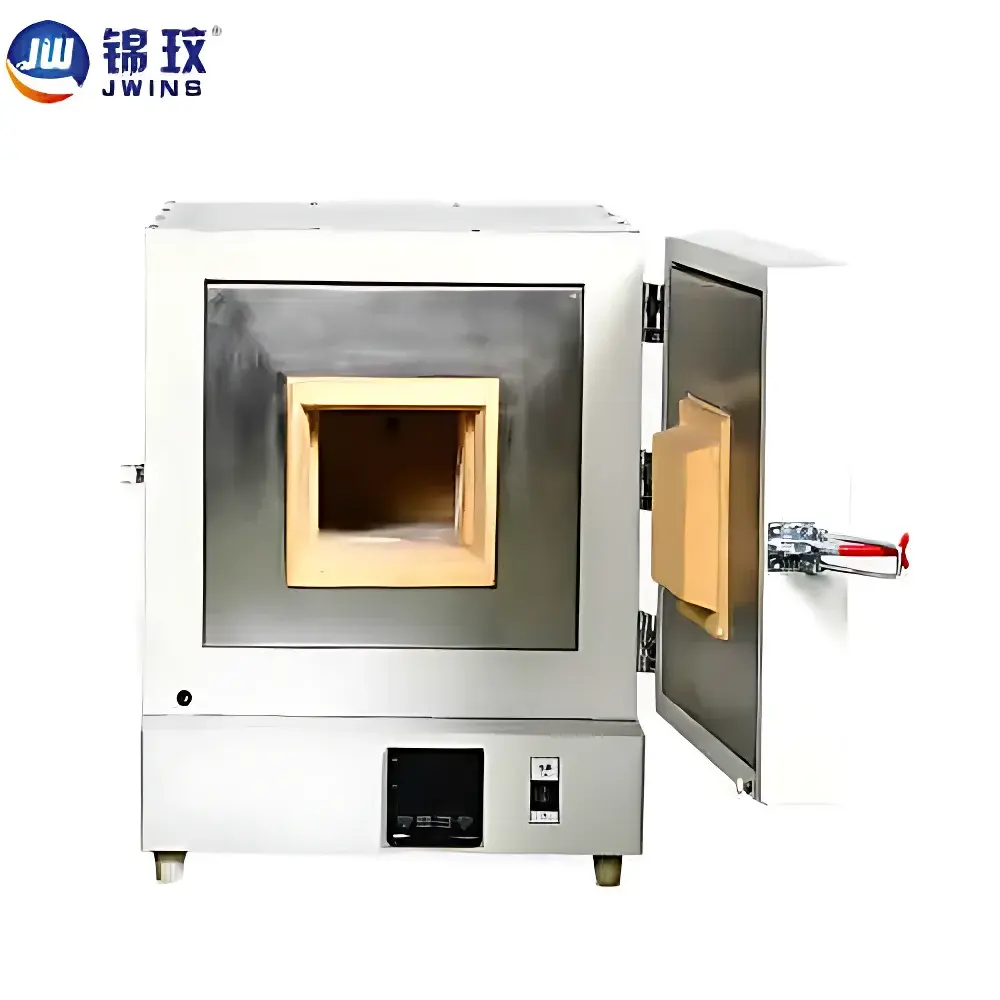
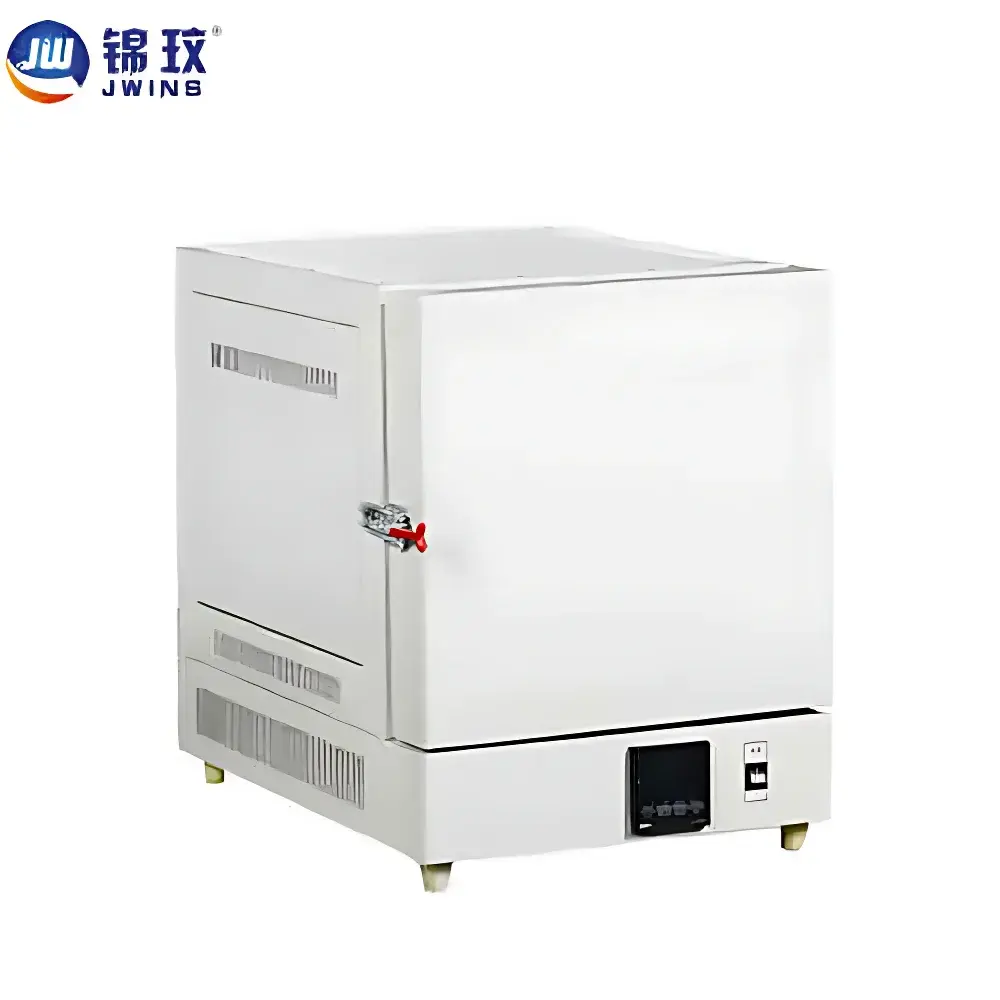
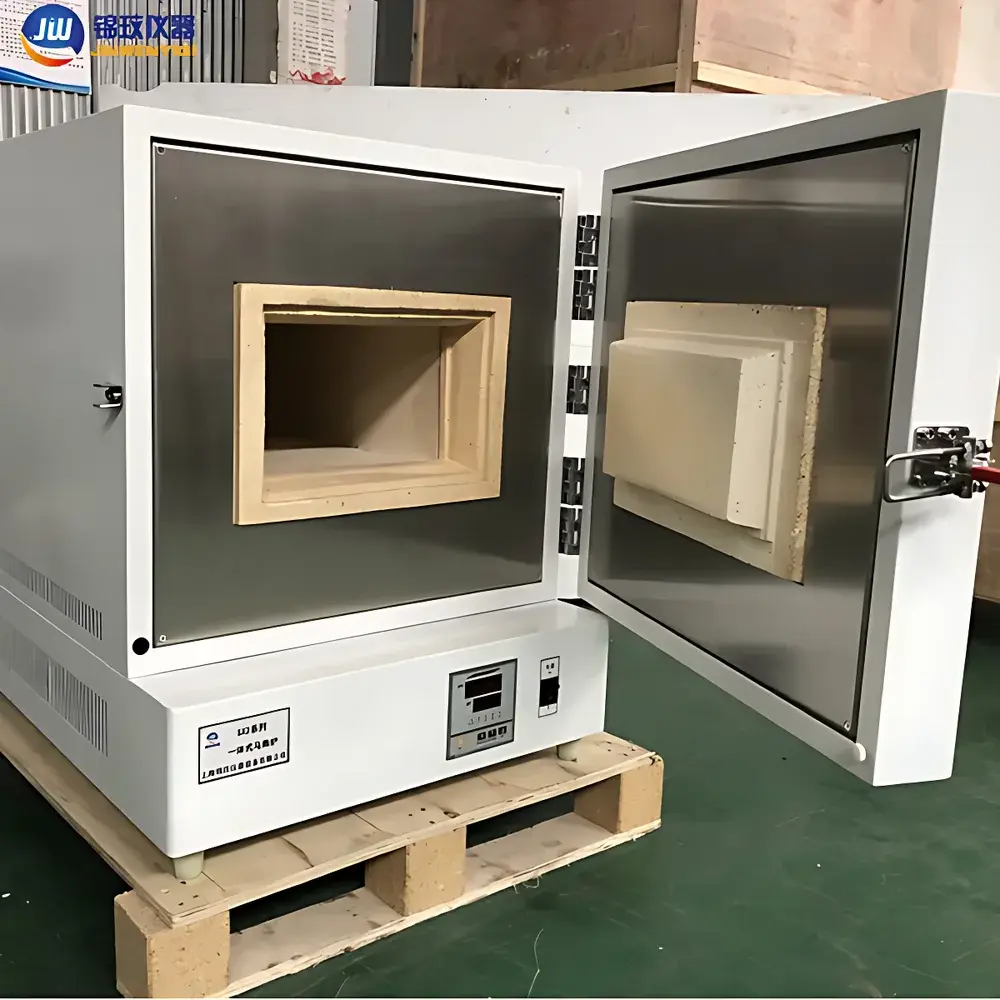
JWINS SX2-2.5-10N Benchtop Muffle Furnace with Refractory Brick Chamber
| Brand | JWINS |
|---|---|
| Origin | Shanghai, China |
| Manufacturer Type | Direct Manufacturer |
| Product Category | Domestic |
| Model | SX2-2.5-10N |
| Instrument Type | Box-Type Resistance Furnace |
| Maximum Temperature | 1000 °C |
| Temperature Control Accuracy | ±1 °C |
| Rated Power | 2.5 kW |
| Heating Time to Max Temp | ≤30 min |
| Heating Element | Nickel-Chromium (NiCr) Wire |
| Internal Chamber Dimensions | 120 × 200 × 80 mm |
| Nominal Chamber Volume | 2 L |
| Operating Temperature Range | RT + 50 °C to 1000 °C |
| Supply Voltage | AC 220 V / 50 Hz |
| Chamber Lining Material | Refractory Firebrick |
Overview
The JWINS SX2-2.5-10N is a compact, benchtop muffle furnace engineered for precise thermal processing in academic laboratories, quality control environments, and small-scale R&D settings. It operates on resistive heating principles, utilizing high-purity nickel-chromium (NiCr) alloy heating elements embedded within a fully insulated refractory brick chamber. This architecture ensures uniform radial and axial temperature distribution across the 2 L working volume—critical for applications requiring reproducible thermal treatment such as ashing, calcination, heat treatment of ceramics, and pre-conditioning of analytical samples. The furnace achieves a maximum operating temperature of 1000 °C with a certified control accuracy of ±1 °C, verified under steady-state conditions per ASTM E220 calibration guidelines. Its rigid cold-rolled steel outer casing, finished with high-temperature baked enamel, provides mechanical stability and long-term corrosion resistance in standard laboratory atmospheres.
Key Features
- Refractory brick chamber construction—provides excellent thermal retention, chemical inertness against alkalis and mild acids, and long service life under repeated thermal cycling.
- Microprocessor-based PID temperature controller with digital setpoint interface, real-time temperature display, and programmable ramp-soak profiles (single-segment standard; optional multi-segment firmware available).
- Optimized thermal insulation: layered design comprising lightweight firebrick door insert, high-density alumina-silica fiber blanket between inner lining and outer shell, and low-conductivity air gaps—reducing surface temperature rise to <55 °C at ambient conditions.
- Integrated safety architecture including over-temperature cutoff (independent bimetallic limiter), current surge protection, earth leakage detection, short-circuit interruption, and automatic power disengagement upon door opening.
- Ergonomic front-hinged door with counterbalanced mechanism and high-temperature ceramic fiber gasket ensures safe, repeatable access without thermal shock to chamber integrity.
Sample Compatibility & Compliance
The SX2-2.5-10N accommodates crucibles, boats, and shallow trays up to 110 mm wide × 190 mm deep × 70 mm high, making it suitable for ASTM D3174 (ash content in coal), ISO 1171 (ash in solid mineral fuels), and USP <281> (residue on ignition). Its refractory brick interior resists degradation from common inorganic salts and oxides encountered in metallurgical or environmental sample preparation. The unit complies with IEC 61010-1:2010 for electrical safety in laboratory equipment and meets CE marking requirements for EMC and low-voltage directives. While not inherently GLP/GMP validated, its stable thermal performance and traceable controller output support integration into auditable workflows when paired with external data loggers meeting FDA 21 CFR Part 11 requirements.
Software & Data Management
The standard configuration includes local digital control only; however, an optional RS485 serial interface (Modbus RTU protocol) enables connection to SCADA systems or PC-based acquisition software for time-stamped temperature logging, alarm event capture, and remote setpoint adjustment. When used with compliant third-party validation packages, the system supports IQ/OQ documentation for regulated environments. All controller parameters—including proportional band, integral time, derivative gain, and sensor offset—are accessible via protected menu navigation and can be backed up/restored using non-volatile EEPROM storage.
Applications
- Ash content determination in biomass, foodstuffs, polymers, and geological specimens per AOAC 942.05 and ISO 2171.
- Pre-firing of ceramic green bodies and sintering trials under controlled oxidizing atmosphere.
- Thermogravimetric sample conditioning prior to XRD or SEM analysis.
- Heat treatment of metallographic specimens for microstructural stabilization.
- Residue-on-ignition testing in pharmaceutical excipients and active ingredients (USP <281>).
- Calibration verification of thermocouples and RTDs using fixed-point reference materials (e.g., Zn, Al melting points).
FAQ
What type of thermocouple is used for internal temperature sensing?
A Type K (chromel-alumel) thermocouple is factory-installed and directly embedded in the chamber wall near the geometric center.
Can this furnace operate continuously at 1000 °C?
Yes—rated for continuous duty at maximum temperature; recommended maximum dwell time per cycle is 4 hours to preserve element longevity.
Is the refractory brick chamber resistant to halogen-containing samples?
No—avoid direct exposure to chlorine or fluorine compounds above 600 °C, as they may accelerate brick erosion; use quartz or alumina crucibles as barriers.
Does the unit include a cooling fan or forced-air quenching?
No—cooling is passive only; natural convection brings chamber temperature to <100 °C in approximately 90 minutes after shutdown.
What maintenance is required for long-term reliability?
Biannual inspection of heating element continuity, thermocouple calibration drift check, and visual assessment of brick spalling or gasket compression set.



