
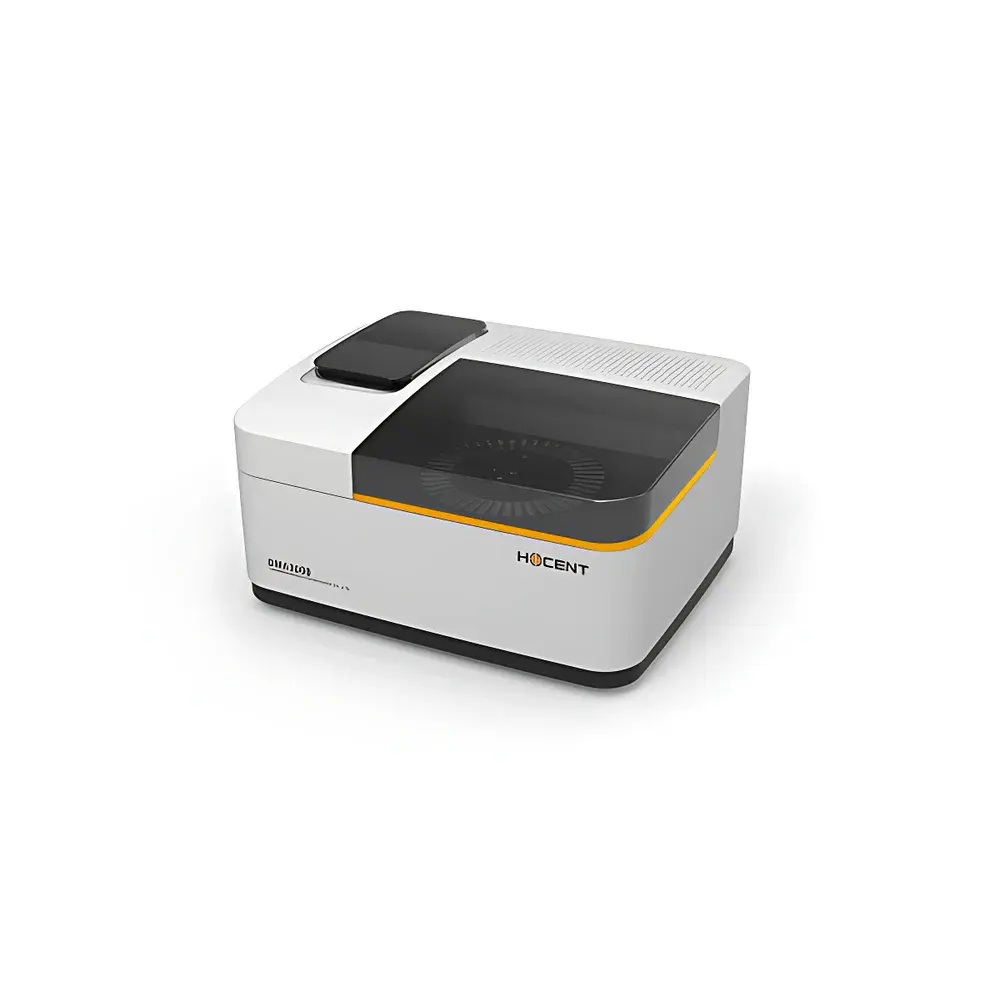
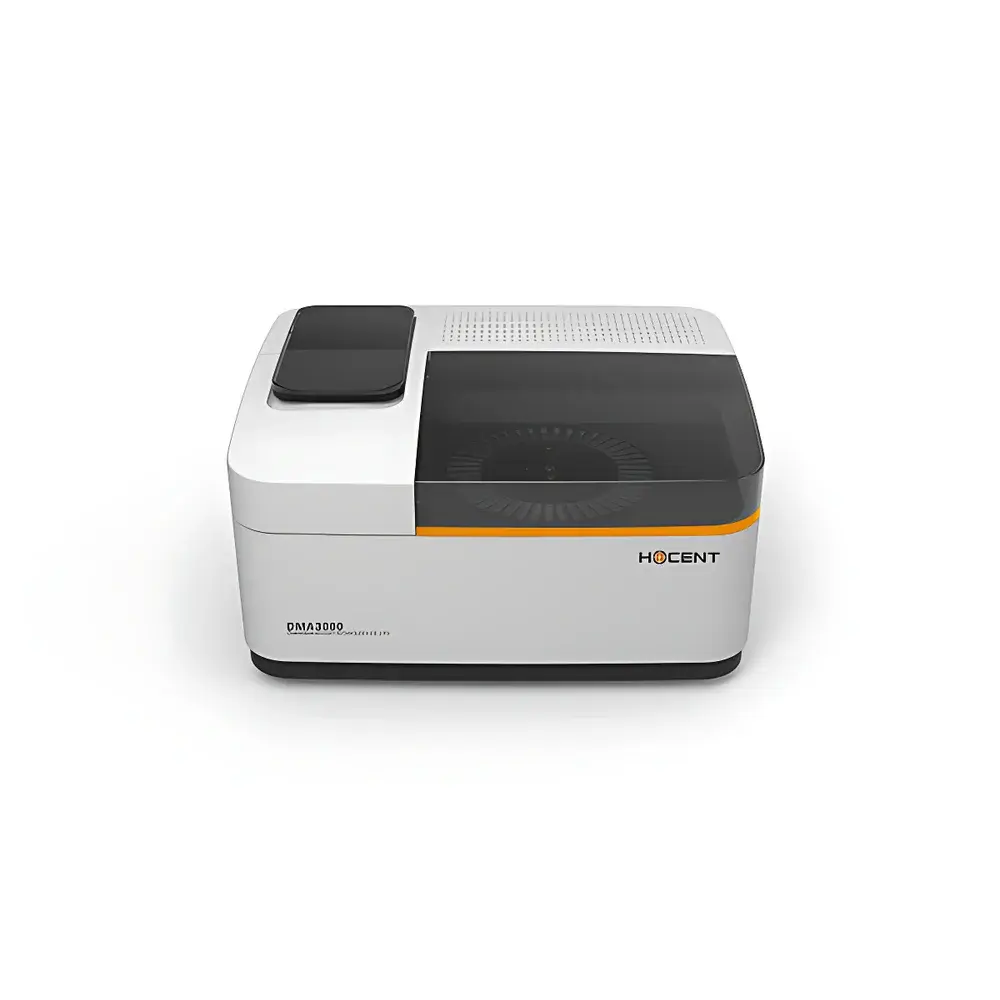
Kaiyuanhongsheng DMA3000 Direct Mercury Analyzer
| Brand | Kaiyuanhongsheng |
|---|---|
| Origin | Hunan, China |
| Manufacturer Type | Authorized Distributor |
| Instrument Type | Benchtop Laboratory Analyzer |
| Principle | Cold Vapor Atomic Absorption Spectrometry (CVAAS) with Thermal Decomposition |
| Detection Limit | 0.001 ng |
| Repeatability | RSD ≤ 1% at 1 ng |
| Linearity Error | ±3% across calibration range |
| Measurement Range | 0.005–1500 ng Hg per sample |
Overview
The Kaiyuanhongsheng DMA3000 Direct Mercury Analyzer is a benchtop thermal decomposition–cold vapor atomic absorption spectrometer engineered for accurate, rapid, and reagent-free quantification of total mercury in solid, liquid, and gaseous matrices. Unlike conventional wet-chemistry methods requiring acid digestion, distillation, or chemical reduction, the DMA3000 employs a fully integrated catalytic pyrolysis system coupled with gold amalgamation and CVAAS detection at 253.7 nm. This approach eliminates procedural losses, cross-contamination, and operator exposure to hazardous reagents—critical concerns in mercury analysis where volatility, adsorption, and memory effects compromise data integrity. The instrument thermally decomposes samples under controlled oxygen flow, oxidizes interfering species (e.g., halogens, NOx, SOx) via high-temperature catalysts, removes water vapor via pneumatic cutoff and thermoelectric cooling, traps elemental mercury selectively on sub-nanometer gold traps, and releases it quantitatively for atomization and absorption measurement. Its design adheres to fundamental metrological principles of trace metal analysis: minimal sample handling, closed-system transport, and physical separation of matrix interferences prior to detection.
Key Features
- 45-position programmable carousel autosampler enabling unattended batch analysis; supports hot-swap sample盘 replacement without interrupting ongoing runs
- Patented dual-stage moisture removal: pneumatic cutoff eliminates bulk water in <1 s; Peltier-cooled secondary trap removes residual moisture to stabilize baseline and suppress spectral noise
- Monolithic catalytic–amalgamation tube assembly: integrally fused quartz/ceramic structure ensures thermal continuity, prevents mercury condensation at joints, and eliminates dead-volume trapping
- No consumable desiccants or chemical reagents required—reducing consumable cost by >70% versus traditional hydride generation or acid digestion workflows
- Typical analysis time: 2–4 min per sample (e.g., rice: 2 min; soil: 3 min); full calibration verification and blank correction executed automatically within each sequence
Sample Compatibility & Compliance
The DMA3000 accommodates heterogeneous samples without size reduction or solvent extraction: powders (soil, coal, ore), homogenized tissues (fish, muscle, plant), liquids (water, digestates, extracts), and gas-phase sampling via sorbent tubes. It meets regulatory requirements for method validation under ISO/IEC 17025 and supports audit-ready documentation for GLP/GMP environments. Certified reference materials—including GBW(E)100362 (rice), GSS-2 (soil), and SARM20 (coal)—demonstrate accuracy within certified uncertainty intervals. The analyzer complies with over 15 international and national standards, including EPA Method 7473, ASTM D6722 and D7623, HJ 923–2017 (China), GB 5009.17–2021 (food), SN/T 3511–2013 (minerals), and DB45/T 939–2013 (fertilizers and biological tissues). All methods specify direct solid/liquid injection as the primary analytical approach—eliminating method transfer validation when switching from wet chemistry to thermal decomposition.
Software & Data Management
Instrument control, calibration management, and result reporting are handled through Kaiyuanhongsheng’s MercurySuite v3.x software, compliant with FDA 21 CFR Part 11 requirements for electronic records and signatures. Features include role-based user access, full audit trail (including parameter changes, calibration events, and manual interventions), automatic QC flagging (e.g., drift >2%, blank elevation >0.05 ng), and customizable report templates aligned with ISO 17025 clause 7.8. Raw absorbance spectra, peak integration parameters, and thermal profile logs are stored in vendor-neutral .csv and .xml formats. Data export supports LIMS integration via ODBC and HL7 protocols. Software includes built-in uncertainty estimation per EURACHEM/CITAC guidelines, incorporating repeatability, calibration curve fit, and weighing uncertainty contributions.
Applications
The DMA3000 serves environmental monitoring labs performing soil/sediment mercury screening per HJ 923; food safety laboratories verifying compliance with GB 5009.17 limits for rice, seafood, and infant formula; mining and metallurgical QA/QC departments analyzing iron ores and concentrates per GB/T 31947; and energy sector labs testing coal, fly ash, and crude oil per ASTM D6722/D7623. Its ability to analyze gaseous mercury—via optional gold-coated quartz traps coupled to ambient air or stack gas samplers—supports HJ 910 and HJ 917 applications. In research settings, it enables kinetic studies of mercury release during thermal treatment of e-waste or biomass, and supports speciation workflows when paired with offline chromatographic separation.
FAQ
Does the DMA3000 require acid digestion or chemical reductants?
No. It uses thermal decomposition in oxygen atmosphere followed by catalytic oxidation and gold amalgamation—no HNO3, KMnO4, SnCl2, or NaBH4 is needed.
How is carryover minimized between high- and low-level samples?
The integrated catalytic trap and gold amalgamation column undergo in-situ thermal cleaning after each analysis; software enforces mandatory blank checks every 10 samples or after any sample >500 ng.
Can the instrument be validated for ISO 17025 accreditation?
Yes. Full validation documentation—including LOD/LOQ determination, linearity assessment (r² ≥ 0.999), precision studies (n = 6 replicates at multiple levels), and recovery experiments using CRM materials—is provided in the Installation Qualification (IQ)/Operational Qualification (OQ) package.
What maintenance intervals are recommended?
Catalyst and gold trap replacement every 10,000 analyses or 12 months; quartz combustion tube cleaning every 2,000 runs; annual performance verification using NIST-traceable mercury standards.
Is remote diagnostics supported?
Yes. Secure TLS-encrypted remote access allows authorized service engineers to monitor system health, review error logs, and perform firmware updates without onsite visits.



