
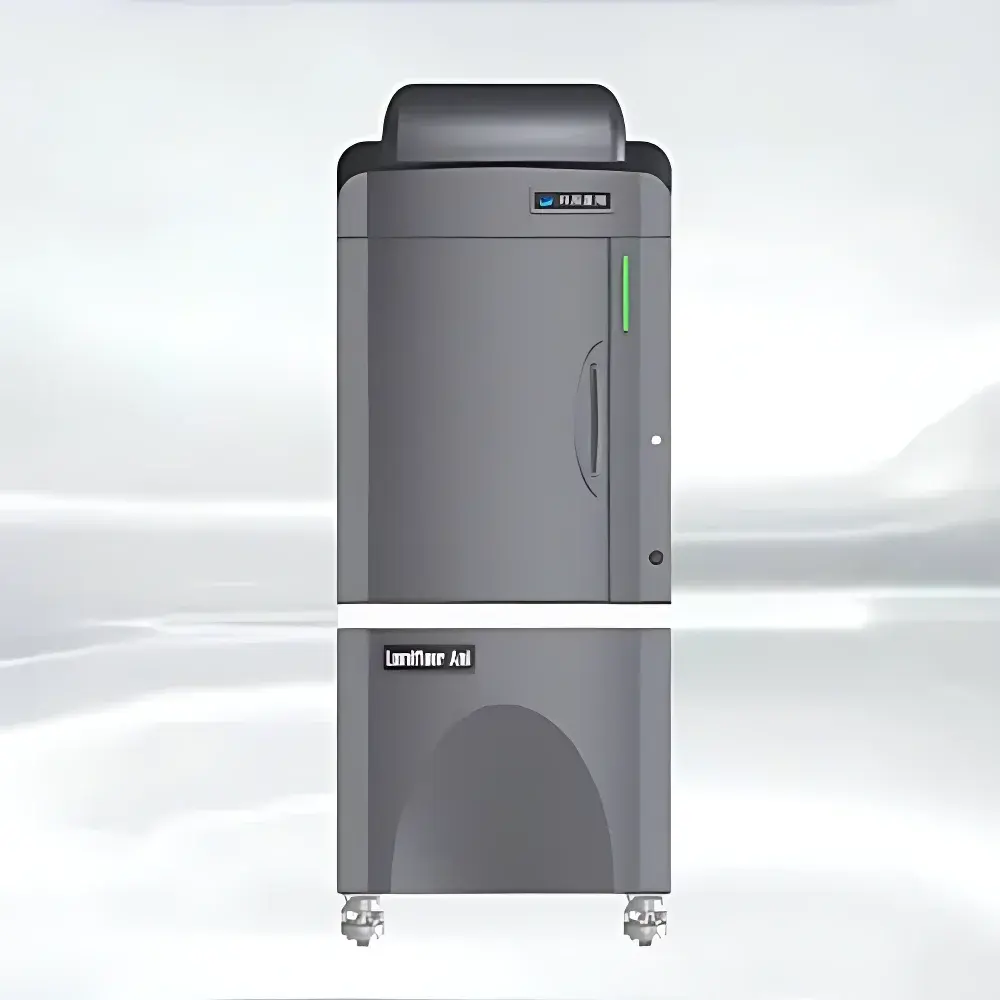
KECHENSTARFLY Plant lumiScreen DIL High-Throughput Dynamic Phenotyping Imaging System for Seedlings
| Brand | KECHENSTARFLY |
|---|---|
| Origin | Beijing, China |
| Manufacturer Type | Direct Manufacturer |
| Product Category | Domestic |
| Model | Plant lumiScreen DIL |
| Price Range | USD 70,000 – 700,000 |
Overview
The KECHENSTARFLY Plant lumiScreen DIL is a purpose-built, high-throughput dynamic phenotyping imaging system engineered for non-invasive, longitudinal monitoring of plant seedlings under controlled environmental conditions. It operates on the principle of multi-modal optical imaging—including visible-light macroscopy, wide-field fluorescence, bioluminescence detection, and high-resolution micro-imaging—integrated with precisely synchronized environmental modulation and automated 3D positional control. Designed for quantitative plant phenomics, the system captures time-resolved morphological, developmental, and physiological dynamics at micron-scale spatial resolution and minute-scale temporal intervals. Its architecture supports standardized acquisition protocols aligned with FAIR (Findable, Accessible, Interoperable, Reusable) data principles, enabling reproducible phenotypic trait extraction across genotypes, treatments, and experimental replicates. The platform is validated for use with model and crop species including Arabidopsis thaliana, Oryza sativa, Brassica rapa, and Glycine max, facilitating translational research from gene function validation to quantitative trait locus (QTL) mapping.
Key Features
- Automated 3D gantry system with micrometer-level positioning repeatability (<±5 µm) over travel ranges up to 1.2 m × 0.8 m × 0.6 m, enabling consistent multi-angle, multi-height image acquisition across large sample arrays.
- Modular optical configuration supporting concurrent or sequential operation of wide-field imaging (up to 30 cm × 40 cm FOV), micro-imaging (2–10× magnification, diffraction-limited resolution), chemiluminescence detection (sensitivity down to 10−16 mol ATP), and optional fluorescence excitation/emission filtering (365/470/535/625 nm LED sources).
- Integrated environmental control unit with independent regulation of temperature (10–35 °C, ±0.3 °C stability), relative humidity (30–90% RH, ±2% RH), photoperiod (0–24 h light/dark cycles, programmable spectral composition via RGB+UV LEDs), CO2 (0–2000 ppm), and optional gravity vector modulation (via centrifugal rotation stage).
- High-throughput sample handling: accommodates up to 96 standard petri dishes (90 mm), 48 multi-well plates (12-well format), or 24 custom trays per imaging cycle; fully compatible with robotic sample loaders (optional integration).
- Real-time hardware-triggered synchronization between illumination pulses, camera exposure, stage movement, and environmental parameter logging ensures sub-second temporal alignment across all modalities.
Sample Compatibility & Compliance
The Plant lumiScreen DIL accepts intact seedlings (0–15 cm height), germinating seeds, excised tissues, and whole-plant specimens grown in agar plates, soil substrates, hydroponic chambers, or aeroponic mist systems. Sample holders are standardized to ANSI/SLAS footprint specifications for seamless integration with automated lab infrastructure. The system complies with ISO 17025:2017 requirements for test equipment calibration traceability, supports GLP-compliant audit trails (including user action logs, parameter versioning, and raw image hash integrity checks), and meets essential design criteria referenced in OECD Test Guidelines 208 (Seedling Emergence and Seedling Growth) and ASTM E3087-17 (Standard Practice for Quantitative Plant Phenotyping). All software modules adhere to FDA 21 CFR Part 11 electronic record and signature requirements when configured with role-based access control and electronic signatures.
Software & Data Management
The system runs on KECHENSTARFLY PhenotypeStudio v4.x—a dual-interface platform comprising Acquisition Suite (real-time hardware orchestration, exposure optimization, and metadata embedding) and Analysis Suite (GPU-accelerated segmentation, root/shoot morphology quantification, growth kinetics modeling, and multivariate trait correlation). Image data are stored in vendor-neutral formats (OME-TIFF, NRRD) with embedded MIAME-compliant metadata. Built-in pipelines support export to PlantCV, R/Bioconductor (phenofit, imagePheno), and Python-based deep learning frameworks (TensorFlow, PyTorch) via RESTful API. Local deployment supports NAS/SAN integration; cloud backup and federated analysis options comply with GDPR and HIPAA-aligned data governance policies.
Applications
- Large-scale mutant or ecotype screening for abiotic stress responses (drought, salinity, temperature extremes, nutrient deficiency)
- Time-series characterization of hormone signaling dynamics using fluorescent reporters (e.g., DR5::GFP, TCS::GFP)
- Quantification of circadian rhythm-driven growth oscillations in hypocotyl elongation or leaf movement
- Root architecture phenotyping under heterogeneous nutrient or pathogen challenge conditions
- Validation of CRISPR/Cas9-edited lines via longitudinal morphometric deviation scoring
- Pre-breeding selection indices development for early vigor, canopy establishment rate, and photoacclimation efficiency
FAQ
What is the minimum resolvable feature size in micro-imaging mode?
The system achieves lateral resolution of ≤2.5 µm at 10× magnification under optimal Köhler illumination and monochromatic LED excitation.
Can the system operate unattended for multi-day experiments?
Yes—fully autonomous operation is supported for up to 14 days with integrated power backup, thermal management, and remote health monitoring via SNMP/HTTP status endpoints.
Is raw image data accessible without proprietary software?
All acquired images are saved in open-standard OME-TIFF format with embedded EXIF and TIFF tags containing full acquisition parameters, stage coordinates, and environmental timestamps.
Does the platform support third-party sensor integration?
Yes—the system provides analog/digital I/O ports and Modbus TCP interface for external sensors (e.g., soil moisture probes, leaf temperature IR sensors, gas analyzers).
How is calibration maintained across long-term deployments?
Automated daily calibration routines include flat-field correction, lens distortion mapping, stage position homing verification, and LED intensity drift compensation using onboard reference targets.




